Sustainability
Eco-Friendly Wallpaper: Sustainable Choices | Goodrich Global
Eco-friendly wallpaper in Singapore is gaining traction as homeowners and designers seek interior finishes that look beautiful without compromising environmental responsibility. The good news is that the wallcovering industry has made significant strides in sustainability — from natural fibre substrates and water-based inks to low-VOC adhesives and responsible manufacturing practices.
This guide helps you navigate the options, understand what makes a wallpaper genuinely eco-friendly, and choose products that align with your sustainability goals while delivering the aesthetic quality you expect.
What Makes Wallpaper Eco-Friendly?
The term “eco-friendly” covers a spectrum of environmental attributes. Understanding these attributes helps you evaluate products meaningfully rather than relying on vague marketing claims.
Low or Zero VOC Emissions
Volatile organic compounds are chemicals released into indoor air from various building materials, including wallpaper and its adhesive. Low-VOC wallpapers use water-based inks and solvent-free coatings that minimise off-gassing after installation. In Singapore’s air-conditioned homes and offices, where windows may remain closed for extended periods, low-VOC products contribute meaningfully to healthier indoor air quality.
Sustainable Raw Materials
The base material of a wallpaper significantly affects its environmental profile. Non-woven substrates made from a blend of cellulose (derived from wood pulp) and polyester use less energy in production than traditional paper-backed wallpapers. Natural fibre wallcoverings — grasscloth, jute, cork, sisal — use renewable materials that are biodegradable at end of life.
Responsible Manufacturing
Eco-friendly wallpaper manufacturers invest in cleaner production processes: water-based rather than solvent-based printing, closed-loop water recycling in factories, energy-efficient production lines, and waste reduction programmes. Japanese manufacturers, in particular, have long emphasised manufacturing efficiency and waste minimisation as part of broader corporate sustainability commitments.
Durability and Longevity
A wallpaper that lasts 10 to 15 years before replacement is inherently more sustainable than a cheaper product that deteriorates after three to five years. Quality wallcoverings resist fading, peeling, and discolouration, reducing the frequency of replacement and the associated waste, energy, and material consumption.
Types of Eco-Friendly Wallpaper
Several wallpaper categories offer strong environmental credentials. Each has distinct characteristics suited to different applications and aesthetics.
Non-Woven Wallpaper
Non-woven wallpaper has become the industry standard for residential applications, and its environmental profile is part of the reason. The non-woven substrate is dimensionally stable (it does not expand or contract when wet), which allows paste-the-wall installation — a method that uses less adhesive than traditional paste-the-back techniques. Non-woven wallpapers can be dry-stripped from walls at end of life, leaving a clean surface without chemical strippers or excessive water. This makes renovation cleaner and generates less waste.
Grasscloth and Natural Fibre Wallcoverings
Grasscloth wallpapers use woven natural fibres — typically seagrass, jute, sisal, or arrowroot — laminated to a paper or non-woven backing. These fibres are rapidly renewable, harvested without damaging the source plant, and biodegradable. The organic texture of grasscloth is unique to each roll, creating walls with natural variation that cannot be replicated by printed alternatives.
Cork wallcoverings deserve special mention: cork bark is harvested from living cork oak trees every nine to twelve years without harming the tree, making it one of the most genuinely sustainable material sources in interior design. Cork also provides natural sound absorption and thermal insulation — functional benefits alongside its environmental credentials.
Water-Based Printed Wallpapers
Digitally printed wallpapers using water-based latex inks have largely replaced solvent-based alternatives in quality manufacturing. These inks produce vibrant, durable colours without the toxic solvents that contribute to both indoor pollution and factory emissions. When printed on non-woven or FSC-certified paper substrates, these wallpapers represent one of the most accessible eco-friendly options for residential interiors.
Explore Goodrich Global’s wallcovering collection for sustainably produced options across multiple styles and price points.
Eco-Friendly Wallpaper for Singapore Homes
Singapore’s climate and housing types create specific considerations for eco-friendly wallpaper selection.
Humidity Considerations
Singapore’s high humidity (typically 70 to 90 per cent) can challenge certain wallpaper types. Non-woven and vinyl-coated wallpapers handle humidity well, maintaining their adhesion and appearance in air-conditioned environments with occasional exposure to humid conditions (when windows are opened). Pure natural fibre wallcoverings like grasscloth may require additional consideration in bathrooms or kitchens where direct moisture exposure is frequent.
HDB and Condo Applications
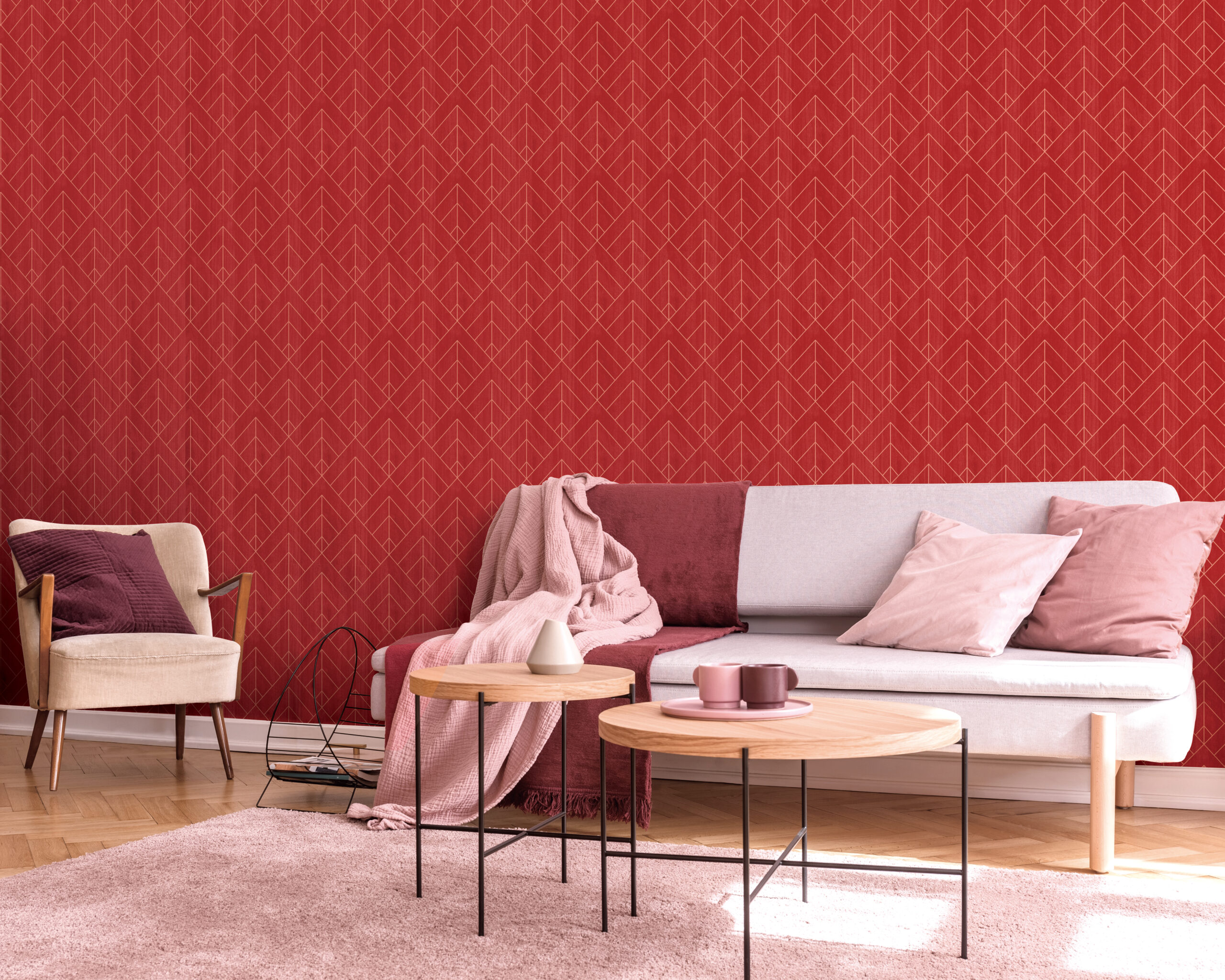
For eco-conscious HDB and condominium homeowners, a non-woven wallpaper on a single feature wall is the most practical and impactful application. Focus the investment on the living room or master bedroom where the wallpaper will be most visible and enjoyed. Choose a design you will be happy with for at least seven to ten years — longevity is itself a sustainability strategy.
Commercial and Office Applications
In commercial fit-outs pursuing Green Mark or SGBC certification, specify wallcoverings with documented VOC test results, preferably GreenGuard or equivalent certification. Commercial-grade vinyl wallcoverings with low-VOC formulations and high durability ratings satisfy both environmental certification requirements and the practical demands of high-traffic spaces.
Adhesives and Installation
An eco-friendly wallpaper installed with a high-VOC adhesive undermines the environmental benefit. The adhesive is as important as the wallpaper itself.
Low-VOC Adhesives
Most quality wallpaper adhesives now offer low-VOC formulations. Starch-based adhesives — the traditional paste for non-woven wallpapers — are inherently low in VOCs and perform well in Singapore’s climate when the correct formulation is used. Specify the adhesive alongside the wallpaper to ensure both components meet your environmental standards.
Professional Installation
Professional installation reduces waste. Experienced wallpaper installers minimise off-cuts through careful pattern matching and wall measurement, use the correct amount of adhesive (excess adhesive is a common source of VOC emissions and waste), and ensure proper adhesion that prevents premature failure and early replacement.
How to Evaluate Eco-Friendly Claims
Not all “eco-friendly” claims are equal. Use these guidelines to assess products critically.
- Look for third-party certification: SGBC, GreenGuard, Oeko-Tex, FSC, or equivalent labels indicate independent verification. Unverified manufacturer claims carry less weight.
- Check specific data: VOC emission test results in micrograms per cubic metre are more meaningful than vague “low-VOC” labels. Ask for test reports.
- Consider the full lifecycle: A wallpaper made from recycled content but with a five-year lifespan may have a larger total footprint than a conventional wallpaper lasting fifteen years. Durability matters.
- Evaluate the manufacturer: Companies with published sustainability reports, factory environmental certifications (ISO 14001), and transparent supply chains are more likely to deliver genuinely sustainable products.
For expert guidance on selecting eco-friendly wallcoverings for your project, book an appointment with Goodrich Global’s design consultants.
Final Thoughts
Eco-friendly wallpaper in Singapore is a practical and accessible way to reduce the environmental impact of your interior without sacrificing style. From low-VOC non-woven papers to renewable grasscloth and cork, the options are broader and more beautiful than ever.
The most sustainable choice is always an informed one: understand what makes a product genuinely eco-friendly, verify claims through certifications and data, and invest in quality that lasts. A well-chosen wallpaper that endures for a decade is one of the greenest decisions you can make for your walls.
Request free samples from our Singapore showroom to see and feel our eco-friendly wallcovering options.