Fabric & Upholstery
Embroidered Fabric in Interior Design: Texture and Craft
Embroidered fabric in interior design introduces a dimension that printed or woven patterns alone cannot achieve: physical texture. The raised threads, intricate stitching and tactile relief of embroidery transform flat textiles into surfaces with depth, shadow and artisanal character. For Singapore interiors where layered sophistication is the goal, embroidered fabrics offer a distinctive way to elevate curtains, cushions, upholstery and decorative panels.
This guide covers the types of embroidered fabric available for interiors, their best applications and practical considerations for specification and care.
Why Embroidered Fabric Adds Value to Interiors
Embroidery is one of the oldest textile arts, and its enduring appeal in interior design stems from several qualities that mass-produced prints cannot replicate.
Dimensionality: Embroidered motifs sit proud of the base fabric, casting micro-shadows that shift with light throughout the day. A floral embroidery catches morning sunlight differently from afternoon light, giving the fabric a living quality that flat prints lack.
Perceived craftsmanship: Even machine-embroidered fabrics carry associations with handwork and artisanal skill. In an interior, embroidered textiles signal investment, care and intentionality — qualities that resonate in both residential and hospitality settings.
Textural contrast: In modern interiors dominated by smooth surfaces — glass, polished stone, lacquered cabinetry — embroidered fabric introduces welcome tactile variety. Running a hand across an embroidered cushion or brushing past an embroidered curtain engages the sense of touch in a way that contemporary interiors often neglect.
Versatility: Embroidery works across design styles, from traditional Peranakan-inspired motifs to minimalist geometric stitch patterns. The technique adapts to virtually any aesthetic, making it relevant for Singapore’s diverse interior design landscape.
Types of Embroidered Fabric for Interiors
Crewel Embroidery
Crewel uses wool yarn stitched onto a cotton or linen base, creating bold, organic motifs — typically floral and botanical. Originating in Jacobean England, crewel embroidery has a rich, textured appearance that suits traditional, colonial and eclectic interiors. It works beautifully on curtains, bed throws and decorative cushions.
Chain Stitch
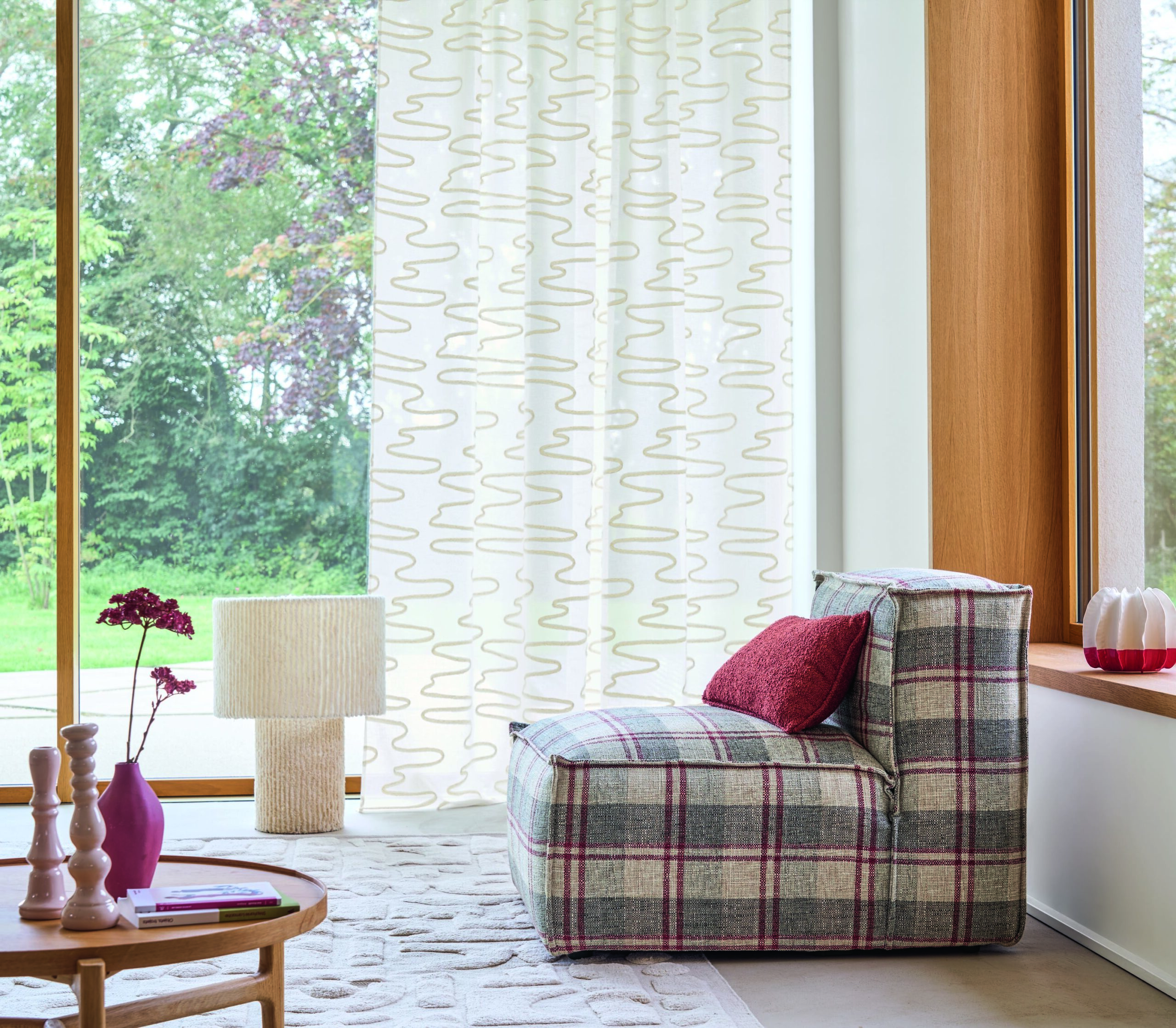
Chain stitch embroidery forms linked loops that create flowing, continuous lines. It is widely used in Kashmiri textiles and translates well into contemporary interior applications. Chain-stitched fabrics offer a lighter, more linear texture than crewel and suit modern furniture upholstery and wall hangings.
Satin Stitch
Satin stitch fills motifs with closely packed parallel threads, producing a smooth, lustrous surface. This technique is used for detailed floral, geometric and figurative designs on drapery fabrics. The reflective quality of satin-stitched embroidery adds a subtle sheen that elevates formal curtains and valances.
Cutwork and Broderie Anglaise
These techniques combine embroidery with cut-out sections, creating open, lace-like patterns. Cutwork fabrics are primarily used for sheer curtains and decorative panels where light filters through the openings, casting patterned shadows. They suit bedrooms, dining rooms and spaces with a romantic or coastal aesthetic.
Contemporary Machine Embroidery
Modern CNC and computerised embroidery machines produce precise, complex designs at scale, making embroidered fabrics more accessible and consistent than handwork allows. Geometric patterns, abstract motifs and minimalist line designs produced by machine embroidery suit contemporary interiors where clean precision matters more than artisanal irregularity.
Applications in Singapore Interiors
Embroidered fabric finds its place in various interior applications, each leveraging its textural qualities differently:
- Curtains and drapery: Embroidered drapery fabric adds visual weight and sophistication to window treatments. Embroidered sheers are particularly striking — the stitching creates patterns visible in silhouette when backlit by daylight.
- Cushions and bolsters: Perhaps the most accessible way to introduce embroidered fabric, decorative cushions allow bold embroidery choices without committing to a large surface area. They can be swapped seasonally or when tastes change.
- Upholstery accents: Fully upholstering a sofa in embroidered fabric is unusual due to wear concerns, but accent applications — chair backs, armrest panels, seat cushion insets — use embroidery where it is visible but not subjected to heavy friction.
- Bed runners and throws: Hotels in Singapore commonly use embroidered bed runners as a signature design element. The same approach works in residential bedrooms to add texture across a plain bedspread.
- Wall panels: Framed embroidered fabric panels serve as textile art, a sophisticated alternative to prints or paintings. They are particularly effective in dining rooms and hallways.
Design Pairings
Embroidered fabric works best when balanced against complementary textures and restrained surroundings:
Embroidery and plain linen: The contrast between an embroidered cushion and a plain linen sofa highlights the stitchwork’s detail. The neutral base gives the embroidery room to breathe.
Embroidery and timber: Natural wood furniture frames embroidered textiles warmly, particularly crewel and botanical designs. This combination suits Peranakan-influenced and colonial Singapore interiors.
Embroidery and metallics: Embroidery incorporating metallic threads (gold, silver, copper) pairs with brass light fittings and metal-framed furniture for a glamorous, layered look suited to formal living and dining spaces.
Embroidery and minimalism: A single embroidered textile in an otherwise minimal room creates maximum impact. One embroidered curtain panel or a pair of embroidered cushions on a simple sofa provides sufficient textural interest without clutter.
Care and Durability Considerations
Embroidered fabrics require more careful maintenance than plain textiles due to the raised stitch surface:
- Cleaning: Most embroidered interior fabrics are dry-clean only. Machine washing can snag and distort stitching. Some machine-embroidered polyester fabrics tolerate gentle hand washing — always check the manufacturer’s care instructions.
- Sunlight exposure: Embroidery threads, particularly silk and wool, are susceptible to UV degradation. In Singapore’s intense sunlight, position embroidered curtains where they are not constantly exposed to direct sun, or use a UV-filtering sheer layer for protection.
- Abrasion: Raised stitching is vulnerable to snagging and wear from friction. Avoid embroidered fabric on heavily used seating surfaces such as sofa seats and dining chair pads.
- Storage: If storing embroidered textiles, roll rather than fold to prevent permanent crease marks across the embroidery.
For project-specific guidance on embroidered fabric suitability and care, booking a consultation with a textile specialist ensures the right product matches the intended application.
Final Thoughts
Embroidered fabric in interior design offers a unique combination of artistry, texture and sophistication that few other textile techniques can match. Whether used lavishly across curtain panels or sparingly on a pair of cushions, it introduces a handcrafted quality that enriches any space.
Choose embroidery styles that complement your design direction, apply them where they will be appreciated visually but protected from heavy wear, and enjoy the textural depth they bring to Singapore interiors.
Browse our e-catalogue to discover embroidered fabric options from leading European and Japanese textile houses.