Sustainability
Passive Design Strategies for Interior Spaces
Passive design interior strategies use the properties of building materials, spatial layout, and natural environmental forces to achieve thermal comfort and reduce energy consumption — without relying on mechanical systems. In Singapore, where cooling energy dominates building operating costs, passive interior design offers a compelling route to lower bills and smaller carbon footprints.
What Passive Design Means for Interiors
Passive design is most commonly discussed in the context of building architecture — orientation, facade design, natural ventilation, and shading. However, interior design decisions also play a significant role in how a building performs thermally and how much energy it consumes.
Interior material selection affects heat absorption, light reflection, and air movement within occupied spaces. Layout decisions influence how natural light penetrates deep into floor plates. Finish choices determine whether surfaces absorb or reflect solar energy. These factors collectively influence the cooling load that the air conditioning system must handle.
For interior designers and specifiers in Singapore, understanding passive design principles opens up opportunities to improve building performance through material choices that are entirely within their scope of work — no architectural changes required.
Thermal Mass and Surface Selection
Thermal mass refers to a material’s ability to absorb, store, and release heat. In temperate climates, thermal mass helps stabilise indoor temperatures by absorbing daytime heat and releasing it at night. In Singapore’s consistently warm climate, the strategy differs — the goal is to minimise heat absorption and prevent surfaces from becoming radiant heat sources.
Low Thermal Mass Finishes
Materials with low thermal mass absorb less heat and cool down quickly when the heat source is removed. Vinyl flooring, carpet tiles, and fabric wallcovering all have low thermal mass compared with concrete, stone, and ceramic tile. Specifying these materials on sun-exposed surfaces reduces the amount of stored heat that radiates into the room after direct sunlight has moved on.
Reflective Surface Properties
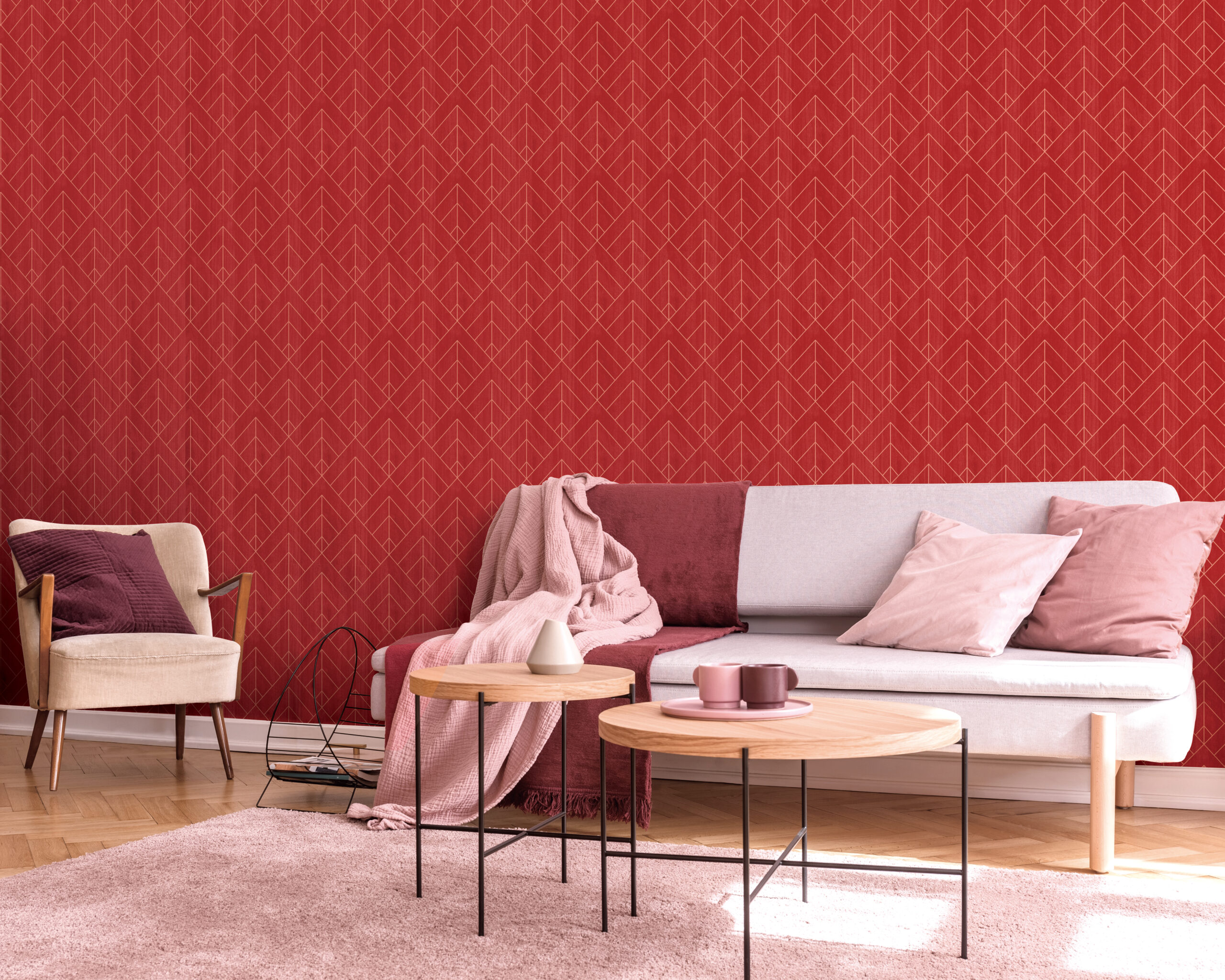
Light-coloured and reflective interior finishes bounce solar energy back towards the window rather than absorbing it. Wallcovering in light tones on walls that face large windows reduces heat absorption. Solar reflective wallcovering takes this further by incorporating specialised pigments that reflect infrared radiation regardless of visible colour.
Flooring also plays a role. Dark floors near windows absorb solar energy and become warm to the touch, radiating heat upward into the occupied zone. Lighter-toned luxury vinyl flooring in these areas reflects more energy and stays cooler underfoot.
Daylighting and Interior Layout
Natural daylight reduces reliance on artificial lighting, which in turn reduces the internal heat generated by light fittings. In commercial buildings, artificial lighting can contribute 15 to 25 per cent of the total cooling load. Maximising daylight penetration through interior layout reduces both lighting energy and the associated cooling energy.
Open Plan and Low Partitions
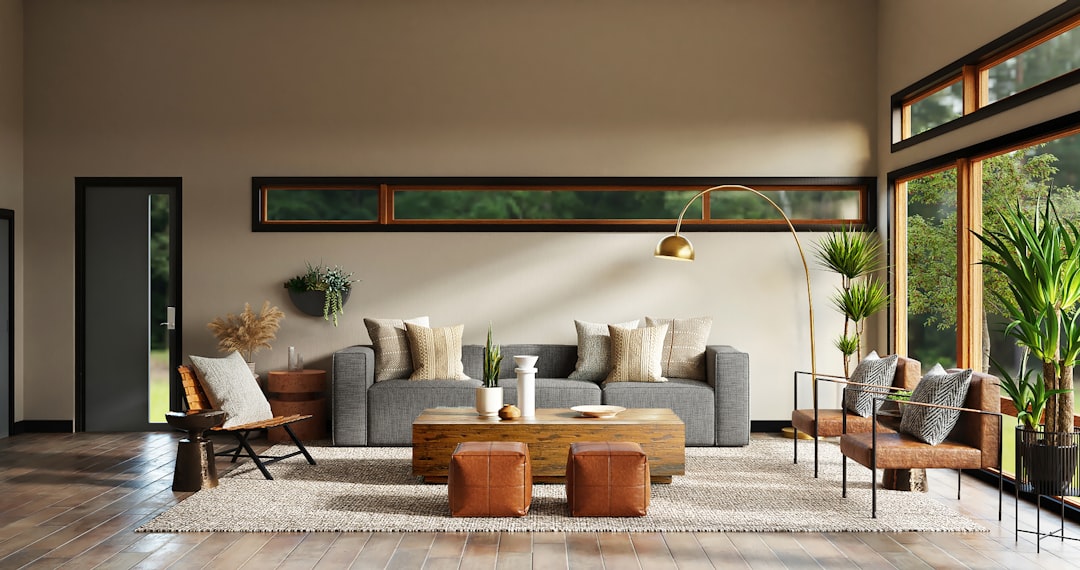
Open-plan layouts allow daylight to travel deeper into the floor plate than cellular offices with floor-to-ceiling partitions. Where partitions are necessary, specifying half-height or glass-topped dividers maintains daylight penetration while providing privacy and acoustic separation.
Reflective Ceiling and Wall Surfaces
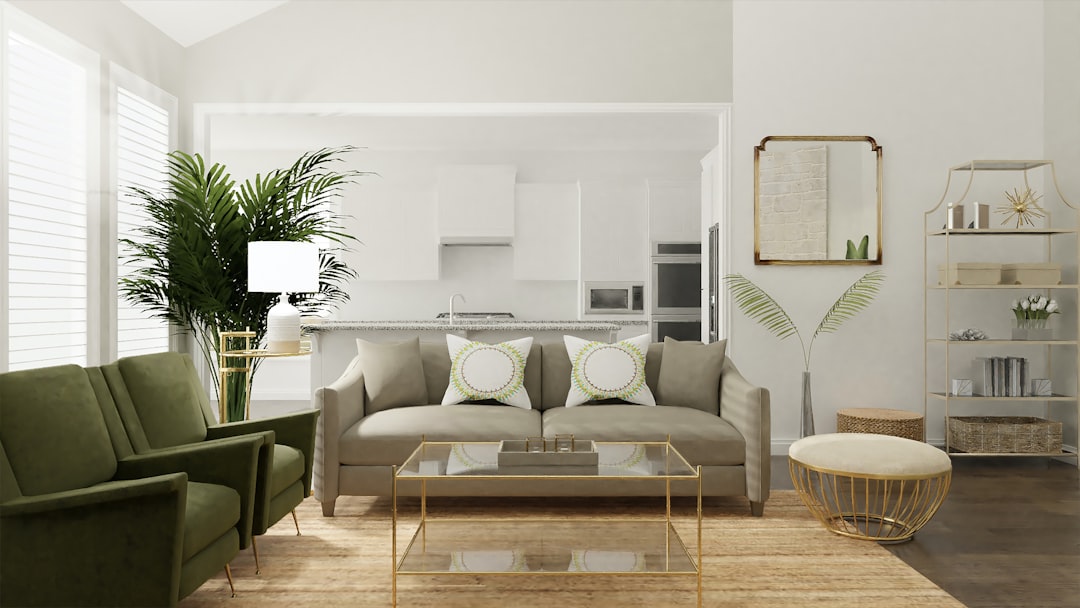
Light-coloured ceilings reflect daylight deeper into the interior, reducing the need for artificial lighting in zones away from windows. Similarly, wallcovering in pale, reflective tones on walls perpendicular to windows bounces daylight sideways into the space.
Window Treatment Selection
Curtain and blind selection directly affects daylight penetration and solar heat gain. Sheer or light-filtering fabrics maintain daylight while diffusing direct sun that causes glare and localised overheating. Dimout fabrics provide greater solar control when needed — during afternoon sun exposure on west-facing facades, for example — without requiring full blackout that necessitates artificial lighting.
Automated blind systems that respond to sun position and light levels optimise the balance between daylight and solar control throughout the day, but even manually operated curtains in well-chosen fabrics make a meaningful difference.
Natural Ventilation Support
While most Singapore commercial buildings rely on mechanical air conditioning, an increasing number of residential and mixed-use projects incorporate natural ventilation strategies. Interior design can support or hinder these strategies.
Airflow Pathways
Interior layouts that create clear pathways between openable windows on opposite or adjacent facades enable cross-ventilation. Partition walls that block these pathways negate the building’s natural ventilation potential. Where partitions are essential, incorporating ventilation openings — louvred panels, gap-top designs, or perforated screens — maintains airflow.
Material Breathability
In naturally ventilated spaces, wall finishes should allow some degree of moisture vapour transmission to prevent condensation and mould growth. Paper-based wallcoverings and breathable paint systems are preferable to impermeable vinyl wallcovering in these specific applications. The choice should be guided by the ventilation strategy of the space.
Ceiling Fans and Interior Height
Ceiling fans are among the most energy-efficient cooling devices available, consuming a fraction of the energy of air conditioning. Interior designs that accommodate ceiling fans — maintaining adequate clearance and unobstructed blade paths — support their use. Higher ceiling heights improve both natural ventilation and ceiling fan effectiveness, as the larger air volume allows for better thermal stratification.
Insulative Properties of Interior Finishes
Every layer of material on a wall, floor, or ceiling contributes to the overall thermal resistance of the building envelope. While the primary insulation is typically within the wall structure, interior finishes add supplementary resistance.
Carpet with underlay provides measurable thermal insulation on floors, reducing heat transfer between storeys. Wallcovering — particularly thicker textured products with a fabric or non-woven substrate — adds a small but cumulative insulative layer to walls. These contributions are modest individually but collectively meaningful across an entire building.
In conditioned spaces, this additional insulation helps maintain the desired temperature with less energy input. In unconditioned spaces — covered walkways, naturally ventilated lobbies — it reduces the rate of heat gain through the envelope.
Measuring the Impact
Quantifying the energy benefits of passive interior design strategies requires building energy modelling. Tools such as BCA’s Green Mark assessment framework evaluate the combined impact of material choices, layout decisions, and shading strategies on overall building energy performance.
For individual projects, a simple thermal comfort survey before and after implementing passive design changes can demonstrate the practical impact. Monitoring air conditioning energy consumption provides hard data on cost savings.
Even without formal measurement, the principles are well-established. Light-coloured, reflective finishes on sun-exposed surfaces reduce cooling loads. Daylight-friendly layouts reduce lighting energy. Low thermal mass materials prevent heat accumulation. These are proven strategies supported by decades of building science research.
Final Thoughts
Passive design interior strategies empower designers to improve building energy performance through material and layout decisions. In Singapore’s tropical climate, these strategies reduce cooling costs, improve occupant comfort, and contribute to the nation’s sustainability targets — all through the thoughtful specification of everyday interior materials.
Browse our e-catalogue for the latest designs and discover materials that support passive design strategies.