Fabric & Upholstery
Curtains for Living Rooms: Fabric, Style and Tips
Choosing the right curtain for living room spaces is one of the most impactful design decisions in any Singapore home. The living room is where family life happens, guests are entertained and first impressions are formed. Curtains set the tone — they control light, frame views, add texture and tie the entire room together.
This guide covers fabric selection, curtain styles, hanging methods and practical advice tailored to Singapore living room conditions.
Why Curtains Matter in the Living Room
The living room typically has the largest windows in the home. In HDB flats, the living room window often spans nearly the full width of the unit. In condos and landed homes, floor-to-ceiling glazing is common. These generous windows make curtains one of the most prominent visual elements in the room.
Beyond aesthetics, curtains manage Singapore’s intense tropical sunlight. West-facing living rooms can reach uncomfortably high temperatures in the afternoon without proper window treatment. The right curtain fabric reduces heat gain, protects furniture from UV fading and controls glare on screens.
Curtains also improve acoustic comfort. Soft, heavy fabrics absorb sound reflections in rooms with hard flooring and smooth walls — a common configuration in Singapore homes with marble, tile or vinyl floors.
Choosing the Right Fabric
Fabric is the single most important decision when selecting living room curtains. It determines how the curtain drapes, how much light it blocks and how it feels in the room.
Linen and Linen Blends
Linen curtains offer a relaxed, organic drape with a natural slub texture. They filter light beautifully, creating a soft, warm glow. Linen blends (linen-polyester) offer the look of linen with better wrinkle resistance and dimensional stability in humid conditions. These suit Scandinavian, contemporary and coastal interiors.
Cotton and Cotton Blends
Cotton curtains provide a clean, crisp appearance with moderate drape. They are versatile, affordable and available in a wide range of prints and colours. Cotton blends with polyester add durability and moisture resistance, which is useful in Singapore’s climate.
Polyester
Polyester curtain fabrics are the most practical for Singapore homes. They resist fading, wrinkling and humidity, hold their shape well and are easy to maintain. Modern polyester fabrics convincingly replicate the appearance of natural fibres like linen and silk at a lower price point.
Velvet
Velvet curtains add luxury, depth and excellent light-blocking properties. They suit formal living rooms and provide superior acoustic absorption. In Singapore, choose lighter-weight velvet (cotton or polyester-based) rather than heavy traditional velvet, which can feel oppressive in a tropical setting.
Silk and Silk-Look
Silk curtains offer an unmistakable sheen and elegant drape. However, real silk is delicate and susceptible to UV damage, making silk-look polyester a more practical alternative for sun-exposed living room windows. Silk-look fabrics provide the lustre without the maintenance burden.
Curtain Styles for Living Rooms
Layered Day and Night Curtains
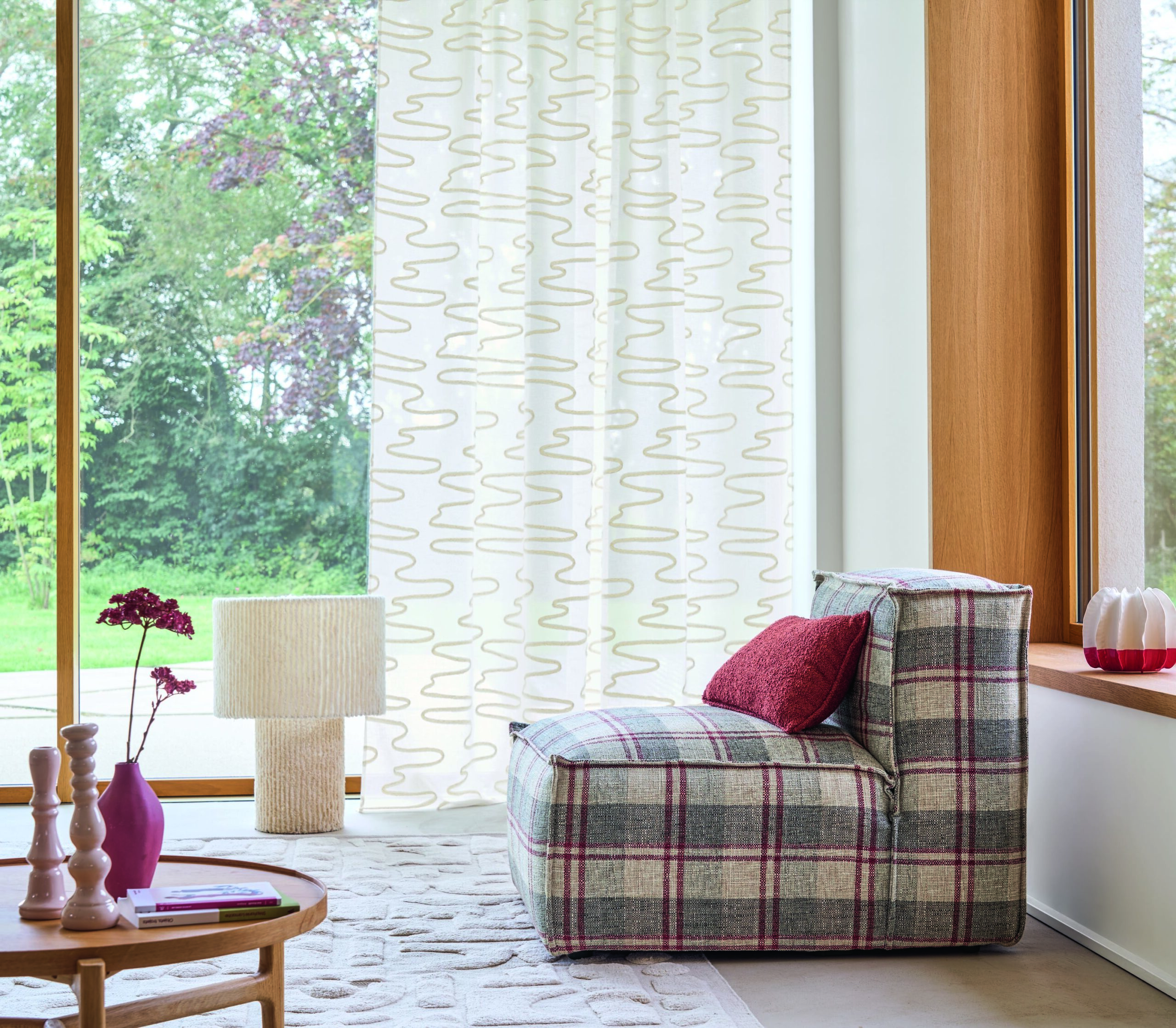
The most popular configuration in Singapore living rooms combines a sheer day curtain with a heavier night curtain on a double-track system. The day curtain provides daytime light filtering and basic privacy, while the night curtain is drawn in the evening for darkness and full privacy. This layered approach offers maximum versatility.
Sheer Curtains Only
For high-floor condos with no overlooking neighbours, sheer curtains alone can be sufficient. Floor-to-ceiling white sheers create an airy, resort-like atmosphere and maximise natural light. This approach works best for units that do not face west.
Blackout Curtains
If the living room doubles as a media room or if west-facing sun is a significant issue, blackout-lined curtains provide complete light control. Modern blackout linings are sewn into the back of the curtain, maintaining the front fabric’s appearance while blocking light entirely.
Hanging Methods and Header Styles
How curtains are hung affects both their appearance and functionality.
| Header Style | Look | Best For |
|---|---|---|
| Pinch pleat | Classic, tailored, formal | Traditional and transitional living rooms |
| S-fold (wave fold) | Modern, clean, uniform | Contemporary and minimalist interiors |
| Eyelet (grommet) | Casual, relaxed, modern | Casual living rooms, open-plan spaces |
| Pencil pleat | Neat, versatile, traditional | All living room styles |
| Rod pocket | Soft, gathered, informal | Cottage and casual interiors |
Ceiling-mounted tracks are the most common installation method in Singapore homes. They create a clean ceiling line and allow curtains to hang at maximum height, making the room feel taller. For landed homes with higher ceilings, decorative rods with finials can add a design feature to the window.
Sizing and Fullness
Getting the proportions right is essential for curtains that look professional rather than skimpy.
- Length: Floor-length curtains are standard for living rooms. The hem should just touch the floor or hover 10-15mm above it. Pooling fabric on the floor (adding 50-100mm of extra length) creates a luxurious look but collects dust more quickly.
- Width (fullness): Living room curtains should be 2 to 2.5 times the width of the window track. This “fullness ratio” ensures the fabric drapes in rich, even folds when drawn. Skimping on fullness results in flat, lifeless curtains.
- Height: Mount the track or rod as close to the ceiling as possible, not at the window frame. This maximises the perceived height of the room — a valuable trick in HDB flats with standard 2.6-metre ceilings.
Practical Considerations for Singapore
- UV protection: Choose fabrics with UV-resistant finishes for west-facing windows. Unprotected curtains can fade within two to three years under direct tropical sun.
- Humidity: Synthetic and blended fabrics handle Singapore’s humidity better than pure natural fibres. Linen and cotton can develop mildew if the room is not adequately ventilated or air-conditioned.
- Maintenance: Polyester and polyester-blend curtains can be machine-washed. Velvet, silk and embroidered fabrics require dry cleaning. Factor maintenance costs and convenience into your choice.
- Air-conditioning placement: Avoid curtain fabrics that billow excessively near air-conditioning vents. Heavier fabrics hang more stably, while lightweight sheers may flutter constantly if positioned in the airflow path.
Browse the full drapery fabric collection for living room curtain options, and explore complementary wallpaper designs to complete your living room transformation.
Final Thoughts
Living room curtains are among the most visible design elements in your home, and getting them right creates a polished, cohesive interior. Focus on fabric quality, appropriate fullness and correct hanging height. A well-made curtain in the right fabric transforms not just the window but the entire room.
Request free samples from our Singapore showroom and feel the difference quality fabric makes.