Fabric & Upholstery
Electric Blinds in Singapore: Types, Cost & Install
Understanding Electric Blinds
Electric blinds are window coverings powered by a small motor that raises, lowers, or tilts the blind material at the press of a button. The motor replaces manual chains, cords, or wands, offering smoother operation and a cleaner aesthetic with no dangling components.
In Singapore, electric blinds have become increasingly practical as homes grow smarter and window sizes grow larger. A floor-to-ceiling window spanning 3 metres is cumbersome to dress with manual blinds — the chain hangs awkwardly, the mechanism requires force, and even operation wears out components faster. An electric motor handles the same task effortlessly, consistently, and quietly.
Beyond convenience, electric blinds eliminate exposed cords, which is a genuine safety consideration in homes with young children. Singapore’s building standards are moving towards cordless window treatments, and electric blinds meet this requirement by design.
Types of Electric Blinds for Singapore Homes
The term “electric blinds” covers several distinct products, each suited to different spaces and functions:
Electric roller blinds are the most widely installed type in Singapore. The motor sits within the roller tube, keeping the profile slim. They work with blackout, translucent, or sunscreen fabrics and suit bedrooms, living rooms, and offices equally well.
Electric venetian blinds feature horizontal aluminium or timber slats that tilt electronically. The motor controls both the tilt angle and the raise/lower function. These provide the most granular light control — tilt the slats to redirect sunlight upward for ambient illumination without glare.
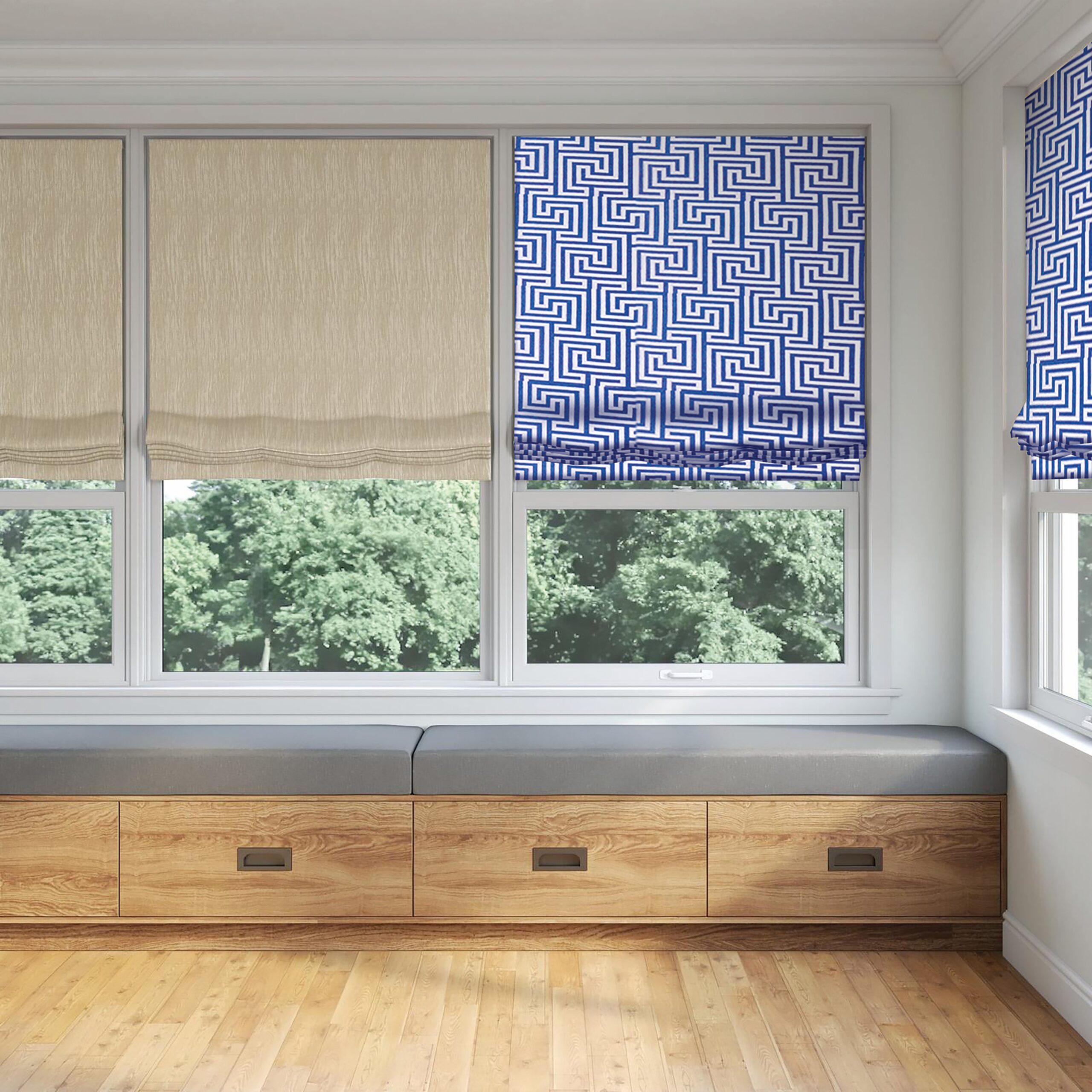
Electric roman blinds fold into neat horizontal pleats when raised. The motorised version ensures even, consistent folds every time, which can be difficult to achieve with manual cords, especially on wider blinds. They pair well with quality drapery fabrics for a softer, more decorative look.
Electric vertical blinds use louvre-style slats that rotate and traverse along a top track. Common in office settings and for wide sliding door openings in condominiums, they handle large spans that would be impractical for horizontal blinds.
| Blind Type | Best Room | Light Control | Max Recommended Width |
|---|---|---|---|
| Electric roller | Bedrooms, living rooms | Good (fabric-dependent) | 3.5 m |
| Electric venetian | Studies, kitchens, offices | Excellent (adjustable slats) | 2.4 m |
| Electric roman | Bedrooms, dining rooms | Good | 2.5 m |
| Electric vertical | Offices, wide doors | Good | 5 m+ |
Cost Breakdown for Singapore
Electric blinds cost more than their manual equivalents, but the price gap has narrowed considerably. Here is a realistic cost breakdown for Singapore:
| Item | Manual Version (SGD) | Electric Version (SGD) |
|---|---|---|
| Roller blind (per window, 150 cm wide) | $80–$200 | $250–$600 |
| Venetian blind (per window, 150 cm wide) | $100–$250 | $350–$700 |
| Roman blind (per window, 150 cm wide) | $150–$350 | $400–$800 |
| Installation (per blind) | $30–$60 | $50–$120 |
| Electrical point (if wired) | N/A | $80–$150 per point |
For a 4-room HDB flat with five windows, a full set of electric roller blinds typically costs $1,500 to $3,500 including installation. Battery-powered motors sit at the lower end; hardwired systems with smart home integration sit at the higher end.
The fabric you choose also affects cost. Standard polyester sunscreen fabric is the most affordable option. Specialist blackout fabrics, textured weaves, or designer prints add to the per-window price.
Wired, Battery, or Solar: Choosing Your Power Source
The power source is one of the first decisions you need to make, and it influences installation complexity, ongoing maintenance, and reliability.
Hardwired (mains-powered): The motor connects to a concealed power outlet, typically positioned within the pelmet or window recess. This provides continuous power with zero maintenance. The drawback is that it requires electrical work — either during renovation or by opening up walls and ceilings later, which adds cost and disruption.
Battery-powered: Rechargeable lithium batteries (usually built into the motor unit) power the blind for three to twelve months per charge, depending on daily usage. Charging takes a few hours via USB. Installation is simple and requires no electrician. The trade-off is remembering to recharge — and managing multiple batteries if you have blinds throughout the house.
Solar-powered: A small solar panel adhered to the window glass charges an internal battery. In Singapore’s climate, this provides reliable power for most window orientations. The panel is discreet but visible, which may not suit all aesthetic preferences.
For new renovations, especially BTO flats still in the wiring phase, hardwired is the clear recommendation. For existing homes where disruption must be minimised, battery-powered electric blinds offer the path of least resistance.
Installation Tips for HDB and Condo Units
Electric blind installation in Singapore properties involves a few specific considerations that manual blinds do not:
- Recess depth: Electric roller blinds need 5 to 8 cm of recess depth to accommodate the motor. Measure your window recess before ordering. If the recess is too shallow, face-mount the blind outside the recess.
- Bracket strength: Motorised blinds are heavier than manual versions. Use appropriate wall plugs for concrete (common in HDB) or toggle bolts for plasterboard (common in condo false walls).
- Wi-Fi range: If using smart-enabled electric blinds, verify that your Wi-Fi signal reaches the window. Concrete walls in HDB blocks can attenuate signals significantly.
- Coordination with curtains: Some homeowners pair electric blinds with sheer or blackout curtains for layered light control. Ensure there is sufficient clearance between the blind and the curtain track — at least 8 cm is recommended.
Professional installation is advisable for hardwired systems. Battery-powered electric blinds can often be installed as a DIY project with basic tools — a drill, a spirit level, and a pencil are usually all you need.
Fabric and Material Selection
The material you pair with your electric blind motor affects daily performance. Since the motor handles operation smoothly regardless of fabric weight, you have greater freedom to choose heavier or more textured materials than you might consider with manual blinds.
For electric roller blinds, sunscreen fabrics remain the most popular choice in Singapore. A 3% to 5% openness factor blocks the majority of UV radiation and solar heat while preserving outward visibility — essential for living rooms with a view. Blackout fabrics are the standard recommendation for bedrooms, and the electric motor ensures the fabric rolls and unrolls evenly without the creasing that manual operation sometimes causes on wider blinds.
Electric venetian blinds benefit from lightweight slat materials. Aluminium slats operate more quietly and place less strain on the motor than timber slats. If you prefer the look of wood, faux-wood slats made from PVC composite offer the visual warmth of timber with less weight and better moisture resistance — a practical combination for Singapore’s climate.
For electric roman blinds, medium-weight fabrics in the range of 200 to 400 grams per square metre produce the best folds. Fabrics that are too light may not fold crisply; fabrics that are too heavy can strain the lifting mechanism over time. A lining — whether for blackout, thermal insulation, or simply to improve the drape — adds weight but also improves the fold structure.
Making the Right Choice for Your Space
Electric blinds make the most impact in spaces with large windows, multiple blinds that you want to control together, or where cord-free operation is a safety priority. For a single small window in a utility room, the added cost of motorisation may not be justified.
Think about your daily routine. If you find yourself adjusting blinds multiple times a day to manage glare and heat — common in west-facing Singapore apartments — the convenience of scheduled electric operation becomes genuinely valuable rather than merely nice to have.
Consider the long-term value as well. Electric blinds typically last longer than their manual counterparts because the motor operates the mechanism with consistent, gentle force. Manual blinds suffer from uneven pulling, jerking, and over-tensioning that accelerates wear on the fabric and the roller. An electric motor eliminates these stresses, extending the overall lifespan of the blind by several years.
Browse our e-catalogue for the latest fabric options, and request a free quote to get accurate pricing for your window dimensions and preferred blind type.