Fabric & Upholstery
Window Blinds Buying Guide: Types & Styles for Rooms
Navigating the World of Window Blinds
Choosing window blinds involves more decisions than most homeowners anticipate. Beyond the basic question of style — roller, venetian, roman, vertical — you need to consider the material, the mounting method, the light control level, and how the blind integrates with your room’s function and design.
This guide walks through each blind type, explains where it works best, and helps you match the right product to the right room. Whether you are fitting out a new BTO flat, refreshing a condominium, or upgrading a landed home, the fundamentals apply.
Blind Types Compared
Each blind type has distinct strengths. Understanding these helps you avoid the common mistake of choosing based on appearance alone, only to discover the blind does not perform well in the intended space.
| Blind Type | Light Control | Privacy | Insulation | Style | Maintenance |
|---|---|---|---|---|---|
| Roller | Good | Good–Excellent | Moderate | Modern, minimal | Low |
| Venetian | Excellent | Good | Low | Classic, versatile | Moderate (dust on slats) |
| Roman | Good | Good | Good | Soft, decorative | Moderate |
| Vertical | Good | Good | Low | Contemporary | Low |
| Honeycomb/Cellular | Good | Good–Excellent | Excellent | Clean, modern | Low |
| Panel | Moderate | Good | Low | Modern, sleek | Low |
Roller Blinds: The Versatile Default
Roller blinds are the most popular window blind in Singapore for good reason. They are compact, affordable, available in hundreds of fabrics, and suit virtually any room. The blind wraps around a tube at the top of the window and unrolls to cover the glass — simple and effective.
Where roller blinds excel is in fabric variety. You can choose from:
- Sunscreen/screen fabrics: Woven to block 1% to 10% of light while maintaining outward visibility. Ideal for living rooms where you want glare reduction without total darkness.
- Translucent fabrics: Diffuse light softly, providing privacy without blocking daylight. Suitable for kitchens, bathrooms, and dining areas.
- Blackout fabrics: Block 100% of light. Essential for bedrooms, nurseries, and media rooms.
- Dim-out fabrics: Block 95–99% of light. A middle ground for bedrooms where you want darkness but not total blackout.
For Singapore’s climate, sunscreen roller blinds with a 3% to 5% openness factor strike a practical balance — they reduce solar heat gain, cut glare on screens, and preserve the view.
Venetian Blinds: Precision Light Control
Venetian blinds consist of horizontal slats that tilt to control light angle and intensity. No other blind type offers the same degree of adjustability. You can tilt slats fully closed for complete privacy, angle them upward to bounce light off the ceiling, or open them flat for maximum light and view.
Slat materials determine both the aesthetic and the performance:
- Aluminium: Lightweight, moisture-resistant, and affordable. Available in a wide colour range. Best for kitchens, bathrooms, and utility areas.
- Timber: Warm, natural appearance. Heavier than aluminium and not suitable for wet areas. Best for living rooms, studies, and bedrooms in well-ventilated spaces.
- Faux wood (PVC): Replicates the look of timber at lower cost and with superior moisture resistance. A practical compromise for Singapore’s humidity.
The main drawback of venetian blinds is dust accumulation. Each slat collects dust on its upper surface, and a blind with 30 or more slats requires regular wiping. In Singapore’s dusty urban environment, this is a genuine maintenance commitment.
Roman Blinds: Softness Meets Structure
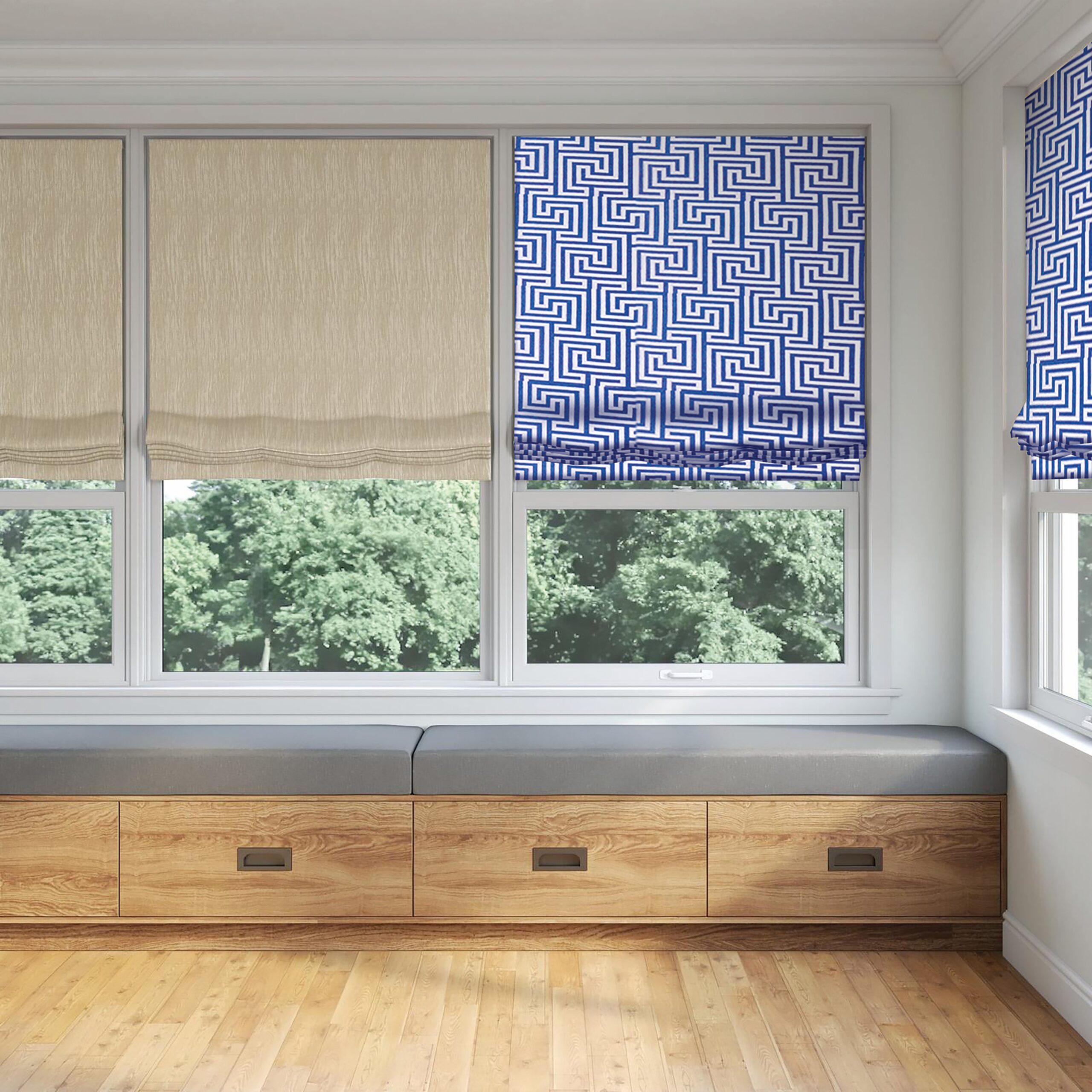
Roman blinds combine the soft, fabric-forward look of curtains with the structured operation of a blind. When lowered, the fabric hangs flat against the window. When raised, it folds into neat horizontal pleats that stack at the top.
Roman blinds work best in spaces where you want warmth and texture — bedrooms, dining rooms, and living areas. They pair particularly well with patterned or textured fabrics that show their design when the blind is lowered.
Key considerations for roman blinds in Singapore:
- They do not offer adjustable light angles like venetian blinds — the fabric is either lowered (closed) or raised (open).
- Lined roman blinds provide better insulation and light blocking than unlined versions.
- They are not recommended for wet areas, as moisture can cause the fabric to sag and the lining to delaminate over time.
- Wider roman blinds (over 200 cm) can sag in the middle. For wide windows, two narrower blinds side by side create a better result.
Matching Blinds to Rooms
The right blind for each room depends on the room’s function, window size, and exposure to sunlight and moisture.
Bedrooms: Blackout roller blinds or lined roman blinds. Darkness is the priority. For bedrooms facing east or west, combine a blackout blind with sheer curtains for daytime light filtering.
Living rooms: Sunscreen roller blinds, timber venetians, or roman blinds. Balance light, view, and aesthetics. West-facing living rooms in HDB flats benefit greatly from sunscreen fabrics that cut solar heat without darkening the room.
Kitchens: Aluminium venetian blinds or moisture-resistant roller blinds. Easy cleaning is essential. Avoid fabric blinds near cooking areas where grease can settle on the material.
Bathrooms: Aluminium venetians or PVC-coated roller blinds. Moisture resistance is non-negotiable. Faux wood venetians also work well here.
Home offices: Sunscreen roller blinds or venetians. Glare control on computer screens is the primary concern. A 3% openness sunscreen fabric reduces glare while keeping the room bright enough to avoid eye strain.
Children’s rooms: Cordless blinds of any type. Safety is paramount. Electric or spring-operated cordless blinds eliminate the risk of cord entanglement.
Measuring, Fitting, and Final Tips
Accurate measurement is the single most important step in getting blinds right. Decide first whether you want an inside mount (within the window recess) or an outside mount (covering the recess and overlapping the wall).
For inside mounts, measure the width at the top, middle, and bottom of the recess, and use the narrowest measurement. Measure the drop on the left, centre, and right, and use the longest. Recesses in older HDB flats are rarely perfectly square, so these multiple measurements are not optional — they are essential.
For outside mounts, add at least 5 cm to each side of the window opening and 10 cm above. This overlap prevents light gaps and provides better privacy and insulation.
A few additional tips for getting the most from your window blinds:
- Test fabric samples in situ. Blind fabrics look different under showroom lighting than they do in your home. Always view samples next to your walls, flooring, and furniture before ordering.
- Consider the view from outside. Many condominiums and HDB flats have windows visible from neighbouring buildings. The reverse side of your blind — what your neighbours see — should look presentable. White or neutral backing is standard and avoids a patchwork appearance from the exterior.
- Factor in child safety. If you have young children, prioritise cordless operating systems. Spring-loaded roller blinds, wand-operated venetians, and motorised options all eliminate the risk of cord loops. Singapore’s consumer safety guidelines increasingly favour cordless designs for residential settings.
- Plan for consistency. In open-plan living and dining areas, use the same blind type and fabric across all windows in the shared space. Mixed blinds — a roller in one window and a venetian in the next — create visual clutter. Consistency ties the space together and creates a calmer, more cohesive interior.
Visit the Goodrich Gallery to see our full collection and get expert advice on the right blinds for your home. You can also request free samples to compare fabrics and colours against your existing interior before committing.