Wallpaper & Wallcovering
Chinoiserie Wallpaper: Eastern Elegance for Interiors
Chinoiserie wallpaper draws on centuries of artistic exchange between East and West, combining stylised depictions of nature, architecture, and daily life into richly decorative wall designs. Rooted in the European fascination with Chinese art and culture that began in the 17th century, chinoiserie has evolved into a timeless design language that resonates strongly in Singapore’s multicultural interior landscape.
This guide explores the defining characteristics, application strategies, and styling approaches that make chinoiserie wallpaper one of the most enduringly popular choices for residential and hospitality interiors.
What Defines Chinoiserie Wallpaper
Chinoiserie is not a direct reproduction of Chinese art. Rather, it is an interpretive style that borrows motifs, colour palettes, and compositional techniques from Chinese, Japanese, and broader East Asian visual traditions, filtered through a Western decorative lens.
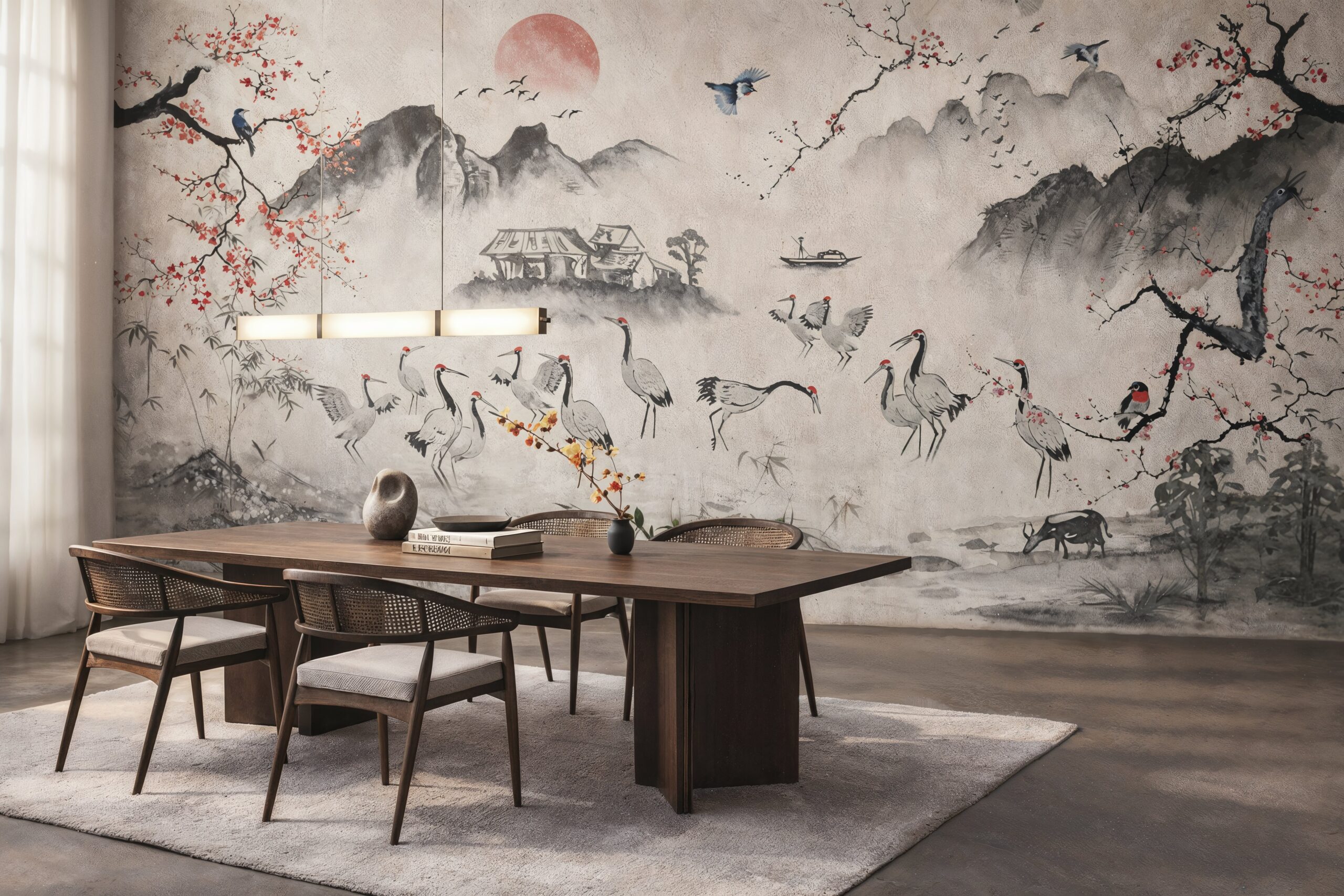
Common motifs in chinoiserie wallpaper include flowering branches (particularly cherry blossom, peony, and chrysanthemum), birds in flight or perched among foliage, pagodas and garden pavilions, mountainous landscapes, and figures engaged in scholarly or domestic activities.
The compositions tend to be open and airy, with motifs arranged asymmetrically against a clean background. This sense of space and balance distinguishes chinoiserie from more densely patterned decorative styles and contributes to its elegant, refined character.
Colour Palettes and Their Effects
Chinoiserie wallpaper is available in a broad spectrum of colour treatments, each creating a distinctly different mood.
Classic Blue and White
Inspired by Chinese blue-and-white porcelain, this palette is perhaps the most iconic chinoiserie colourway. Delicate blue motifs on a white or cream ground create a fresh, timeless aesthetic that works in both traditional and contemporary interiors.
Rich Jewel Tones
Deep emerald, sapphire, and ruby backgrounds with metallic or contrasting motifs create dramatic, opulent walls suited to formal dining rooms, hotel lobbies, and statement feature walls. The depth of colour adds gravitas and a sense of luxury.
Soft Pastels
Pale pink, mint green, and lavender backgrounds with tonal or white motifs produce a gentle, romantic effect. This palette is popular for bedrooms, dressing rooms, and feminine-leaning commercial spaces such as boutiques and tea rooms.
Metallic and Gilded
Gold, silver, and copper metallic grounds or accents add a luminous quality that catches and reflects light. Metallic chinoiserie wallpapers are particularly effective in spaces with controlled lighting, such as restaurants and bars, where the interplay of light and surface creates a dynamic, atmospheric effect.
Contemporary Neutrals
Grey, charcoal, and black-and-white chinoiserie treatments bring the style into modern interior schemes. These restrained palettes allow the beauty of the motifs to shine without the colour intensity that some may find too traditional.
Where to Use Chinoiserie Wallpaper
Chinoiserie’s versatility allows it to enhance a wide range of spaces when applied thoughtfully.
- Dining rooms: A full-room chinoiserie installation creates an immersive, formal atmosphere for entertaining. The detailed motifs reward close inspection, making them ideal for a room where guests linger.
- Living room feature walls: A single chinoiserie wall balanced by solid-coloured adjacent walls makes a sophisticated focal point without overwhelming a compact Singapore living room.
- Master bedrooms: Soft-palette chinoiserie behind the headboard creates an elegant, restful backdrop. The organic motifs of flowers and birds bring a natural serenity to sleeping spaces.
- Hallways and corridors: Narrow spaces benefit from chinoiserie’s open, airy compositions, which can make a corridor feel wider and more interesting. The detailed patterns reward the passing glance.
- Hotel suites and restaurants: Singapore’s hospitality sector frequently draws on chinoiserie to create interiors that celebrate the city’s East-meets-West cultural identity.
Styling Chinoiserie in Modern Interiors
One of the common concerns about chinoiserie is that it may look dated or overly traditional. In practice, the style adapts remarkably well to contemporary settings when paired with the right elements.
Pair chinoiserie wallpaper with clean-lined, modern furniture to create a contrast that feels fresh rather than period. A sleek, low-profile sofa against a richly detailed chinoiserie wall prevents the room from tipping into a historical pastiche.
Mix materials thoughtfully. Natural timber, marble, brass hardware, and textured upholstery fabrics complement chinoiserie beautifully. Avoid matching the wallpaper’s decorative intensity with equally ornate furnishings; let the wall be the statement piece.
In compact Singapore homes, limit chinoiserie to a single wall or alcove. The detailed patterns can feel overwhelming in a small room if applied to all four walls. A focused application creates impact without claustrophobia.
Consider the scale of the motifs in relation to the room size. Large-scale designs with bold branches and oversized birds suit spacious rooms. Smaller, more delicate patterns work better in compact spaces and corridors.
Hand-Painted vs Printed Chinoiserie
Chinoiserie wallpaper is available in two primary production methods, each with different characteristics and price points.
Hand-painted chinoiserie panels are the pinnacle of the craft. Each panel is painted by skilled artisans on silk or paper, creating a unique work of art. The colours are more nuanced, the brushwork more organic, and the overall effect more alive than any printed reproduction. Hand-painted panels are a significant investment, typically specified for luxury residences and high-end hospitality projects.
Digitally printed chinoiserie offers the aesthetic at a fraction of the cost. Modern printing technology reproduces intricate details with impressive accuracy on a range of substrates including non-woven, vinyl, and fabric-backed wallcoverings. For the majority of residential and commercial projects in Singapore, high-quality printed chinoiserie delivers excellent results.
Explore the wallpaper and wallcovering collection to compare printed options that bring chinoiserie elegance to your project.
Installation Tips for Chinoiserie Wallpaper
Chinoiserie designs often feature continuous scenes that flow across multiple panels. Correct panel sequencing and alignment during installation is essential to maintain the integrity of the design.
Mark each panel’s position before installation begins. Follow the manufacturer’s panel numbering precisely. Any deviation will disrupt branches, bird positions, and landscape elements that are designed to flow from one panel to the next.
Wall preparation must be meticulous. Chinoiserie’s open compositions, with large areas of background colour, expose any underlying wall imperfections. Skim-coat and sand the wall to a smooth finish before priming.
Work with an experienced wallpaper installer who has handled scenic or mural-style designs. The skills required go beyond standard wallpaper hanging and are worth the investment for a design this detailed.
Final Thoughts
Chinoiserie wallpaper offers a rare combination of historical depth, artistic beauty, and design adaptability. In Singapore, where Eastern and Western influences blend naturally, it feels both culturally resonant and aesthetically compelling. Whether applied as a full-room installation or a single feature wall, chinoiserie adds a layer of sophistication that few other wallpaper styles can match.
Book an appointment with our design consultants to explore chinoiserie wallpaper options suited to your interior vision.