Fabric & Upholstery
Sheer Curtain Fabric: Light and Privacy Balance
Sheer curtain fabric strikes a delicate balance between welcoming natural light and maintaining a degree of privacy — two priorities that often seem at odds in Singapore’s high-density residential landscape. Whether you live in an HDB flat overlooking a neighbouring block or a condo with floor-to-ceiling windows, sheers offer an elegant solution that softens harsh sunlight while keeping your home bright and airy.
Choosing the right sheer fabric involves understanding the interplay of material weight, weave density, colour, and functional performance. This guide walks through the key considerations for selecting sheers that work beautifully in Singapore’s tropical climate.
What Makes a Fabric “Sheer”
Sheer fabrics are characterised by their lightweight, translucent construction. They are woven or knitted with fine yarns at a low density, allowing light to pass through while partially obscuring the view from outside. The degree of transparency varies significantly across different sheer fabrics, from barely-there voiles to denser lace-effect weaves that provide more visual screening.
Common sheer fabric types include:
- Voile: A soft, plain-weave fabric with a smooth hand feel. Available in cotton, polyester, and blended fibres. The most versatile and widely used sheer fabric for residential curtains.
- Chiffon: Lightweight with a slightly textured surface. Drapes beautifully but is more delicate than voile and less suited to everyday residential use.
- Organza: Crisp and structured with a slight sheen. Holds its shape well, making it suitable for tailored or pleated styles.
- Linen sheer: A loosely woven linen with a natural, organic texture. Offers more visual weight than synthetic sheers and works well in contemporary and minimalist interiors.
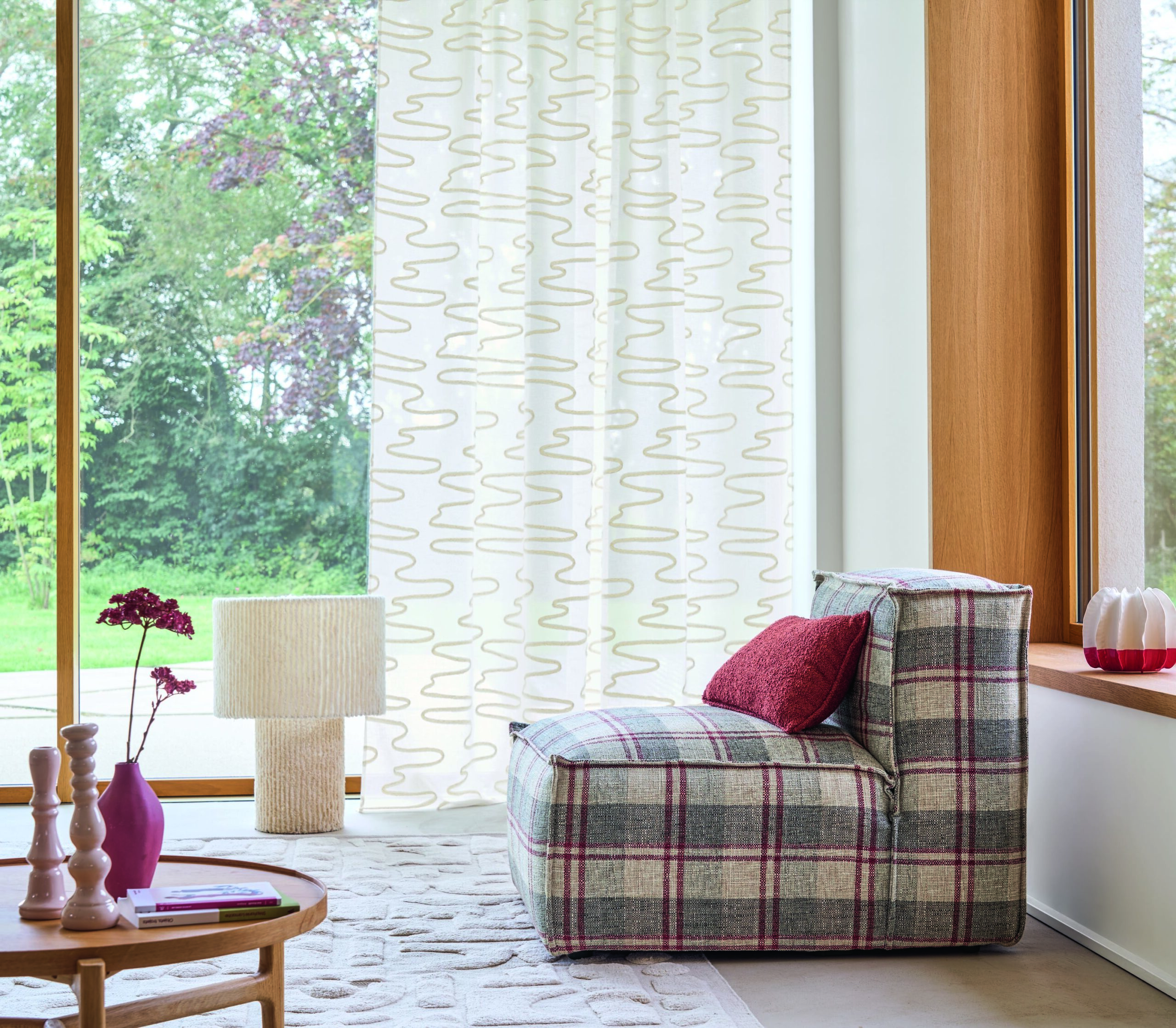
- Embroidered sheer: Any base sheer fabric enhanced with embroidered patterns. Adds decorative interest while maintaining translucency between the embroidered motifs.
Balancing Light and Privacy
The fundamental challenge with sheer curtains is achieving the right balance between light transmission and privacy. The answer depends on your specific living situation and the orientation of your windows.
Daytime Privacy
During the day, sheer curtains provide effective privacy because the light level outside is higher than inside. The exterior brightness makes it difficult for people outside to see through the sheer fabric, while you can still see out. This effect is strongest with white or pale-coloured sheers and diminishes with darker tones.
Night-time Considerations
At night, the dynamic reverses. Interior lights make the inside of your home more visible from outside. Sheers alone will not provide adequate privacy after dark. This is why most Singapore homes pair sheer curtains with a secondary layer — either blackout curtains, roller blinds, or day-night blinds — that can be drawn for complete privacy when needed.
Density Matters
Not all sheers are equally transparent. Denser weaves, heavier yarns, and textured patterns all increase the visual screening effect. If privacy is a greater concern — for example, in a ground-floor HDB unit or a condo facing a neighbouring block at close range — choose a sheer with a tighter weave or a subtle pattern that disrupts the line of sight.
Choosing Sheer Fabric for Singapore’s Climate
Singapore’s tropical climate — characterised by strong sunlight, high humidity, and year-round warmth — places specific demands on curtain fabrics.
UV Protection
West-facing windows in Singapore receive intense afternoon sun that can fade furniture, flooring, and artwork. Sheer fabrics with UV-blocking properties filter harmful rays while still allowing visible light through. Some performance sheers block up to 90 percent of UV radiation, significantly extending the life of your interior furnishings.
Humidity Resistance
In non-air-conditioned rooms or areas near open windows, sheer curtains are exposed to Singapore’s ambient humidity. Polyester and polyester-blend sheers resist moisture absorption and are less prone to mildew than natural fibres. They also dry quickly after exposure to rain through open windows — a common occurrence in Singapore.
Heat Management
Light-coloured sheers reflect a portion of incoming solar heat, helping to reduce the thermal load on your air conditioning system. While the effect is modest compared to dedicated solar films or external shading, every degree of heat reduction contributes to energy savings over Singapore’s relentless summers.
Popular Sheer Styles for Singapore Homes
The styling of sheer curtains affects both their appearance and function. Here are the most popular approaches in Singapore residential interiors.
Layered with Blackout Curtains
The most common configuration in Singapore homes: a sheer layer closest to the window, with a heavier blackout or dim-out curtain behind it. The sheer provides daytime softness and light control, while the blackout layer is drawn for sleep and evening privacy. Double curtain tracks or poles accommodate both layers.
Full-Length Floor Puddle
Sheers that extend beyond floor level, creating a gentle pool of fabric on the floor, add a luxurious, relaxed feel. This look works best in bedrooms and living rooms with ample floor space. Polyester sheers maintain this drape well without wrinkling.
Ceiling-Mounted for Height
Mounting the curtain track at ceiling level rather than just above the window frame makes rooms appear taller — a valuable trick in HDB flats and condos with standard ceiling heights of 2.6 to 2.8 metres. Ceiling-mounted sheers also cover any unsightly elements above the window frame.
Wave Fold
Wave fold (or ripple fold) sheers hang in uniform, S-shaped curves that create a modern, streamlined appearance. This style suits contemporary interiors and requires a specific track system. The consistent spacing of the folds showcases the fabric’s drape and translucency to best effect.
Caring for Sheer Curtains in Singapore
Sheer fabrics attract less dust than heavier curtains, but Singapore’s urban environment still deposits a fine layer of particulates over time. Regular maintenance keeps sheers looking fresh and extends their lifespan.
- Regular dusting: Use the soft brush attachment on your vacuum cleaner to gently remove surface dust every two to four weeks.
- Machine washing: Most polyester sheers can be machine washed on a gentle cycle with cold water. Use a mesh laundry bag to prevent snagging. Avoid fabric softener, which can leave residue that attracts dust.
- Ironing: Polyester sheers rarely need ironing if removed from the washing machine promptly and rehung while slightly damp. If ironing is needed, use the lowest heat setting to avoid melting or glazing the fabric.
- Professional cleaning: For embroidered sheers, linen sheers, or delicate fabrics, professional dry cleaning is recommended.
Explore Goodrich Global’s drapery fabric collection for a curated selection of sheer and semi-sheer fabrics suited to Singapore homes and commercial interiors.
Final Thoughts
Sheer curtain fabric offers a simple, elegant way to manage light and privacy in Singapore homes. The key is selecting a fabric weight and weave that matches your specific needs — considering window orientation, proximity to neighbours, and how the room is used throughout the day and evening.
Paired with a complementary blackout layer for night-time use, sheers create a versatile window treatment that enhances comfort and beauty in equal measure.
Request free samples from our Singapore showroom to feel the weight and see the transparency of different sheer fabrics before you decide.