Wallpaper & Wallcovering
Wallpaper for BTO and New Launch Apartments: A New-Owner Guide
Collecting the keys to a new BTO flat or a freshly TOP’d condominium is one of the genuinely memorable moments in a Singapore homeowner’s life. It is also the moment when the renovation question stops being abstract and starts being a sequence of real decisions, made in real time, often under real budget pressure. Wallpaper is one of those decisions — and it is the one that sits awkwardly in the middle of the timeline, after the wet works are done but before the furniture arrives, in a window that everyone underestimates.
This guide is for new owners. Whether you have just collected the keys to a four-room BTO in Punggol, a one-bedder in a new launch in District 9, or a freshly handed-over executive condominium in Tampines, the wallpaper considerations are similar. The walls are brand new, painted in developer-spec colours, with no holes, no nails, no residue of previous occupants. It is the easiest possible canvas to work with. The mistakes to avoid are mostly about timing and sequencing, not about taste.
Why BTO and New Launch Walls Are Different
The wall surface in a new BTO or new launch condominium is a clean, smooth, gypsum-plastered substrate finished with a flat developer paint. There is no accumulated grease layer from years of cooking. No previous adhesive ghost. No textured surface from a previous owner’s experiment with wallpapering. From a wallpaper installer’s point of view, this is the ideal starting condition.
The trade-off is that the developer paint is rarely the right primer for wallpaper. It is a thin, low-grip coat designed for handover photography rather than long-term substrate stability. Most professional wallpaper installations in new homes will require a base coat — either a wallpaper-specific primer or a sealing coat — applied before any wallpaper goes up. Without this step, the wallpaper’s adhesive may pull paint off the wall during installation or, worse, during eventual removal years later.
The second consideration is the defects rectification period. Most new BTOs and condominiums come with a defects liability period (typically 12 months for HDB BTO, varies for private) during which the developer or HDB will fix anything that goes wrong. Installing wallpaper inside this window means that if a defect develops — a wall crack, a moisture seep from above — the wallpaper has to be removed for the developer to access and repair the wall. Many owners choose to wait out the critical part of the defects period before committing to wallpaper, particularly on external-facing walls or walls adjacent to wet areas.
Choosing Wallpaper for a New-Owner Space
Pattern, colour, and finish choices for a new home are personal, but a few principles apply specifically to BTO and new launch contexts.
Scale to the room dimensions. BTO rooms tend to be more compact than older HDB layouts and significantly more compact than landed homes. Large-scale patterns can overwhelm a bedroom in a 3-room or 4-room BTO; small repeating patterns and textural finishes typically read better. New launch condos vary widely — a 1-bedroom CCR launch is dimensionally quite different from a 5-bedroom OCR family unit.
Accent walls outperform full-room coverage for most new owners. A single feature wall behind the bed, the TV console, or in the dining area gives high visual impact at a fraction of the material and installation cost of full coverage. Full-room wallpaper has its place — children’s rooms, study nooks, statement powder rooms — but the typical new-owner brief is well-served by accent treatment. For more on this approach, see our complete guide to feature walls.
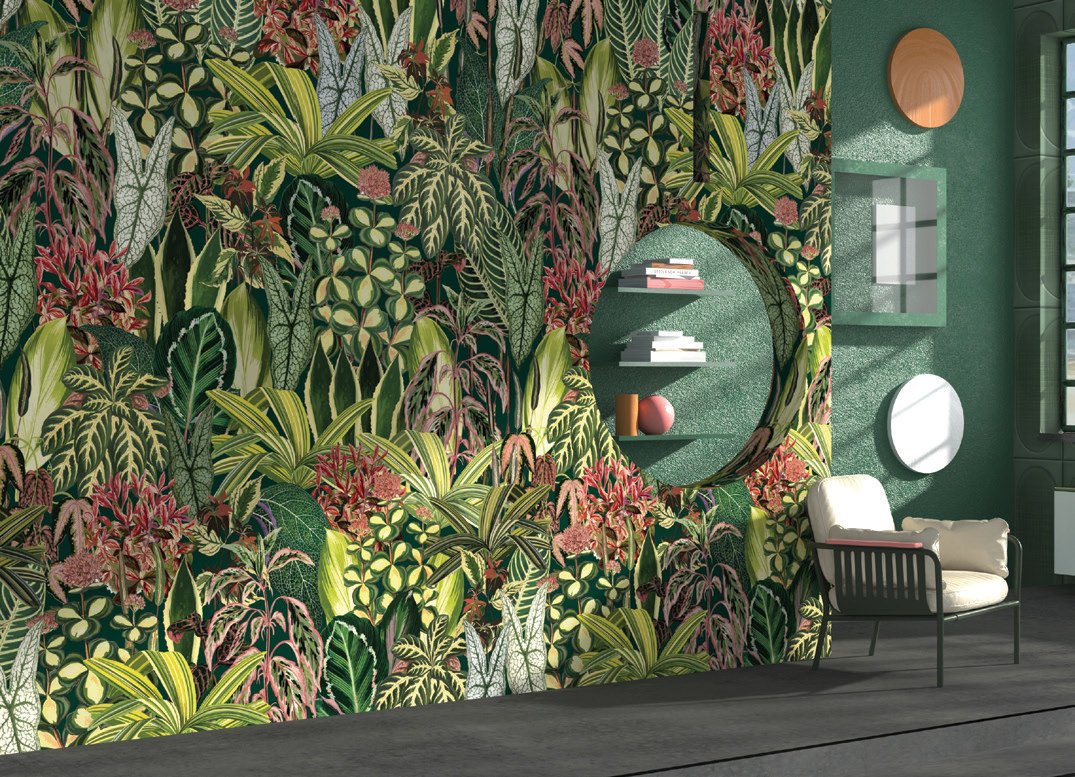
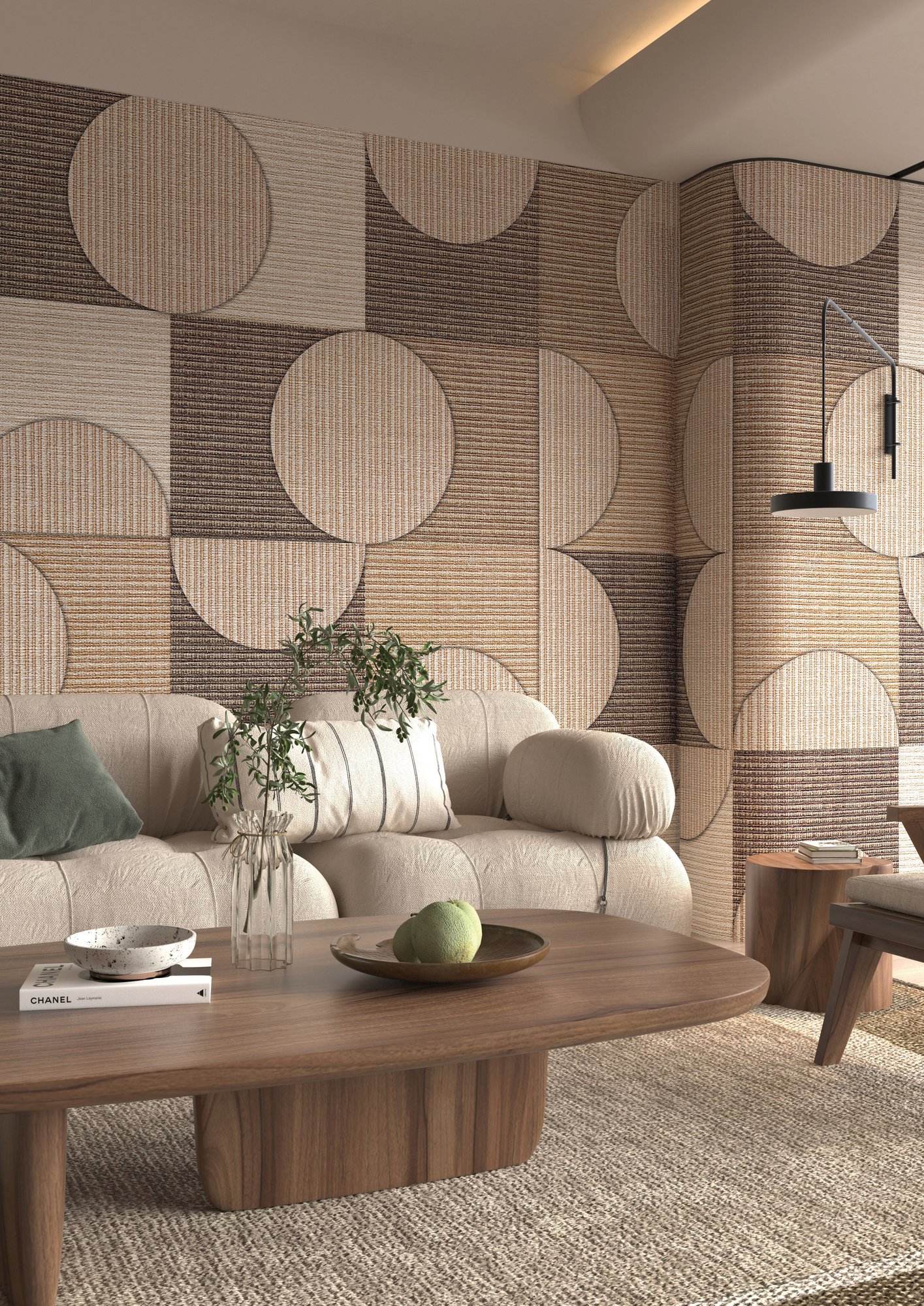
Consider the resale horizon. Most BTO owners stay in their flat for 5 to 10 years before considering resale. Bold maximalist wallpaper choices that feel right at age 30 may not appeal to a resale buyer at age 38. Neutral textural wallpapers — linen weaves, raffia textures, soft geometric grasscloth — age better visually and resell better than statement florals or strong colour fields. This is less of a concern for private launches where the holding period is typically longer.
Account for natural light. Many BTOs and high-floor condos have specific orientations — north-facing units get less direct sun, west-facing units get strong afternoon light. Wallpaper colour and metallic finishes read very differently under each. Buy a sample sheet, tape it on the actual wall, and look at it in morning, afternoon, and evening light before committing.
Sequencing With the Rest of the Renovation
The most common new-owner mistake is sequencing wallpaper either too early or too late in the renovation timeline.
Too early — installing wallpaper before electrical chasing, before air-conditioner mounting, before built-in carpentry — invariably means cuts, patches, or partial reinstallation. Wallpaper does not survive being lifted around a contractor’s later work.
Too late — installing wallpaper after furniture has arrived — means working around bulky pieces, which professional installers will charge extra for and may decline outright for built-ins like custom wardrobes. The strip alignment quality is also visibly worse around obstructions.
The correct window is after all wet works are dry (typically 28 days after painting completes), after all carpentry and electrical fittings are installed, but before furniture is delivered. In a typical 8-to-12-week BTO renovation, this is usually the final week before move-in. For a new launch with developer-provided finishes, the window is the post-defects period before bringing in built-ins. For broader BTO renovation context, see our BTO renovation tips guide.
Procurement Practicalities
For new owners procuring wallpaper for the first time, three procurement realities are worth knowing up front.
Lead times for designer wallpaper collections often run four to eight weeks, particularly for European brands that are stocked-to-order rather than held in Singapore inventory. If wallpaper is on the renovation critical path, sample and order at the same stage as the carpenter’s design rather than during the final fit-out week.
Roll counts must account for pattern repeat. A 3-metre wall with a small textural pattern needs fewer rolls than the same wall with a large geometric repeat that has to align across joins. A specialist supplier will calculate the roll count from the wall dimensions and the chosen pattern — do not assume the at-shelf “coverage per roll” headline figure applies cleanly to your specific room.
Installation is a specialist trade. The general contractor delivering the BTO renovation may sub-contract wallpaper to a different installer, or may not have one in their network. Engaging a wallpaper specialist directly — often via the supplier — generally produces a better outcome than relying on whichever installer the contractor finds at short notice.
Wallpaper Sits Inside a Broader Material Palette
For new BTO and new launch owners, wallpaper is rarely the only material decision in flight. Flooring (if not developer-supplied), curtains, bedroom carpets, and sofa upholstery typically get specified within the same 8-to-12-week renovation window — often by the same homeowner without an interior designer in the loop. And each decision affects the others. Wallpaper colour reads differently against a light wood-look vinyl floor than against a dark carpet. Curtain fabric coordinates with wall pattern more often than people plan for. A sofa upholstery pulled in late can clash with finishes that are already locked in.
This is the practical case for a one-stop material supplier. When wallcovering, flooring, curtain and upholstery fabric, and carpet all come from a single showroom and a single specification team, samples sit side-by-side under the same lighting, lead times plan together, installer referrals align with the contractor’s master schedule, and bundled procurement across product lines often prices more keenly than sourcing each finish from a separate specialist.
Where to Start
For new BTO and new launch owners thinking about wallpaper as part of the move-in package, the practical starting point is a visit to a showroom with the floor plan and a clear sense of which walls you are considering. From there, sampling on the actual wall — in actual light — is the single most useful step before committing.
Goodrich Global is a one-stop supplier of residential wallcoverings, flooring, fabric, and carpet for new Singapore homes — with sample sheets, measured calculations, and installer referrals across the full range. Visit our showroom or contact the team to start the selection process for your new home.