Fabric & Upholstery
How to Measure Curtains | Width, Length & Fullness Guide
Why Accurate Curtain Measurements Matter
Curtains that are too narrow look skimpy and fail to block light effectively. Curtains that are too long pool on the floor and collect dust. Curtains that are too short look awkward and unfinished. Getting your measurements right is the single most important step in achieving a polished, professional-looking window treatment.
This guide walks you through the process of measuring for curtains, covering the three critical dimensions — width, length, and fullness — along with specific considerations for common Singapore property types.
Tools You Will Need
Before you begin, gather the following items:
- A steel retractable tape measure (at least 3 metres long)
- A step stool or ladder for reaching above the window frame
- A pen and notepad or your phone for recording measurements
- A spirit level (optional, but useful for checking whether the window frame is truly level)
Always use a steel tape measure rather than a cloth one. Cloth tape measures stretch over time and can introduce inaccuracies of a centimetre or more — enough to make a noticeable difference in the finished result.
Measuring Curtain Width
Curtain width is measured along the curtain track or pole, not the window itself. This is a common source of confusion. The track or pole typically extends beyond the window frame on both sides to allow the curtains to stack clear of the glass when open, maximising natural light.
Follow these steps to determine your curtain width:
- Step 1: If you already have a curtain track or pole installed, measure its full length from end to end. This is your track width.
- Step 2: If you do not yet have a track or pole, measure the width of the window frame. Then add 15 to 20 centimetres on each side to allow for stack-back. For most HDB windows, adding 15cm per side is sufficient. Larger windows in condominiums and landed homes may benefit from 20 to 25cm.
- Step 3: Record this measurement. This is the total width your curtain fabric needs to cover when drawn closed.
For a pair of curtains that meet in the centre, divide the total width by two to get the finished width of each curtain panel. For a single curtain drawn to one side, use the full track width.
Measuring Curtain Length
Curtain length — or drop — is measured from the top of the curtain track or pole to where you want the curtain to end. The length you choose has a significant impact on the room’s overall aesthetic.
There are four standard curtain lengths to consider:
| Length Style | Description | Best For |
|---|---|---|
| Sill length | Ends at the window sill | Kitchen windows, small bathroom windows |
| Below sill | Extends 10–15cm below the sill | Bedroom windows with radiators or furniture beneath |
| Floor length | Ends 1–2cm above the floor | Living rooms, bedrooms, formal spaces |
| Puddle length | Extends 5–15cm onto the floor | Master bedrooms, formal living rooms in landed homes |
Floor-length curtains are the most versatile and popular choice in Singapore homes. They create a sense of height and elegance that shorter curtains cannot match. For most HDB and condo living rooms and bedrooms, floor-length curtains are the recommended option.
When measuring, always take measurements at three points — left side, centre, and right side — and use the longest measurement. Floors and ceilings in older HDB flats are not always perfectly level, and using the longest measurement prevents the curtain from appearing too short at any point.
Understanding Curtain Fullness
Fullness refers to the ratio of fabric width to track width. It determines how gathered or pleated the curtain appears when closed. A curtain with insufficient fullness looks flat and lifeless, while one with too much fullness can appear bulky and overwhelm a small window.
Standard fullness ratios vary by heading style:
- Pencil pleat: 2 to 2.5 times the track width
- Pinch pleat (double or triple): 2 to 2.5 times the track width
- Eyelet / grommet: 1.5 to 2 times the track width
- Wave / S-fold: 1.8 to 2.2 times the track width
- Tab top: 1.5 to 2 times the track width
For example, if your track width is 3 metres and you are using a pencil pleat heading, you need between 6 and 7.5 metres of fabric width in total. This fabric is then gathered into pleats to fit the 3-metre track.
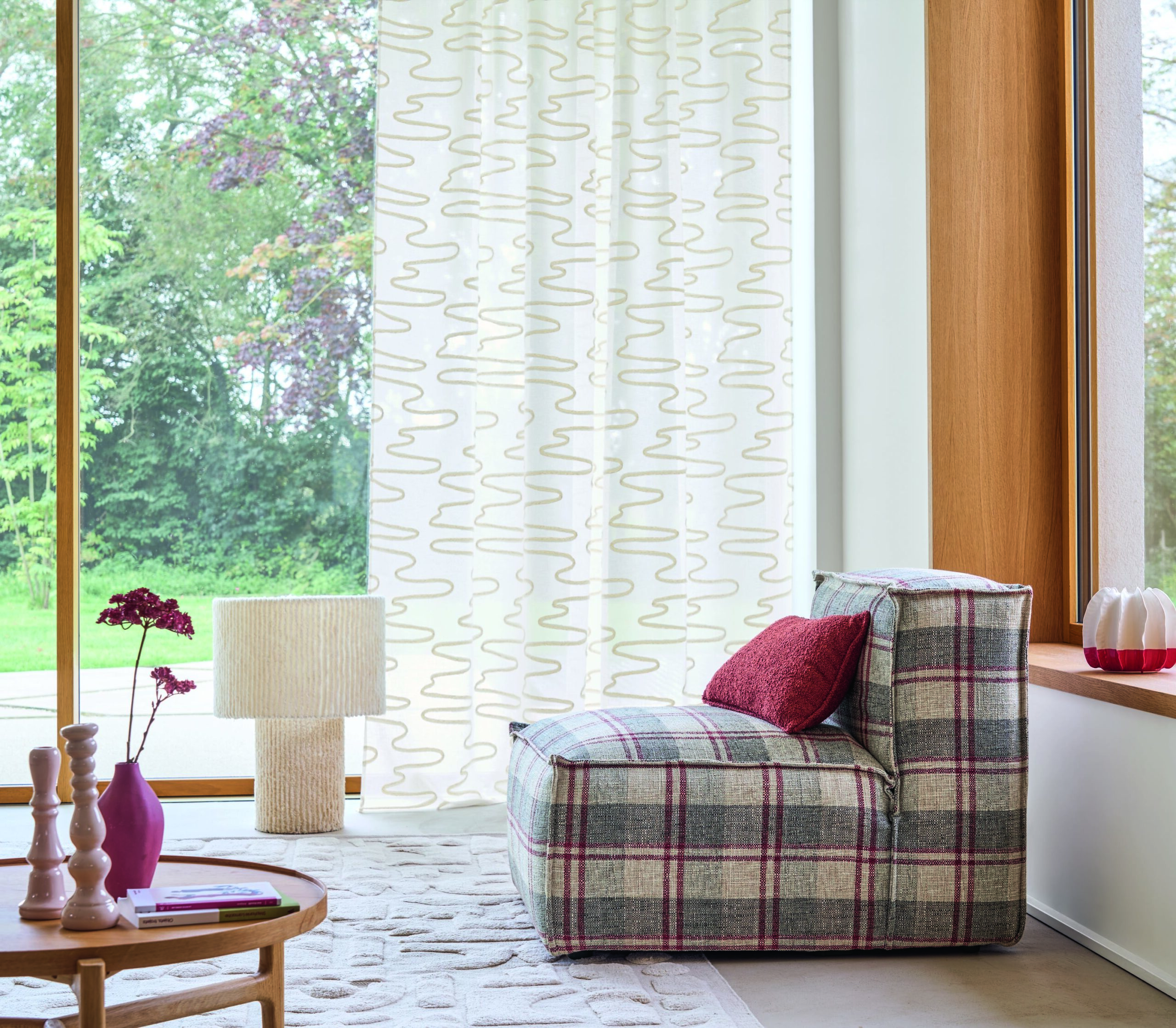
Higher fullness ratios produce richer, more luxurious folds. In larger rooms with high ceilings — common in landed properties and some condominiums — a fullness of 2.5 times creates an impressive, generous drape. For compact HDB rooms, a fullness of 2 times is usually ideal, providing sufficient volume without overwhelming the space. Browse our drapery fabric collection to see how different fabrics drape at various fullness levels.
Special Considerations for Singapore Properties
Different property types in Singapore present unique measurement challenges. Here are tips for the most common scenarios:
HDB BTO flats: Standard HDB windows typically measure between 150cm and 200cm wide. Ceiling height is usually around 265cm for newer BTO units and slightly lower in older resale flats. Many homeowners choose to mount their curtain track at the ceiling rather than above the window frame, which creates the illusion of taller windows and a more spacious room.
Condominiums with floor-to-ceiling windows: These tall windows require precise length measurements. The drop from a ceiling-mounted track to the floor can exceed 280cm, and even a small measuring error becomes noticeable over such a long span. Measure at multiple points along the window, as high-rise buildings can have subtle floor-level variations.
Landed homes with bay windows: Bay windows require curtains to follow the angles of the bay. Measure each section of the bay separately and record the angles. A curved or angled curtain track will be needed, and professional measurement is strongly recommended for these configurations.
Sliding glass doors: Common in both HDB and condo units, sliding doors serve as both windows and access points to balconies. Ensure your curtain stack-back allows the door to open fully without obstruction. A one-way draw — where the entire curtain pulls to one side — often works better than a centre-opening pair.
Common Measurement Mistakes to Avoid
Even experienced home improvers sometimes make these errors:
- Measuring the window, not the track: Your curtain must cover the track or pole, not just the window opening. Always measure from the track or planned track position.
- Forgetting stack-back space: Curtains need somewhere to go when open. If your track does not extend beyond the window frame, the gathered fabric will cover part of the glass even when the curtain is fully open.
- Ignoring existing fittings: Air-conditioning units, ceiling cornices, and window handles can all interfere with curtain installation. Note the position of any obstructions near the window.
- Rounding down: When in doubt, round up rather than down. It is far easier to hem a curtain that is slightly too long than to extend one that is too short.
- Assuming all windows are identical: Even in the same flat, window sizes can vary by a centimetre or two. Measure each window individually.
When to Seek Professional Measurement
While measuring standard rectangular windows is straightforward, certain situations benefit from professional assistance. Bay windows, angled walls, extremely tall windows, and motorised track installations all involve complexities that a trained installer will handle more accurately.
Professional measurement also accounts for fabric-specific factors like weight and drape, which affect how much stack-back space is needed and whether the track can support the curtain without sagging. If you are investing in premium fabrics, professional measurement helps protect that investment by ensuring a perfect fit.
Book an appointment with our design consultants for professional measuring guidance. Schedule your visit and let our team help you achieve the perfect curtain fit for your home.