Articles / Carpet & Flooring / Commercial Interiors
Contract Vinyl Flooring for F&B Kitchens: Slip-Resistant, Durable & Hygienic Commercial Solutions

Why Kitchen Floors Are a Safety System
Commercial F&B kitchens operate under intense pressure. Heat, moisture, grease, speed, and human movement converge in a confined space where mistakes carry immediate consequences. In this environment, the floor is not a background surface. It is a critical safety system that directly affects staff wellbeing, workflow efficiency, and operational continuity.
Slips and falls remain one of the most common causes of injury in professional kitchens, often triggered by wet or greasy conditions during peak service. When flooring fails to provide consistent traction, the risk extends beyond individual accidents to lost productivity, staff turnover, and service disruption.
This is why slip resistant contract vinyl flooring for F&B kitchens should be understood as a performance requirement rather than a material preference. The right flooring supports safe movement, withstands constant cleaning, and maintains traction over time, forming a foundation for both safety and efficiency in demanding kitchen environments.
The Reality of Slip Risk in F&B Kitchens

F&B kitchens are constantly exposed to conditions that increase slip risk. Water from washing stations, oil and grease from cooking processes, and food debris from preparation areas regularly end up on the floor. These substances reduce surface traction quickly, especially during busy service periods when spills cannot be addressed immediately.
Peak service pressure intensifies the hazard. Staff move at speed, carrying hot equipment, sharp tools, and heavy loads. In these moments, even small losses of footing can result in serious injury. The combination of wet surfaces and rushed movement creates a high-risk environment where flooring performance is tested continuously.
Slips and falls remain a leading kitchen hazard because these conditions are unavoidable in active kitchens. Eliminating risk entirely is unrealistic. This is why contract vinyl flooring plays a crucial role. It provides consistent grip under real operating conditions, reducing the likelihood of accidents while supporting fast-paced kitchen workflows.
What ‘Slip Resistant’ Really Means in Commercial Kitchens
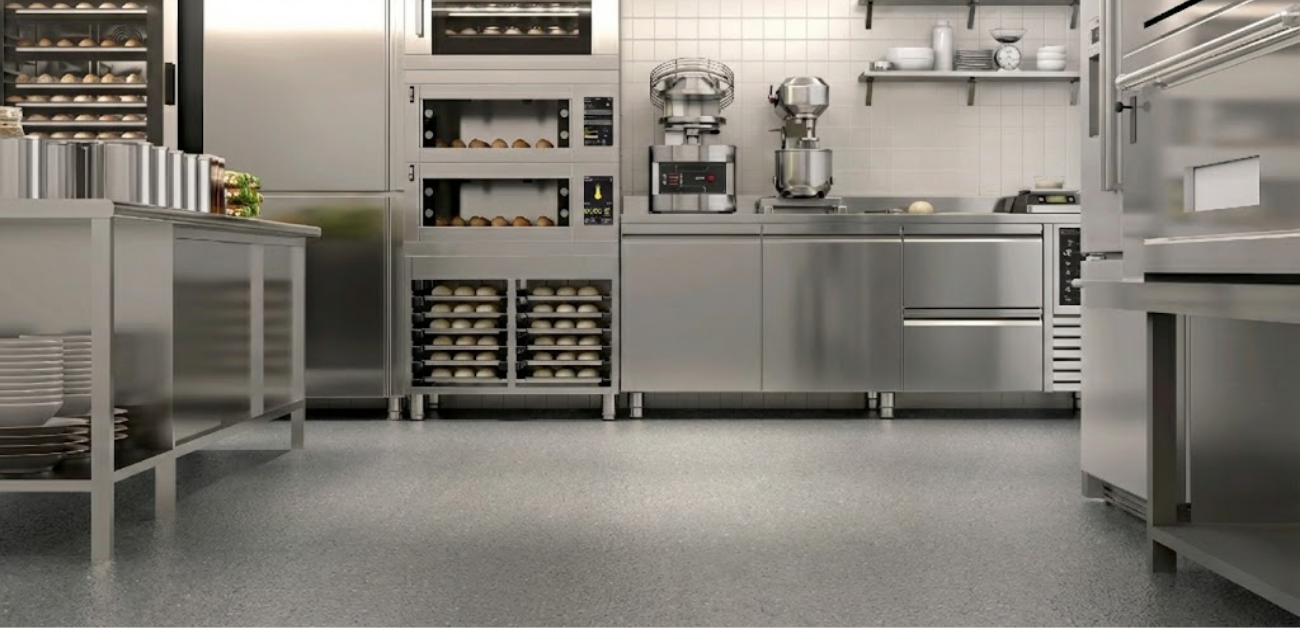
The term ‘slip resistant’ is often misunderstood when applied to commercial kitchens. Surface texture alone does not guarantee safety. A floor that feels rough underfoot when dry may lose traction quickly once exposed to water, oil, or detergent residue. Real-world traction depends on how the surface performs under the exact conditions kitchens face every day.
Wet, greasy, and soapy environments place very different demands on flooring. Oils can create a thin film that neutralises shallow textures, while detergents used during cleaning can temporarily reduce grip if the material is not designed to handle them. True slip resistance must be maintained not only during service, but also immediately after cleaning cycles when floors are still damp.
For contract vinyl flooring, performance expectations should focus on consistency over time. Flooring must deliver reliable traction under changing conditions, withstand frequent cleaning, and resist surface wear that can smooth out grip. Slip resistance is not a one-time rating, but an ongoing performance requirement.
Why Vinyl Is Widely Used in Professional Kitchens
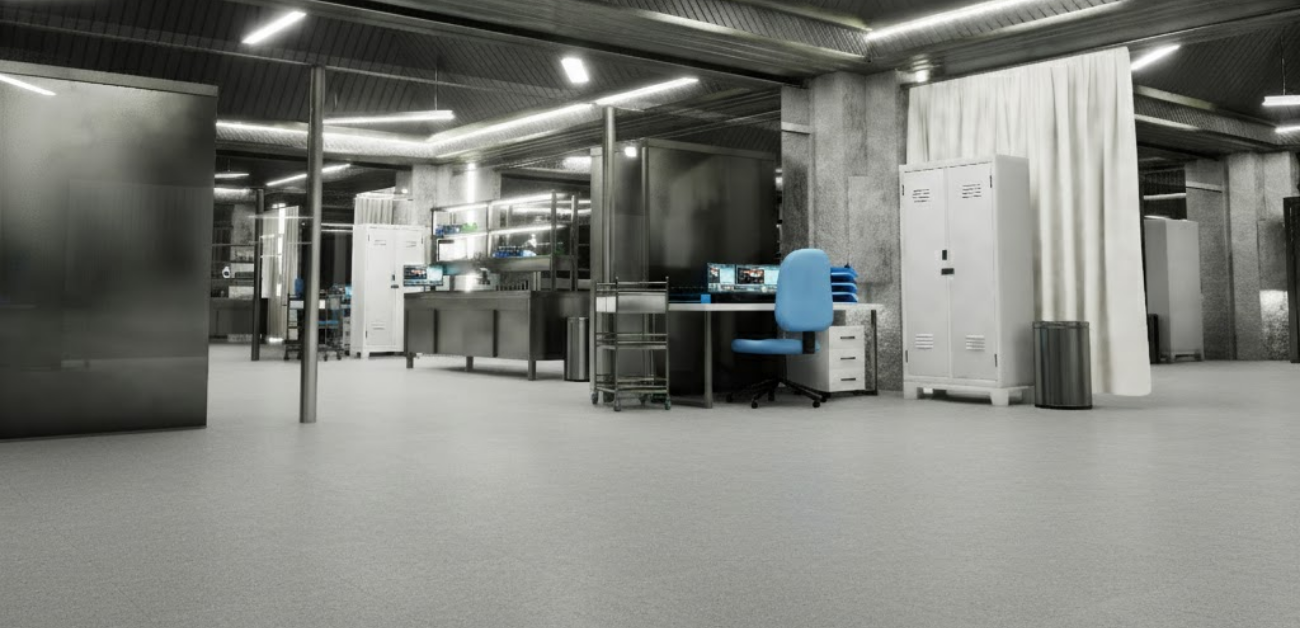
Vinyl flooring is widely specified in professional kitchens because it balances safety, hygiene, and practicality. Seamless installation reduces joints and gaps where water, grease, and food debris can accumulate. This makes cleaning more effective and helps maintain hygienic conditions in fast-paced environments where downtime is limited.
Chemical resistance is another key advantage. Commercial kitchens rely on strong degreasers, detergents, and sanitising agents that can degrade many flooring materials. Quality vinyl is designed to withstand repeated exposure to these chemicals without breaking down or losing integrity. Its durability allows it to handle heavy foot traffic, equipment movement, and constant cleaning.
Alternative flooring materials present limitations in kitchen settings. Tiles introduce grout lines that trap contaminants, while natural stone can become slippery or stain easily. Epoxy systems may crack or delaminate under thermal stress. This is why contract vinyl flooring remains a practical and reliable choice for demanding kitchen operations.
Slip Resistance Under Continuous Cleaning Cycles
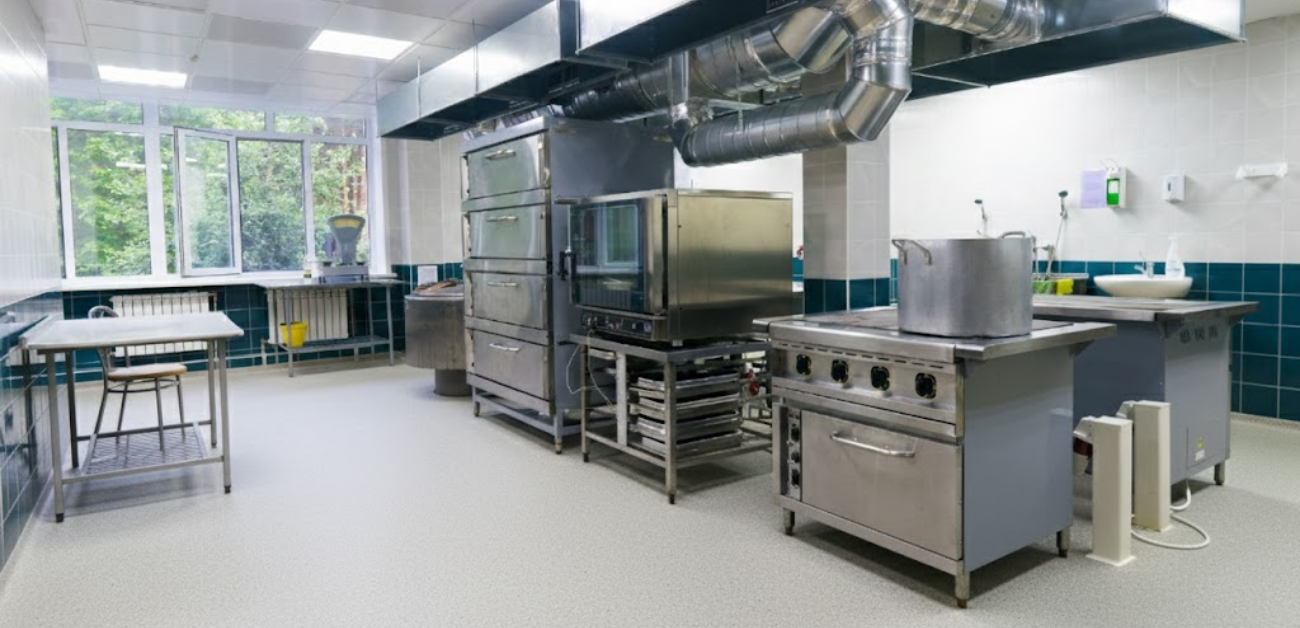
Cleaning is essential in F&B kitchens, but it also places heavy demands on flooring. Degreasers, detergents, and hot water are used multiple times a day to remove food residue and maintain hygiene. These processes can gradually affect surface texture, especially if the flooring is not designed for repeated chemical exposure.
Over time, traction can degrade as cleaning agents smooth or wear down the surface. Floors that perform well when new may become noticeably more slippery after months of aggressive cleaning. This gradual loss of grip often goes unnoticed until incidents begin to occur.
Choosing flooring that maintains grip over time is therefore critical. Initial slip ratings provide only a snapshot of performance. For contract vinyl flooring, the focus should be on materials engineered to retain traction despite constant washing. Long-term slip resistance ensures safety is sustained throughout the flooring’s lifecycle, not just at installation.
Workflow, Fatigue, and Staff Movement
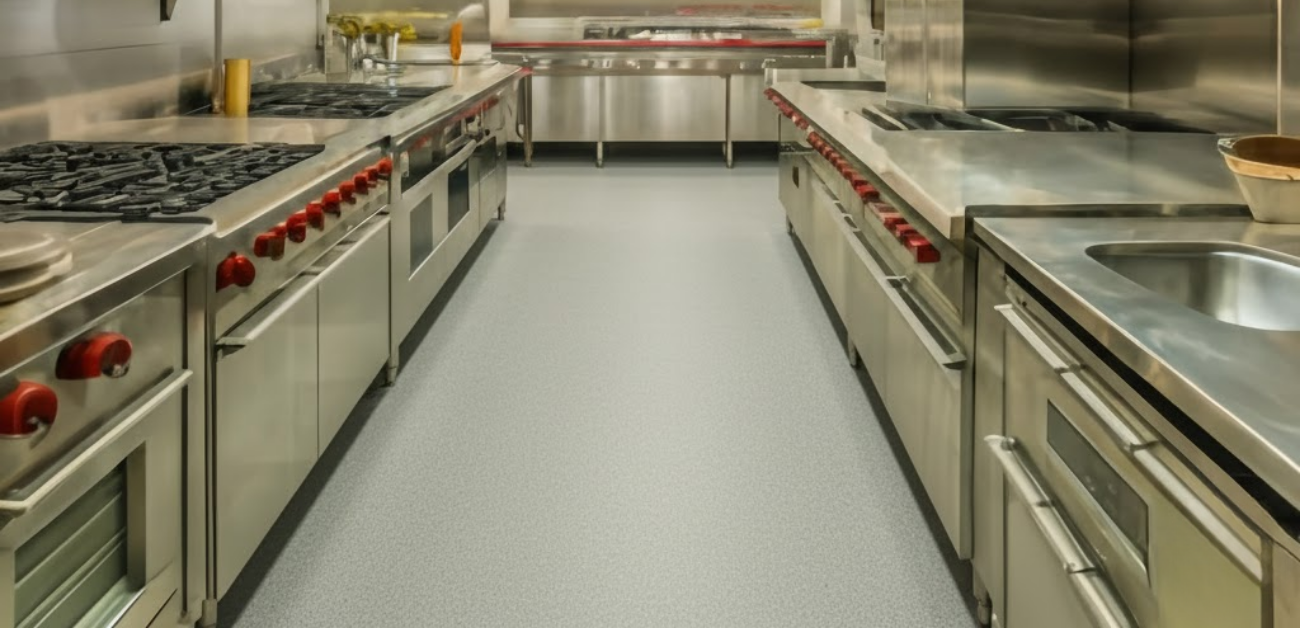
Kitchen staff spend long hours standing and moving across the same floor surfaces throughout each shift. Poor flooring performance increases physical strain, contributing to fatigue in the legs, back, and joints. When staff are tired, reaction times slow and the risk of missteps rises, particularly in high-pressure service periods.
Professional kitchens also require constant turning, carrying, and rapid movement. Staff frequently change direction while handling hot equipment, heavy containers, or sharp tools. Flooring that lacks consistent traction forces workers to adjust their movement, reducing efficiency and increasing the likelihood of slips or sudden loss of balance.
Floor performance directly affects both productivity and safety. A stable, slip-resistant surface allows staff to move confidently and maintain pace without hesitation. This is why contract vinyl flooring supports not only injury prevention, but also smoother workflow and sustained performance during demanding service operations.
Where Slip-Resistant Vinyl Matters Most in F&B Kitchens
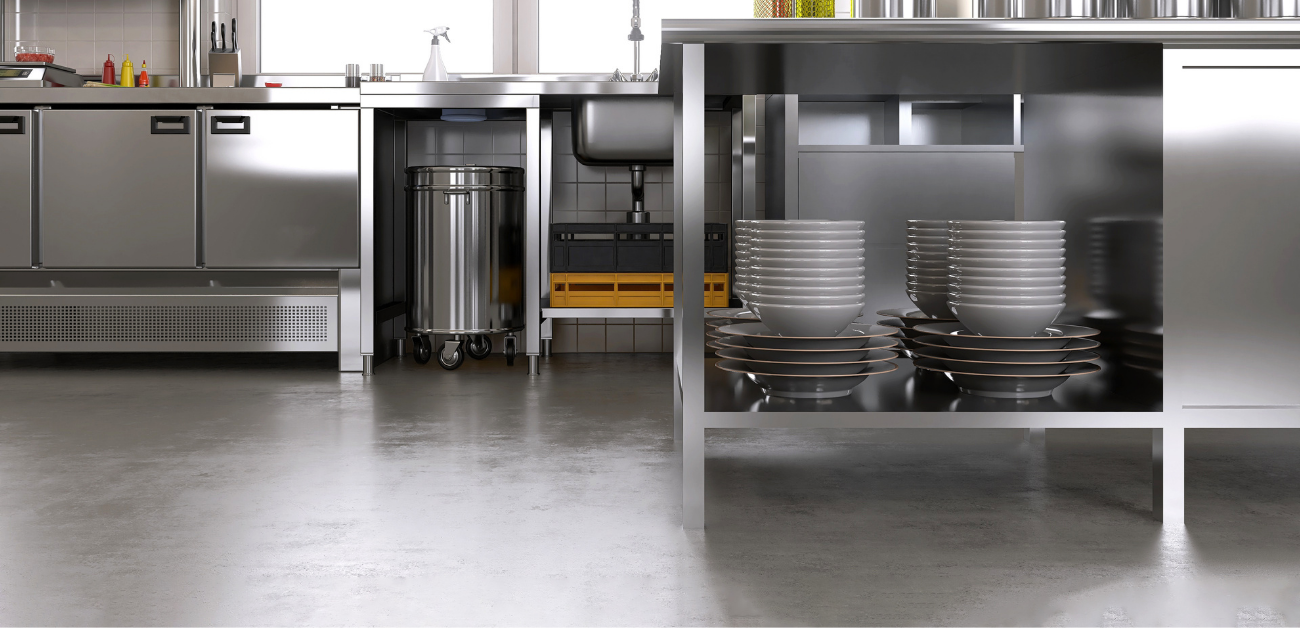
Not all areas within an F&B kitchen face the same level of slip risk. Prep zones, cooking lines, wash areas, and entry points experience the highest exposure to water, grease, and constant foot traffic. These zones demand flooring that delivers reliable traction under the most challenging conditions, where spills and cleaning occur continuously throughout service.
Transition areas also require careful attention. Points where staff move between dry storage, preparation, and wet wash zones often see sudden changes in floor conditions. Without consistent slip resistance, these transitions become common locations for accidents, especially during peak hours.
This is why strategic specification is more effective than a one-size-fits-all approach. Applying slip resistant contract vinyl flooring for F&B kitchens where risk is greatest ensures safety is addressed where it matters most, while maintaining overall operational efficiency and durability across the kitchen environment.
Longevity, Replacement, and Operational Disruption
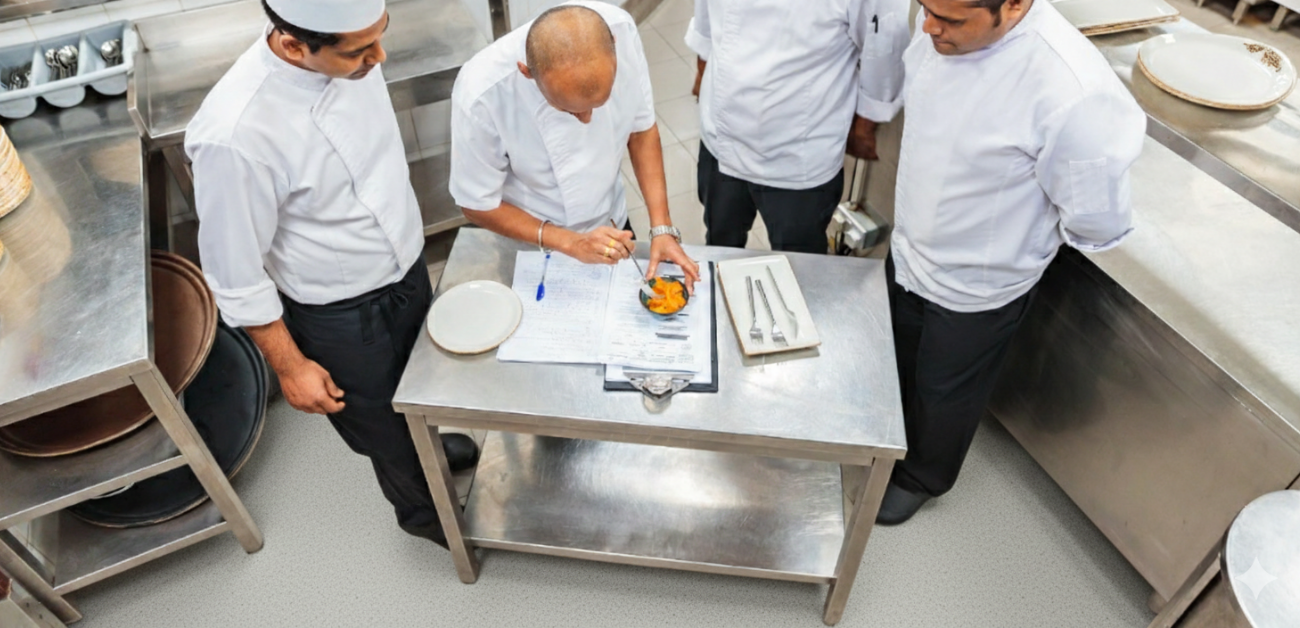
Flooring in F&B kitchens must perform under relentless conditions, and wear is inevitable. Over time, heavy traffic, equipment movement, and cleaning cycles can lead to surface degradation and loss of traction if materials are not designed for long-term use. When flooring fails prematurely, the consequences extend beyond safety concerns.
Replacing kitchen flooring often requires downtime, partial closures, or disrupted service schedules. These interruptions impact revenue, staff coordination, and customer experience. Frequent replacement also increases long-term costs, even if the initial material choice appeared economical.
Investing in slip resistant contract vinyl flooring in F&B kitchens supports operational continuity. Durable flooring that maintains slip resistance reduces replacement frequency, minimises disruption, and provides predictable performance over its lifespan. Longevity becomes a key measure of value, not just upfront cost.
Conclusion: Flooring as a Core Kitchen Safety Decision

In professional F&B kitchens, flooring is a foundational safety decision rather than a finishing detail. It influences how staff move, how safely they work, and how efficiently the kitchen operates under pressure. Slip resistance, durability, and cleanability must work together to support demanding daily conditions.
The value of slip resistant contract vinyl flooring in F&B kitchens lies in sustained performance. Floors must provide consistent traction under wet and greasy conditions, withstand aggressive cleaning, and support long hours of movement without compromising safety.
Within this context, Goodrich Global approaches F&B kitchen flooring with a performance-driven mindset, focusing on materials engineered for long-term reliability and real operational demands. Its emphasis on durability and safety reflects an understanding that in kitchens, flooring is not an aesthetic choice, but a critical component of a safe and efficient working environment.