Interior Design
Eclectic Interior Design: How to Mix Styles Beautifully | Goodrich
Eclectic interior design is the art of mixing styles, periods, and influences into a cohesive whole. Far from being a random assortment of mismatched pieces, successful eclectic spaces are carefully curated — every element earns its place through colour, texture, or narrative connection to the broader scheme.
For Singapore homeowners tired of strictly themed interiors, eclectic design offers the freedom to blend inherited furniture with modern finds, Asian craft with European form, and bold pattern with quiet texture. The challenge is making it look intentional rather than chaotic.
The Principles of Eclectic Design
Eclectic does not mean anything goes. The most successful eclectic interiors follow clear organising principles that create visual harmony despite stylistic diversity.
A Unifying Colour Thread
Colour is the most powerful unifying tool in eclectic design. Establish a palette of three to five colours and ensure every major piece in the room connects to at least one of them. A mid-century modern chair, a Persian-style rug, and a contemporary art print can coexist comfortably if they share a common colour — terracotta, navy, or forest green, for instance.
Consistent Scale
Mix styles, but maintain consistent scale within each room. A delicate Victorian side table next to a chunky industrial coffee table creates visual tension. Pieces from different eras should share similar visual weight to sit comfortably together.
The 80/20 Rule
A practical guideline: let 80 per cent of the room follow a dominant style or mood, and allow 20 per cent to be the contrasting, unexpected element. This ensures the space reads as intentional with moments of surprise, rather than an indecisive jumble.
Mixing Patterns and Textures
Pattern and texture mixing is where eclectic design comes alive — and where it most easily goes wrong.
Pattern Pairing Rules
Combine patterns of different scales: a large-scale floral wallpaper with a medium-scale geometric cushion and a small-scale textured throw. Varying the scale prevents patterns from competing. Stay within your colour palette to keep the mix harmonious.
Limit bold patterns to two or three per room, using solid colours and subtle textures as visual rests between them. A richly patterned wallcovering deserves a solid-coloured sofa beside it; a boldly printed upholstery fabric works best against a plain wall.
Texture as the Quiet Connector
Where colour unifies overtly, texture connects subtly. A room with a velvet armchair, a rattan side table, a linen curtain, and a wool rug feels richly layered even if the colour palette is restrained. Each texture adds warmth and interest without adding visual noise. Explore Goodrich Global’s fabric collection for upholstery and drapery materials that bring tactile variety to eclectic schemes.
Wall Treatments for Eclectic Interiors
Walls in eclectic spaces play a crucial supporting role. They can anchor the room’s dominant mood or provide a quiet backdrop that lets furniture and accessories shine.
Wallpaper as a Design Anchor
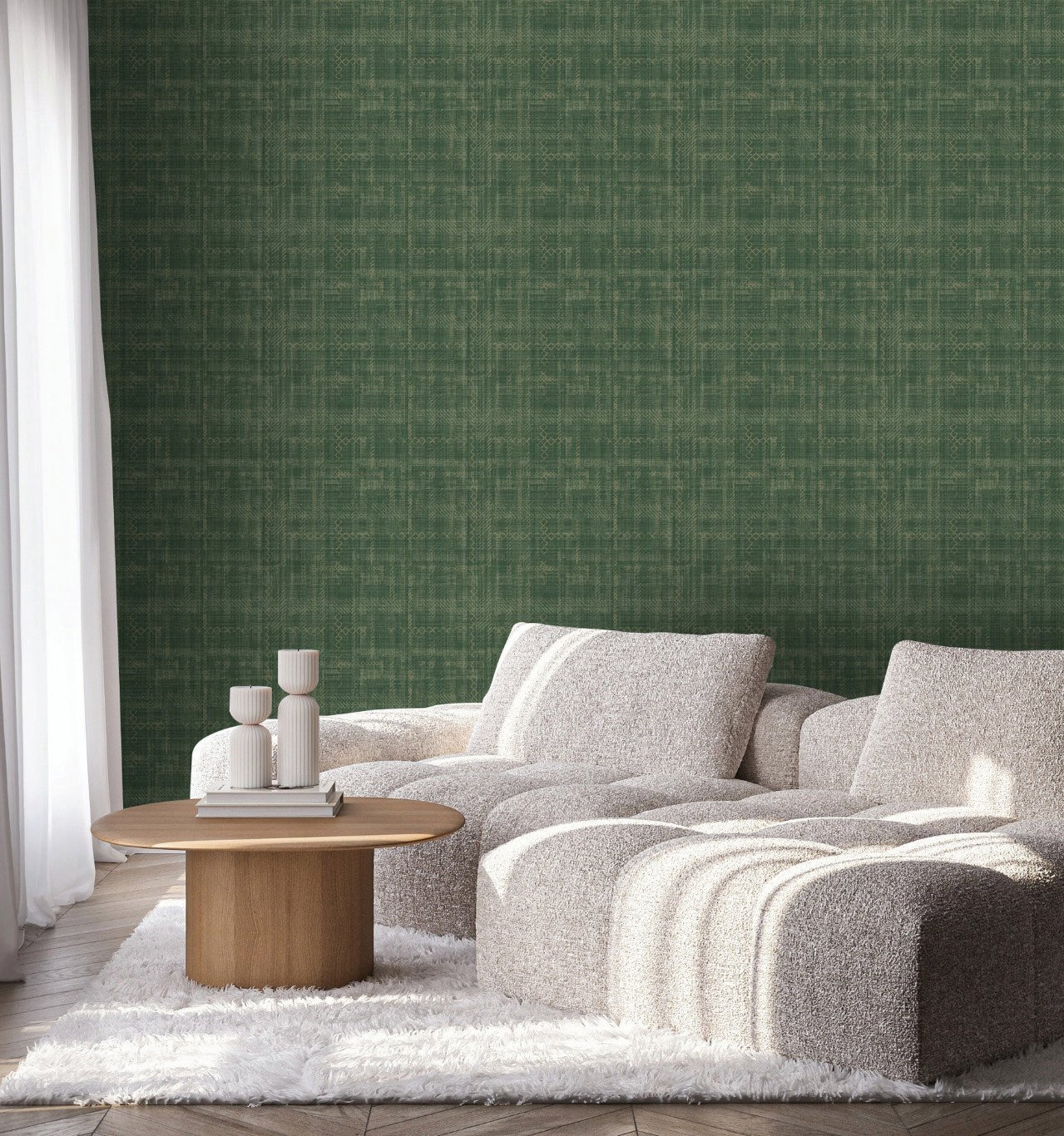
A bold wallpaper on a single feature wall can establish the room’s colour palette and mood in one stroke. Floral patterns, abstract designs, or ethnic-inspired motifs set the tone that other elements respond to. In an eclectic living room, the wallpaper might be the most contemporary element in a room filled with vintage furniture — or the most traditional piece in an otherwise modern space.
Gallery Walls and Layered Surfaces
Eclectic interiors suit gallery-style arrangements where artwork, mirrors, and objects of varying sizes and frames are grouped on a wall. A subtle textured wallcovering behind a gallery wall adds depth without competing with the displayed pieces. Grasscloth or linen-textured wallpapers in neutral tones are particularly effective as gallery wall backdrops.
Mixing Wall Treatments
In an eclectic home, different rooms can feature different wall treatments without appearing disconnected, provided the colour palette remains consistent. Wallpaper in the living room, painted walls in the bedroom, fluted panels in the hallway — the variety itself becomes part of the eclectic character. Browse Goodrich Global’s wallcovering range for patterns and textures that anchor eclectic interiors.
Eclectic Design in Singapore Homes
Singapore’s multicultural heritage makes it a natural home for eclectic design. Many local households already blend Chinese, Malay, Indian, and Western influences through family heirlooms, travel souvenirs, and everyday objects. Eclectic design simply elevates this reality into a deliberate aesthetic.
HDB and Condo Applications
In compact apartments, eclectic design should be curated rather than accumulated. Choose fewer, more impactful pieces rather than filling every surface. A single vintage cabinet in a modern living room, a Peranakan-tiled kitchen backsplash in a Scandinavian-themed flat, or a Japanese-style low platform bed paired with Moroccan-inspired cushions — each creates a moment of interest without overwhelming the space.
Landed Properties
Larger landed homes can embrace eclectic design more freely. Different rooms can express different moods — a mid-century modern living room, a colonial-inspired study, a minimalist bedroom — connected by a shared colour palette and consistent flooring. The transitional spaces (hallways, stairwells, landings) serve as neutral buffers between more characterful rooms.
Common Pitfalls and How to Avoid Them
Eclectic design walks a fine line between curated and cluttered. Here are the most common mistakes.
- Too many focal points: Every room needs one primary focus. If the wallpaper is bold, the sofa should be calm. If the rug is the star, the walls should recede.
- Ignoring negative space: Eclectic rooms need breathing room. Leave some surfaces bare, some shelves half-empty, some walls unadorned. The blank spaces make the decorated areas more impactful.
- No editing: The hardest part of eclectic design is saying no. Not every interesting piece belongs in the same room. Rotate collections, store some pieces, and resist the urge to display everything at once.
- Forgetting the floor: Flooring is often treated as an afterthought in eclectic spaces, but it provides the common ground (literally) for everything above it. A clean, consistent floor in a neutral timber or stone tone lets eclectic furnishings above it coexist peacefully.
Final Thoughts
Eclectic interior design rewards confidence, restraint, and a good eye for colour. It is the most personal of all design styles because it reflects the specific tastes, travels, and stories of its inhabitants rather than following a prescribed formula.
In Singapore’s richly multicultural context, eclectic spaces feel particularly at home. The key is curation — selecting each material, pattern, and piece with intention, and trusting colour and texture to tie the story together.
Book an appointment with our design consultants to find the right wallcoverings and fabrics for your eclectic home.