Healthcare Interiors
Healthcare Interior Design: Walls, Floors and Fabrics | Goodrich
Healthcare interior design operates under constraints that no other sector faces. Every material must balance patient comfort, infection control, durability under intensive cleaning, regulatory compliance, and wayfinding — all while creating environments that reduce anxiety and support recovery.
In Singapore, where healthcare infrastructure standards are among the highest in the world, material specification for hospitals, clinics, and aged-care facilities demands expertise that goes beyond standard commercial interior design.
Design Priorities in Healthcare Environments
Before selecting specific materials, understand the hierarchy of priorities that governs healthcare interior specification.
Infection Prevention and Control
Surfaces must resist microbial growth, withstand frequent cleaning with hospital-grade disinfectants, and minimise joints and seams where contaminants can harbour. Non-porous materials with sealed edges are the baseline requirement for clinical areas.
Patient Wellbeing
Research consistently shows that the physical environment affects patient outcomes. Spaces that feel calm, clean, and connected to nature — through colour, natural light, and organic textures — contribute to faster recovery times and reduced anxiety. The challenge is achieving this within the strict hygiene constraints of healthcare settings.
Durability Under Heavy Use
Healthcare facilities operate around the clock, with heavy foot traffic, wheeled equipment, bed and trolley movement, and frequent deep cleaning. Materials must maintain their appearance and performance under this regimen for years without replacement.
Regulatory Compliance
Singapore’s Ministry of Health and relevant building codes set specific requirements for healthcare finishes, including fire ratings, slip resistance, and infection control properties. Material selection must comply with these standards from the outset.
Flooring for Healthcare Facilities
Flooring is the most critical surface specification in healthcare design. It must be hygienic, slip-resistant, durable, comfortable underfoot, and visually appropriate for its zone.
Vinyl Sheet and Vinyl Tile Flooring
Homogeneous and heterogeneous vinyl flooring remains the industry standard for clinical areas. Sheet vinyl installed with heat-welded seams creates a seamless, impervious surface that prevents moisture and contaminants from penetrating to the subfloor. Coving — where the vinyl curves up the wall by 100 to 150 mm — eliminates the floor-wall junction where dirt accumulates.
For non-clinical areas such as administrative offices, staff rooms, and reception lobbies, luxury vinyl tile offers a warmer, more residential aesthetic while maintaining the waterproof and easy-clean properties healthcare demands.
Carpet Tiles in Specific Zones
Carpet is appropriate in selected healthcare zones — waiting areas, consultation rooms, and administrative offices — where its acoustic and comfort benefits outweigh hygiene concerns. Modern healthcare-rated carpet tiles feature antimicrobial backing, solution-dyed fibres that resist staining and bleach cleaning, and low-profile construction that allows wheeled equipment to roll smoothly.
The acoustic benefit is significant: carpet tiles reduce impact noise by 25 to 35 decibels, creating quieter environments that benefit both patients and staff. Explore Goodrich Global’s carpet tile range for healthcare-rated options.
Slip Resistance
Falls are a leading cause of injury in healthcare facilities. Flooring must meet minimum slip-resistance ratings (typically R10 or higher for wet areas) and maintain that rating after repeated cleaning. Textured vinyl surfaces provide slip resistance without creating a rough surface that is difficult to clean — a careful balance that smooth or high-gloss finishes cannot achieve.
Wall Treatments for Clinical and Non-Clinical Areas
Walls in healthcare facilities face frequent contact from trolleys, wheelchairs, beds, and hands, plus exposure to cleaning chemicals. Standard paint rarely withstands this combination for long.
Vinyl Wallcoverings
Commercial vinyl wallcoverings rated for healthcare applications provide a durable, cleanable surface that resists scuffing, staining, and chemical damage from disinfectants. Type II vinyl wallcoverings (as classified by international standards) offer the thickness and durability required for high-traffic corridors, patient rooms, and treatment areas.
Healthcare vinyl wallcoverings are available with antimicrobial properties that inhibit bacterial growth on the surface. While these treatments do not replace proper cleaning protocols, they provide an additional layer of protection between cleaning cycles.
Wall Protection Systems
In corridors and patient rooms where trolley and bed impact is common, wall protection elements — corner guards, handrails with integrated wall guards, and crash rails — protect the underlying wallcovering from damage. These elements can be colour-coordinated with the wallcovering to integrate seamlessly into the design rather than appearing as afterthoughts.
Non-Clinical Areas
Reception areas, family waiting rooms, and staff lounges allow for warmer wall treatments that support patient and staff wellbeing. Textured wallcoverings in natural tones, acoustic wallpapers in consultation rooms, and calming botanical or abstract patterns in waiting areas create environments that feel less clinical without compromising hygiene standards. Browse Goodrich Global’s wallcovering collection for healthcare-appropriate options across clinical and non-clinical zones.
Fabrics in Healthcare Settings
Fabric use in healthcare is more limited than in residential or hospitality design, but it plays important roles in specific applications.
Cubicle Curtains
Privacy curtains in patient bays and examination rooms are the most common fabric application in hospitals. These curtains must be inherently flame-retardant (or treated to meet fire codes), antimicrobial, and easily removable for laundering. Disposable curtain systems are used in some facilities, but reusable fabric curtains in polyester blends remain common in Singapore.
Waiting Area and Lounge Seating
Upholstery in waiting rooms and staff areas must resist staining from body oils, food, and beverages, and withstand cleaning with disinfectant wipes. Healthcare-grade performance fabrics with fluid-barrier backing prevent spills from penetrating to the foam, which is critical for infection control. Specify fabrics with a minimum Martindale abrasion rating of 50,000 rubs for healthcare seating.
Window Treatments
In patient rooms, curtains or blinds control light and support circadian rhythm — the natural sleep-wake cycle that artificial lighting disrupts. Blackout curtains in bedrooms and roller blinds in treatment rooms serve functional roles. Where fabric curtains are used, specify options that can be removed for regular laundering and that meet fire-rating requirements.
Colour and Wayfinding in Healthcare Design
Colour serves a functional purpose in healthcare environments beyond aesthetics. A well-planned colour strategy aids wayfinding, reduces anxiety, and supports different functional zones.
- Patient rooms: Soft, warm neutrals (pale green, warm beige, soft blue) create a restful environment that supports recovery.
- Corridors: A consistent neutral base with colour-coded accent walls or floor strips aids navigation through large facilities.
- Treatment areas: Clean, bright surfaces in white and light grey support clinical work and create a sense of hygiene.
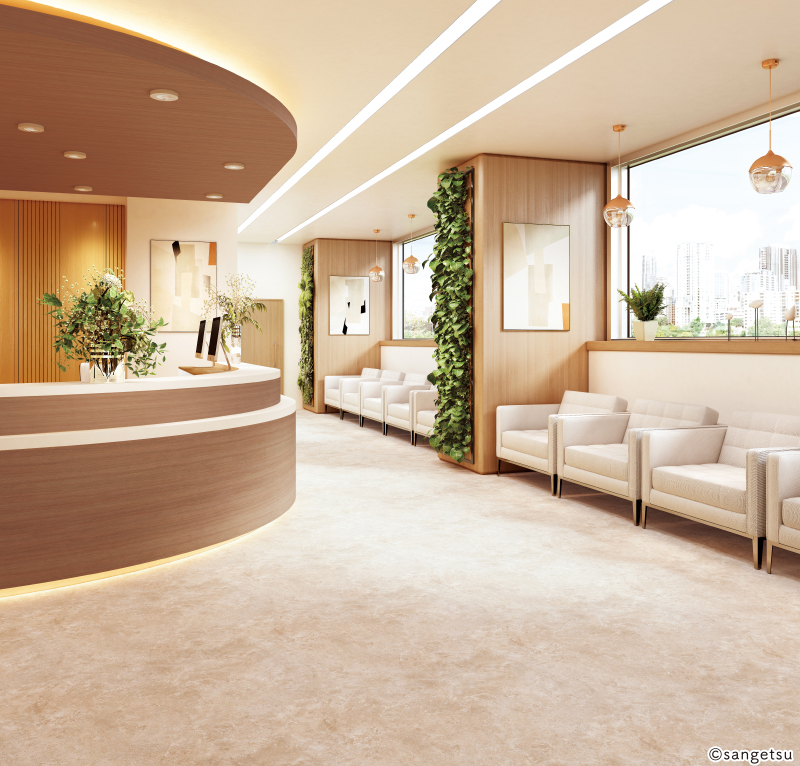
- Waiting areas: Warmer tones with natural textures reduce the institutional feel and ease patient anxiety.
- Staff areas: More expressive colour and residential-quality finishes in break rooms and offices support staff wellbeing and provide respite from clinical zones.
Final Thoughts
Healthcare interior design in Singapore requires materials that perform across every metric — hygiene, durability, safety, and human comfort. The best healthcare environments do not feel like a compromise between clinical necessity and design quality; they integrate both seamlessly.
Specifying the right combination of flooring, wallcoverings, and fabrics from the outset reduces lifecycle costs, supports infection control, and creates spaces where patients heal and staff thrive.
Get a free quote for your healthcare interior project today.