Interior Design
Maximalist Interior Design: Bold and Expressive
Maximalist interior design is the deliberate embrace of abundance, layering colour, pattern, texture, and objects to create spaces that are rich, expressive, and deeply personal. Far from the chaos it is sometimes mistaken for, skilled maximalism is a curated approach to design that celebrates the homeowner’s personality, collected treasures, and love of visual stimulation. It is the antithesis of the pared-back minimalism that has dominated design media for years, and it is gaining momentum in Singapore among homeowners who want their living spaces to tell a story.
This guide demystifies maximalist design and provides a framework for creating layered, vibrant interiors that feel intentional rather than overwhelming.
What Maximalist Design Is (and Is Not)
Maximalism is not hoarding, clutter, or indiscriminate accumulation. The distinction is critical. A maximalist interior is edited and intentional; every item earns its place because it contributes to the overall composition, whether through colour, texture, personal meaning, or visual impact.
Think of maximalism as designing with volume turned up. Where minimalism strips back to the essential, maximalism amplifies. More colour. More pattern. More texture. More objects on display. But each layer is considered, and the overall effect is harmonious rather than chaotic.
Several principles distinguish thoughtful maximalism from simple excess:
- A unifying colour story: Even in a room bursting with pattern and colour, successful maximalist spaces are held together by a cohesive palette. Colours relate to each other through tone, temperature, or saturation.
- Deliberate pattern mixing: Patterns of different scales and types (geometric, floral, abstract, stripe) are combined intentionally, often linked by shared colours.
- Layered textures: Smooth, rough, matte, glossy, soft, and hard surfaces create tactile richness that engages the senses.
- Personal narrative: Collections, artwork, travel souvenirs, and objects with personal significance populate maximalist spaces, making them unmistakably individual.
- Quality over quantity: A room filled with carefully chosen, well-made items feels rich. A room filled with disposable items feels cluttered. Maximalism demands quality at every layer.
Building a Maximalist Colour Palette
Colour is the engine of maximalist design. Getting the colour palette right is the most important step in creating a maximalist interior that feels cohesive rather than confused.
Start with a dominant colour group. This is not a single colour but a family of related tones that will appear most frequently in the room. Jewel tones, deep greens, rich blues, warm burgundies, and golden yellows, form a natural maximalist palette that is both bold and inherently harmonious.
Add secondary colours that complement or contrast with the dominant group. A room anchored in deep blue and green gains energy from touches of coral, amber, or fuchsia. These secondary colours appear in smaller quantities: cushions, artwork, decorative objects, and accent furniture.
Include a neutral to ground the palette. Even maximalist spaces need visual rest points. Deep charcoal, warm cream, or rich brown serves this purpose, appearing in large furniture pieces, flooring, or portions of the wall treatment.
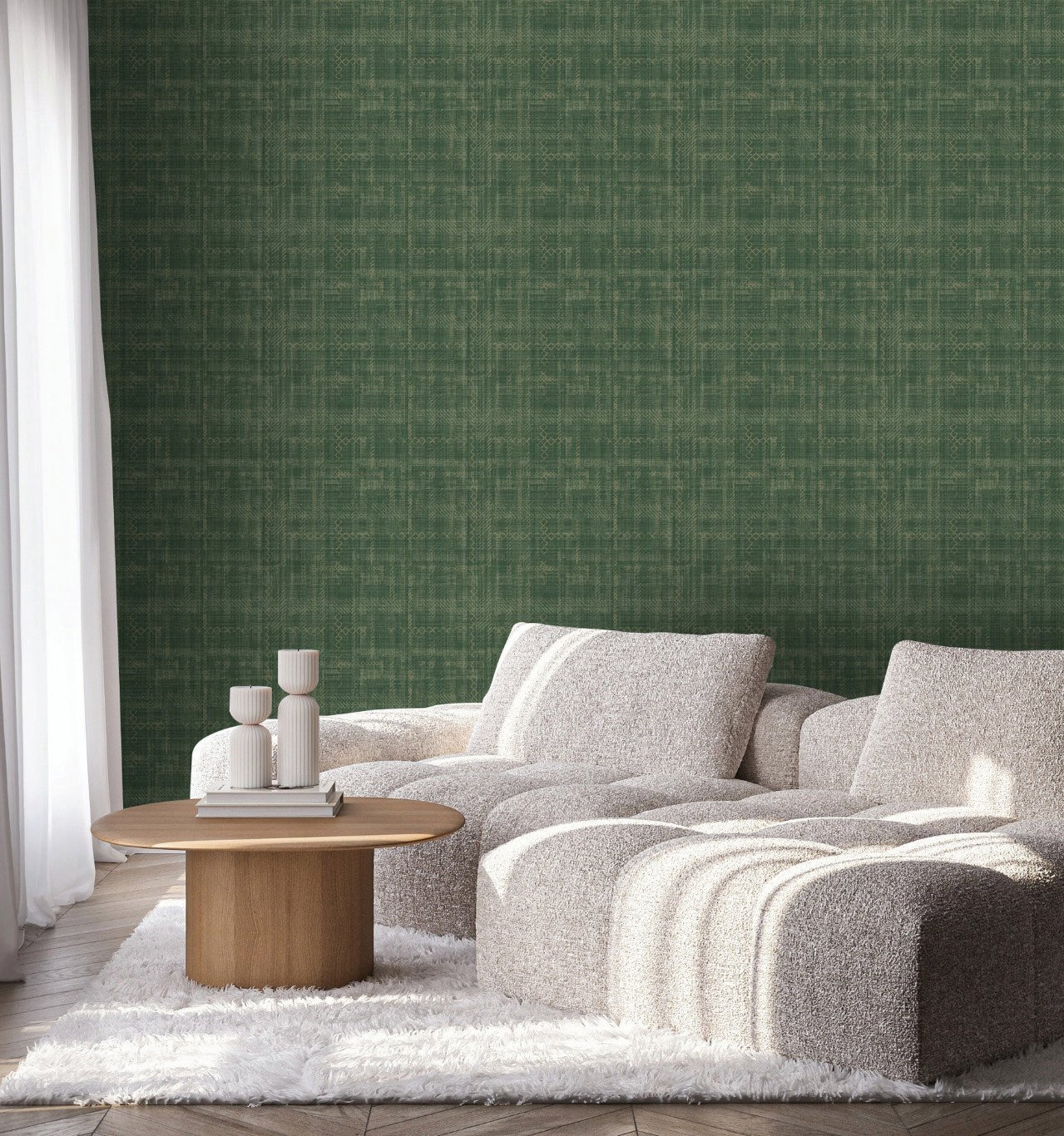
Wallpaper is one of the most effective vehicles for establishing a maximalist colour palette. A boldly patterned wallcovering on one or more walls immediately introduces multiple colours, pattern, and visual energy. It sets the tone for the entire room and provides a colour map for selecting upholstery, curtains, and accessories.
Pattern Mixing with Confidence
Mixing patterns is the technique that most intimidates people about maximalist design. A few practical rules make the process manageable.
Vary the scale. Combine large-scale, medium-scale, and small-scale patterns in the same space. A large floral on a sofa, a medium geometric on cushions, and a fine stripe on curtains create visual rhythm without the patterns fighting for dominance.
Link through colour. Patterns that share at least one colour naturally belong together, even if their styles differ. A blue-and-gold geometric wallpaper, a blue floral upholstery, and a gold-striped cushion are unified by their shared palette despite their different pattern types.
Include solids. Not everything needs to be patterned. Solid-coloured elements, whether a plain velvet armchair, a textured but unpatterned rug, or solid-coloured curtain panels, provide visual rest between patterned surfaces. These breathing spaces prevent the eye from becoming overwhelmed.
Use pattern on different planes. Distribute pattern across walls, floor, and furnishings rather than concentrating it on one surface type. Patterned wallpaper on the walls, a textured rug on the floor, and patterned cushions on a solid sofa creates a three-dimensional pattern experience that feels enveloping and intentional.
Maximalism in Singapore Homes
Singapore’s housing typologies each offer distinct opportunities and challenges for maximalist design.
HDB Flats
The compact dimensions of HDB living spaces require maximalism to be particularly disciplined. The temptation to fill every surface defeats the purpose; instead, focus on richness within a controlled footprint. A boldly wallpapered feature wall, a colourful upholstered sofa with layered cushions, a gallery wall of artwork, and a collection of decorative objects on a single display shelf creates a maximalist impression without consuming precious floor space.
Vertical space is an asset. Floor-to-ceiling bookshelves filled with books, artwork, and objects deliver maximalist density while occupying minimal floor area. Wall-mounted collections, from plates to masks to framed textiles, add visual richness overhead where they do not obstruct movement.
Condominiums
Open-plan condo layouts can feel characterless and generic. Maximalist design injects personality and warmth that transforms developer-standard finishes into highly individual spaces. Bold wallpaper, colourful curtain fabric, and layered furnishings create rooms that feel collected and curated rather than purchased as a set.
Landed Properties
Landed homes provide the spatial generosity that maximalism rewards. Multiple rooms allow different colour stories and themes to unfold through the house, creating a journey of visual discovery. Generous wall areas accommodate large-scale wallpaper patterns and extensive art collections. Higher ceilings support more layers of visual interest without feeling crowded.
Common Maximalist Mistakes
Even enthusiastic maximalists benefit from knowing where the line sits between rich and chaotic.
Ignoring the colour story is the most common error. Random colour accumulation, grabbing whatever catches the eye without considering how it relates to what is already in the room, produces visual noise rather than visual richness. Always refer back to your established palette when adding new pieces.
Neglecting functionality in favour of display creates spaces that look impressive but are frustrating to live in. Every surface piled with objects, every chair draped in throws, and every path narrowed by furniture makes daily life cumbersome. Maximalism must coexist with comfort and practical function.
Using only inexpensive, mass-produced items creates a flat, disposable feeling. Maximalism gains its richness from variety in origin, material quality, and craftsmanship. Mix vintage finds, handmade pieces, quality textiles, and meaningful personal items alongside more accessible pieces to create depth and authenticity.
Forgetting about lighting is a subtle but significant error. Rich colours and deep textures absorb light. Maximalist interiors need generous, layered lighting: ambient, task, and accent, to illuminate the layers and prevent rooms from feeling dark and heavy, particularly in Singapore’s equatorial environment where natural light fades quickly after sunset.
Final Thoughts
Maximalist interior design is a celebration of personality, colour, and visual abundance. In a design culture that has long favoured restraint and reduction, maximalism offers permission to surround yourself with the things you love and create spaces that are vividly, unapologetically expressive. The discipline lies not in what you leave out, but in how thoughtfully you bring it all together. Start with a strong colour palette, layer with intention, and let your home reflect who you are.
Browse our e-catalogue for the latest designs and discover bold wallcovering and fabric options for your maximalist interior.