Healthcare Interiors
Aged Care Interior Design: Dignity and Comfort
Aged care interior design carries a responsibility that goes beyond aesthetics. The environment in which elderly residents live directly affects their physical safety, emotional wellbeing, and sense of dignity. In Singapore, where an ageing population is driving rapid expansion of nursing homes, assisted living facilities, and senior care centres, the demand for thoughtful, evidence-based interior design has never been greater.
Every material choice in an aged care setting either supports or hinders the people who live and work there. Getting it right requires understanding the specific needs of elderly residents and the operational demands of care environments.
Design Principles for Aged Care Environments
Effective aged care interior design is guided by principles that prioritise the resident’s experience above all else. These principles shape every material and colour decision.
- Safety first: Falls are the leading cause of injury among elderly residents. Flooring must provide traction, cushion impact, and avoid visual patterns that cause confusion or hesitation.
- Wayfinding through design: Many aged care residents experience cognitive decline. Colour contrast, distinctive flooring patterns at key points, and clear visual differentiation between zones help residents navigate independently.
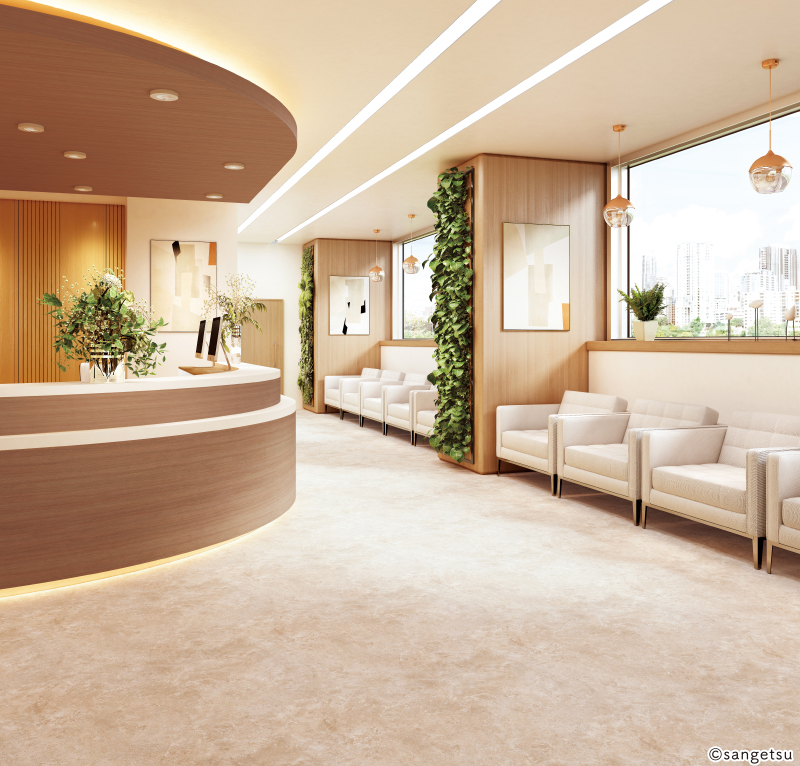
- Home-like atmosphere: Institutional environments contribute to depression and disorientation. Residential-quality finishes, warm colours, and familiar material textures help residents feel at home rather than hospitalised.
- Infection control: Care environments must maintain strict hygiene standards. Materials must withstand rigorous cleaning protocols without degrading.
- Staff efficiency: The design should support care staff in their work, with durable surfaces that are easy to clean and maintain, reducing the time spent on housekeeping.
Flooring for Safety and Comfort
Flooring is the most consequential material decision in aged care design. The wrong floor can cause falls, exacerbate mobility difficulties, and create an institutional atmosphere. The right floor supports confident movement and contributes to a welcoming environment.
Key Flooring Requirements
Aged care flooring must meet several requirements simultaneously:
- Slip resistance: Surfaces must provide adequate grip in both dry and wet conditions. This is measured by the R-rating system, with R10 being the minimum for most aged care areas.
- Impact absorption: Cushioned flooring reduces the severity of injuries from falls. Even a modest amount of resilience can mean the difference between a bruise and a fracture.
- Visual clarity: Flooring should be uniform in tone within a room to avoid visual confusion. High-contrast patterns, dark patches, or strong veining can be perceived as holes or obstacles by residents with impaired vision or dementia.
- Easy maintenance: The floor must withstand daily mopping, periodic deep cleaning, and exposure to cleaning chemicals without deteriorating.
Recommended Flooring Types
Vinyl flooring in sheet or tile format is the most widely specified flooring for aged care facilities. It meets all the requirements above: slip-resistant, cushioned, visually consistent, and easy to clean. Sheet vinyl with heat-welded seams creates a seamless, hygienic surface that prevents moisture penetration, a critical concern in environments where incontinence is common.
In residential-style rooms and common areas, luxury vinyl tile in warm timber tones creates a home-like atmosphere while maintaining commercial-grade performance. The visual warmth of a timber-look floor significantly reduces the institutional feel of a care facility.
Carpet is appropriate in specific areas, such as lounge rooms and quiet sitting areas, where its acoustic and thermal properties enhance comfort. However, it should be low-pile and easily cleanable, with individual tile replacement capability.
Wall Treatments for Wayfinding and Warmth
Walls in aged care settings serve dual purposes: they must be durable and hygienic, and they must contribute to a warm, navigable environment.
Colour Contrast for Navigation
Residents with diminished vision or cognitive impairment rely on colour contrast to understand their environment. Walls should contrast clearly with floors, doors should contrast with surrounding walls, and handrails should contrast with the wall behind them. A difference of at least 30 points on the Light Reflectance Value (LRV) scale between adjacent surfaces is recommended.
Wallcovering for Durability
Walls in aged care corridors and common areas are subject to constant contact from wheelchairs, walking frames, trolleys, and hands reaching for support. Commercial-grade vinyl wallcovering provides the impact resistance and cleanability these areas demand.
In resident rooms, wallcovering in warm, residential tones creates a more personal atmosphere than institutional paint. Soft patterns reminiscent of home environments, such as subtle damask or linen textures, help residents feel that the room is theirs rather than a hospital ward.
Wall Protection
Corridor walls require additional protection at wheelchair and trolley height. Wall protection rails, corner guards, and rubbing strips prevent damage while maintaining a clean design aesthetic. These elements should be specified in colours that complement the overall interior scheme.
Fabric and Soft Furnishings
Soft furnishings bring warmth and homeliness to aged care interiors. They also serve practical functions in acoustic management and thermal comfort.
Curtains
Curtains in resident rooms and common areas add a residential quality that blinds alone cannot achieve. Choose fabrics that are inherently flame-retardant or treated to meet fire safety requirements. Curtains should be easy to remove for laundering and resistant to fading from Singapore’s strong sunlight.
Upholstery
Seating in aged care facilities must support residents with limited mobility. Chairs need firm cushioning and armrests that assist standing. The upholstery fabric must be waterproof or highly water-resistant, stain-resistant, and easy to wipe clean. Vinyl upholstery or polyurethane-coated fabrics meet these requirements while offering a comfortable seating surface.
Common areas benefit from upholstered furniture in varied, warm colours that create visual interest and help residents identify their preferred seating spots.
Dementia-Friendly Design Considerations
A significant proportion of aged care residents live with dementia. The interior environment can either support or hinder their daily functioning.
Key dementia-friendly design principles include:
- Avoid dark flooring thresholds: A dark strip at a doorway may be perceived as a step or a hole, causing residents to freeze or attempt to step over it.
- Minimise mirror-like reflections: Highly glossy floors or mirrored surfaces can cause confusion and distress. Specify matte or satin finishes throughout.
- Use colour to identify rooms: Different wall colours or wallcovering patterns at each resident’s door help individuals recognise their own room.
- Maintain consistent flooring: A single flooring type and colour throughout circulation areas prevents hesitation and promotes confident walking.
- Provide visual cues: A contrasting floor border at the edges of corridors helps residents navigate. Distinct wallcovering in dining rooms and lounge areas signals a change of activity zone.
Final Thoughts
Aged care interior design is an act of respect. Every material decision affects the daily experience of people who deserve to live in comfort, safety, and dignity. The right flooring prevents falls. The right wallcovering supports navigation. The right fabrics bring warmth to a place that must feel like home.
For architects and designers specifying aged care interiors in Singapore, the material choices matter profoundly. Choose them with the care that every resident deserves.
Get a free quote for your project today and explore materials designed for aged care environments.