Healthcare Interiors
Rehabilitation Centre Interior Design Guide
Rehabilitation centre interior design directly influences patient recovery outcomes. The physical environment shapes mood, motivation, and mobility in ways that complement clinical treatment. Patients recovering from strokes, orthopaedic surgeries, neurological conditions, or substance dependencies spend weeks or months within these spaces — the design must support healing at every level.
This guide covers the material specifications, spatial strategies, and design principles that create rehabilitation environments where patients feel safe, motivated, and cared for.
Why Interior Design Matters in Rehabilitation
Clinical research consistently links the physical environment to recovery speed and patient wellbeing. Natural light, views of greenery, calming colour palettes, and intuitive spatial layouts all contribute to reduced stress, improved sleep, and greater willingness to engage in therapy.
Conversely, institutional aesthetics — stark white walls, fluorescent lighting, echoing corridors — can increase anxiety and create a sense of confinement that undermines rehabilitation goals.
In Singapore, where rehabilitation facilities serve an ageing population alongside younger patients recovering from accidents and surgeries, the design must accommodate a wide range of physical capabilities and emotional needs within a single facility.
Flooring for Safety and Therapeutic Function
Flooring is arguably the most critical material choice in a rehabilitation centre. Patients with mobility impairments, balance deficits, and muscle weakness are at elevated fall risk. The floor surface directly affects safety, confidence, and the ability to perform therapeutic exercises.
Luxury vinyl flooring is widely specified in rehabilitation settings. It offers the necessary combination of slip resistance, impact absorption, and wheelchair compatibility that these environments demand.
Critical Flooring Specifications
- Slip resistance: Wet and dry slip ratings must meet or exceed healthcare facility standards. Textured, matte surfaces are essential in therapy areas, bathrooms, and corridors.
- Impact absorption: A degree of cushioning underfoot reduces injury severity if a patient falls. Vinyl flooring with foam or cork-backed construction provides this without compromising wheelchair manoeuvrability.
- Seamless installation: Welded seams in vinyl sheet flooring eliminate trip hazards and prevent moisture ingress, simplifying infection control.
- Wheelchair and mobility aid compatibility: Smooth, level surfaces without transitions or thresholds allow wheelchairs, walkers, and wheeled therapy equipment to move freely.
- Colour contrast: Contrasting floor and wall colours help patients with visual impairments identify spatial boundaries, doorways, and obstacles.
Therapy Gym Flooring
Physiotherapy and occupational therapy gyms require flooring that supports exercises ranging from walking practice to balance training. Resilient vinyl or rubber flooring with moderate cushioning provides a stable surface that forgives missteps without being so soft that it destabilises patients learning to walk again.
Wall Treatments That Support Recovery
Walls in a rehabilitation centre must be durable enough to withstand wheelchair impacts, grab-rail installations, and frequent cleaning, while contributing to a warm, non-institutional atmosphere.
Healthcare-grade vinyl wallcoverings meet both requirements. They resist impact damage, support antibacterial cleaning protocols, and are available in a wide range of colours and textures that soften the clinical feel of the facility.
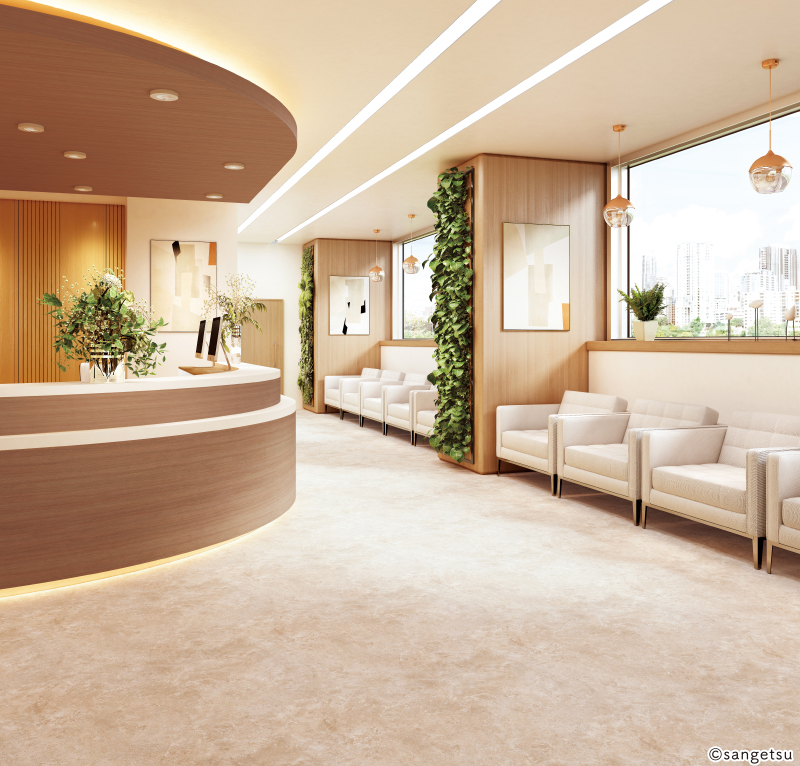
Colour choice significantly influences patient mood. Evidence-based healthcare design recommends soft, nature-inspired tones — muted greens, warm beiges, gentle blues — that promote calm without drowsiness. Feature walls in communal areas can incorporate warmer or more stimulating tones to encourage social interaction and activity.
In corridors, wall protection rails and corner guards prevent damage from wheelchairs and trolleys. Combining these protective elements with durable wallcoverings creates a surface system that remains attractive despite constant physical contact.
Patient Room Design
Patient rooms in a rehabilitation centre serve as bedroom, recovery space, and sometimes therapy room. They must balance privacy with clinical access, comfort with functionality.
Flooring should be warm-toned LVT that feels residential rather than clinical. Matte finishes prevent glare from bedside lighting that may disturb sleep. The floor surface must extend seamlessly into the ensuite bathroom, eliminating the threshold that poses a trip hazard for patients transferring between rooms.
Wallcoverings in patient rooms should be calming and neutral, serving as a backdrop for personal items and family photographs that help patients feel at home. A feature strip or accent colour near the headboard wall adds visual interest without overwhelming the space.
Window treatments are important for circadian rhythm support. Curtain fabrics that allow adjustable light control help patients maintain healthy sleep-wake cycles, which research links to faster recovery.
Communal and Therapy Spaces
Dining rooms, lounges, recreation areas, and group therapy rooms are where patients socialise and rebuild confidence. These spaces should feel distinctly different from clinical areas — warmer, more relaxed, and more stimulating.
Carpet tiles in lounge areas add acoustic comfort and warmth. Choose low-pile, dense-loop constructions that allow wheelchair movement while still providing softness underfoot for ambulatory patients.
Upholstered seating in performance fabrics supports infection control without sacrificing comfort. High-density foam cushions and supportive armrests help patients with reduced mobility sit down and stand up independently.
Group therapy rooms benefit from flexible furniture that can be reconfigured for different session types — circle arrangements for group discussions, clear floor space for movement therapy, and partitioned zones for individual exercises.
Wayfinding and Accessibility
Intuitive wayfinding is especially important in rehabilitation settings where patients may have cognitive impairments, visual deficits, or unfamiliarity with the facility layout.
Colour-coded zones — using distinct wallcovering colours or flooring tones for different wings or floors — provide an instinctive navigation system that does not rely on reading ability or visual acuity.
Contrasting colours between floors, walls, and doors help patients with low vision identify spatial boundaries. Door frames in a different tone from the surrounding wall make entrances immediately visible.
Handrails along all corridors provide physical support and serve as wayfinding guides. Their colour should contrast with the wall behind them for maximum visibility.
Final Thoughts
Rehabilitation centre interior design is a discipline where material choices have direct therapeutic consequences. Slip-safe flooring, calming wallcoverings, thoughtful colour palettes, and intuitive spatial planning create environments that actively support patient recovery.
Investing in healthcare-grade finishes ensures these spaces remain safe, hygienic, and welcoming across years of intensive use, benefiting patients and operators alike.
Get a free quote for your project today and explore healthcare-grade flooring and wallcovering options for your rehabilitation facility.