Industry Insights
Decorative Glass Film for Commercial Interiors
Decorative glass film is one of those products that most specifiers under-use, largely because the early generation of the technology was unconvincing and the assumption has stuck. Current-generation architectural glass film is materially different from the office-window product that defined the category twenty years ago. It performs against four distinct briefs at once — UV protection, privacy modulation, energy management, and decorative expression — and at a cost basis that makes it difficult to justify any other intervention when those briefs need to be addressed simultaneously.
At Goodrich, we specify Sangetsu’s CLEAS architectural glass film range across commercial, hospitality, healthcare, retail, and education projects in Singapore. This article sets out where decorative glass film genuinely earns its place in a commercial fit-out, where it does not, and how we approach specification for projects that need the four briefs handled together.
The Four Briefs Decorative Glass Film Addresses
UV protection
Singapore sun is brutal on interior finishes. Direct and reflected UV exposure causes textile fading, leather discoloration, timber bleaching, and accelerated polymer ageing across any soft furnishing or decorative element within line of sight of unprotected glazing. For interior designers specifying premium fabrics, hand-tufted carpets, and natural-material wallcoverings, UV-driven colour shift is a service-life issue, not just an aesthetic one. Sangetsu CLEAS film cuts UV radiation by 99 per cent or more — practical elimination of UV-driven degradation of interior materials behind the treated glass.
Privacy modulation
Commercial interiors increasingly use glass partitioning to deliver visual openness and daylight penetration. The trade-off is sightline control: meeting rooms that need privacy from the corridor, healthcare consultation rooms, hotel guestrooms with bathroom glass partitions, retail fitting rooms, executive offices. Decorative glass film converts a clear glass surface into a frosted, patterned, gradient, or branded privacy element without the cost or weight of replacing the glass with a frosted or laminated specification.
Energy and glare management
Solar heat gain through unprotected glazing is one of the largest contributors to interior cooling load in Singapore commercial buildings. Reflective and absorbing glass films reduce solar heat gain coefficient (SHGC) measurably, lowering air-conditioning load. Glare management — the experience of harsh sunlight bouncing off glazed elevations and into the workspace — is a separate but related brief, and one that decorative film addresses without darkening the interior the way heavy tinting does.
Decorative expression and brand
Glass surfaces are some of the largest uninterrupted visual planes in a modern interior. Treating them as decorative canvases — branded patterns, abstract gradients, custom artwork, environmental graphics — is a high-leverage way to inject design identity without any structural intervention. For hospitality and corporate spaces wanting to express brand language through interior surfaces, glass film delivers at a fraction of the cost of bespoke etched or printed glass replacement.
The Sangetsu CLEAS Range
The Sangetsu CLEAS film family addresses the four briefs in different combinations across its product variants. The core technical attributes Goodrich works with on commercial specifications:
- UV-cut performance: 99+ per cent UV reduction across the CLEAS range, validated under standard testing protocols.
- Scatter prevention: film holds glass shards in place if the glazing breaks. Functions as a basic safety film for general areas where laminated glass was not specified at original construction.
- Energy-saving variants: films with solar reflective and absorptive properties that reduce SHGC, applicable to perimeter glazing exposed to direct sun.
- Privacy variants: frosted, patterned, gradient, and dichroic films delivering visual obscuration at varying levels — from full obscuration through to subtle pattern-driven privacy.
- Decorative variants: printed patterns, custom artwork, and brand-language films suitable for storefronts, partition walls, retail interiors, and hospitality decorative panels.
Where Decorative Glass Film Earns Its Place
Office meeting rooms and executive offices
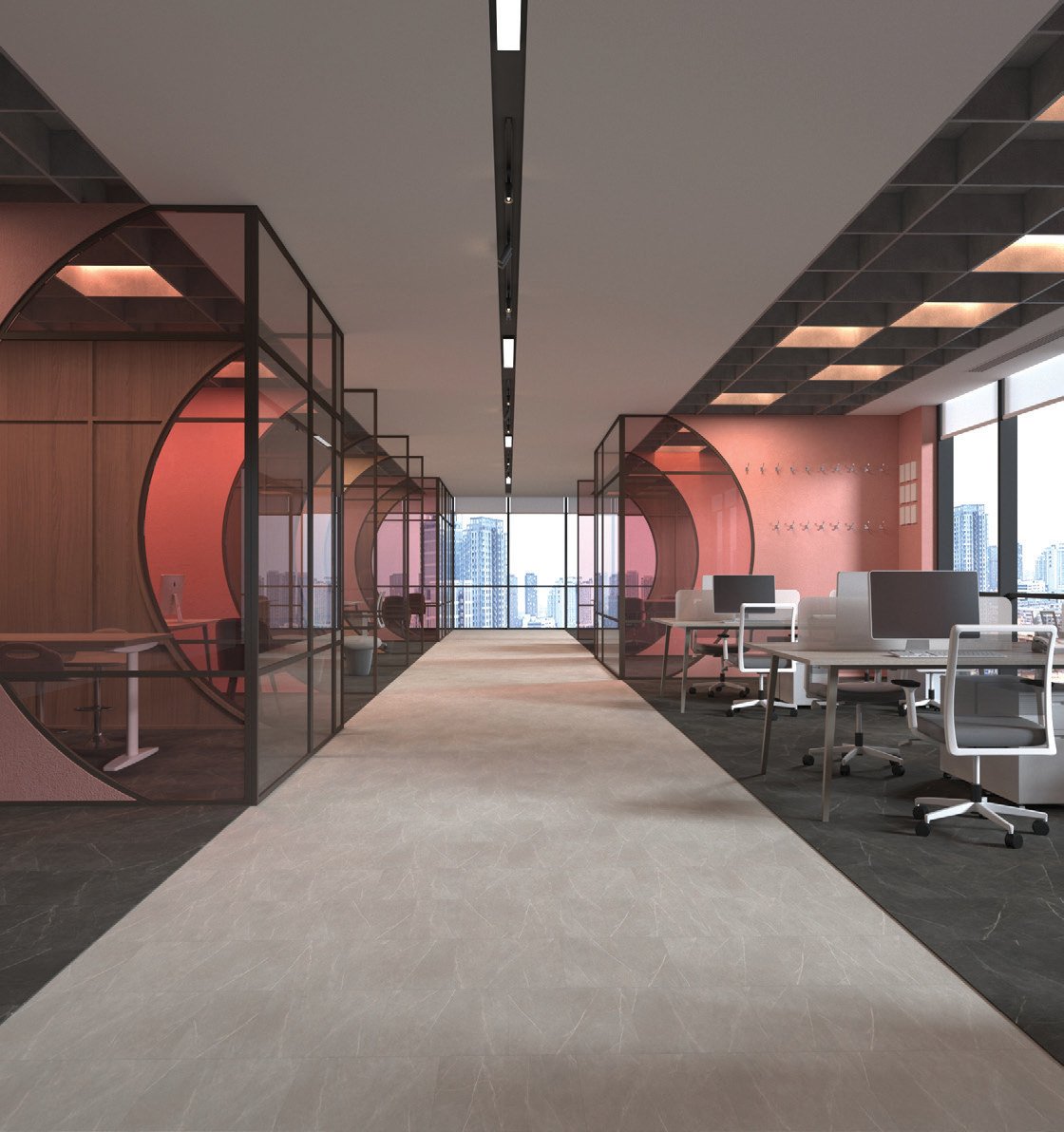
Glass-walled meeting rooms have become the corporate office default, but most do not have the privacy modulation built in at the glazing specification. Decorative glass film retrofits the privacy without replacing the glass — frosted bands at seated-eye-line height, full obscuration from the corridor, branded patterns that signal the function of the room. Same logic applies to executive offices with glazed partitions to the open-plan workspace.
Hotel guestrooms and bathroom partitions
Singapore and regional luxury hotels have widely adopted glass partitions between bathrooms and sleeping areas. The aesthetic case is open, daylit, designer-friendly. The practical case requires privacy modulation — guests do not want a fully transparent partition between the shower and the bed. Decorative glass film delivers the privacy without compromising the design intent.
Retail storefronts and feature glazing
Storefront glass is one of the highest-impact brand surfaces a retail tenant has. Decorative glass film delivers seasonal campaigns, brand graphics, and promotional artwork at the speed of the merchandising calendar — campaigns can rotate every quarter without touching the glass itself. For flagship and pop-up retail formats, this is a structural advantage.
Healthcare consultation and treatment rooms
Healthcare facilities increasingly use glass partitioning for daylight penetration and supervisory visibility, but consultation rooms, treatment rooms, and recovery areas need privacy. Decorative glass film delivers the privacy with patterns that read as appropriate for healthcare interiors, while UV cut and scatter prevention are operational benefits.
Educational facilities
Glazed corridors, classroom windows, and library reading rooms benefit from UV protection (textbook spines and printed materials are particularly UV-sensitive), glare reduction (a critical issue for whiteboards and screens), and selective privacy modulation. Sangetsu CLEAS specifications appear regularly in Singapore international school and tertiary institution work.
F&B and hospitality glazing
Restaurants and bars with full-height glazing face glare management at lunch and dinner service when low-angle sun crosses the diner’s sightline. Decorative film addresses glare while contributing to brand identity through pattern selection. UV cut protects upholstery and carpet within the dining room from direct-light degradation.
The Selection Framework
For most commercial briefs, decorative glass film selection follows a four-question framework:
1. What level of privacy is required?
Full obscuration (frosted variant), seated-eye-line band (partial frosted), patterned (residual transparency through the pattern), or gradient (variable obscuration top-to-bottom). The privacy answer drives the family of film selected.
2. How much UV and solar protection is needed?
If the glazing is in direct or reflected sun for any meaningful part of the day, energy-saving film with UV cut is the performance answer. If the glazing is internal partition (no exterior light path), basic decorative film with scatter prevention is sufficient.
3. Is decorative or branded artwork required?
Standard pattern, custom pattern, or photographic-quality custom print. For brand-led specifications, custom-print film is the route, with the commensurate development time and cost. For pattern-led specifications, the standard CLEAS catalogue covers most briefs without custom development.
4. What is the substrate and installation context?
Annealed glass, tempered glass, laminated glass, monolithic, IGU (insulated glass unit), exterior or interior face. These determine which adhesive system is appropriate, whether film application is acceptable on the chosen face, and whether IGU thermal stress is a consideration. Application to the wrong face or wrong glazing type can void the glazing warranty.
The Installation Question
Glass film application is a high-skill installation. The product itself is precisely engineered, but the difference between an excellent installation and a poor one is entirely in the technique — surface preparation, slip solution chemistry, squeegee technique, edge handling, and post-application cure conditions. Air bubbles, edge lift, and contamination defects in a poorly installed film are visible across the entire glazed surface and undermine the design intent immediately.
For commercial projects, supplying both product and installation through a single source — Goodrich provides supply-and-install for Sangetsu CLEAS — is the structural risk control. The installation team is trained on the specific film, the adhesive system, and the substrate handling protocol.
The Energy-Saving Case in Singapore Specifically
Singapore’s tropical climate makes solar heat gain a year-round cooling load. For perimeter glazing on west-facing and south-facing elevations of office and commercial buildings, retrofitting energy-saving glass film delivers measurable cooling-load reduction — typically in the 15 to 30 per cent range for the affected glazing area, depending on the specific film and the original glazing performance.
For BCA Green Mark Restoration credits and corporate sustainability commitments, retrofitted energy-saving film is a low-disruption intervention. The asset does not need to come out of service; the glazing does not need to be replaced; the operational cooling-load reduction shows up in the monthly utility bills within the first billing cycle after installation. For older assets where the original glazing is single-glazed or low-performance double-glazed, the energy case alone often justifies the film capital cost within 24 to 36 months.
Where Decorative Glass Film Does Not Fit
- Glazing requiring fire-rated assemblies. Decorative film does not contribute fire performance. Fire-rated glazing assemblies must be specified at the glazing level, not retrofitted with film.
- Glazing already at high-performance specification. If the glazing is high-performance low-e double-glazed, additional energy film delivers diminishing returns. The case is strongest on legacy glazing.
- Substrates with active condensation or sealant degradation. Substrate problems must be remediated before film application. Film over a failing substrate transfers the problem rather than hiding it.
- Some IGU configurations. Solar films on the inboard face of insulated glass units can create thermal stress on the outboard pane. Specification on IGU requires confirmation against the IGU manufacturer’s allowed films.
Service Life and Lifecycle
Decorative glass film typical service life is 10 to 15 years interior, with shorter life on directly sun-exposed elevations. At end of service the film is removed mechanically, the glass is cleaned, and the substrate is ready for refilming or alternative treatment. The reversibility is an underrated specification advantage — particularly for tenants in leased space where landlord-owned glazing must be returned to original condition at lease end.
How to Specify with Goodrich
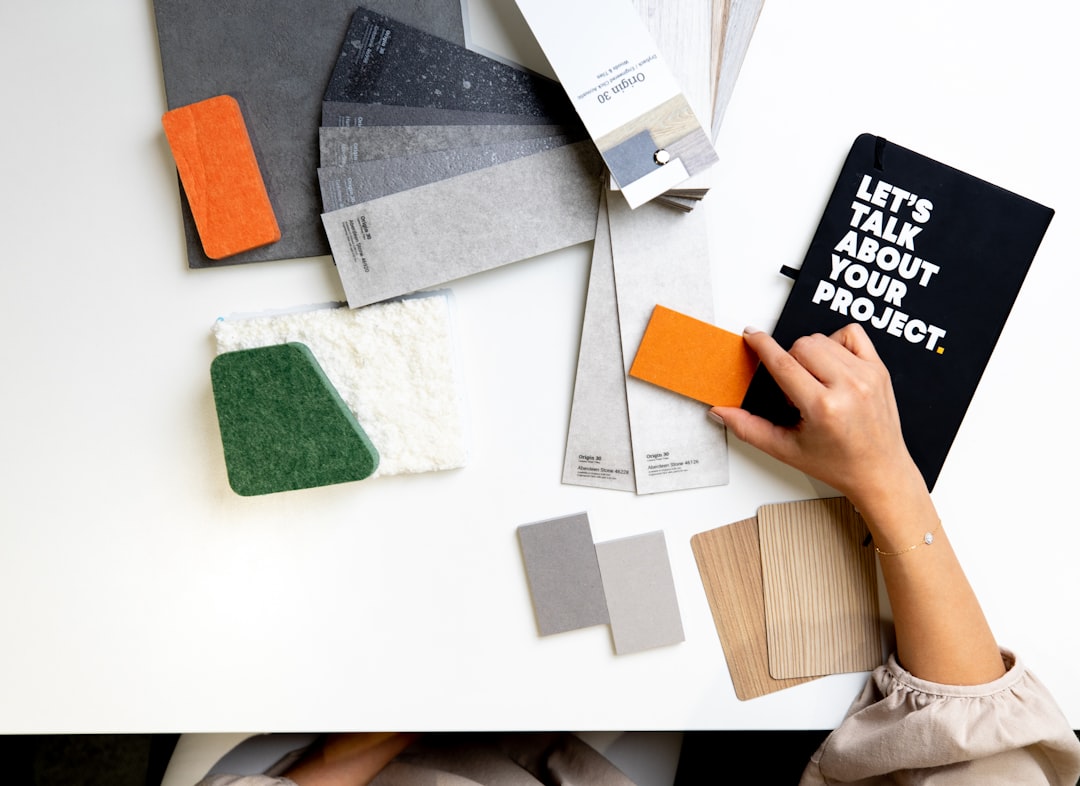
The shortest path to a confident specification is a site assessment. We assess glazing type and condition, identify the brief (privacy, UV, energy, decorative — usually some combination), develop sample boards for design alignment, scope the installation programme, and quote on a supply-and-install basis. For multi-phase rollouts across hospitality groups, retail chains, or corporate office portfolios, the same scoping process scales — coordinated specifications across phases ensure visual consistency and operational simplicity.
Speak to our team to scope a decorative glass film specification. Browse Sangetsu CLEAS references in the Goodrich e-catalogue, explore the full Goodrich wallcovering and surfacing range, or see project case studies for examples in commercial and hospitality work.