Commercial Interiors
Resin Flooring Types: Epoxy, PU and Where Resilient Vinyl Fits
“Resin flooring” appears in Singapore tender documents as if it were a single product, when it is actually a family of chemically distinct systems with different cure behaviours, temperature tolerances and failure modes. Specifying the wrong resin for the exposure — or specifying resin at all where a resilient floor serves the brief better — is one of the more expensive mistakes a fit-out can make, because poured systems are unforgiving to remove.
This guide maps the resin family for specifiers, sets out what to verify before committing, and draws an honest line between where resin genuinely belongs and where it gets defaulted into interiors unnecessarily.
Goodrich Global does not supply or install resin flooring systems. Our range covers commercial resilient vinyl flooring that installs faster, repairs more easily and brings acoustic and underfoot comfort that poured floors cannot.
The Resin Family at a Glance
Four chemistries account for almost every resin floor specified in Singapore, and their differences are practical, not academic.
| System | Character | Strengths | Watch-outs |
|---|---|---|---|
| Epoxy | Rigid, hard, glossy | Chemical resistance, seamless finish, decorative flake/metallic options | Yellows under UV (indoors only), brittle over moving cracks, slow cure |
| Polyurethane (PU) | Flexible, resilient | Thermal-shock tolerance, better crack-bridging, comfort variants | Costlier than epoxy; moisture-sensitive during application |
| PMMA / MMA | Fast-cure acrylic | Full cure in roughly two hours, overnight retail and cold-room turnarounds | Strong odour during cure; premium price |
| Cementitious urethane | Heavy-duty hybrid | Withstands hot washdowns, steam and aggressive processing environments | Utilitarian aesthetics; thick, heavy build-up |
Epoxy is the volume product and the one most enquiries actually mean; its costs and residential uses are covered in depth in our epoxy flooring Singapore guide. PU earns its premium wherever temperature swings would crack epoxy — commercial kitchens, food factories, blast chillers. PMMA buys programme time; cementitious urethane buys survival in wet processing halls.
Build-Ups and Thicknesses
Within each chemistry, the build-up determines performance as much as the resin itself. Thin coatings of 0.3mm to 1mm are essentially paint systems: economical, quick, but with a service life measured in a few years under traffic. Self-levelling systems poured at 2mm to 4mm form the standard commercial and light-industrial floor, thick enough to absorb minor substrate texture and take steady forklift or trolley traffic.
Trowel-applied screeds at 4mm to 9mm — typically cementitious urethane or heavily filled epoxy — are the heavy-industrial tier, built for impact, point loads and thermal abuse. Each step up adds material cost, labour skill and programme days, so matching build-up to actual exposure, rather than specifying the thickest system defensively, is where value engineering legitimately lives.
Indicative Singapore pricing follows the same ladder: thin coatings from roughly S$15 to S$30 per sqm, self-levelling systems from S$40 to S$80, and heavy-duty trowelled screeds upwards of S$80 to S$150 depending on chemistry and preparation. Surface grinding, crack repair and moisture primers sit on top of those figures, and on older slabs the preparation line can rival the resin itself.
What Specifiers Must Check Before Committing
Resin failures are rarely the resin’s fault; they are almost always application-condition failures. Four checks belong in every specification review.
Substrate moisture
Resins are impermeable, so moisture rising through a slab has nowhere to go and will blister the coating off. New slabs need verified drying time or a moisture-suppressing primer; hygrometer testing before application is non-negotiable in Singapore’s humidity, particularly on ground slabs and post-hacking wet works.
Slip profile vs cleanability
Broadcast aggregate gives resin its wet-slip grip, but every increment of texture makes the floor harder to mop and more likely to trap soiling. Kitchens and wet zones need the texture; a showroom does not. Specify the slip rating per zone rather than one finish throughout.
Downtime windows
Epoxy typically needs multi-day cure before full traffic; PU similar; PMMA cures overnight at a price. If the space cannot be closed — an operating retail floor, a hospital corridor — the honest options narrow quickly, and this is frequently the point where a resilient floor re-enters the conversation.
VOC and odour during cure
Curing resins release odour and, depending on system, meaningful VOCs. In an occupied building, works must be isolated and ventilated; PMMA’s odour in particular travels through shared air-handling. Green Mark projects should verify low-VOC certification for the specific system, not the brand family.
Where Resin Belongs — and Where Vinyl Is the Better Default
Resin earns its place where the floor is genuinely a piece of process equipment: production and wet-processing areas, commercial kitchens, plant rooms, loading docks, workshops and carparks. In those environments, chemical spillage, hot washdowns, impact and vehicular traffic justify a seamless poured system, and nothing resilient competes.
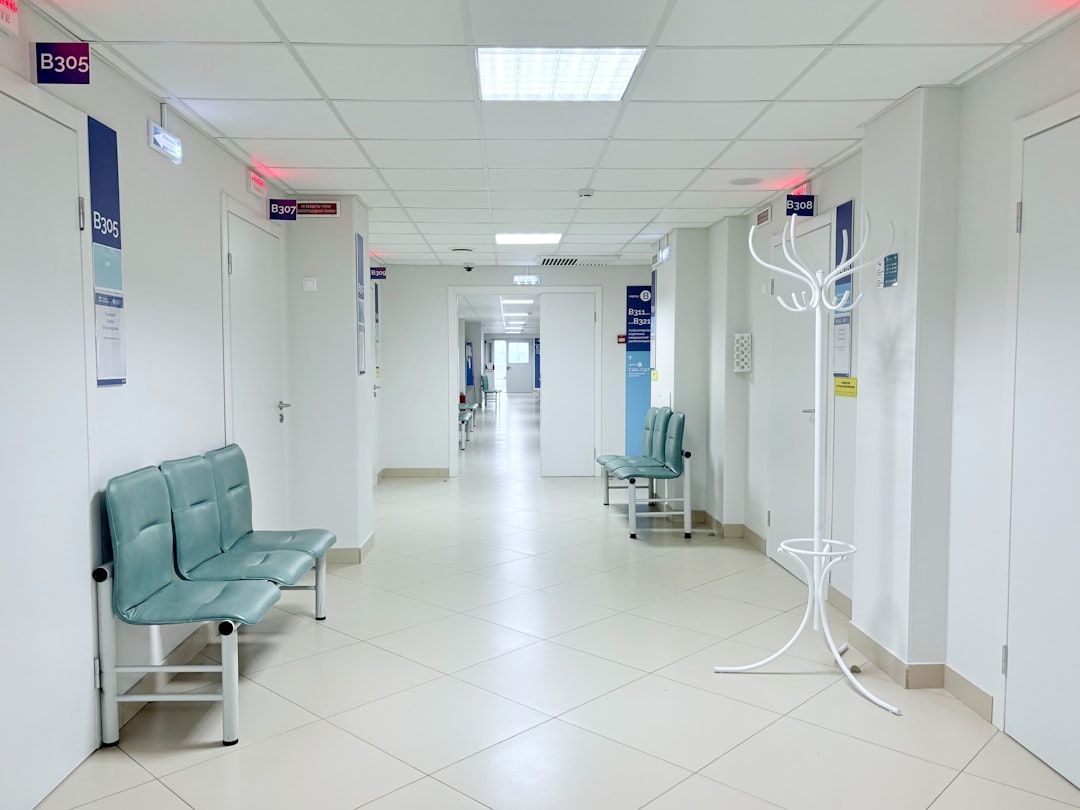
The pattern to question is resin migrating into interior fit-outs by aesthetic momentum — offices, retail floors, healthcare corridors and F&B front-of-house specified with self-levelling resin because the seamless look is fashionable. In these settings the exposure case is absent, and the trade-offs run the other way. Resilient vinyl installs in days without cure-time closures, and damaged planks or welded sheet sections are repaired or swapped without grinding out a bonded coating. It is warmer and quieter underfoot — acoustic-backed formats cut impact noise in ways a rigid resin surface amplifies — and modern LVT delivers concrete, stone and timber visuals a pigmented resin cannot. For healthcare corridors specifically, welded homogeneous and heterogeneous sheet remains the code-friendly standard. The full comparison, including per-sqm costs and lifecycle numbers, is in epoxy vs vinyl flooring for commercial spaces.
There is also a tenancy-cycle argument that rarely makes it into the aesthetic conversation. Singapore office and retail fit-outs turn over on three-to-five-year leases, and a bonded resin floor must be mechanically ground off before the next tenant’s finish goes down — noisy, dusty and slow in an occupied tower. Loose-lay and click resilient formats lift out cleanly at reinstatement, which landlords and project managers increasingly price into the comparison.
A useful discipline: if the zone would survive on the resilient flooring palette — vinyl, rubber, carpet tile — without functional compromise, the burden of proof sits with the resin, not against it. Poured systems should be specified for what they do, not how they photograph.
Final Thoughts
Treat “resin flooring” as a family, not a product: epoxy for chemical-heavy interiors, PU where thermal shock rules, PMMA where the programme is measured in hours, cementitious urethane where processing is brutal. Verify substrate moisture, zone-by-zone slip ratings, downtime tolerance and cure-stage VOCs before any system is locked in. And where the space is an office, store or corridor rather than a process environment, run the resilient-vinyl comparison honestly — on installation speed, repairability, acoustics and comfort, the poured floor usually loses the interiors it was never designed for.
Request specifications and a quotation from our commercial team — we support Singapore specifiers with datasheets, slip certifications and samples for resilient vinyl packages.