Commercial Interiors
Wall Guards and Wall Protection: Specifying for Busy Interiors
Walk the service corridor of any Singapore hospital, hotel or MICE venue and the walls tell the story: black wheel scuffs at skirting height, gouges at trolley-bumper height, a band of grime and impact damage between 600mm and 1,200mm where luggage, chairbacks and equipment live. Painted plasterboard has no answer to this traffic, which is why busy facilities end up repainting corridors every 12 to 18 months at S$3–S$6 per square foot — plus hoarding, night works and the operational disruption of closing a live corridor.
Wall guard systems and protective finishes exist to break that cycle. This guide sets out the full wall protection toolkit at specification level — rigid hardware, heavy-duty wallcoverings and design tactics — and where each belongs, zone by zone, in a Singapore facility.
Goodrich Global does not supply rigid crash rails, corner guards or handrail systems — those are contractor-supplied hardware. Our range covers heavy-duty protective wallcoverings that absorb everyday scuffs and impacts while keeping the interior looking designed rather than defended.
Why Walls Fail First in Busy Buildings
Wall damage is mechanical and predictable. In healthcare, it is bed and trolley traffic, wheelchair footplates and portable equipment. In hotels, it is luggage trolleys, roller bags dragged along corridor walls and housekeeping carts. In schools and offices, it is chairbacks parked against walls, AV carts and the simple abrasion of thousands of hands and shoulders along high-touch routes.
The cost is not only the repaint. Damaged walls read as poor maintenance to patients, guests and auditors; in healthcare they also become an infection-control problem, because chipped paint and cracked surfaces cannot be cleaned to protocol. A wall protection strategy is therefore an asset-management decision as much as an aesthetic one: the question is which layer absorbs the abuse, and how often you are willing to renew it.
The Toolkit, Part One: Rigid Wall Guard Systems
Rigid protection is the hardware family your main contractor procures and fixes. Crash rails (also called bumper rails or wall guards) are extruded PVC or acrovyn profiles on continuous aluminium retainers, mounted at trolley-impact height to take direct hits. Corner guards — surface-mounted or flush angles in the same materials or stainless steel — protect the single most-hit element in any corridor. Impact-resistant sheet (rigid PVC or laminate panels bonded to the wall, typically to 1,200mm dado height) armours whole wall faces in the most brutal zones, and handrail-cum-bumper combinations serve healthcare corridors where fall-prevention briefs demand a graspable rail.
Specify rigid systems wherever impacts are hard, repeated and concentrated: bed-transfer routes, loading corridors, service lifts and lobbies, kitchens and BOH circulation. Healthcare briefs and operator standards frequently require handrails and corner protection in patient-movement corridors, so check the employer’s requirements before value-engineering them out. The trade-off is aesthetic: rails and sheet read as institutional, add visual clutter, and their joints and end-caps become cleaning details. Over-specifying them in guest-facing or ward areas buys durability the zone does not need at a hospitality cost the interior cannot afford.
The Toolkit, Part Two: Heavy-Duty Protective Wallcoverings
For the far larger area of wall that takes scuffs, abrasion and glancing contact rather than direct trolley strikes, the working layer is a commercial wallcovering. Type II fabric-backed vinyl (the mid-weight commercial grade, roughly 20–33 oz) handles corridors, lobbies, meeting rooms and guestrooms; Type III (33 oz and above) is the heavy-duty grade for the hardest-working interior walls. Both carry high abrasion ratings, are scrubbable with detergent and non-abrasive brushes, and shrug off the wipe-downs that would burnish or strip paint within months — our commercial vinyl wallcovering guide covers the grades and standards in detail.
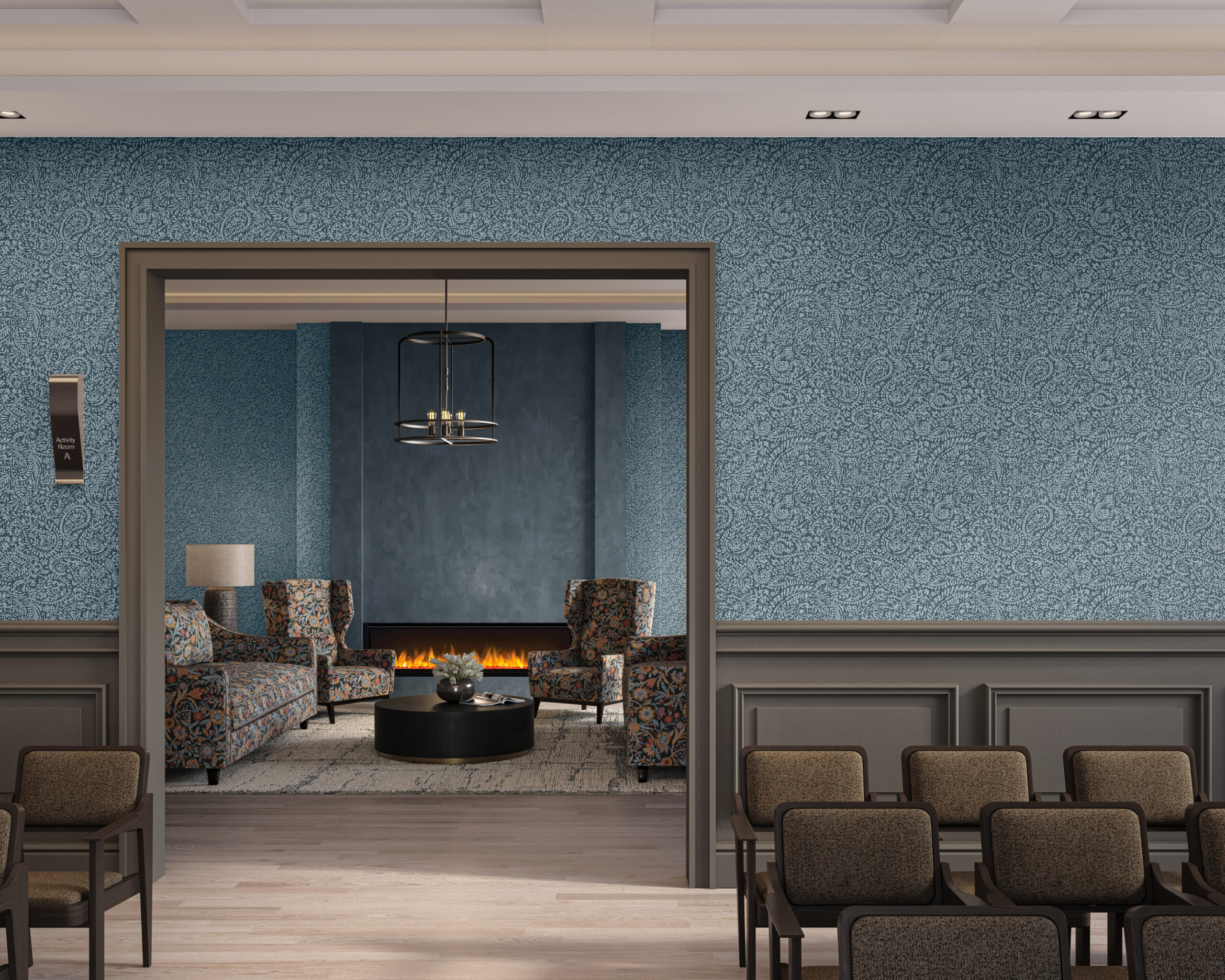
Two attributes matter particularly in Singapore facilities. First, hygiene: antimicrobial-treated wallcoverings suit patient areas and clinics, resisting the mould growth that tropical humidity encourages behind cooler external walls — see our guide to antimicrobial wall coverings for hospitals. Second, compliance: commercial wallcoverings must carry fire-performance certification acceptable to SCDF for the building class; insist on certificates for the specific product, as set out in our fire-rated wallcovering guide. Unlike rails and sheet, a wallcovering protects and decorates in a single layer — texture, colour and pattern come built in, so the corridor looks designed, not armoured.
The Toolkit, Part Three: Design Tactics That Hide the Battle
The cheapest protection is choosing finishes that do not show damage. A dado-height split — a darker, heavier-duty wallcovering to 1,200mm with a lighter finish above — concentrates the tough material exactly where contact happens and reads as a deliberate design move. Mid-tone, low-saturation colours at contact height hide scuffs that white walls broadcast; textured and patterned surfaces disguise minor marks that would be obvious on a flat matt finish. None of this replaces protection in genuine impact zones, but across wards, guestroom corridors and office circulation it stretches redecoration cycles significantly at zero added cost.
Zone-by-Zone Specification
Most projects need all three tools, allocated by traffic. A workable starting matrix:
| Zone | Primary protection | Supporting spec |
|---|---|---|
| Patient / bed-transfer corridors | Crash rails, corner guards, handrails | Type II–III vinyl wallcovering above and between rails; antimicrobial option |
| Wards and consult rooms | Type II antimicrobial wallcovering | Corner guards at door reveals; scuff-tolerant mid-tones |
| Hotel guest corridors | Type II vinyl wallcovering | Dado-height contrast; corner guards at lift lobbies |
| Lobbies and front-of-house | Type II wallcovering, textured | Discreet flush corner protection only where trolleys pass |
| BOH, service lifts, loading routes | Impact sheet to 1,200mm + crash rails | Type III wallcovering or painted block above |
| Schools and office circulation | Type II wallcovering, dado split | Corner guards at pinch points; chairback-height rail in waiting areas |
Maintenance: making the specification pay
Protection only delivers its payback if cleaning regimes match the materials. Commercial vinyl wallcoverings take routine damp-wiping with neutral detergent and periodic deeper scrubbing on high-touch bands; avoid solvent cleaners, which dull the surface. Rigid rails and guards need their fixings checked annually — a loose crash rail transfers impact straight into the substrate it was meant to protect. Keep attic stock of the specified wallcovering from the original batch, because a damaged drop can then be replaced invisibly rather than triggering a whole-corridor redecoration.
Reviewed this way, the economics are straightforward: a Type II wallcovering installation typically costs more than paint up front, but where paint demands repainting every 12–18 months in hard-use corridors, a heavy-duty wallcovering routinely serves 7–10 years with cleaning alone.
Final Thoughts
Specify wall protection by zone, not by habit. Rigid wall guard hardware — crash rails, corner guards, impact sheet — earns its institutional look in bed-transfer routes, BOH and loading corridors, where nothing else survives. Everywhere else, which is most of the building, a heavy-duty commercial wallcovering absorbs the everyday scuffs, wipes clean to protocol and carries the interior design in the same layer. Get the matrix right at tender stage and the walls stop appearing on the defects list altogether.
Request a quotation for heavy-duty protective wallcoverings with abrasion grades, antimicrobial options and fire certificates matched to your project’s zones.