Fabric & Upholstery
Curtains and Blinds Together: How to Layer and Choose per Room
Pairing curtains and blinds Singapore homeowners often treat as an either-or decision, when in practice the two work best together. Blinds deliver precise light control and a clean, functional layer at the glass, while curtains add softness, warmth and acoustic comfort — layer them and you get the strengths of both without the compromises of choosing one alone.
This guide covers why the combination works, the best pairings room by room, how to coordinate fabric, colour and hardware, and when a single treatment is genuinely enough.
Why Combine Curtains and Blinds
A blind sits close to the window and handles the practical work: filtering glare, adjusting privacy through the day and, in the case of blackout blinds, sealing out light entirely. A curtain hangs in front as a soft, full-height layer that frames the window, absorbs sound and gives a room a finished, residential feel that a blind alone rarely achieves.
Layering the two means you can dial in exactly the light and privacy you want at any hour. Tilt or lower the blind for daytime control, then draw the curtains in the evening for warmth and complete privacy. The blind does the heavy lifting on function; the curtain does the heavy lifting on atmosphere. In Singapore’s bright, west-facing high-rise units, this dual approach also helps manage intense afternoon sun without leaving the room feeling stark.
If you are still deciding between just one treatment rather than both, our blinds vs curtains guide compares them head to head. This article assumes you want to run both together.
Best Pairings by Room
Living Room
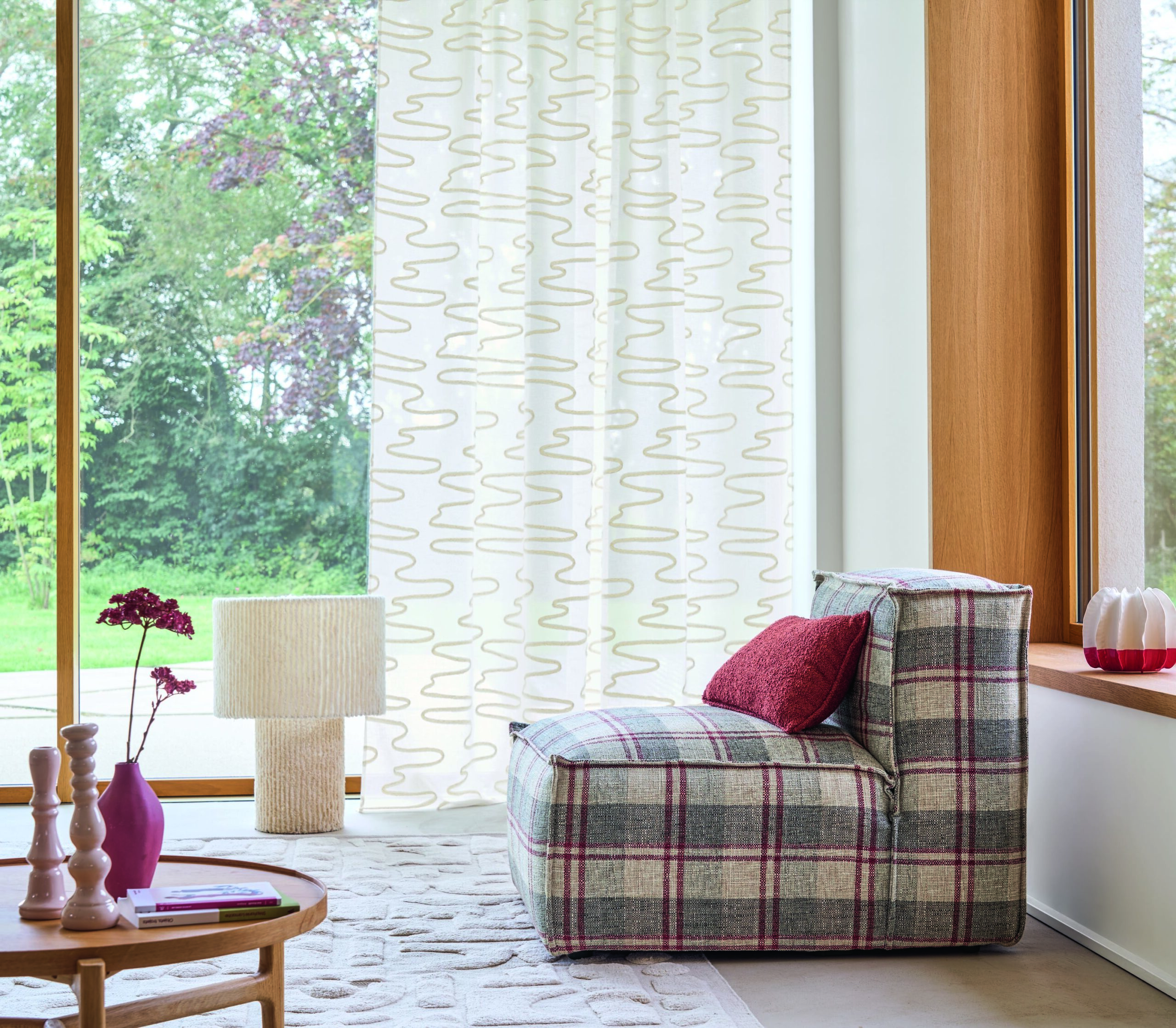
Living rooms benefit most visibly from layering. Pair a roller or roman blind at the glass with floor-length day curtains in a light, textured fabric. The blind manages glare on the television and screens the view when needed, while the curtains soften the hard edges of large windows and improve acoustics in open-plan HDB and condo layouts. Sheer or light-filtering curtains keep the space bright and airy during the day.
Bedroom
The bedroom is where layering earns its keep. A blackout blind fitted close to the reveal blocks street light and the early tropical sunrise, while a pair of curtains adds insulation, absorbs sound and creates a calm, enveloping feel. This pairing is the single most requested combination in Singapore homes because blinds alone leak light around the edges, and curtains alone rarely seal it out completely.
Study or Home Office
Screen glare is the main concern here. An aluminium venetian or roller blind lets you fine-tune light through the working day without plunging the room into darkness, while a lighter day curtain keeps the space from feeling clinical. Draw the curtain back fully during video calls for even, flattering light, then close the blind to cut afternoon sun on your monitor.
Kitchen
Kitchens favour practicality over softness. A moisture-resistant roller or aluminium venetian blind handles steam, splashes and cooking odours far better than fabric near the hob. If you want a hint of softness, add a short curtain or café-style panel well away from the cooking zone rather than full-length drapes.
Blackout Blind + Day Curtain, and Other Winning Combos
A handful of combinations account for most successful layered windows in Singapore:
- Blackout blind + day curtain: The bedroom classic. The blind delivers total darkness for sleep; the sheer or light curtain softens the window and diffuses daylight when the blind is up.
- Roller blind + sheer curtain: A clean, modern pairing for living rooms and studies. The sheer stays permanently drawn for a soft, glowing daytime look, with the roller lowered only when you need privacy or glare control.
- Venetian blind + full curtain: Adjustable slats give graduated light control while heavier curtains add evening warmth and a more formal feel — good for living and dining rooms.
- Roman blind + day curtain: Both layers are fabric, so this reads as the softest, most tailored option. Best kept to dry, air-conditioned rooms where humidity won’t trouble the folds.
- Sheer roller + blockout curtain: The reverse of the bedroom classic — a light-filtering blind for the day and heavy curtains that close for darkness and privacy at night.
For the blackout element, our blackout blinds guide explains how side channels and close-fit mounting eliminate the light gaps that curtains then cover. If you are still weighing which blind style suits each room, the window blinds types guide runs through the full range.
Coordinating Fabric, Colour and Hardware
The goal of layering is a considered look, not a busy one. Let one layer lead and keep the other quiet. If the blind carries a pattern or strong texture, choose a plain curtain in a complementary tone — and vice versa. Matching the blind and curtain to the same colour family, a shade or two apart, reads as intentional rather than clashing.
Fabric weight matters too. A light-filtering blind pairs naturally with a sheer or mid-weight drapery fabric, while a blackout blind can carry a heavier, more substantial curtain behind it. Pull the whole scheme together by echoing the metal finish of the blind mechanism in your curtain track or rod — brushed nickel, matte black or brass throughout.
| Blind layer | Curtain layer | Best rooms | Overall feel |
|---|---|---|---|
| Blackout roller/roman | Sheer day curtain | Bedroom, nursery | Dark for sleep, soft by day |
| Light-filter roller | Blockout curtain | Bedroom, media room | Bright day, private night |
| Venetian (aluminium/wood) | Mid-weight curtain | Living, dining, study | Adjustable, warm |
| Roman blind | Sheer or light curtain | Living, formal spaces | Soft, tailored |
| Moisture-resistant roller | Short café panel | Kitchen, utility | Practical, low-fuss |
On hardware, plan the mounting depth early. A blind sits inside or close to the window reveal, so the curtain track needs enough projection to clear it when drawn — a wall-mounted rod or a ceiling-recessed track both work. For motorised setups, keep the blind and curtain systems on compatible controls so a single remote or app can operate the pair.
Cost and Practicality Trade-Offs
Running two treatments naturally costs more than one, in both materials and installation. Budget for a blind plus curtains, track and fitting at each window you layer. The upside is flexibility and longevity: you can refresh the curtains for a new look while keeping the functional blind, and you are less likely to compromise on light control or privacy.
Layering also adds a little to upkeep. Blinds need periodic dusting or wiping, while curtains benefit from occasional laundering or professional cleaning — worth remembering in Singapore’s humid climate, where fabric near an un-air-conditioned window can hold moisture. Choosing washable or moisture-tolerant curtain fabrics keeps maintenance manageable. Prioritise the rooms where layering delivers the most, typically bedrooms and the main living area, and keep secondary rooms to a single treatment.
When One Is Enough
Layering is not always the right answer. A single treatment often makes more sense when:
- The window is small or in a wet zone: A kitchen or bathroom window is usually better served by one wipe-clean blind than by fabric that traps steam and odours.
- Budget is tight: If you can only invest in one layer, a well-chosen blind or a good blockout curtain will cover most needs on its own.
- The look is deliberately minimal: Some contemporary interiors read best with a single, unadorned roller blind and no curtains at all.
- Space is limited: Narrow reveals or windows close to a corner may not leave room for a curtain track to sit and stack neatly.
In these cases, deciding between the two comes back to the trade-offs set out in our blinds vs curtains guide.
Final Thoughts
Combining curtains and blinds gives Singapore homes the best of both worlds — the precise, practical light control of a blind and the softness, warmth and acoustic comfort of a curtain. The winning approach is to let the blind handle function and the curtain handle feel, coordinate the two through colour, fabric weight and matching hardware, and reserve full layering for the rooms that reward it most. Get the pairing right and every window works harder while looking considered.
Book an appointment with our design consultants to plan the right curtain and blind combination for each room in your home.