Fabric & Upholstery
Window Blinds: Types, Materials and How to Choose
Understanding window blinds types is the first step toward selecting the right window treatment for your home. With options ranging from sleek roller blinds to classic venetian and elegant roman styles, each type offers a distinct combination of light control, privacy, aesthetic and functionality. This guide breaks down the main categories to help you make a confident choice for your Singapore home.
Roller Blinds
Roller blinds are one of the most popular window treatments in Singapore homes for good reason. A single piece of fabric rolls around a tube at the top of the window, pulled down by hand, chain or motor. When raised, the blind tucks away neatly, leaving the window frame unobstructed.
Key Features
- Clean, minimalist profile that suits modern interiors.
- Available in sheer, light-filtering and blackout fabrics.
- Motorised options for hard-to-reach windows or smart home integration.
- Easy to maintain; most fabrics can be wiped or vacuumed.
Best For
Bedrooms (blackout), living rooms (light-filtering), kitchens (moisture-resistant fabric) and home offices. Roller blinds work in virtually any room and are especially effective in compact HDB and condo spaces where protruding window treatments feel bulky.
Venetian Blinds
Venetian blinds feature horizontal slats, typically made from aluminium, timber or faux timber, suspended on ladder cords. The slats tilt to control light angle and can be raised entirely to clear the window.
Key Features
- Precise light control through adjustable slat angles.
- Redirect sunlight toward the ceiling to distribute natural light deeper into the room.
- Aluminium is moisture-resistant and suits bathrooms and kitchens.
- Timber and faux-timber options add warmth and suit living areas and bedrooms.
Best For
Rooms where adjustable light control matters most, such as home offices, study areas and kitchens. Aluminium venetian blinds are also practical for bathrooms. Timber venetians suit living rooms and bedrooms in Scandinavian, coastal or mid-century-inspired interiors.
Vertical Blinds
Vertical blinds consist of individual fabric or PVC louvres hanging from a top track. The louvres rotate for light control and slide to one side or both sides to open the window fully.
Key Features
- Ideal for wide windows and sliding doors.
- Good light and privacy control through louvre rotation.
- Affordable and available in a range of colours and textures.
- Individual louvres can be replaced if damaged.
Best For
Floor-to-ceiling windows, balcony sliding doors and wide window configurations common in Singapore condos. Vertical blinds are also popular in offices and commercial settings.
Roman Blinds
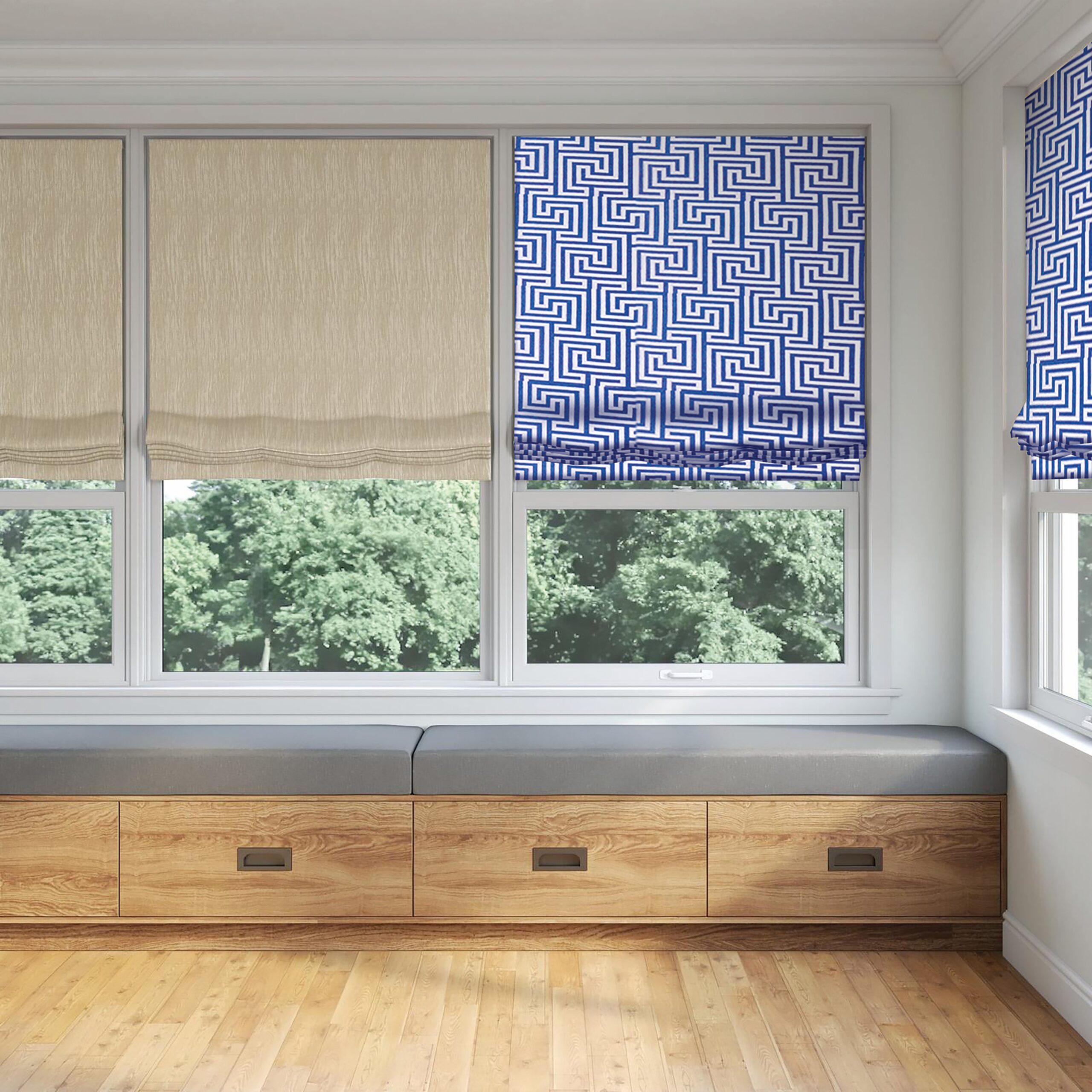
Roman blinds are fabric panels that fold into neat horizontal pleats when raised and lie flat when lowered. They offer the softness of a curtain with the structured, space-saving profile of a blind.
Key Features
- Soft, tailored look that adds a decorative element to the window.
- Available in a wide range of fabrics, from sheer linen to structured cotton and blackout lining.
- Can be lined for additional light blocking and insulation.
- Best suited to standard-width windows rather than very wide spans.
Best For
Bedrooms, dining areas and living rooms where a softer, more decorative window treatment is desired. Roman blinds work particularly well in traditionally styled or transitional interiors and pair beautifully with curtain panels for a layered look.
Panel Blinds
Panel blinds use wide fabric panels that slide horizontally along a multi-channel track. They overlap when stacked and span the full window width when extended.
Key Features
- Contemporary, architectural appearance.
- Ideal for very large windows and glass walls.
- Can double as a room divider in open-plan spaces.
- Fabric panels are easy to remove for cleaning or replacement.
Best For
Large glazed facades, full-height windows and open-plan living areas. Panel blinds also work well as sliding partitions between rooms or to conceal storage areas.
Pleated and Cellular Blinds
Pleated blinds are made from a single layer of permanently creased fabric. Cellular (honeycomb) blinds have a double-layered construction that traps air in honeycomb-shaped cells, providing insulation. For a slim, view-through fabric-vane option, see our guide to silhouette and sheer-shade blinds.
Key Features
- Compact when raised, taking up minimal headroom.
- Cellular variants offer superior thermal and acoustic insulation.
- Available in light-filtering and blackout fabrics.
- Suitable for shaped and specialty windows (arches, skylights).
Best For
Bedrooms where insulation and blackout are priorities, skylights, shaped windows and any application where a slim, discreet blind is needed.
Other Specialised Blind Types
Beyond the core categories, a couple of setting-specific blinds are worth considering. Bamboo blinds offer a woven, tropical look indoors and out. For balconies and patios exposed to sun and rain, see our outdoor blinds buyer’s guide.
Comparing Window Blind Types
| Blind Type | Light Control | Privacy | Style | Maintenance |
|---|---|---|---|---|
| Roller | Good to excellent | Good to excellent | Minimalist | Low |
| Venetian | Excellent | Good | Classic to modern | Moderate |
| Vertical | Good | Good | Contemporary | Low |
| Roman | Moderate to good | Good | Soft, decorative | Moderate |
| Panel | Good | Good | Architectural | Low |
| Pleated / Cellular | Good to excellent | Good | Discreet, neat | Low |
How to Choose the Right Blinds
With so many options, narrowing down the choice requires clarity on your priorities. Ask yourself these questions:
- What is the primary purpose? If light blocking for sleep is essential, prioritise blackout roller or cellular blinds. If adjustable daylight is the goal, venetian blinds offer the most control.
- What is the window size and type? Large windows and sliding doors suit vertical or panel blinds. Standard windows work with any type. Specialty shapes require pleated or cellular blinds.
- What style does the room call for? Minimalist interiors pair with roller or panel blinds. Traditional or layered spaces suit roman blinds or timber venetians.
- What is the room’s humidity level? Bathrooms and kitchens need moisture-resistant materials such as aluminium venetians or PVC roller blinds.
- What is the maintenance commitment? If low maintenance is a priority, roller and vertical blinds are the simplest to care for.
Pairing Blinds with Curtains
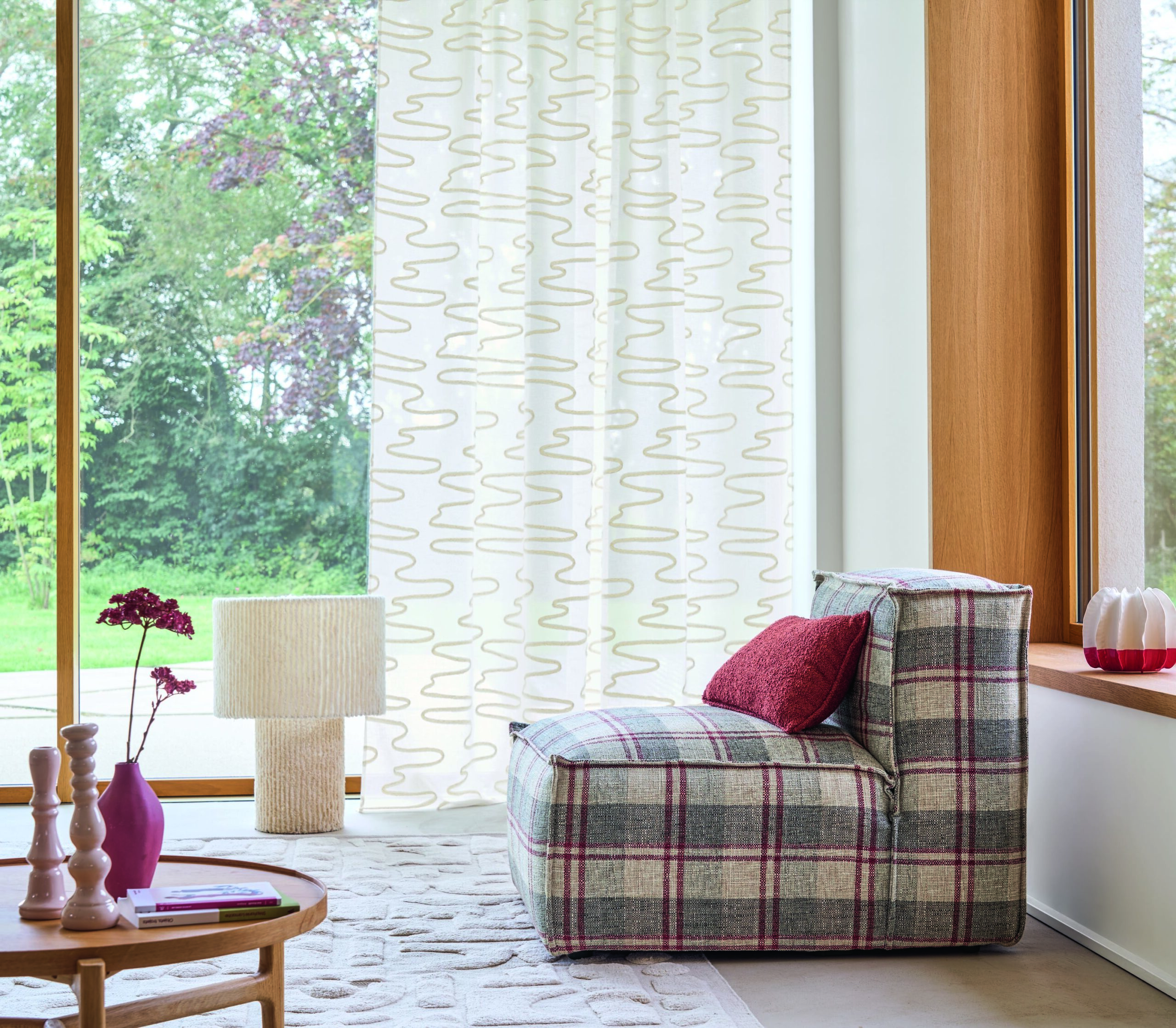
Blinds and curtains are not mutually exclusive. Many Singapore homeowners combine a functional blind (such as a blackout roller) with decorative drapery for a layered, polished look. The blind handles light control and privacy, while the curtains add softness, colour and texture to the room. See our guide to using curtains and blinds together for room-by-room pairings.
This approach is particularly effective in bedrooms and living rooms, where the combination provides both practical performance and visual warmth.
Final Thoughts
Choosing from the various window blinds types available comes down to matching the product’s strengths to your room’s requirements. By considering light control, privacy, aesthetics, window dimensions and maintenance needs, you can select a blind that performs beautifully and enhances your interior for years to come.
Visit the Goodrich Gallery to see our full collection of fabrics for blinds and curtains. Book an appointment with our design consultants for personalised guidance on the best window treatment for your home.