Healthcare Interiors
Antimicrobial Wall Coverings for Hospitals and Clinics | Goodrich
Antimicrobial wall coverings have become an essential specification in Singapore’s hospitals, clinics, and aged-care facilities. As healthcare-associated infections remain a persistent challenge worldwide, every surface in a clinical environment is scrutinised for its ability to resist microbial colonisation, withstand rigorous cleaning protocols, and maintain hygienic integrity over years of service.
This guide explains how antimicrobial wallcoverings work, where they should be specified, and what to look for when selecting products for healthcare projects in Singapore.
How Antimicrobial Wall Coverings Work
Antimicrobial wallcoverings incorporate agents — typically silver-ion, zinc-based, or organic compounds — into the surface layer or throughout the material. These agents inhibit the growth and reproduction of bacteria, mould, and fungi on the wallcovering surface.
Surface-Level vs Through-Body Treatment
Some products apply antimicrobial treatment to the finished surface only, while others incorporate the agent throughout the vinyl matrix. Through-body treatments maintain their effectiveness even when the surface is scratched or abraded, making them more suitable for high-traffic healthcare environments where wall contact from equipment is frequent.
What They Do — and Do Not — Replace
It is important to be clear: antimicrobial wallcoverings are a supplementary infection control measure, not a replacement for proper cleaning and disinfection protocols. They reduce microbial proliferation between cleaning cycles, which is valuable in busy wards where continuous surface disinfection is impractical. They do not eliminate the need for regular cleaning with hospital-grade disinfectants.
Where to Specify Antimicrobial Wallcoverings
Not every wall in a healthcare facility requires antimicrobial treatment. Targeted specification — focusing on the areas with the highest risk or contact frequency — is both more cost-effective and more clinically meaningful.
High-Priority Zones
- Patient rooms: Walls around bed heads, beside hand-hygiene stations, and at trolley-height contact zones are the primary specification areas.
- Corridors: High-traffic corridors where trolleys, wheelchairs, and gurneys contact walls benefit from antimicrobial wallcoverings that also resist physical damage.
- Treatment rooms: Any space where procedures are performed — from operating theatre corridors to outpatient treatment rooms — warrants antimicrobial surfaces.
- Bathrooms and wet areas: Moisture promotes microbial growth, making antimicrobial treatment particularly valuable in these zones.
Moderate-Priority Zones
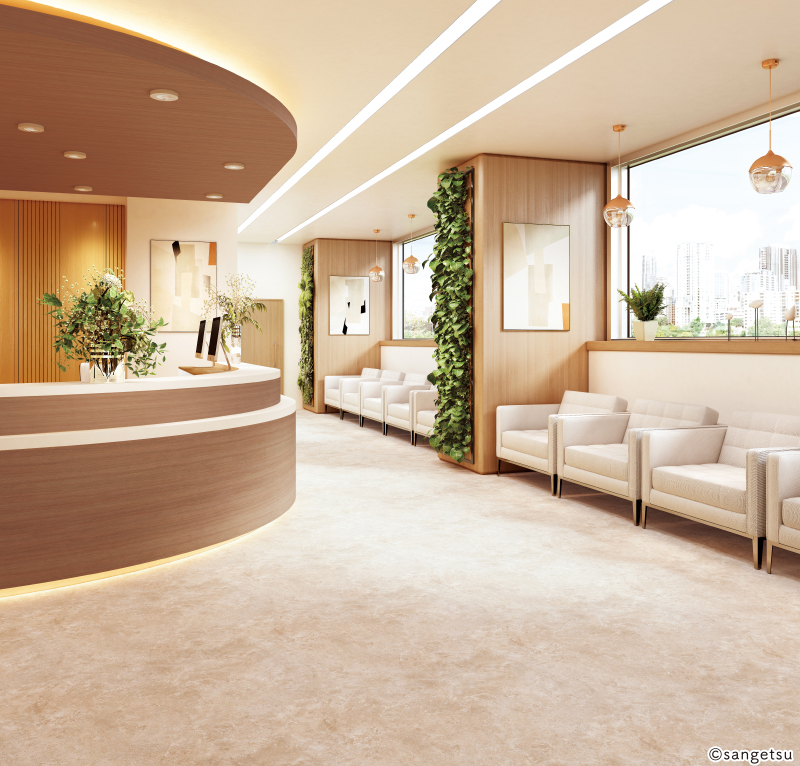
- Waiting areas: Walls behind and beside seating where patients and visitors make contact.
- Consultation rooms: Especially in clinics where patients with varying conditions share the same rooms throughout the day.
- Nursing stations: High-touch areas where staff interactions are frequent.
Lower-Priority Zones
Administrative offices, staff break rooms, and storage areas do not typically require antimicrobial wallcoverings, though standard commercial-grade vinyl wallcoverings are still recommended for their durability and cleanability.
Key Specification Criteria
When evaluating antimicrobial wallcoverings for healthcare projects, consider these technical and practical factors.
Antimicrobial Efficacy
Look for products tested to recognised standards such as ISO 22196 (measurement of antibacterial activity on plastics and non-porous surfaces) or JIS Z 2801 (the Japanese Industrial Standard equivalent). These tests quantify the reduction in bacterial colony counts over a defined period, typically 24 hours. Products should demonstrate a log reduction of 2 or greater (99 per cent reduction) against common pathogens.
Chemical Resistance
Healthcare wallcoverings must withstand cleaning with aggressive disinfectants — bleach solutions, quaternary ammonium compounds, hydrogen peroxide, and alcohol-based cleaners. Specify products explicitly rated for resistance to these agents. Standard residential wallcoverings will degrade, discolour, or delaminate under repeated exposure to hospital-grade chemicals.
Fire Rating
All interior finishes in Singapore healthcare facilities must comply with SCDF fire safety requirements. Wallcoverings should carry appropriate certifications — typically Class 0 or Class 1 surface spread of flame rating. Request test certificates before specifying.
Physical Durability
In healthcare corridors and patient rooms, wallcoverings face impact from trolleys, wheelchairs, and medical equipment. Type II vinyl wallcoverings (approximately 20 oz per linear yard or heavier) provide the thickness and tensile strength to resist tearing and puncture. Some products incorporate reinforced scrub-resistant surfaces that maintain their finish through thousands of cleaning cycles.
Installation Considerations
Proper installation is critical to the performance of antimicrobial wallcoverings in healthcare settings. Poor installation can create gaps, seams, and lifted edges that harbour contaminants — undermining the very protection the product is designed to provide.
Seam Treatment
All seams should be butt-joined tightly and sealed with the manufacturer’s recommended seam adhesive. In high-moisture areas, heat-welded seams provide the most impervious joint. The goal is an unbroken surface with no channels for moisture or microbial ingress.
Wall-to-Floor Junction
Where walls meet floors, a coved skirting detail — where the vinyl wallcovering extends down to meet the flooring — eliminates the 90-degree junction where dirt and moisture accumulate. In patient rooms and clinical areas, this detail significantly simplifies cleaning and improves hygiene outcomes.
Corner and Edge Protection
External corners and door-frame edges are the most vulnerable points for physical damage. Specify corner guards and edge trim profiles that integrate with the wallcovering system. These should be colour-matched and designed to create smooth, cleanable transitions rather than dirt-trapping ridges.
Explore Goodrich Global’s commercial wallcovering range for antimicrobial and healthcare-rated products suited to Singapore clinical environments.
Beyond Walls: A Holistic Approach to Hygienic Interiors
Antimicrobial wallcoverings are most effective as part of a comprehensive approach to hygienic interior design. Complementary measures include:
- Flooring: Seamless sheet vinyl with welded seams and coved edges in clinical areas, antimicrobial carpet tiles in waiting rooms.
- Upholstery: Performance fabrics with fluid-barrier backing on all seating in patient areas and waiting rooms.
- Curtains: Cubicle curtains with antimicrobial treatment and easy-remove hanging systems for regular laundering.
- Handrails and protection: Antimicrobial handrails and wall guards that match the wallcovering design for a cohesive, cleanable interior.
For comprehensive healthcare interior solutions, request a quotation from Goodrich Global for wallcoverings, flooring, and fabrics that meet clinical-grade standards.
Final Thoughts
Antimicrobial wall coverings are a proven tool in the healthcare interior designer’s specification toolkit. They reduce microbial surface contamination between cleaning cycles, withstand the harsh chemical and physical demands of clinical environments, and contribute to a holistic infection prevention strategy.
In Singapore’s healthcare sector, where standards are high and expectations higher, specifying the right wallcovering is not just a design decision — it is a duty of care.
Book an appointment with our specification team to discuss antimicrobial wallcovering options for your healthcare project.