Commercial Interiors
Acoustic Solutions for Co-Working Spaces – Goodrich
Coworking acoustic solutions are essential for any shared workspace that wants to retain members and attract corporate clients. Noise is consistently rated the number one complaint among co-working space users, and in Singapore’s booming flexible workspace market, operators who solve the acoustics problem gain a genuine competitive advantage.
Why Acoustics Matter in Co-Working Environments
Open-plan co-working spaces bring together freelancers, start-up teams, and corporate tenants in a single environment. Phone calls overlap with video conferences, collaborative discussions bleed into focussed work zones, and communal kitchens generate background noise that carries across the floor plate.
Research by workplace consultancies consistently shows that poor acoustics reduce cognitive performance by 15 to 25 per cent. For co-working operators, this translates directly to member dissatisfaction and churn. Members who cannot concentrate will leave for quieter alternatives.
The challenge is that co-working spaces must remain open and collaborative by nature. The solution is not to eliminate all sound but to manage it — reducing unwanted noise transmission while preserving the energy and connectivity that make shared workspaces attractive.
Understanding Sound Behaviour in Open Workspaces
Sound in an open-plan space behaves in two key ways: it travels through the air (airborne sound) and it travels through the building structure (impact sound). Effective acoustic design addresses both.
Airborne sound — voices, music, phone ringtones — radiates outward from the source and reflects off hard surfaces such as concrete ceilings, glass partitions, and hard floors. Every reflection adds to the overall noise level and increases reverberation, making speech less intelligible and forcing people to speak louder, which compounds the problem.
Impact sound — footsteps, dropped objects, chair movement — transmits through the floor structure. This is particularly problematic in multi-storey co-working spaces where the floor above is someone else’s ceiling.
Flooring as an Acoustic Tool
The floor is the largest continuous surface in any workspace, making flooring selection one of the most impactful acoustic decisions.
Carpet Tiles
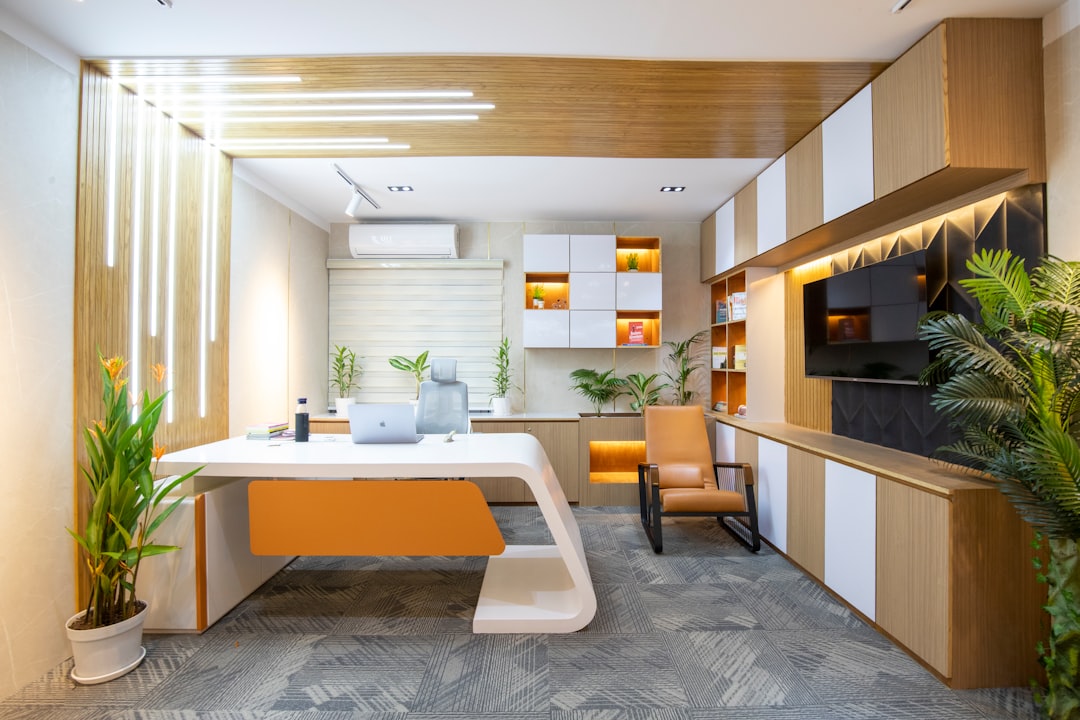
Carpet tiles are the foundation of acoustic flooring in commercial workspaces. A standard carpet tile with cushion backing reduces impact sound by 20 to 30 decibels compared with a bare concrete slab. This dramatically reduces footstep noise and chair movement sounds.
Beyond impact sound reduction, carpet tiles absorb airborne sound at floor level, reducing the total reverberation in the space. This absorption is particularly effective for low-frequency sounds that hard surfaces reflect freely.
For co-working spaces, modular carpet tiles offer additional practical benefits. Damaged or stained tiles can be replaced individually. Zones can be defined using different tile colours or patterns. And installation is fast, minimising downtime during fit-out or reconfiguration.
Vinyl Flooring in Shared Zones
Kitchens, pantries, and high-traffic circulation areas may require hard flooring for hygiene and maintenance reasons. Luxury vinyl tile with acoustic underlayment provides a practical compromise — easier to clean than carpet while still offering some degree of sound dampening. Specify LVT with an integrated cork or foam backing for the best acoustic performance.
Wall and Ceiling Treatments
Walls and ceilings are the primary surfaces responsible for sound reflection in open-plan spaces. Treating these surfaces with absorptive materials is essential to controlling reverberation time.
Fabric-Wrapped Acoustic Panels
Fabric-covered acoustic panels are among the most effective and versatile wall treatments for co-working spaces. An acoustic core of mineral wool or recycled polyester is wrapped in a decorative fabric, creating panels that absorb sound across a broad frequency range while looking like intentional design elements.
These panels can be mounted on walls, suspended from ceilings, or used as freestanding dividers between work zones. The fabric covering can be specified in brand colours to reinforce the co-working operator’s identity.
Acoustic Wallcovering
Specialist acoustic wallcovering combines a textile face with a sound-absorptive backing. Applied directly to walls, it reduces reverberation without the visual bulk of protruding panels. This solution works well in meeting rooms and phone booths where wall space is limited.
Ceiling Treatments
Exposed concrete ceilings — a popular aesthetic in co-working spaces — are acoustically problematic. Their hard, reflective surface bounces sound around the space. Suspended acoustic baffles, cloud panels, or ceiling-mounted fabric panels address this without compromising the industrial aesthetic that many operators favour.
Zoning Strategies for Sound Management
Effective acoustic design in co-working spaces relies on intelligent zoning rather than attempting to make the entire space quiet. Different activities have different noise profiles, and the layout should separate them accordingly.
- Focus zones: Quiet areas for concentrated work. Carpet tiles with heavy acoustic backing, fabric wall panels, and acoustic ceiling treatments create the quietest possible environment. These zones should be positioned away from communal areas and entry points.
- Collaboration zones: Areas for team discussions and group work. Standard carpet tiles and moderate acoustic treatment allow productive conversation without excessive sound spillover. Soft furnishings and upholstered seating add absorptive mass.
- Social zones: Kitchens, lounges, and event spaces. These areas accept higher noise levels as part of their function. Hard flooring for practicality is acceptable here, but surrounding walls should include acoustic treatment to contain sound within the zone.
- Phone and video booths: Enclosed pods with full acoustic isolation. Internal surfaces should be lined with absorptive material to prevent sound build-up within the small space.
Measuring Acoustic Performance
Acoustic performance in workplaces is typically measured using reverberation time (RT60) — the time it takes for sound to decay by 60 decibels. For open-plan offices and co-working spaces, a target RT60 of 0.6 to 0.8 seconds is generally recommended. Meeting rooms should aim for 0.4 to 0.6 seconds for clear speech intelligibility.
Noise Rating (NR) or Noise Criteria (NC) curves measure background noise levels. Co-working focus zones should target NC 35 to 40, while collaboration zones can tolerate NC 40 to 45. An acoustic consultant can measure existing conditions and recommend specific treatments to achieve target levels.
Investing in a professional acoustic assessment before fit-out is far more cost-effective than retrospective remediation. Acoustic problems discovered after opening are significantly more disruptive and expensive to resolve.
Final Thoughts
Acoustic design is not an afterthought in co-working space planning — it is a core business requirement. The right combination of carpet tiles, fabric panels, and acoustic wallcovering creates an environment where every member can work productively, regardless of what is happening around them.
Request free samples from our Singapore showroom to evaluate acoustic flooring and fabric options for your co-working space.