Healthcare Interiors
Dental Clinic Interior Design: Patient Comfort Guide
Dental clinic interior design has a unique challenge that most commercial spaces do not face: a significant proportion of patients arrive anxious. The environment must actively work to calm nerves, build trust, and communicate professionalism, all before any treatment begins. In Singapore, where dental practices compete in a sophisticated market, the interior quality of the clinic increasingly influences patient choice and loyalty.
From the reception area to the treatment room, every material and colour decision either amplifies or alleviates patient anxiety. Here is how to design a dental clinic that puts patients at ease.
Why Interior Design Matters in Dentistry
Research consistently shows that the clinical environment affects patient stress levels. Cold, institutional interiors with harsh lighting and bare surfaces trigger the association with pain and discomfort that many people carry from childhood dental experiences. Conversely, warm, residential-quality interiors signal care and competence, helping patients relax before they reach the chair.
Beyond patient comfort, the interior also affects staff wellbeing. Dental professionals spend long hours in treatment rooms, and an environment that is pleasant and well-designed reduces occupational fatigue and supports sustained concentration.
In Singapore’s competitive dental market, clinics in areas like Orchard Road, Marina Bay, and suburban heartland malls use interior design as a differentiator. The investment pays for itself through higher patient satisfaction scores and stronger word-of-mouth referrals.
Reception and Waiting Area Design
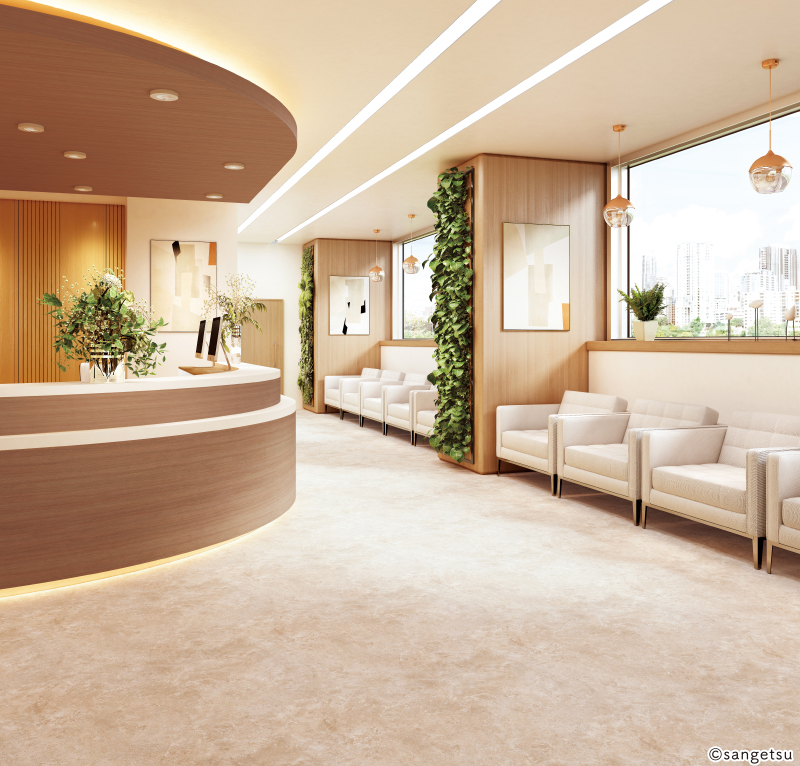
The reception area is where first impressions are formed and anxiety either builds or dissipates. This space deserves as much design attention as the treatment rooms.
Flooring
The reception floor should feel warm and welcoming. Timber-look luxury vinyl tile creates a residential atmosphere that immediately distinguishes the clinic from a hospital setting. LVT is also practical for dental environments because it resists staining from tracked-in moisture, is easy to clean, and absorbs sound better than hard tile.
Avoid overly polished or reflective flooring, which can feel clinical and cold. A matte or satin finish in a warm oak or walnut tone sets the right mood.
Wall Treatments
Feature wallcovering behind the reception desk establishes the clinic’s visual identity. Textured designs in calming colours, such as soft green, warm grey, or muted blue, project competence without sterility. The wallcovering range includes options that combine aesthetic appeal with the cleanability required in healthcare-adjacent settings.
In the waiting area, wallcovering with a subtle pattern or texture gives patients something to look at that distracts from their upcoming appointment. Nature-inspired designs, such as abstract botanical prints or gentle watercolour effects, are particularly effective at promoting calm.
Seating
Waiting area seating should be upholstered in a performance fabric that is stain-resistant, wipeable, and comfortable. Avoid leather-look vinyl that sticks to skin in Singapore’s humidity. Instead, choose a breathable performance textile in a warm, inviting colour.
Treatment Room Material Choices
Treatment rooms must meet strict hygiene standards while avoiding the cold, intimidating atmosphere that triggers patient anxiety.
Flooring
Vinyl sheet flooring with heat-welded seams is the gold standard for dental treatment rooms. It creates a seamless, impervious surface that prevents moisture, blood, and cleaning chemicals from penetrating to the subfloor. The surface must be slip-resistant for the safety of staff moving around the chair.
Choose a warm tone rather than clinical white or grey. A mid-tone beige, warm grey, or muted green floor softens the treatment environment without compromising hygiene.
Walls
Treatment room walls must be smooth, non-porous, and resistant to chemical cleaners. Commercial-grade vinyl wallcovering meets all these requirements. It can be wiped down with disinfectant between patients and resists the yellowing that paint experiences over time from exposure to cleaning chemicals.
The wall colour visible to the patient while reclined in the chair deserves special attention. This is often the ceiling or the upper portion of the wall directly ahead. A soft, calming tone in this area, such as pale sky blue or warm cream, contributes to patient relaxation during procedures.
Acoustic Considerations
Sound management in dental treatment rooms serves two purposes: it prevents the sound of dental instruments from travelling to the waiting area, and it reduces the perceived noise level for the patient in the chair. Acoustic wallcovering on partition walls between treatment rooms helps contain sound. Carpet tiles in corridors between treatment rooms absorb footfall and trolley noise.
Colour Psychology for Dental Environments
Colour is one of the most powerful tools for managing patient anxiety. The dental clinic colour palette should be carefully chosen to promote calm and trust.
Colours that work well in dental settings:
- Soft green: Associated with nature and calm. Sage and muted green tones reduce perceived stress and create a restorative atmosphere.
- Warm blue: Conveys trust and professionalism. Avoid bright or electric blues, which feel cold. Instead, use dusty or grey-tinged blues.
- Warm neutrals: Beige, taupe, and warm grey create a sophisticated, residential feel that avoids both the sterility of white and the heaviness of dark tones.
- Soft blush: A muted pink or peach can add warmth and softness, particularly in paediatric dental areas.
Colours to avoid:
- Stark white: Reads as clinical and cold. It also shows every mark and stain.
- Bright red: Associated with blood and urgency. Even as an accent, it raises anxiety.
- Dark grey or black: Can feel oppressive in the close quarters of a treatment room.
Infection Control and Material Selection
Every material in a dental clinic must support infection control protocols. This is a regulatory requirement and a practical necessity.
Material selection criteria for infection control include:
- Non-porous surfaces: Flooring, wallcovering, and countertops must not absorb fluids. Sealed vinyl surfaces meet this requirement.
- Chemical compatibility: Surfaces must withstand repeated exposure to disinfectants, including quaternary ammonium compounds, hydrogen peroxide, and alcohol-based cleaners, without degrading, discolouring, or losing structural integrity.
- Seamless installation: Wherever possible, materials should be installed with sealed or welded seams to eliminate harbourage points for bacteria.
- Replaceable elements: Soft furnishings such as curtains and upholstery covers should be removable and washable or replaceable to maintain hygiene standards over time.
Explore flooring options that meet healthcare-grade hygiene and infection control requirements.
Final Thoughts
Dental clinic interior design is a balance between clinical rigour and human warmth. The best clinics make patients forget they are in a dental practice, replacing anxiety with comfort through considered material and colour choices. In Singapore’s competitive dental landscape, this is not a luxury but a necessity.
Every surface, from the waiting room floor to the treatment room wall, contributes to the patient experience. Design each one with care.
Request free samples from our Singapore showroom to evaluate materials for your dental clinic project.