Healthcare Interiors
Eye Clinic Interior Design: Precision and Comfort
Eye clinic interior design demands a meticulous approach to lighting, surfaces, and spatial flow that few other healthcare environments require. Patients visiting for eye examinations, laser procedures, or post-operative reviews are often experiencing visual sensitivity, anxiety, or temporary impairment — and the environment must support them at every stage.
Here is how to design an eye clinic that delivers clinical precision alongside genuine patient comfort.
Understanding the Specific Needs of Eye Care Spaces
Eye clinics present design challenges distinct from general medical practices. Examination rooms require precisely controlled lighting with minimal glare. Waiting areas must be calming for anxious patients, including those with dilated pupils who are highly light-sensitive. Recovery zones need dim, comfortable environments for patients regaining clarity after procedures.
Wayfinding must be especially intuitive. Patients with impaired or temporarily compromised vision cannot rely on small signage or subtle cues. High-contrast transitions between flooring zones, tactile guidance, and clear spatial logic help patients navigate confidently.
Hygiene standards are non-negotiable. As a medical facility, all surfaces must be easy to disinfect without degrading over time from repeated chemical exposure.
Flooring for Clinical Performance and Patient Safety
Flooring in an eye clinic must address slip resistance, hygiene, glare control, and acoustic comfort simultaneously.
Luxury vinyl tile (LVT) and vinyl sheet flooring are the preferred choices for most eye clinic areas. They meet healthcare hygiene requirements, are waterproof, and can be cleaned with medical-grade disinfectants without deterioration.
Flooring Considerations by Zone
| Zone | Priority | Recommended Finish |
|---|---|---|
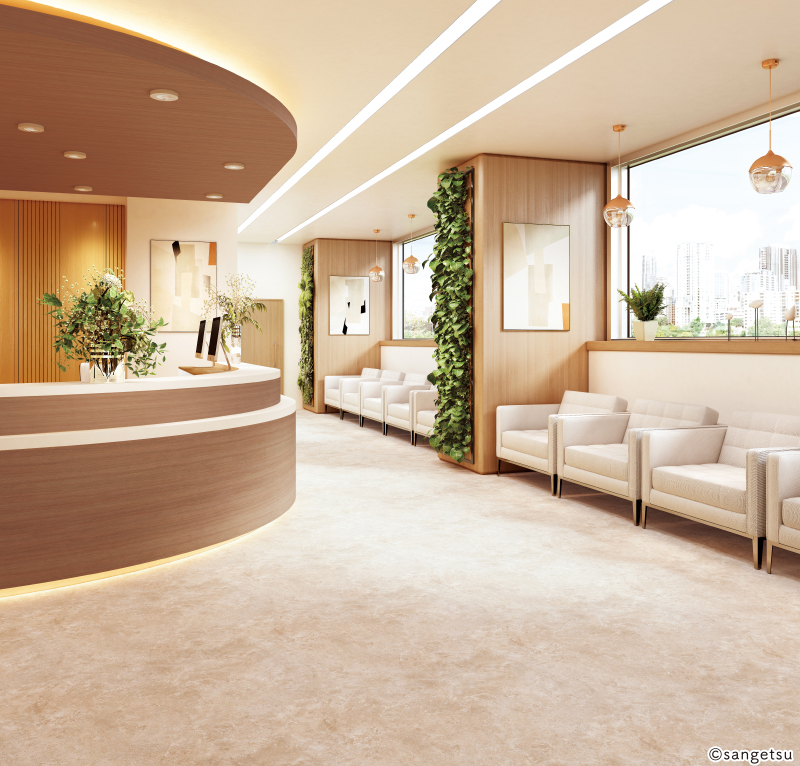
| Reception and waiting | Comfort, warmth, low glare | LVT in matte timber or warm stone look |
| Examination rooms | Hygiene, glare-free, anti-static | Seamless vinyl sheet, matte finish |
| Surgical suites | Sterility, anti-static, seamless | Welded vinyl sheet with coved skirting |
| Recovery areas | Comfort, quiet, low light reflection | LVT in warm, matte tones |
| Corridors | Durability, wayfinding contrast | LVT with contrasting border strips |
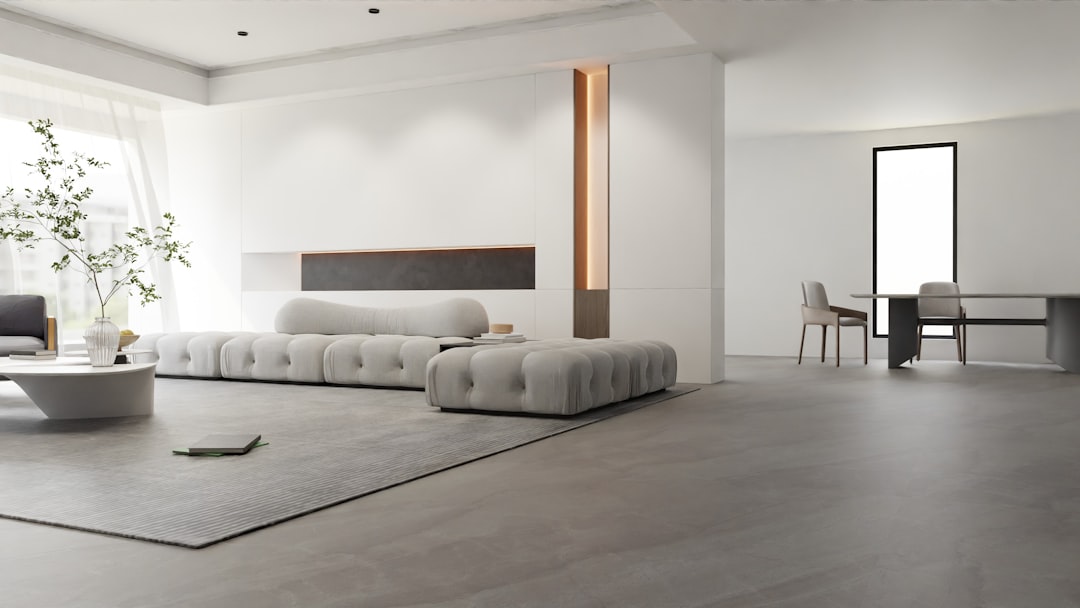
Matte and satin finishes are critical throughout. High-gloss floors create reflections and glare that cause discomfort for patients with dilated pupils or photosensitivity. Every flooring selection should be evaluated not just for durability but for its light-reflective properties.
Wall Treatments for Calm and Hygiene
Walls in an eye clinic serve dual purposes: contributing to a calming atmosphere and meeting infection-control requirements. The two goals are entirely compatible with the right material choices.
Commercial-grade vinyl wallcoverings designed for healthcare environments offer antibacterial surfaces that withstand regular disinfection. Unlike paint, which chips and absorbs stains over time, vinyl wallcoverings maintain a clean, consistent appearance for years.
Colour selection should prioritise soft, muted tones. Pale greens, warm taupes, and soft greys create a sense of calm without the starkness of clinical white. Avoid bright whites and high-contrast patterns that strain sensitive eyes.
In examination rooms, walls should be uniformly neutral to avoid interfering with diagnostic lighting. A consistent matte wallcovering in a mid-tone grey or taupe provides the ideal background for ophthalmic equipment and chart displays.
Lighting Design for Eye Care Environments
Lighting is arguably the most critical design element in an eye clinic. Each zone requires a different lighting approach.
Waiting Areas
Soft, indirect ambient lighting using warm colour temperatures (2700K to 3000K) creates a relaxed environment. Avoid overhead downlights that shine directly into the eyes of seated patients. Cove lighting, wall washers, and shielded pendants are better alternatives.
Examination Rooms
These spaces need full blackout capability for certain diagnostic procedures, combined with adjustable task lighting for clinical work. Separate circuits for ambient and task lighting give practitioners precise control.
Recovery Areas
Dimmable lighting at low levels allows patients to rest after dilating drops or minor procedures. Natural light should be controllable with blackout blinds or curtains to prevent discomfort from sudden brightness changes.
Corridors and Transitions
Gradual light-level transitions between bright and dim areas reduce the shock of sudden changes for patients with compromised vision. Avoid abrupt shifts from a brightly lit reception to a dark examination corridor.
Spatial Flow and Wayfinding
Patient flow in an eye clinic typically follows a sequence: reception, waiting, pre-examination, examination, potential procedure room, recovery, and checkout. The layout should support this linear flow without requiring patients to double back through busy areas.
Flooring transitions between zones serve as intuitive wayfinding cues. A change from timber-look LVT in the waiting area to a different tone in the clinical corridor signals progression through the care pathway without reliance on signage.
Contrasting floor borders along corridor walls help patients with reduced peripheral vision maintain orientation. Tactile floor indicators at key decision points — such as the entrance to examination rooms — add another layer of navigational support.
Clear, large-format signage with high-contrast text supports patients whose vision is temporarily compromised. Backlit signs should avoid glare by using diffused rather than direct illumination.
Acoustic Considerations
While not as acoustically demanding as a recording studio, an eye clinic benefits significantly from sound management. Patients discussing personal health information deserve speech privacy. Anxious patients waiting for procedures need a calm, quiet environment.
Carpet tiles in waiting areas absorb airborne noise and soften the space. In clinical zones where carpet is not appropriate for hygiene reasons, acoustic ceiling panels and fabric wall features provide the necessary absorption.
Solid-core doors on examination rooms and consultation spaces ensure private conversations remain confidential, which is both a comfort factor and a regulatory expectation for healthcare facilities.
Final Thoughts
Eye clinic interior design requires sensitivity to the specific vulnerabilities of ophthalmic patients. From glare-free flooring and calming wall colours to carefully zoned lighting and intuitive wayfinding, every design decision should support both clinical function and patient comfort.
High-performance, healthcare-grade materials ensure these carefully designed spaces remain hygienic and attractive through years of daily clinical use.
Book an appointment with our design consultants to explore healthcare-grade flooring and wallcovering solutions for your clinic.