Carpet & Flooring
Flooring Trends 2026: What Singapore Homes and Projects Are Choosing
Flooring trends move slower than paint colours but faster than most people assume, and 2026 marks a clear turning of the page in Singapore. The grey-everything decade is over, pattern is back, and specifiers are asking harder questions about acoustics and sustainability than they were even two years ago.
What follows are the eight flooring trends we are seeing most consistently across HDB and BTO renovations, condominium projects, and commercial fit-outs this year — with the reasoning behind each, and how to achieve the look from resilient ranges without the cost and maintenance burden of the natural materials driving them.
Colour and Tone: The Great Warming
1. Honey and caramel timber tones replace grey
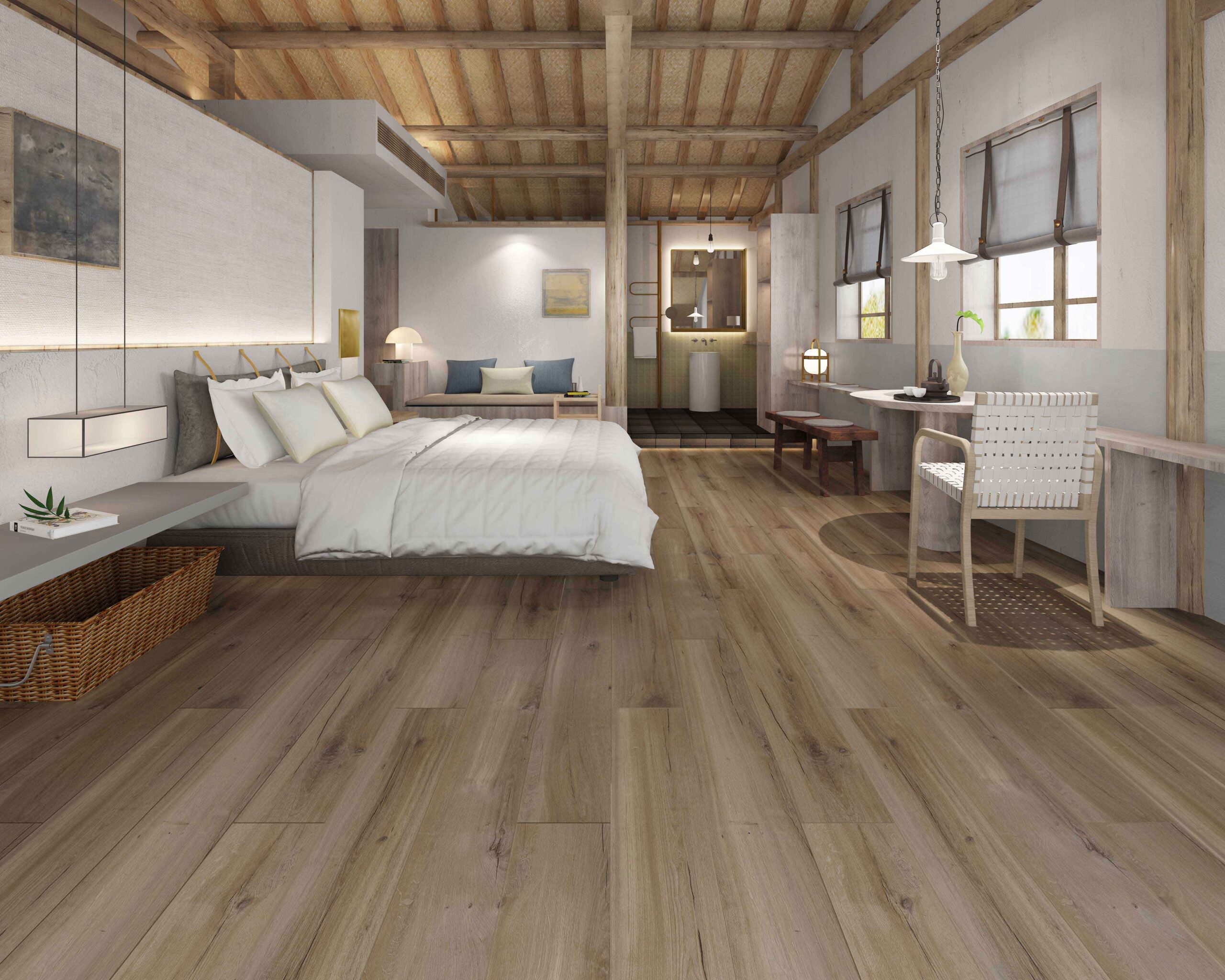
The defining shift of 2026 is temperature. Cool grey oak, the default of the late 2010s, has given way to honey, caramel and warm natural oak tones that flatter skin, furniture and food alike. The why is partly reaction fatigue and partly practical: warm mid-tones hide dust and footprints better than pale grey, and they photograph beautifully in Singapore’s bright, diffuse daylight.
In vinyl, this means choosing planks with golden-brown base tones and subtle tonal variation rather than flat uniform colour. Our wood-look vinyl flooring guide breaks down how to read plank visuals — grain repeat, bevel, gloss level — so the warmth looks like timber rather than tint.
2. Dark accents return, used sparingly
Alongside the warming trend, deep walnut and smoked-oak tones are reappearing in studies, master bedrooms and hospitality suites. The difference from the 2000s dark-floor era is restraint: one room, strong lighting, pale walls. Dark floors read as luxurious precisely because they are no longer everywhere, and vinyl formats make the commitment reversible — a dark master bedroom no longer obliges a dark living room to match.
Pattern and Format: Geometry Goes Mainstream
3. Herringbone and chevron in HDB and BTO flats
Parquet patterns were once the preserve of landed homes with solid timber budgets. Vinyl changed that. Herringbone-format luxury vinyl planks now appear routinely in four-room BTO living rooms, because the pattern adds architecture to boxy layouts at a modest premium over straight-lay planks. The zigzag also visually widens narrow HDB living-dining strips — a genuinely useful optical trick, not just a fashion.
Chevron, herringbone’s sharper cousin with mitred plank ends meeting in a true point, is following close behind in condominiums and boutique offices where a more tailored geometry suits the architecture. Layout planning matters more than product choice for both patterns; our herringbone vinyl flooring guide covers direction, borders and the higher wastage allowances these formats demand.
4. Checkerboard and bold formats in cafes and retail
Commercial spaces are pushing further. Checkerboard layouts in cream-and-olive or black-and-bone, oversized tile formats, and contrasting border inlays are showing up in F&B, salons and boutique retail across town. The driver is Instagram-era placemaking: the floor has become part of the brand. Resilient tiles make these looks viable because two colours from the same collection share identical thickness and wear layer, so mixed layouts install cleanly and wear evenly.
5. Stone and travertine looks in large formats
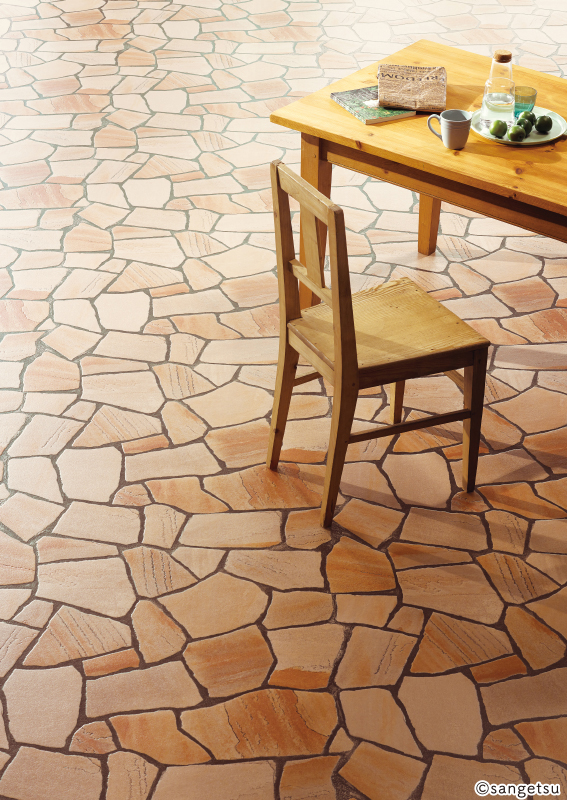
The stone story of 2026 is travertine — warm, banded, Mediterranean — along with soft limestone and honed-granite visuals in large-format tiles with realistic grout-line detailing. Homeowners want the villa look without the sealing, cold and weight of real stone. Large formats matter because fewer joints read as calmer and more expensive. See our stone-look vinyl flooring guide for how the best visuals avoid obvious pattern repeats.
Performance and Conscience: How Floors Behave
6. Texture you can feel: registered emboss
Realism has moved from the eye to the fingertips. Registered-emboss surfaces — where the physical texture aligns with the printed grain, so a knot looks and feels like a knot — are becoming the expected standard in mid-range vinyl rather than a premium extra. Under Singapore’s strong daylight, synchronised texture is what separates a floor that reads as timber from one that reads as a photograph of timber. When comparing ranges, run a hand across the sample; if the texture ignores the grain, look further up the range.
7. Quiet floors for co-living, hotels and dense living
Acoustics has become a specification item, not an afterthought. Co-living operators, hotels and MCSTs are demanding floors with acoustic backing layers or dedicated underlays that cut impact noise transmission to the unit below, alongside slightly softer wear surfaces that damp footfall within the room. The why is simple: noise complaints are now a leading source of resident friction, and a floor that drops impact sound meaningfully is cheaper than retrofitting ceilings.
The specification language is shifting too. Where a brief once said “vinyl flooring”, it now says “minimum 17dB impact sound reduction with acoustic backing” — a measurable requirement products either meet or fail. Expect acoustic-rated resilient flooring to move from hospitality into premium residential launches through 2026, particularly in co-living conversions where one noisy floor can sour an entire storey of tenancies.
8. Sustainability moves from brochure to checklist
Green claims are being audited, not just admired. Projects chasing Green Mark credits now ask for recycled content percentages, third-party certification such as SGBC labelling, and increasingly for PVC-free resilient options in wellness and education settings. Manufacturers have responded with ranges incorporating recycled material without compromising wear performance — our recycled-content flooring guide explains what the certificates actually verify and which claims to press on.
The Quiet Megatrend: Overlay Renovation
Underneath all eight trends sits a delivery-method shift that affects more Singapore homes than any colour story: renovating by overlay rather than hacking. Installing vinyl directly over existing sound tiles avoids hacking permits, debris disposal and weeks of dust — a three-room flat can be refloored in two to three days. With resale flats changing hands in volume and owners renovating on tighter timelines between tenancies, overlay is often the difference between a renovation happening this quarter or next year. The prerequisites — level check, hollow-tile detection, edge trims at doorways — are covered in our vinyl flooring over tiles guide.
Final Thoughts
The 2026 flooring picture is coherent once you see the thread: warmth over coolness, pattern over uniformity, texture over gloss, and performance — acoustic and environmental — as a headline requirement rather than fine print. The practical good news for Singapore homeowners and specifiers is that every one of these looks is achievable in resilient formats from the Goodrich Global flooring range, including luxury vinyl collections spanning honey oaks, herringbone formats, travertine visuals and acoustic-backed options — with tropical-climate stability built in.
Browse the Goodrich Global e-catalogue to see the 2026 collections in full, or request samples of the trends that fit your next project.