Carpet & Flooring
Walnut-Look Vinyl Flooring in Singapore: Style, Durability and Easy Maintenance
Walnut wood flooring sits at the top of most dark-timber wish lists, and for good reason. Its deep chocolate tones, straight grain broken by occasional character swirls, and natural purple-brown undertones give rooms a gravity that stained oak never quite matches. From mid-century interiors to today’s luxe-modern condominiums, walnut is shorthand for quiet expense.
Getting that look in Singapore, however, is more complicated than the mood boards suggest. Solid walnut behaves differently from oak, the naming on the market is slippery, and our humidity is unkind to imported temperate hardwoods. This guide covers what walnut really offers, what buyers actually receive, and how to get the look reliably.
Goodrich Global does not supply solid walnut timber flooring. Our range covers walnut-tone wood-look luxury vinyl that captures the depth and grain of walnut with dent-resistant wear layers and full waterproofing.
Why Walnut Casts Such a Spell
American black walnut heartwood ranges from milk-chocolate brown to near-espresso, often with a subtle violet cast that reads as richness rather than darkness. The grain is predominantly straight and fine, punctuated by curls and swirls around knots — enough character to feel alive, not so much that it turns busy. Against pale walls and brass or black fittings, few floors photograph better.
Stylistically it is versatile in a way most dark materials are not. Mid-century schemes lean on walnut’s warmth against teak furniture and olive textiles; contemporary luxury schemes use it as a matt, low-sheen base beneath marble, bouclé and smoked glass. In both cases the floor does the anchoring while everything above it stays light.
What “Walnut” Actually Means at the Showroom
The label covers at least three different products, and the price gaps between them are large.
| Product | What it is | What to expect |
|---|---|---|
| American black walnut | Juglans nigra, North American | The benchmark: deep tone, purple undertones, premium pricing |
| European walnut | Juglans regia | Lighter, greyer-brown, wavier grain; rarer as flooring |
| “Walnut-stained” | Oak, birch, acacia or rubberwood, stained dark | Colour approximates walnut; grain and undertone do not |
Much of what is sold locally as walnut flooring is the third category. Stained oak has a coarser, more open grain that reads differently at floor level, and stains sit in the surface rather than running through the board — so deep scratches reveal pale timber beneath. If you are paying walnut prices, ask for the species in writing.
The Hard Realities of Solid Walnut in Singapore
Assuming you source genuine American black walnut, four issues follow it into a Singapore home.
Softness and denting
Walnut’s Janka hardness is roughly 1,010 lbf against white oak’s 1,360 — meaningfully softer. Stiletto heels, dropped pans, chair legs without felt pads and dog claws all leave their record in the surface, and in a rental or multi-generational household that record accumulates quickly. On a dark floor, dents catch light and read as sparkle in exactly the wrong way, visible every time the afternoon sun rakes across the boards.
Photosensitive lightening
Most timbers darken with UV exposure; walnut does the opposite, mellowing from deep chocolate towards honey-amber over years of light exposure. In a bright Singapore living room with full-height windows, rug and furniture shadows become permanent tan lines when you rearrange. The dramatic espresso tone you bought is, in effect, a starting point rather than a fixed colour.
Cost and movement
Genuine solid walnut lands in Singapore at roughly S$18–S$30 per square foot supplied and installed — comfortably above oak, and before you add skirting, subfloor preparation and the air-conditioning discipline the timber will demand of you afterwards. It is a temperate hardwood in an equatorial climate: sustained 70–85% relative humidity drives expansion, cupping and gapping cycles unless indoor conditions are actively managed, which in practice means running air-conditioning or dehumidification far more than most households intend to.
The engineered compromise
Engineered walnut — a real walnut veneer over a plywood core — tames much of the humidity movement and is the sensible format if genuine timber is non-negotiable. The trade-offs are its own: the wear layer is only 2–4mm, so sanding opportunities over the floor’s life are limited to one or two passes, and the softness and photosensitivity of the walnut surface remain exactly as they are in solid boards. You pay slightly less and worry slightly less, but you are still living with walnut’s temperament.
Styling Dark Floors So They Do Not Swallow the Room
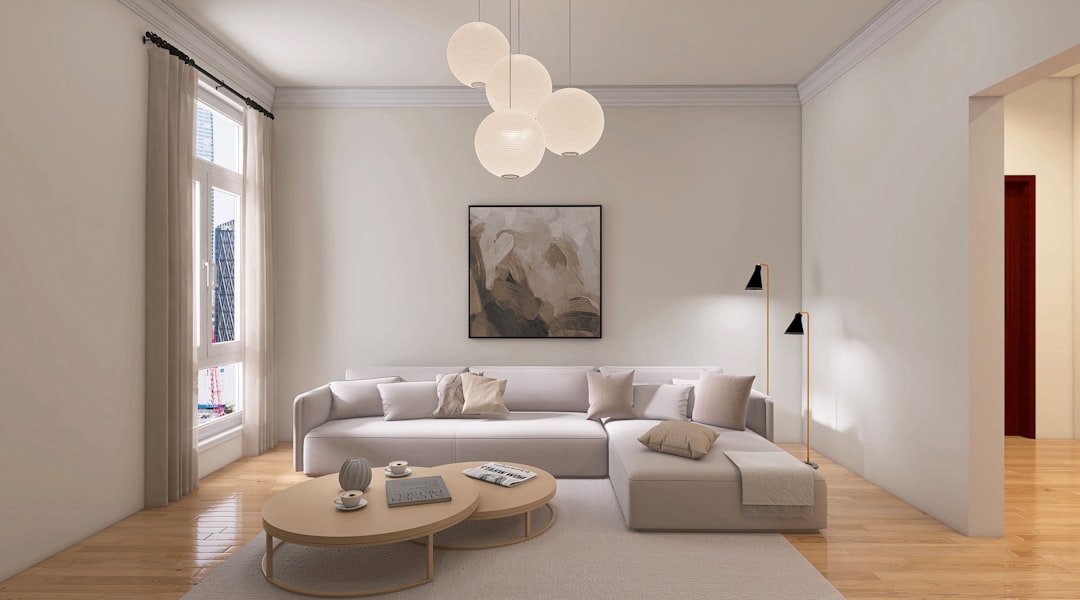
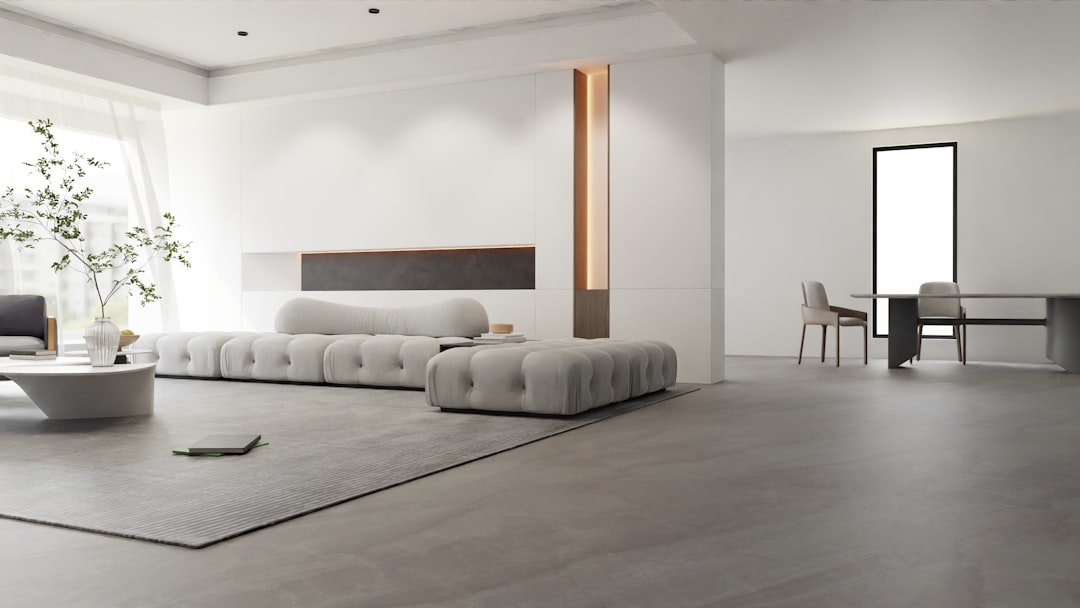
Dark flooring in Singapore’s flats needs deliberate handling, because our deep floor plates and shaded windows can turn a walnut floor into a cave. The rules that work: keep walls and ceilings pale to bounce light back down; introduce a large light-toned rug to break the dark plane in seating zones; and layer warm artificial lighting at multiple heights so the floor reads rich after sunset rather than black. Contrast is the whole game — dark floor, light everything else. Our dark flooring interior design guide covers these principles room by room, including small-bedroom and corridor treatments.
Walnut-Tone Vinyl: The Look Without the Ledger
For most Singapore projects, the walnut conversation ends at a walnut-visual luxury vinyl plank — and not as a grudging compromise. High-resolution scanning of real walnut boards means current vinyl visuals carry the straight grain, character swirls and violet-brown undertones convincingly, with registered emboss texture that follows the printed grain underfoot.
The performance profile solves precisely the problems solid walnut creates. The colour is UV-stable, so the tone you choose is the tone you keep, with no rug shadows. Wear layers of 0.3–0.55mm shrug off heels, chairs and claws that would dent real walnut. The planks are fully waterproof and dimensionally indifferent to humidity, install over existing sound tiles without hacking, and cost a fraction of genuine timber. Tone is consistent plank to plank and order to order — useful when a phase-two extension needs to match phase one. Our wood-look vinyl flooring guide explains how to judge visual quality, and the wider flooring range includes walnut tones in both plank and herringbone formats.
Final Thoughts
Walnut wood flooring earns its reputation as the most elegant of the dark timbers, but in Singapore it is a demanding tenant: softer than oak, restless in humidity, expensive to buy and destined to lighten in our sun. Engineered formats soften some of those edges without removing them. If the goal is the walnut look — deep, straight-grained, quietly luxurious — a walnut-tone luxury vinyl floor delivers it with dent resistance, waterproofing and colour that stays put, styled with the same light-walls-and-layers discipline any dark floor deserves.
Book a showroom appointment to see walnut-tone vinyl planks laid out at full scale and compare tones under realistic lighting.