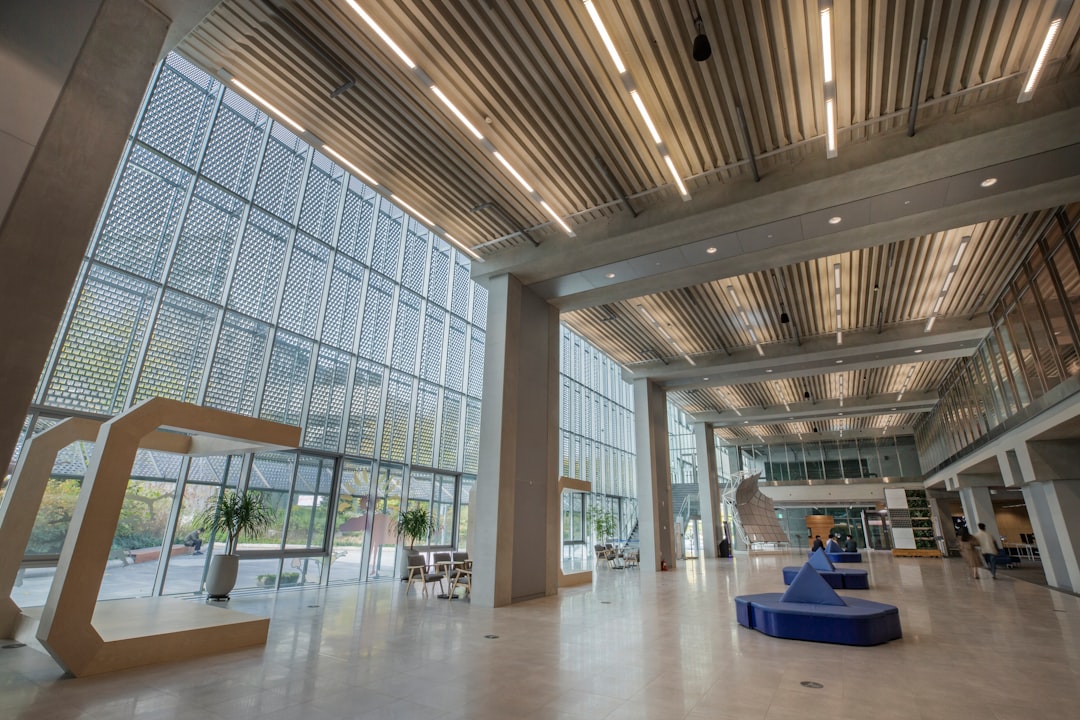
Healthcare Interiors
Healthcare Construction Boom: Interior Demand in Singapore
Healthcare construction in Singapore is entering a sustained build-out, and the pipeline points to years of demand for specialised interior materials. SJ Group’s 2026 Singapore Construction Market Review and Outlook details a deep institutional pipeline — major hospital developments, new medical facilities, and care-related projects — that together represent one of the most material-intensive and standards-driven categories of building work in the country.
This article looks at what that pipeline means for healthcare interiors. Hospitals, clinics, and care facilities place exacting demands on flooring, wallcovering, and fabric — infection control, durability, hygiene, acoustics, and patient wellbeing all at once — and the scale of upcoming work makes getting these specifications right a significant and recurring task.
The Institutional Pipeline In Numbers
The report sets out a substantial slate of healthcare and institutional projects. Main construction works at Alexandra Hospital began in December 2025. The Ministry of Health has awarded an S$82 million contract for advance infrastructure works at Singapore General Hospital’s Phase 2A development, with Phase 2B underway and the main contract tender for Tengah General and Community Hospital in progress.
Beyond the hospitals themselves, MOH has announced a 55,542 square metre office building within the SGH campus and a 22,800 square metre site near Paya Lebar MRT earmarked for a health and medical care development. Civil engineering and institutional demand overall is forecast to strengthen to between S$11.6 billion and S$13.4 billion in 2026. For interiors, each of these projects is a large, specification-heavy fit-out.
Why Healthcare Interiors Are A Specialist Category
Healthcare is unlike commercial or residential fit-out because the materials have to satisfy clinical requirements alongside design and durability. A floor or wall surface in a hospital is part of the infection-control strategy, not just the finish. The core demands include:
- Infection control: seamless, cleanable, antimicrobial surfaces that resist the growth and spread of pathogens.
- Durability: materials that withstand constant traffic, trolleys, beds, and aggressive cleaning regimes.
- Hygiene and maintenance: surfaces that are easy to clean thoroughly and frequently.
- Patient wellbeing: acoustics, warmth, and calming environments that aid recovery rather than feel institutional.
These requirements are explored in depth in our guides to healthcare facility flooring and infection control wall systems, both directly relevant to the projects now in the pipeline.
Matching Materials To Healthcare Settings
The institutional pipeline spans very different environments, each with its own material brief. A single hospital development contains many of them.
| Setting | Material focus |
|---|---|
| Wards and patient rooms | Hygienic, warm, acoustically comfortable surfaces for rest and recovery |
| Corridors and circulation | Heavy-duty, wayfinding-friendly flooring and wall protection |
| Clinical and treatment areas | Seamless, antimicrobial, easily sanitised surfaces |
| Waiting and public areas | Durable yet calming finishes that ease patient anxiety |
Wall protection deserves particular attention in high-traffic clinical settings, where trolleys and beds quickly damage unprotected surfaces — a subject we cover in our guide to wall protection systems for healthcare and commercial interiors. Hygienic, durable flooring and performance wallcovering form the backbone of any healthcare specification.
Flooring Is The Critical Healthcare Surface
Of all healthcare interior materials, flooring carries the heaviest burden. It must be slip-resistant for patient and staff safety, seamless or tightly jointed to deny pathogens a foothold, comfortable underfoot for staff on long shifts, and durable enough to survive constant trolley and bed traffic and aggressive cleaning. In some clinical settings it must also be conductive or static-dissipative for sensitive equipment.
Resilient flooring — particularly homogeneous and heterogeneous vinyl — dominates clinical areas for these reasons, while carpet finds a role in waiting areas and administrative spaces where acoustic comfort and warmth matter more than wet-area hygiene. Matching the right floor to each zone, rather than defaulting to one product, is central to a healthcare specification that performs across the whole facility.
The Ageing Population Behind The Pipeline
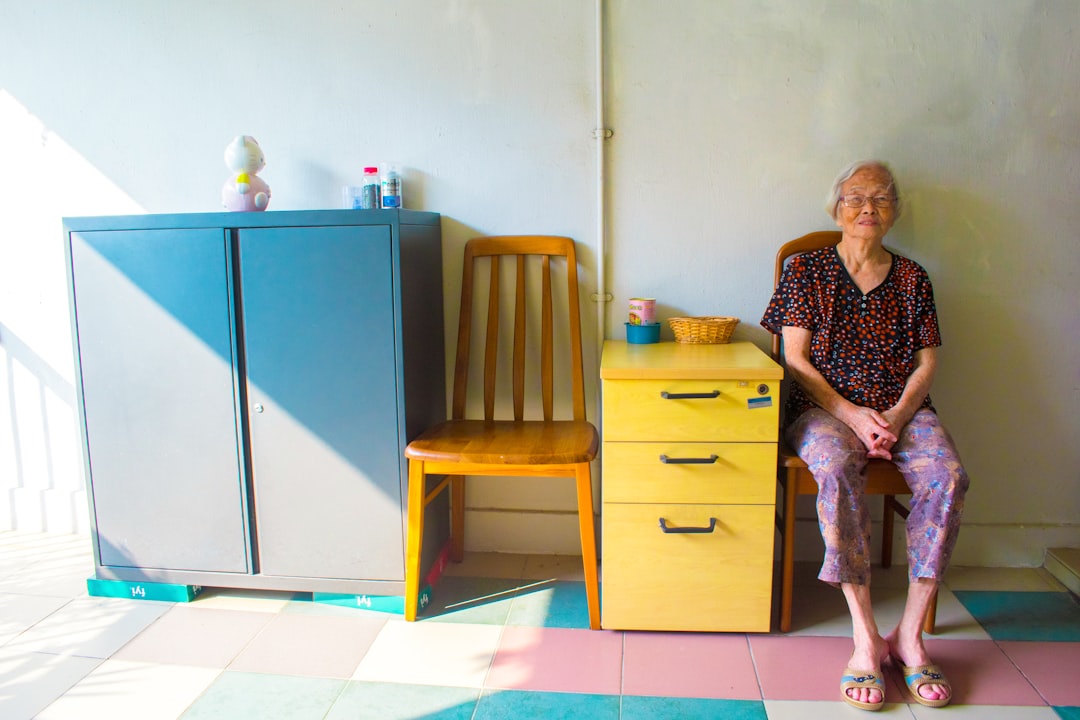
The healthcare build-out is not a temporary spike; it reflects a structural demographic shift. With a rapidly ageing population, demand for hospitals, nursing homes, and care facilities will continue well beyond the current pipeline. The cost-per-CFA benchmarks in the report even list nursing homes as a distinct development type, underlining how established this category has become.
That continuity matters for interior specifiers. Healthcare and care interiors are a durable, growing field rather than a one-off, and the same material expertise applies across hospitals, nursing homes, and ageing-ready community facilities. The connection between the two is explored in our piece on designing interiors for an ageing Singapore.
Fabric And Soft Furnishings In Clinical Settings
Soft furnishings are easy to overlook in healthcare specification, yet they carry significant infection-control and durability requirements of their own. Seating in waiting rooms and wards, cubicle curtains, and any upholstered element must resist staining and moisture, withstand frequent cleaning and disinfection, and in many cases offer antimicrobial properties. The wrong fabric becomes a maintenance liability and an infection risk; the right one quietly supports the facility’s hygiene strategy.
Performance upholstery fabrics developed for healthcare combine these clinical demands with the warmth and colour that make a space feel less institutional — an increasingly important consideration as evidence mounts that environment affects recovery. Cubicle curtains, in particular, are a high-touch, high-turnover item where antimicrobial treatment and easy laundering matter as much as appearance. Specifying these alongside flooring and wallcovering, rather than as an afterthought, produces a more coherent and compliant healthcare interior.
Designing For Patient Experience, Not Just Compliance
The most forward-looking healthcare projects in the pipeline treat patient experience as a design goal rather than a by-product of meeting clinical minimums. Calming colour palettes, biophilic references, warm materials, and good acoustics all contribute to environments that reduce anxiety and support healing. The challenge — and the skill — lies in achieving this without compromising the infection control, durability, and hygiene that remain non-negotiable. Materials that deliver both, such as wallcoverings with natural imagery that are also fully wipeable, are where healthcare interior design is heading, and the scale of the current pipeline makes getting this balance right unusually consequential.
This dual standard — clinical performance and human comfort in the same material — is also what distinguishes suppliers with genuine healthcare expertise from those offering general commercial ranges. As the pipeline of hospitals, specialist medical facilities, and care developments builds out over the coming years, that expertise becomes a practical advantage on every project, shortening specification time and reducing the risk of a material that meets the clinical brief but undermines the patient experience, or vice versa.
Specifying For The Healthcare Build-Out
For specifiers preparing for this pipeline, a few principles hold across projects. Choose materials with verified clinical credentials — antimicrobial performance and cleanability backed by documentation, not just description. Specify for the full life of the building, since healthcare facilities run continuously and cannot easily close for refurbishment. And balance the clinical requirements with patient wellbeing, because the evidence increasingly shows that calmer, warmer environments support better outcomes. Drawing these from a single supplier with a dedicated healthcare range simplifies both specification and the documentation that hospital projects demand. For projects now in design, it is worth requesting samples and technical documentation early so clinical credentials can be verified before specification is locked.
Final Thoughts
Singapore’s healthcare construction boom — from Alexandra Hospital to SGH Phase 2A, Tengah, and beyond — represents a sustained, specialist demand for interior materials that perform clinically and humanely at once. Backed by a structural demographic shift, it is a category worth building genuine expertise in, not treating as an occasional project type.
Book an Appointment with Our Team
Meet our consultants at the Goodrich Gallery to see materials in person and discuss your project.