Commercial Interiors
Serviced Office Interior Design Guide for Singapore
Serviced office interior design must satisfy a uniquely demanding brief: create a workspace that feels premium and professional while accommodating tenants with vastly different needs, branding, and team sizes. In Singapore’s competitive co-working and serviced office market, design quality is a key differentiator.
This guide covers the material selections, layout strategies, and finish specifications that help serviced office operators deliver spaces tenants want to work in and are willing to pay a premium for.
What Sets Serviced Office Design Apart
Unlike a traditional corporate fit-out designed for a single tenant over a five-to-ten-year lease, a serviced office must be reconfigured frequently. Tenants cycle every six to twenty-four months on average. Finishes must therefore be durable enough to withstand constant turnover yet refined enough to attract quality tenants.
Neutrality is essential. The base design needs to feel polished and contemporary without imposing a specific brand identity. Tenants personalise through furniture, artwork, and accessories; the shell should support rather than compete with these additions.
Acoustic performance is another critical factor. Open-plan areas, phone booths, private offices, and meeting rooms coexist in close proximity. Noise transfer between zones is one of the most common complaints in serviced offices and must be addressed through material selection and spatial planning.
Flooring Strategies for Multi-Tenant Environments
Flooring is one of the highest-wear surfaces in a serviced office. Chair castors, foot traffic, and furniture rearrangement during tenant changeovers all take their toll.
Commercial carpet tiles remain the most popular flooring choice for serviced offices in Singapore. They offer excellent acoustic absorption, reducing airborne and impact noise between workstations. When a section becomes stained or worn, individual tiles can be replaced without disrupting the entire floor.
For reception areas, breakout lounges, and corridors that benefit from a harder, more premium look, luxury vinyl tile (LVT) in timber or stone finishes provides visual contrast and a sense of arrival. The transition between carpet and LVT zones also helps define different functional areas within the office.
Specification Priorities
- Wear rating: Choose carpet tiles rated for heavy commercial use (Class 33 or above) to maintain appearance under daily traffic.
- Stain resistance: Solution-dyed fibres resist spills from coffee, tea, and food — a near-daily occurrence in any office.
- Acoustic backing: Carpet tiles with cushion-back or felt-back construction improve underfoot comfort and reduce noise transmission to floors below.
- Design flexibility: Modular tiles in complementary colourways allow operators to create zone-specific patterns or refresh specific areas between tenancies.
Wall Finishes That Endure Tenant Turnover
Standard painted plasterboard shows scuffs, pin holes, and adhesive residue within months of a tenancy. For serviced offices with frequent changeovers, more durable wall treatments significantly reduce refurbishment costs.
Commercial-grade vinyl wallcoverings are highly effective in corridors, common areas, and meeting rooms. They resist scuffing, are easy to clean, and hide minor imperfections in the wall surface beneath.
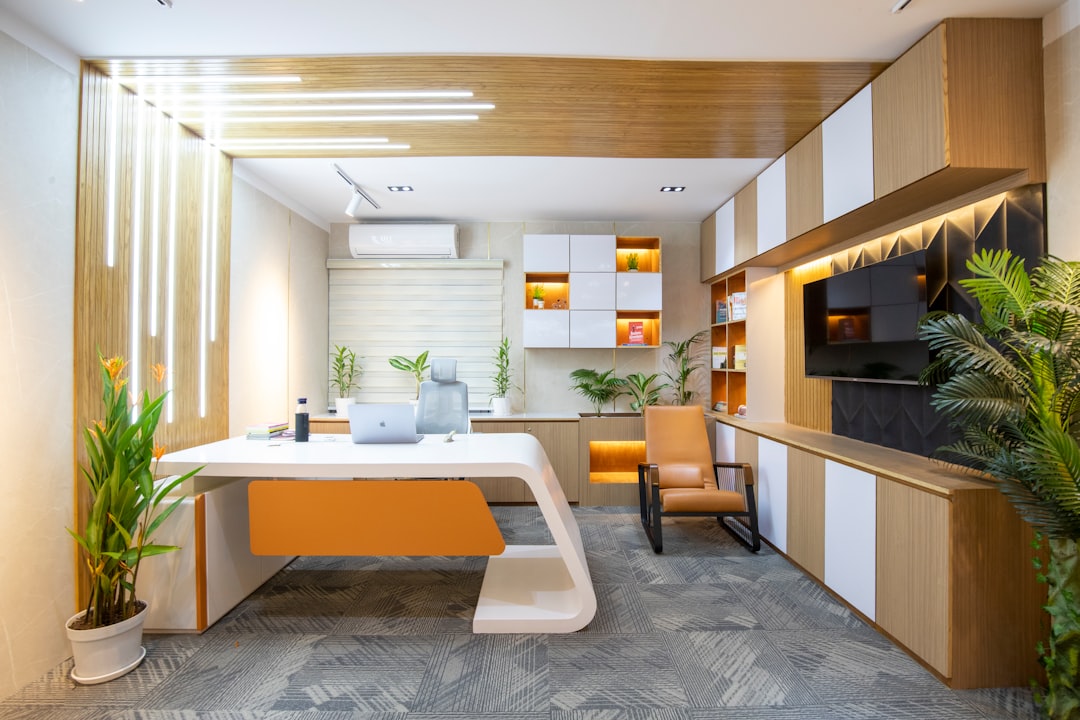
In private offices, a combination of painted walls and a single accent wallcovering panel behind the desk or on the corridor-facing glass partition creates visual interest without making tenant personalisation difficult.
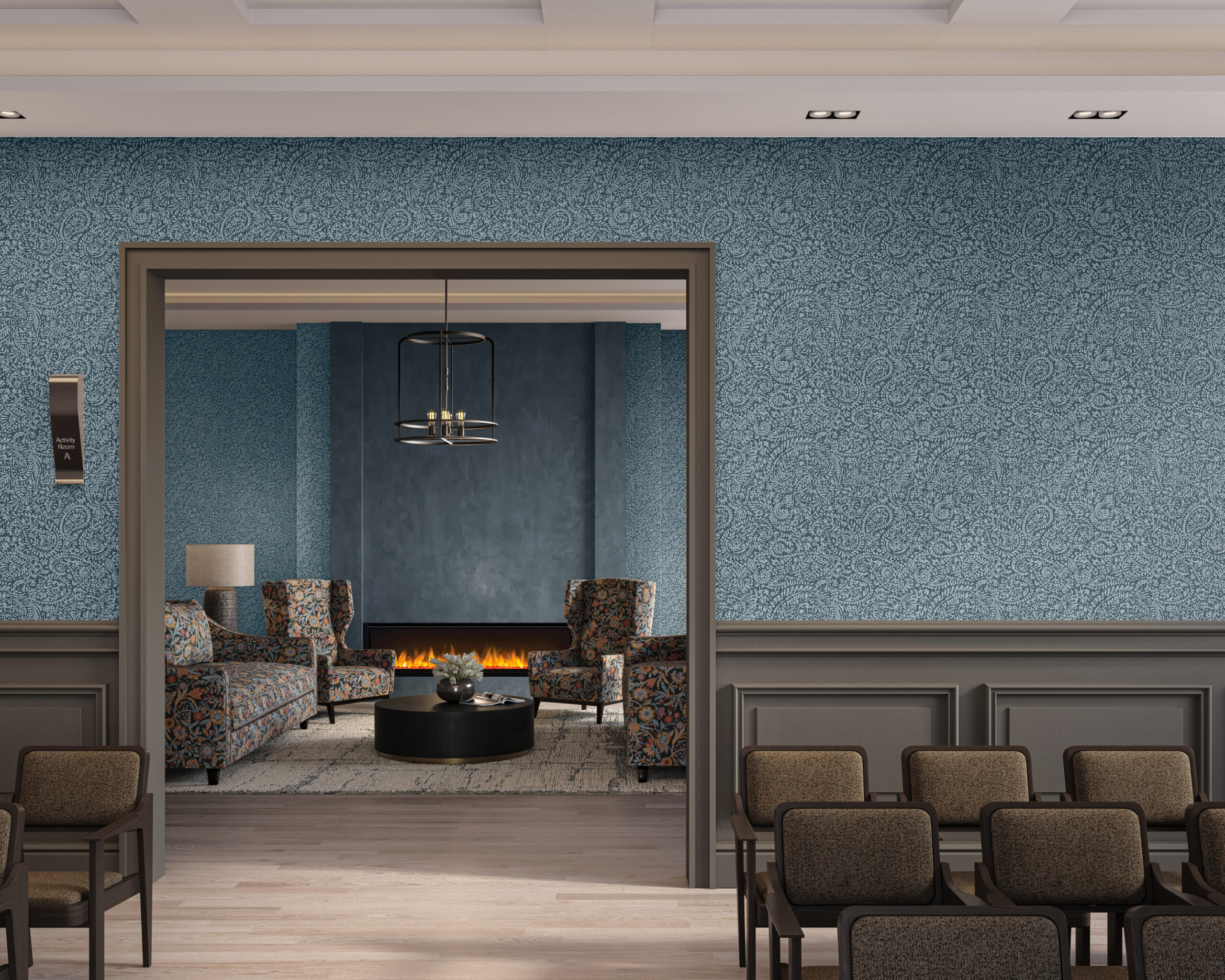
Feature walls in reception and lounge areas benefit from textured or patterned wallcoverings that reinforce the operator’s brand identity and elevate the first impression for visiting clients.
Acoustic Design for Shared Workspaces
Sound management separates a good serviced office from a great one. Without deliberate acoustic planning, open-plan noise, phone calls, and meeting-room chatter bleed into neighbouring spaces, reducing productivity and tenant satisfaction.
Key Acoustic Strategies
- Carpet tile flooring: Absorbs impact noise from footsteps and chair movement, particularly important in open-plan areas.
- Fabric-wrapped wall panels: Positioned in meeting rooms and along open-plan perimeters, these panels absorb mid-to-high-frequency sound that causes speech intelligibility issues.
- Ceiling treatments: Acoustic ceiling tiles or suspended baffles reduce reverberation in large open areas.
- Partition specification: Glass partitions between private offices and corridors should include acoustic interlayers or double glazing to maintain speech privacy.
Combining soft flooring, absorbent wall surfaces, and ceiling treatments creates a balanced acoustic environment where tenants can concentrate, collaborate, and take calls without conflict.
Common Areas That Drive Tenant Retention
In Singapore’s saturated serviced office market, common areas are a powerful retention tool. A well-designed pantry, lounge, or breakout space encourages tenants to renew rather than move to a competing operator.
Durable, visually appealing materials are essential in these high-use zones. LVT flooring handles the spills and traffic of a shared pantry better than carpet, while still looking refined. Upholstered lounge seating in performance fabrics resists staining and wear, maintaining a premium feel even after thousands of hours of use.
Biophilic elements such as living green walls, planters, and natural-material finishes improve the perceived quality of a space. Natural timber-look flooring and botanical-patterned wallcoverings can introduce this effect without the maintenance demands of living plants.
Lighting in common areas should feel warmer and more relaxed than in workspaces, encouraging tenants to use these zones for informal collaboration and genuine breaks from their desks.
Design for Rapid Reconfiguration
The ability to reconfigure quickly between tenants is a commercial necessity. Design choices that support rapid changeover include modular carpet tiles that can be partially replaced, wallcoverings that resist damage and hide minor wear, and standardised furniture systems with interchangeable components.
Colour and material palettes should be cohesive enough that adding or removing a partition, replacing a carpet zone, or refreshing a feature wall does not require redesigning the entire floor. Neutral base finishes with replaceable accent elements give operators maximum flexibility.
Planning accessible cable management, demountable partitions, and plug-and-play IT infrastructure from the outset also reduces the time and cost of reconfiguring spaces between tenancies.
Final Thoughts
Serviced office interior design is a balancing act between durability, aesthetics, acoustics, and flexibility. The right material choices — from heavy-duty carpet tiles to commercial-grade wallcoverings — ensure spaces remain attractive through multiple tenant cycles without excessive refurbishment spending.
Operators who invest in quality finishes and thoughtful acoustic design create environments tenants are reluctant to leave, improving occupancy rates and long-term profitability.
Get a free quote for your project today and discover commercial-grade carpet tiles and wallcoverings for your serviced office.