Wallpaper & Wallcovering
Wallpaper for Accent Walls: Design Tips and Ideas
Wallpaper for accent walls remains one of the most effective ways to inject personality into a room without overwhelming the entire space. A single statement wall can anchor a living area, define a dining zone, or add depth to a compact bedroom — making it an especially versatile technique for Singapore homes where space is at a premium.
Whether you are renovating an HDB flat, refreshing a condo unit, or designing a landed property, the right accent wall can elevate your interior from ordinary to extraordinary. Here is what you need to know to get it right.
Why Accent Walls Work in Singapore Homes
Singapore interiors tend to favour neutral palettes and clean lines, partly because of compact floor plans and partly due to the influence of minimalist design trends. An accent wall introduces visual interest without cluttering the room or making it feel smaller.
In HDB flats and BTO units, where open-plan living and dining areas are common, a wallpapered accent wall can subtly delineate zones. A textured wallpaper behind the dining table, for example, signals a distinct area without the need for physical partitions.
For condominiums with floor-to-ceiling windows, an accent wall on the opposite side of the glass creates a balanced focal point, drawing the eye inward and adding warmth to what might otherwise feel like a cold, glass-heavy space.
Choosing the Right Wall for Your Accent
Not every wall is suited to be an accent. The most effective feature walls share a few characteristics that make them natural focal points.
The Wall You See First
When you enter a room, the wall your eyes land on first is typically the best candidate. In most Singapore living rooms, this is the wall behind the sofa or the television console. In bedrooms, it is almost always the wall behind the headboard.
Walls with Architectural Features
A wall with a fireplace niche, a built-in shelving recess, or an alcove already draws attention. Adding wallpaper amplifies its presence. Conversely, avoid walls broken up by multiple doors or windows — the wallpaper pattern will appear fragmented and lose its impact.
Walls That Define Zones
In open-concept HDB and condo layouts, consider using an accent wall to define the dining area, study nook, or entryway. This approach is more elegant than room dividers and far more cost-effective than built-in carpentry.
Selecting Patterns and Colours for Impact
The pattern and colour you choose will determine whether your accent wall whispers sophistication or shouts for attention. Both approaches have their place — the key is matching the wallpaper to the room’s purpose and existing decor.
Bold Geometric Patterns
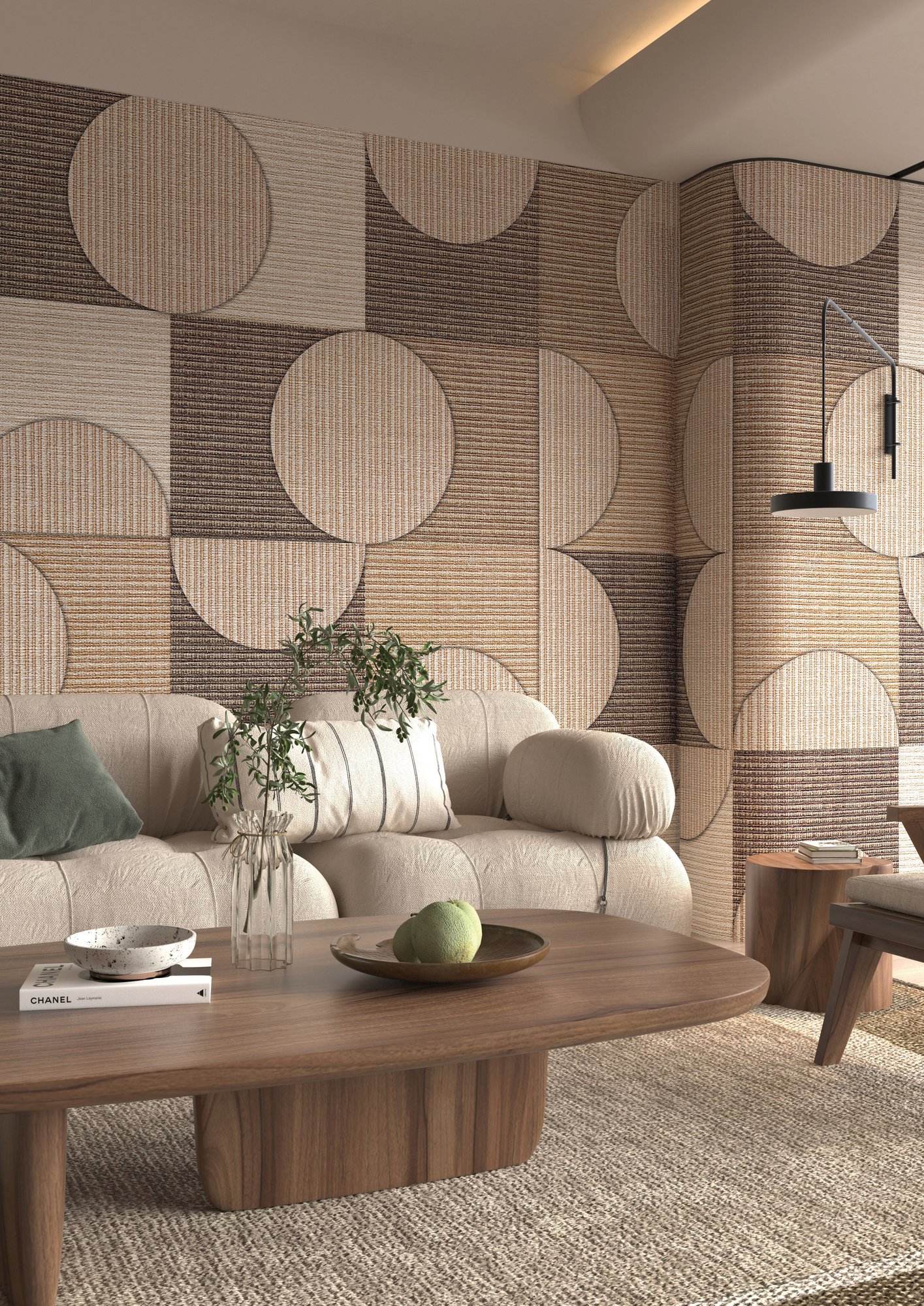
Large-scale geometric designs create a contemporary, energetic feel. They work particularly well in living rooms and home offices where you want a sense of dynamism. Pair them with solid-coloured furniture and simple accessories to avoid visual competition.
Botanical and Nature Prints
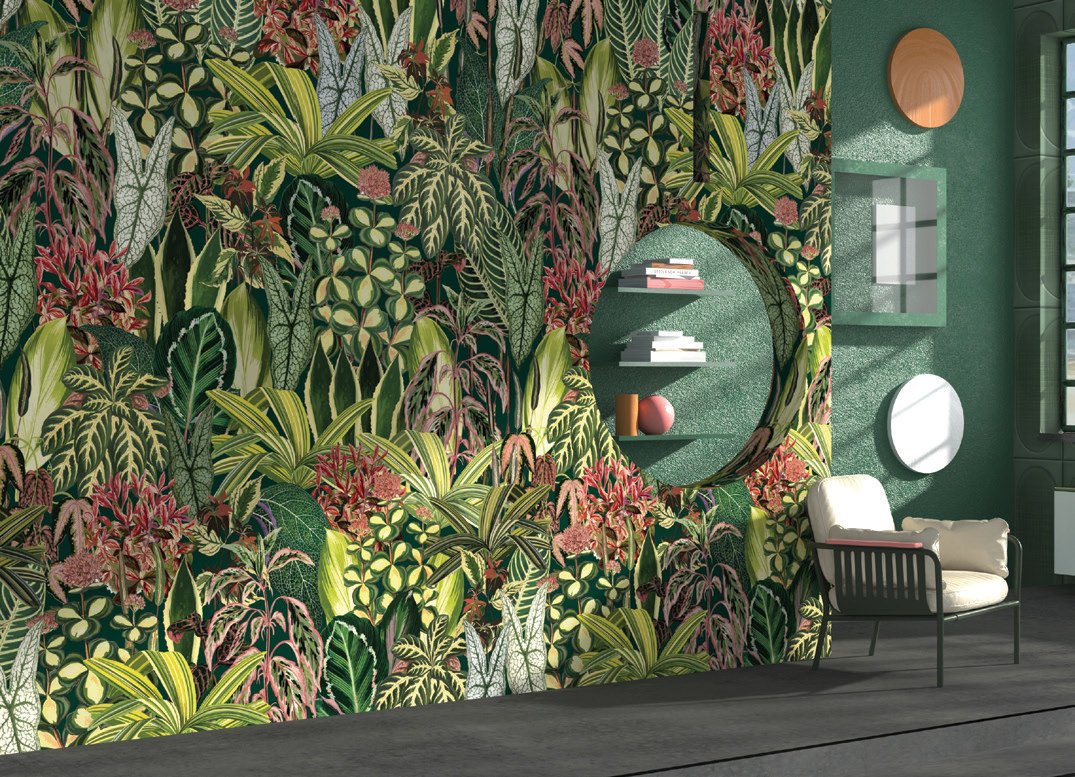
Tropical leaf motifs and floral patterns bring organic warmth to urban interiors. In Singapore, where greenery is a prized element of design, botanical wallpapers on an accent wall can echo the lush landscape visible through your windows.
Textured and Tactile Finishes
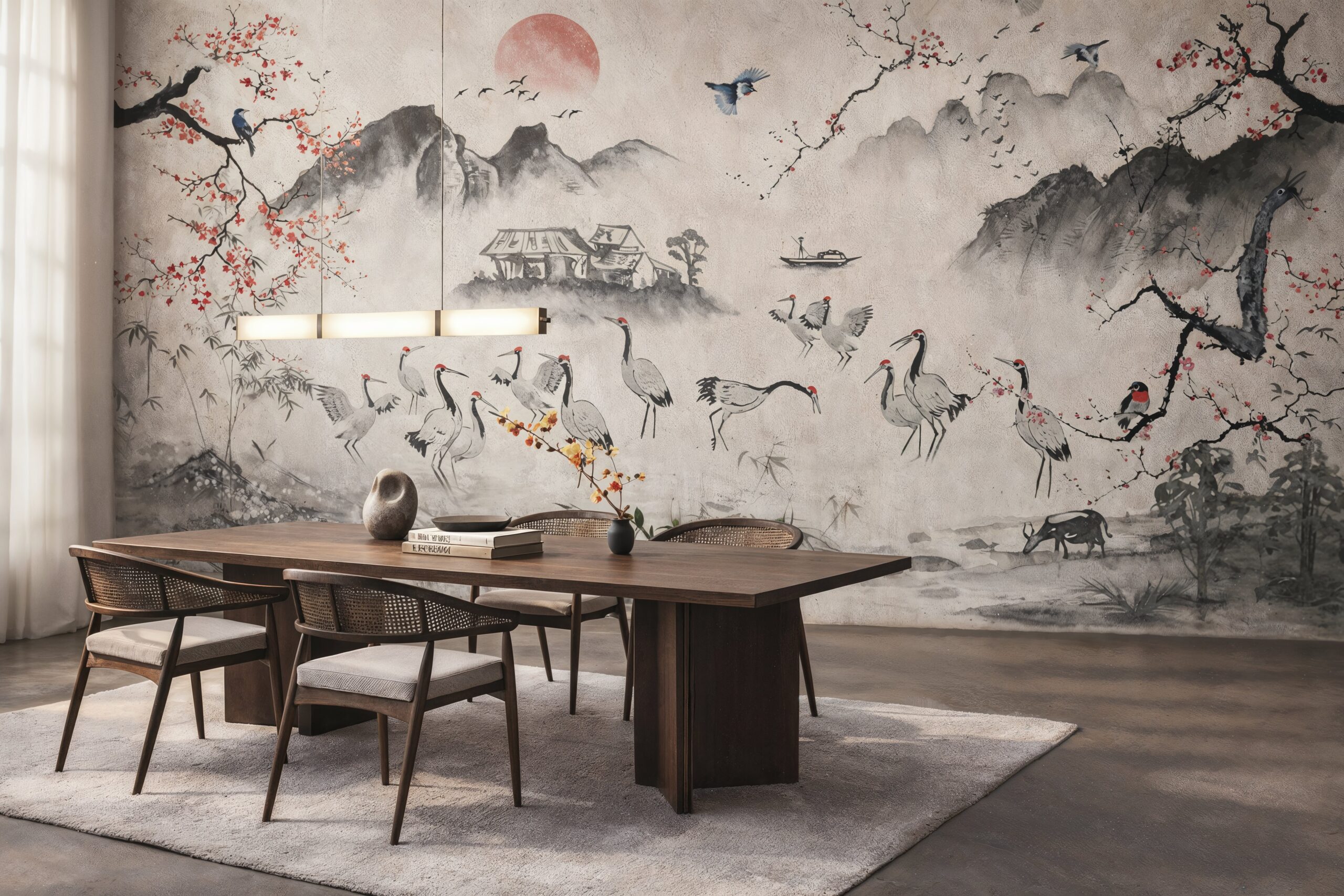
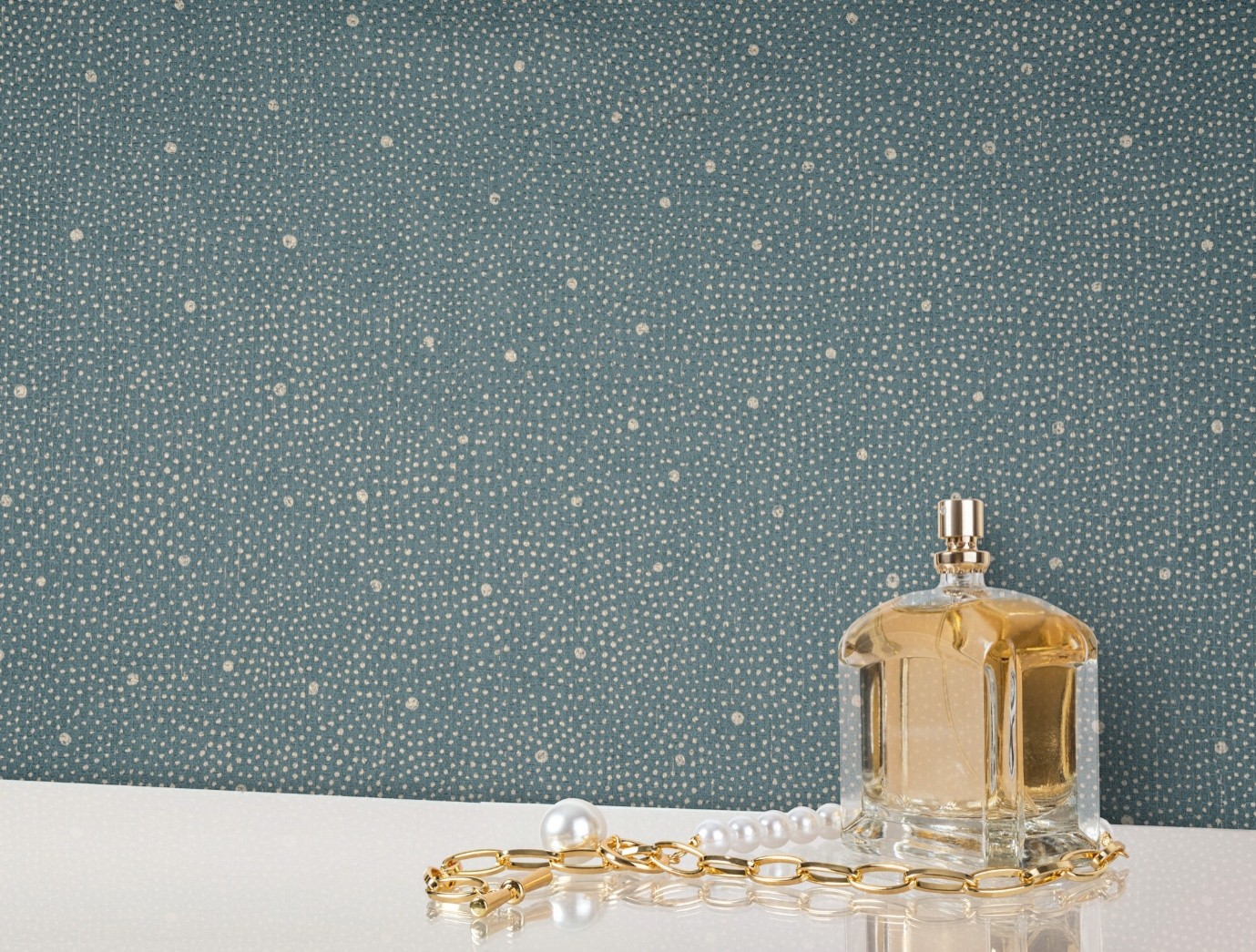
Grasscloth, linen-effect, and faux-stone wallpapers add dimension through texture rather than colour. These are excellent choices for accent walls in bedrooms and dining rooms, where a subtle, tactile quality enhances the sense of comfort.
Colour Considerations
Dark, saturated colours — deep navy, forest green, charcoal — create depth and make a wall appear to recede, which can paradoxically make a small room feel larger. Light, warm tones work best for rooms that receive limited natural light, a common scenario in HDB flats with north-facing windows.
As a general rule, the accent wall colour should be present somewhere else in the room, even if only in small doses through cushions, a rug, or artwork. This creates a cohesive look rather than a disconnected statement.
Common Accent Wall Mistakes to Avoid
Even well-intentioned accent walls can fall flat if certain pitfalls are not addressed. Here are the most frequent errors seen in Singapore homes.
- Choosing too many accent walls: One per room is the rule. Two or more competing feature walls cancel each other out and create visual chaos.
- Ignoring scale: A large pattern on a small wall can feel cramped, while a tiny pattern on a large wall may read as busy rather than impactful. Match the pattern scale to the wall dimensions.
- Clashing with furniture: A heavily patterned wallpaper behind a heavily patterned sofa creates a visual conflict. Let one element be the star.
- Forgetting lighting: Textured wallpapers look best with directional lighting that casts shadows across the surface. Flat, overhead lighting can wash out the effect entirely.
- Poor edge finishing: Where the wallpaper meets the adjacent painted wall, the transition must be clean. Professional installation ensures crisp edges, especially at internal corners.
Wallpaper Types Best Suited for Accent Walls
Not all wallpapers perform equally as accent features. Some types are naturally better suited to the role of a statement piece.
| Wallpaper Type | Best For | Key Benefit |
|---|---|---|
| Vinyl wallcovering | Living rooms, hallways | Durable, easy to clean, humidity-resistant |
| Non-woven | Bedrooms, dining rooms | Breathable, paste-the-wall application |
| Grasscloth | Feature walls in luxury spaces | Natural texture, unique character |
| Metallic finish | Dining rooms, entryways | Light-reflecting, adds depth |
| Textured paintable | Minimalist interiors | Adds dimension without colour commitment |
For Singapore’s humid climate, vinyl and non-woven wallpapers are the most practical choices. They resist moisture absorption and are less prone to peeling — a real concern in non-air-conditioned rooms. Goodrich Global’s residential wallcovering collection includes options across all these categories, tested for performance in tropical conditions.
Installation Tips for a Flawless Finish
A wallpaper accent wall is only as good as its installation. Even the most stunning design will disappoint if bubbles, misaligned patterns, or peeling edges undermine the finished look.
Surface Preparation
The wall must be smooth, dry, and free of loose paint or plaster. In older HDB resale flats, walls may have multiple layers of paint that need sanding. Skim coating is recommended for uneven surfaces — a step that many homeowners skip but that professionals insist upon.
Acclimatisation
Allow the wallpaper rolls to acclimatise to room temperature for at least 24 hours before installation. In Singapore’s climate, sudden shifts from air-conditioned storage to a warm room can cause expansion issues.
Pattern Matching
For large-scale patterns, factor in additional material for pattern matching. A half-drop repeat, for instance, requires more wallpaper than a straight match. Your installer or the Goodrich Global wallpaper team can advise on how much extra you need.
Professional vs DIY Installation
While paste-the-wall wallpapers have made DIY more accessible, accent walls demand precision because all attention is focused on a single surface. Imperfections that might go unnoticed on a fully papered room become glaringly obvious on a lone feature wall. Professional installation is strongly recommended for high-impact patterns and textured materials.
Final Thoughts
A well-executed wallpaper accent wall can transform a room’s character in a single afternoon. The key lies in choosing the right wall, selecting a pattern that complements rather than competes with your existing decor, and ensuring professional-quality installation.
With hundreds of designs suited to Singapore’s climate and aesthetic sensibilities, finding your perfect accent is a matter of exploring the options and trusting your instincts.
Request free samples from our Singapore showroom to see how your chosen wallpaper looks against your walls before committing.