Wallpaper & Wallcovering
Commercial vs Residential Wallpaper: Key Differences | Goodrich
Commercial wallpaper vs residential wallpaper may look similar on the surface, but they are engineered for very different environments. Choosing the wrong type can lead to premature wear, failed fire safety inspections, or unnecessary overspending. Whether you are specifying wallcoverings for a hotel lobby or refreshing your HDB living room, understanding these differences is essential.
Goodrich Global supplies both commercial and residential wallcoverings across Singapore, working with architects, interior designers, and homeowners alike. This guide breaks down the critical distinctions so you can make an informed selection for your next project.
What Defines Commercial Wallpaper?
Commercial wallpaper — more accurately called commercial wallcovering — is manufactured to withstand the demands of high-traffic environments. Think office corridors, hotel guest rooms, hospital wards, and retail spaces. These products must meet strict performance benchmarks that residential wallpapers simply do not need to address.
Key characteristics of commercial wallcoverings include higher weight per square metre (typically above 370 g/m²), enhanced tear and abrasion resistance, and compliance with fire safety standards such as ASTM E84 Class A or BS 476 Part 7. They are usually backed with woven or non-woven substrates that improve dimensional stability and ease of installation on large wall surfaces.
In Singapore, commercial wallcoverings used in public buildings must comply with SCDF fire safety regulations. This is a non-negotiable specification that architects and project managers must verify before procurement.
What Defines Residential Wallpaper?
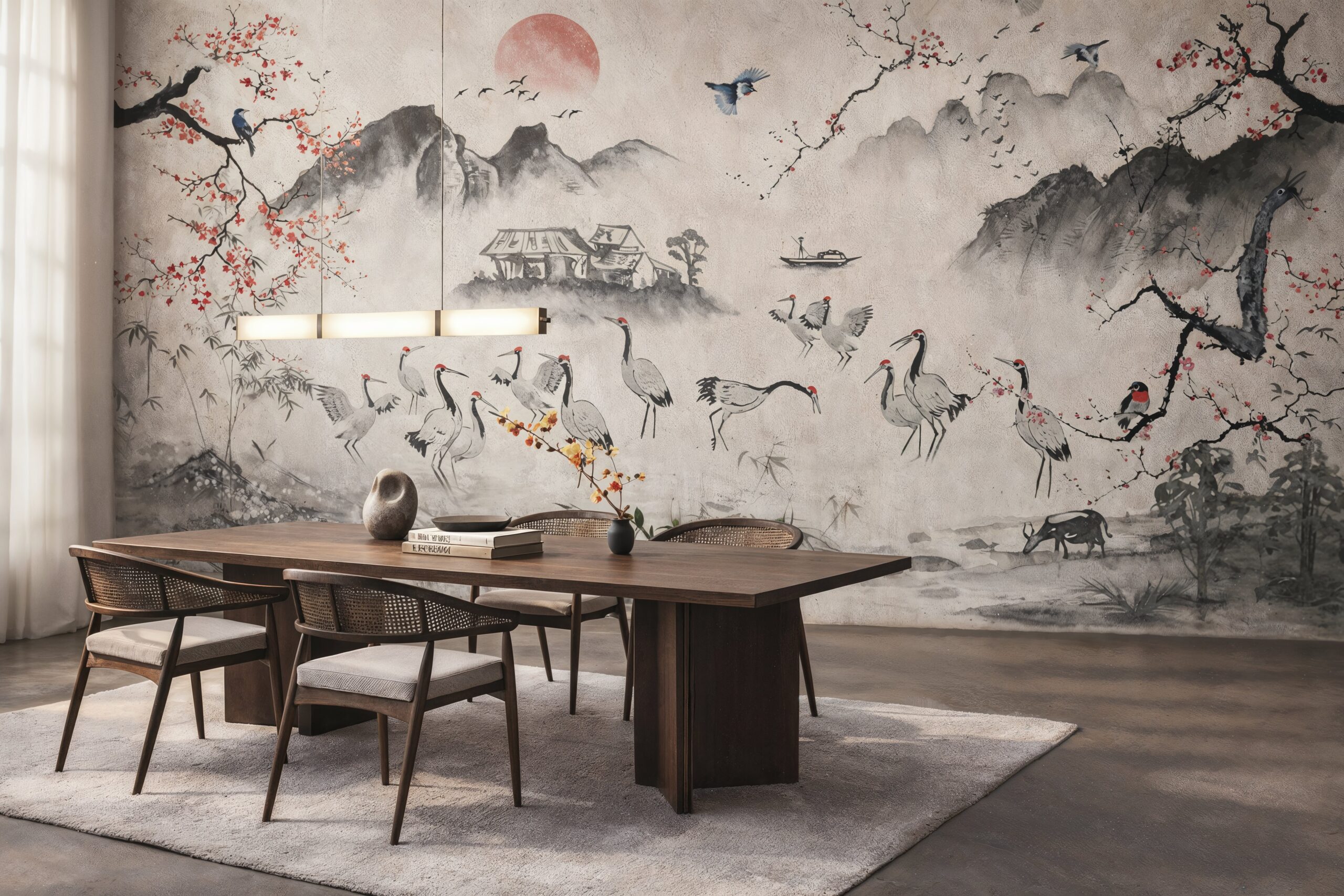
Residential wallpaper is designed primarily for aesthetic appeal and comfort in home settings. It caters to a far wider range of designs — from delicate florals and hand-painted murals to textured grasscloth and metallic finishes. The priority is visual impact rather than industrial-grade durability.
Residential wallpapers tend to be lighter in weight, often between 100 and 300 g/m². They are available in more diverse materials, including pure paper, non-woven, fabric-backed, and vinyl. While they still offer reasonable durability for living rooms, bedrooms, and dining areas, they are not built to handle the constant scuffing and cleaning that commercial spaces demand.
For Singapore homeowners renovating HDB flats, BTO units, or condominiums, residential wallpaper offers the widest selection of designs at accessible price points. Browse Goodrich Global’s residential wallpaper collection to explore the range.
Durability and Performance Compared
The most significant difference between commercial and residential wallpaper lies in their performance specifications. Here is a direct comparison of the key metrics.
| Feature | Commercial Wallcovering | Residential Wallpaper |
|---|---|---|
| Weight | 370+ g/m² | 100-300 g/m² |
| Abrasion resistance | High (Wyzenbeek 3,000+ cycles) | Low to moderate |
| Fire rating | ASTM E84 Class A / BS 476 | Not always rated |
| Tear strength | High (machine and cross direction) | Moderate |
| Washability | Scrubbable | Washable to spongeable |
| Mould resistance | Treated backing | Varies by product |
| Design variety | Moderate (textures, solids, subtle patterns) | Extensive (florals, murals, metallics, etc.) |
| Price range | Higher per roll | Wider range, generally lower |
Commercial wallcoverings are tested under standardised protocols — including colourfastness, stain resistance, and cold-crack resistance — that ensure consistent performance over years of use. Residential wallpapers undergo less rigorous testing, which is perfectly acceptable for the lower demands of a home environment.
Fire Safety and Compliance in Singapore
Fire performance is arguably the most critical distinction for Singapore projects. The Singapore Civil Defence Force (SCDF) enforces fire safety standards for interior finishes in commercial, healthcare, and hospitality buildings. Wallcoverings in these spaces must meet minimum flame-spread ratings.
Commercial wallcoverings from reputable manufacturers are tested and certified to standards such as ASTM E84 (Surface Burning Characteristics) or BS 476 Part 7 (Surface Spread of Flame). These certifications are documented in product technical data sheets, which specifiers should always request before finalising selections.
Residential wallpaper does not typically require fire certification for use in private homes, though some vinyl-based residential products do carry fire ratings. If you are working on a mixed-use development or a residential project with commercial elements — such as a condo clubhouse or function room — verify the fire requirements with your project’s qualified person.
Choosing the Right Type for Your Project
Selecting between commercial and residential wallpaper depends on three primary factors: the environment, the regulatory requirements, and the desired aesthetic outcome.
When to Specify Commercial Wallcovering
- Office spaces, co-working centres, and meeting rooms
- Hotel guest rooms, lobbies, and corridors
- Healthcare facilities including clinics and hospitals
- Retail stores and F&B outlets
- Any space requiring SCDF fire safety compliance
- High-traffic residential areas such as condo lobbies and lift lobbies
When to Choose Residential Wallpaper
- HDB flat living rooms, bedrooms, and dining areas
- BTO units during initial renovation
- Condo apartments (private residential units)
- Landed property interiors
- Accent walls and feature walls where design impact is the priority
For projects that sit between the two — such as serviced apartments or boutique offices that prioritise aesthetics — consider heavy-duty residential wallpapers or lighter commercial wallcoverings. Goodrich Global’s wallpaper and wallcovering range includes products that bridge this gap effectively.
Installation and Maintenance Differences
Commercial wallcoverings are typically installed by professional contractors who understand the requirements for seam alignment on long corridor runs and adhesive compatibility with fire-rated products. The heavier weight demands stronger adhesives and more precise substrate preparation.
Residential wallpaper installation is more straightforward. Non-woven residential wallpapers, in particular, allow paste-the-wall application, which simplifies the process and reduces installation time. Many Singapore homeowners engage their ID firm to handle wallpaper installation as part of a broader renovation package.
Maintenance also differs. Commercial wallcoverings are designed to be scrubbed with diluted cleaning solutions without damage to the surface. Residential wallpapers require gentler care — a damp cloth for most vinyl types, and dry cleaning only for fabric or paper-based products.
In Singapore’s humid climate, both types benefit from proper wall preparation. Applying a mould-resistant primer before installation helps prevent moisture issues, particularly in older HDB flats and ground-floor units.
Final Thoughts
The choice between commercial and residential wallpaper comes down to performance requirements and project context. Commercial wallcoverings deliver the durability, fire safety, and cleanability that high-traffic and regulated spaces demand. Residential wallpapers offer broader design freedom and accessible pricing for home interiors. Specifying the right type from the outset prevents costly replacements and compliance issues.
Request free samples from our Singapore showroom to compare commercial and residential wallcovering options for your project.