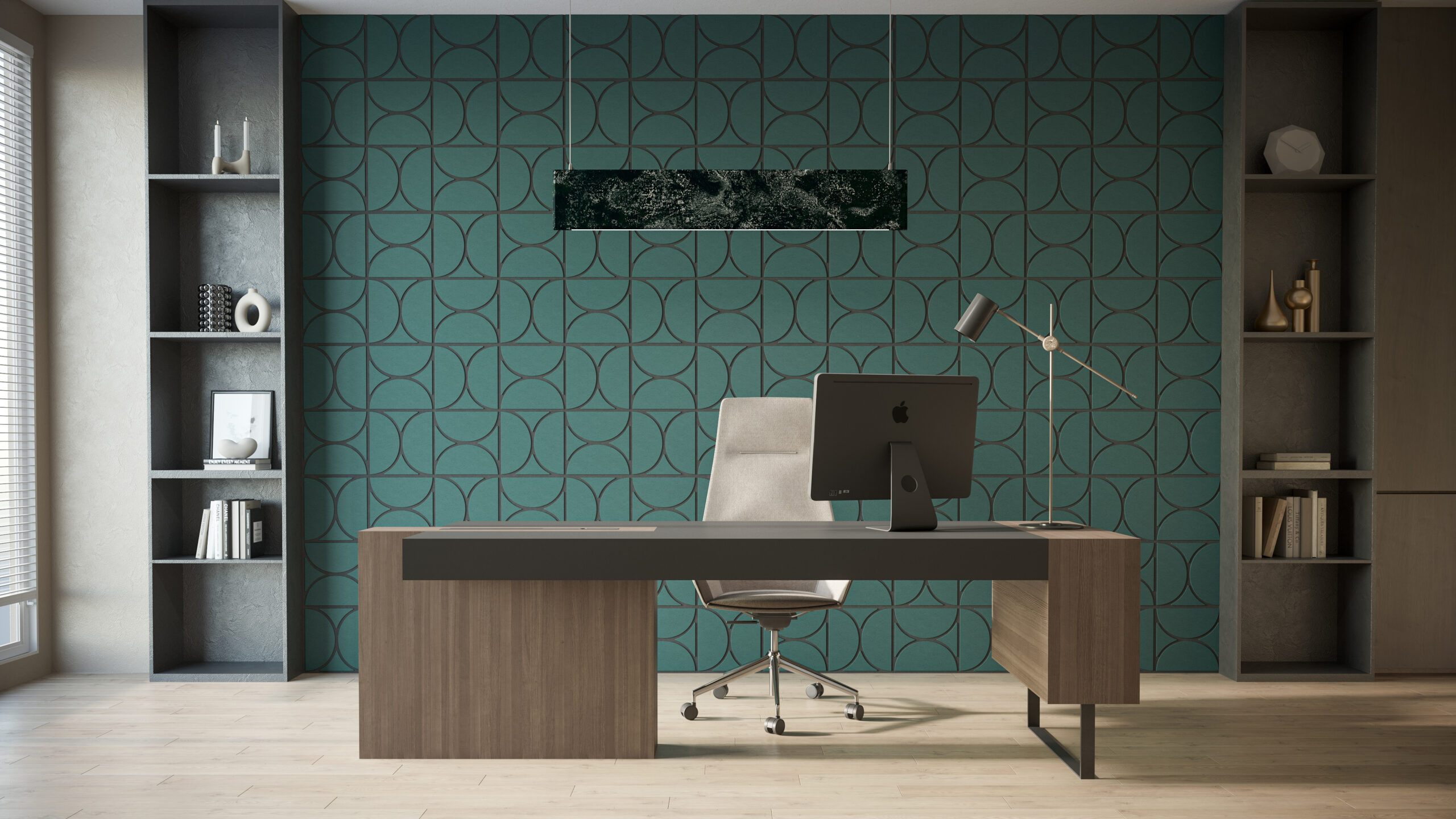
Wallpaper & Wallcovering
Functional Wallcovering for Singapore Interiors: A Guide
Functional wallcovering is what happens when a wall is asked to do more than look good. In commercial interiors — offices, healthcare, schools and hospitality — the wall is one of the largest surfaces in the room, and it can be put to work: absorbing sound, taking a marker pen, resisting disinfectant, or shrugging off a trolley. This guide explains the main types of functional wallcovering, how to match each one to the job the wall actually needs to do, and what to check before you specify for a Singapore project.
The short version: there is no single “functional” product. Function is application-specific, so the right approach is to start with the problem the wall has to solve — high-traffic, disinfectable, acoustic, writable, low-emission — and then specify the wallcovering (often a combination) around those requirements rather than choosing a decorative finish first.
What Makes a Wallcovering “Functional”?
A decorative wallcovering is specified for how it looks. A functional wallcovering is specified for what it does — while still looking the part. In practice, “functional” covers a handful of distinct performance jobs, and most commercial walls need one or two of them:
- Acoustic: absorbs sound to reduce echo and reverberation in noisy, hard-surfaced rooms.
- Writable and magnetic: turns a wall into a continuous dry-erase and pin-up surface for collaboration.
- Hygienic and easy-clean: scrubbable, often antimicrobial, finishes that tolerate repeated disinfecting.
- Durable and impact-resistant: commercial-weight surfaces that survive trolleys, furniture and heavy foot traffic.
- Fire-rated and low-emission: finishes that meet building fire codes and low-VOC indoor-air-quality standards.
The reason commercial projects often struggle with functional wallcovering is that these requirements can pull against each other — a hard, wipe-clean face works against sound absorption, and a designer’s preferred texture may not carry the tested fire rating a corridor demands. The wall has to satisfy the architect, the client, the contractor and the facilities team at once, so the successful specification treats function as a system, not a single product.
The Core Functional Types
Acoustic Wallcovering
Acoustic wallcoverings absorb a portion of the sound that hits them rather than reflecting it, using fibrous or textured substrates. Applied across large wall runs they typically achieve a Noise Reduction Coefficient (NRC) of around 0.15 to 0.45 — modest per square metre, but meaningful over a whole wall. Where higher, targeted absorption is needed, dedicated acoustic panels reach roughly 0.65 to 0.95. Most open-plan offices use both: wallcovering for broad coverage, panels at the key reflection points. See our detailed guide to acoustic wallcovering for offices for specification depth.
Writable and Magnetic Wallcovering
Writable wallcoverings turn a whole wall into a continuous dry-erase surface, scaling the writable area to the room rather than a fixed board. Magnetic function is layered into the same surface for pinning up printed material. These systems earn their place in huddle rooms, training spaces, classrooms and innovation labs — anywhere teams need generous, always-available surface to work on. Our guide to writable and magnetic wallcoverings for collaboration spaces covers how to evaluate them.
Hygienic and Easy-Clean Wallcovering
In healthcare, education and food environments, the wall must be non-porous, seamless and cleanable so bacteria cannot harbour in the finish, and it must survive repeated wiping with hospital-grade disinfectants without discolouring. This is where infection control, durability and — increasingly — low emissions have to align. Our guide to eco-friendly wallcovering for healthcare interiors sets out how to balance those demands, and the easy-clean wall covering for schools guide does the same for education.
Durable and Impact-Resistant Wallcovering
Corridors, wards and back-of-house areas take constant contact from beds, trolleys and furniture. Commercial-weight (Type II) vinyl and wall-protection systems resist abrasion and impact far better than residential paper, extending the interval between refurbishments. For the performance baseline, see our commercial vinyl wallcovering guide.
Sustainable and Low-Emission Wallcovering
Indoor air quality matters most where people spend long, uninterrupted hours indoors. PVC-free (polyolefin) or phthalate-free, recycled-content wallcoverings cut chemical emissions while keeping the wipe-clean toughness projects need. Prioritise a recognised low-emission certification such as GREENGUARD Gold, and the Singapore Green Label for local green-building documentation.
Match the Function to the Space
A single project rarely needs one product everywhere. Matching the wallcovering to each zone avoids paying for specialist performance where it isn’t required:
| Space | Primary functional need | Typical wallcovering |
|---|---|---|
| Open-plan office | Acoustic + durable | Acoustic wallcovering across large walls, commercial vinyl elsewhere |
| Meeting / huddle room | Writable + acoustic | Writable-magnetic wall, acoustic finish on adjacent surfaces |
| Hospital ward / clinic | Hygienic + fire-rated + low-VOC | PVC-free scrubbable wallcovering, verified fire rating |
| Classroom | Durable + easy-clean + acoustic | Easy-clean wallcovering, acoustic panels at reflection points |
| Corridor / high-traffic | Impact-resistant | Type II commercial vinyl with wall protection |
| Reception / client-facing | Brand + durable | Statement commercial wallcovering, scrubbable finish |
Specifying Functional Wallcovering for Singapore Projects
Singapore’s climate and building rules add a layer on top of the functional requirement. High humidity and heavy air-conditioning make moisture and mould resistance essential, particularly behind furniture and in wet-cleaned areas, so favour finishes rated for humid conditions and ensure walls are properly dried before installation. On escape routes, confirm the tested fire rating — typically Euroclass B-s1,d0 or equivalent — for the exact product and substrate, rather than assuming it from the product category. And verify performance claims against tested data: NRC to ASTM C423 or ISO 354 for acoustics, a durability classification such as Type II, and a named low-emission certification for indoor air quality.
How to Choose
The most reliable way to specify functional wallcovering is to invert the usual question. Instead of “which wallcovering looks right?”, ask “what does this wall need to do?” — then list the requirements in priority order (for example, high-traffic + disinfectable + acoustic + low-emission + premium appearance) and build the specification around them. Reserve the highest-performance products for the zones that genuinely need them, browse the full range on our wallcovering product category, and treat “functional” as a system of coordinated surfaces rather than a single hero product.
Final Thoughts
Functional wallcovering is less about one clever material and more about matching the wall to the job in front of it — acoustic where noise is the problem, writable where teams collaborate, hygienic where cleaning is relentless, durable where traffic is heavy, and low-emission where air quality matters most. Get that mapping right, zone by zone, and the wall stops being a decorative afterthought and starts doing measurable work for the building.
Book an appointment with our consultants to specify the right functional wallcovering for your next commercial project.
Frequently Asked Questions
What is functional wallcovering?
Functional wallcovering is a commercial wall finish specified for what it does as well as how it looks — absorbing sound, providing a writable or magnetic surface, resisting disinfectants, withstanding impact, or meeting fire and low-emission standards. There is no single functional product; the term covers several distinct performance jobs, and most commercial walls need one or two of them combined into a coordinated system.
Which functional wallcovering is best for Singapore office fit-outs?
For a Singapore office, a commercial-grade wallcovering — Type II vinyl or a PVC-free equivalent — that is scrubbable, fire-rated and resistant to humidity and heavy air-conditioning is the baseline. Match the variant to the zone: acoustic wallcovering where noise is an issue, durable finishes in high-traffic areas, and writable surfaces in meeting rooms. No single finish suits every wall in the fit-out.
Why do commercial projects struggle with functional wallcovering solutions?
Because the requirements often conflict and the stakeholders differ. A wipe-clean face works against sound absorption, a preferred texture may not carry the required fire rating, and the architect, client, contractor and facilities team each optimise for different things. Projects struggle when function is treated as an add-on to a decorative choice rather than designed in from the start as a system.
Can a single wallcovering be both acoustic and writable?
Rarely in one layer — a writable surface is hard and cleanable, which works against sound absorption. The robust solution is a coordinated wall system: a writable-magnetic surface where teams work, and acoustic wallcovering or panels on adjacent surfaces to control sound. They are specified together as one scheme rather than expecting a single product to do both jobs.
How do you specify functional wallcovering for a commercial project?
Start with the problem the wall must solve, not the look. List the requirements in priority order — for example high-traffic, disinfectable, acoustic, low-emission, premium appearance — then verify each against tested data: NRC to ASTM C423 or ISO 354 for acoustics, a Type II durability classification, a verified fire rating such as Euroclass B-s1,d0, and a named low-emission certification. Specify zone by zone so performance goes where it is actually needed.