Articles / Fabric & Upholstery / Healthcare Interiors
Rethinking Hospital Interiors Through Flame Retardant Hospital Curtain Fabric

Introduction: Fire Safety and the Hidden Role of Hospital Curtains
Fire safety in healthcare facilities is often discussed in terms of alarms, suppression systems, and evacuation protocols. Less attention is given to the materials that populate patient areas, despite their direct influence on how a fire behaves once it starts. In this context, flame retardant hospital curtain fabric plays a critical role in reducing fire risk within clinical environments.
Hospital curtains are positioned near beds, medical equipment, and electrical devices, and in some cases close to oxygen delivery systems. These conditions increase the consequences of ignition, particularly in spaces occupied by patients with limited mobility. Curtains that ignite or allow flames to spread rapidly can accelerate fire development and reduce available response time.
By limiting ignition potential and slowing flame spread, flame retardant hospital curtain fabric functions as a passive safety measure. Its performance supports broader fire protection strategies, helping healthcare facilities manage risk, protect vulnerable occupants, and meet essential safety expectations embedded in modern hospital design.
Why Curtains Matter in Hospital Fire Risk Assessments
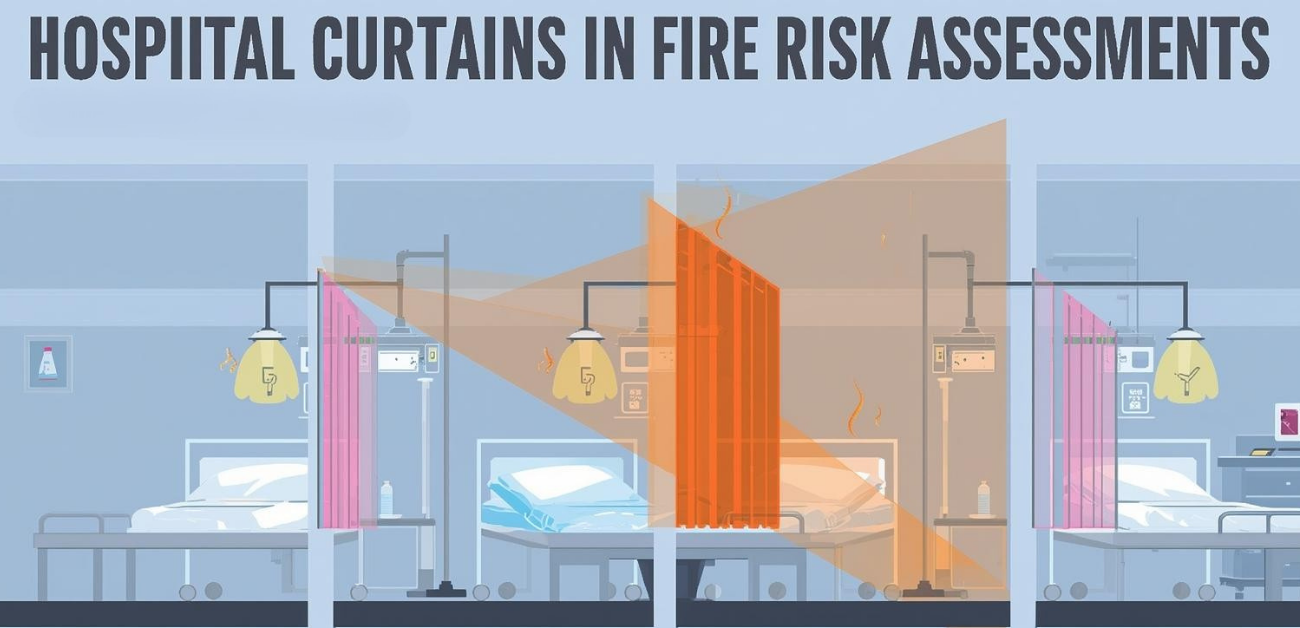
Hospital fire risk assessments focus on how quickly a fire can start, spread, and be controlled within occupied spaces. Curtains play a significant role in this evaluation because of where they are placed. Privacy curtains are typically installed directly beside patient beds, close to electrical equipment, heating elements, and, in some cases, oxygen delivery systems. These locations increase exposure to ignition sources and amplify the consequences of material failure.
Curtains also contribute to a room’s overall fire load. As soft furnishings, they can ignite more readily than hard surfaces and, if not properly specified, allow flames to travel vertically and laterally. Rapid flame spread reduces available response time and complicates evacuation efforts, particularly in wards where patients cannot move independently.
Using flame retardant hospital curtains helps limit these risks by resisting ignition and slowing flame propagation. While such materials do not prevent fires entirely, they reduce the speed and intensity of fire development. This controlled behaviour supports safer evacuation, more effective suppression, and improved outcomes during fire-related emergencies.
Understanding Flame Retardancy in Clinical Textiles
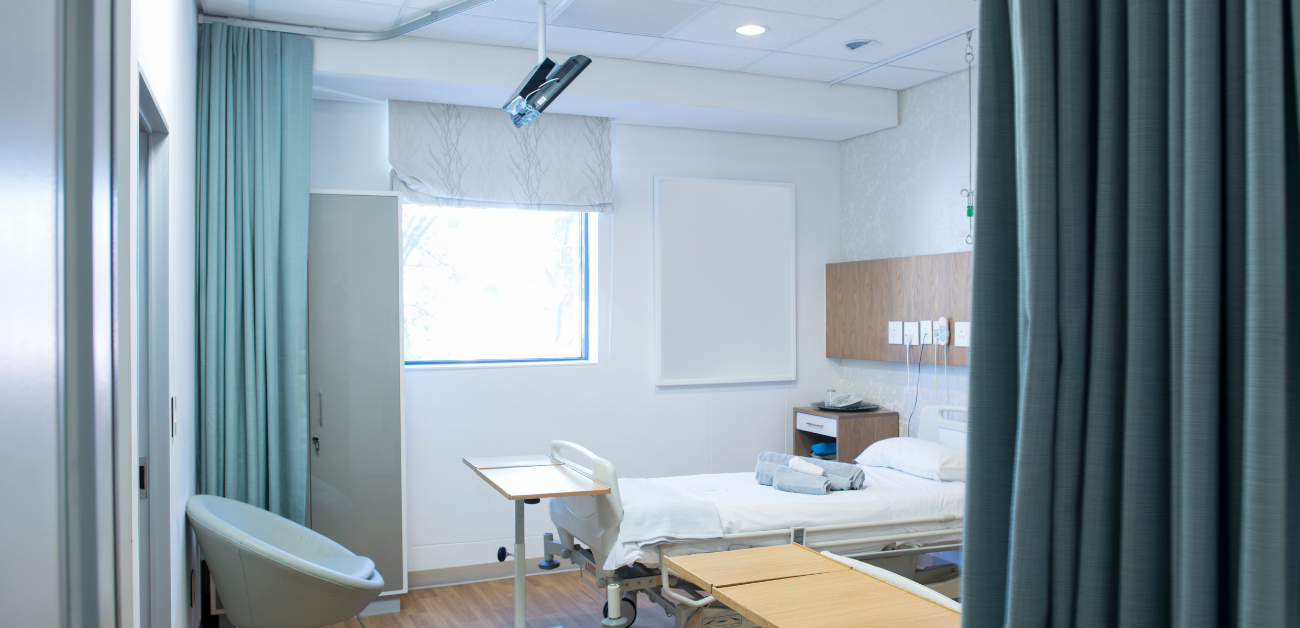
Flame performance in healthcare textiles is often misunderstood, particularly the distinction between fire-resistant and flame-retardant materials. Fire-resistant materials are designed to withstand exposure to heat without igniting, while flame-retardant materials are engineered to slow ignition and limit flame spread once exposed to a heat source. In hospital environments, this controlled response is critical because it reduces fire growth during the early stages of an incident.
Clinical textiles are subject to specific regulatory standards and testing requirements. These typically evaluate ignition resistance, flame spread, and after-flame behaviour under defined conditions. Compliance with recognised fire safety standards is essential for materials used in patient-care areas, as failure to meet these benchmarks can compromise both safety and regulatory approval.
For fabrics used in flame retardant hospital curtains, performance expectations extend beyond initial testing. The fabric must retain its flame-retarding properties over time, even after repeated laundering and exposure to cleaning chemicals. Consistent performance throughout the product lifecycle is necessary to ensure ongoing fire safety in demanding healthcare environments.
Curtains, Evacuation Time, and Patient Vulnerability
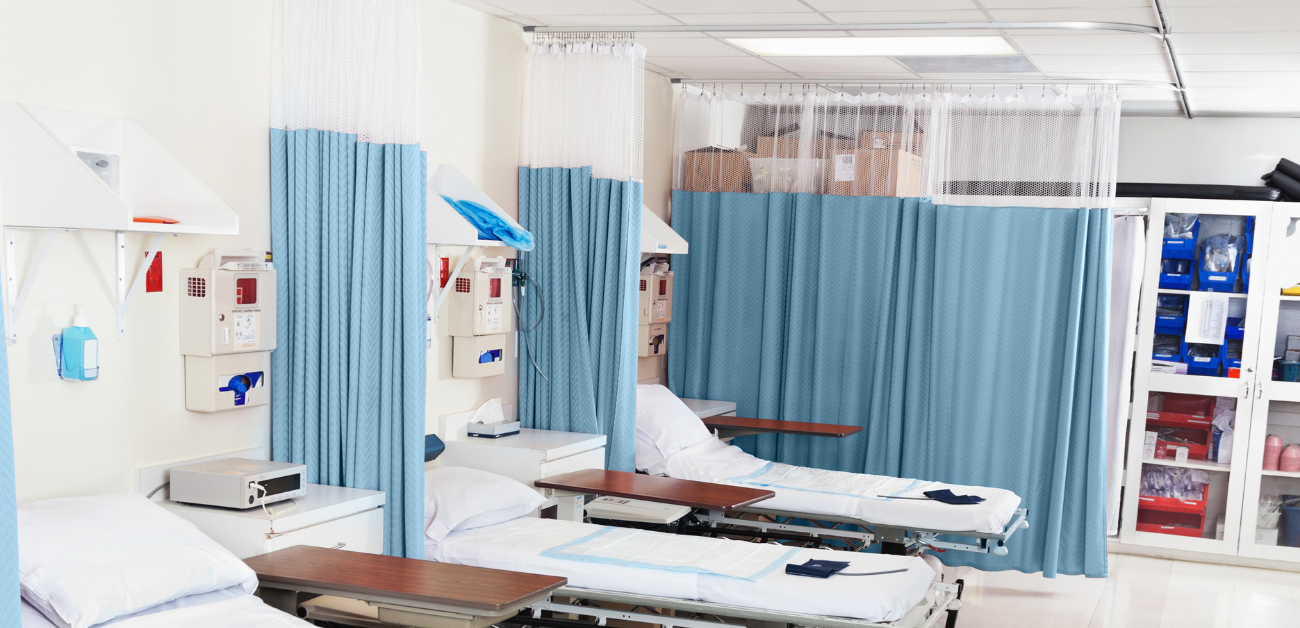
Evacuation in healthcare settings presents unique challenges that are not present in most other building types. Many patients have limited mobility, rely on medical equipment, or require staff assistance to move safely. These factors significantly extend evacuation time and increase reliance on materials that slow the progression of fire rather than accelerate it.
When curtains ignite or allow flames to spread rapidly, they can reduce visibility, generate heat, and obstruct escape routes within seconds. Slower flame spread, by contrast, preserves critical response time. It allows staff to assess the situation, initiate evacuation protocols, and protect patients who cannot move independently.
In this context, flame retardant hospital curtains play a direct safety role. By resisting ignition and limiting flame propagation it contributes to more predictable fire behaviour. This controlled response supports safer evacuation conditions, reduces panic, and helps healthcare facilities manage emergencies where every additional second can affect patient outcomes.
Compliance, Codes, and Institutional Accountability

Healthcare facilities operate under strict fire safety codes designed to protect vulnerable occupants and ensure orderly evacuation during emergencies. These regulations often specify performance requirements for interior materials, including textiles used in patient-care areas. Curtains that do not meet fire safety standards can place facilities at risk of noncompliance, leading to citations, corrective actions, or operational restrictions.
During inspections and audits, evaluators assess both documentation and physical conditions. Curtains are examined for labelling, certification, and visible wear that could compromise fire performance. Materials that show degradation or lack clear compliance records can trigger deeper reviews of safety practices and procurement decisions.
Integrating flame retardant hospital curtains into facility standards reduces regulatory risk by aligning material specifications with code requirements. Consistent use of compliant fabrics demonstrates institutional accountability, supports audit readiness, and reinforces a proactive approach to fire safety across clinical environments.
Durability, Laundering, and Long-Term Fire Performance

Hospital curtains are subjected to frequent laundering, chemical disinfectants, and mechanical stress as part of routine infection-control practices. These processes can degrade fire-retardant treatments if fabrics are not engineered for long-term clinical use. Over time, repeated washing can reduce effectiveness, particularly when treatments are surface-applied rather than integrated into the fiber structure.
Maintaining fire performance throughout a product’s lifespan is critical. Curtains that initially meet standards but lose flame-retarding properties over time introduce hidden safety risks. This makes durability and performance retention essential criteria during material selection, not secondary considerations.
High-quality flame retardant hospital curtains are designed to preserve fire safety characteristics despite ongoing maintenance demands. Evaluating fabrics for long-term performance under real operating conditions helps healthcare facilities avoid premature replacement, maintain compliance, and ensure consistent fire protection across patient-care areas.
Ethical Responsibility in Healthcare Fire Safety Design

Fire safety decisions in healthcare environments are inseparable from ethical responsibility. Patients often have limited mobility, rely on medical devices, or are unable to respond independently during emergencies. This places a heightened duty of care on institutions to minimise preventable risks through thoughtful design and material selection. Staff members also depend on safe environments to carry out emergency procedures without unnecessary hazards.
Material choices carry ethical implications because they influence how a facility performs under crisis conditions. Selecting fabrics that fail to slow ignition or flame spread prioritises short-term cost or convenience over human safety. In contrast, specifying flame retardant hospital curtains reflects a commitment to protecting lives through preventive design.
Fire safety is therefore not only an engineering concern but a design responsibility. Integrating safety-focused materials into healthcare spaces demonstrates accountability, foresight, and respect for those who depend on these environments during their most vulnerable moments.
Conclusion: Flame Retardancy as a Healthcare Safety Standard
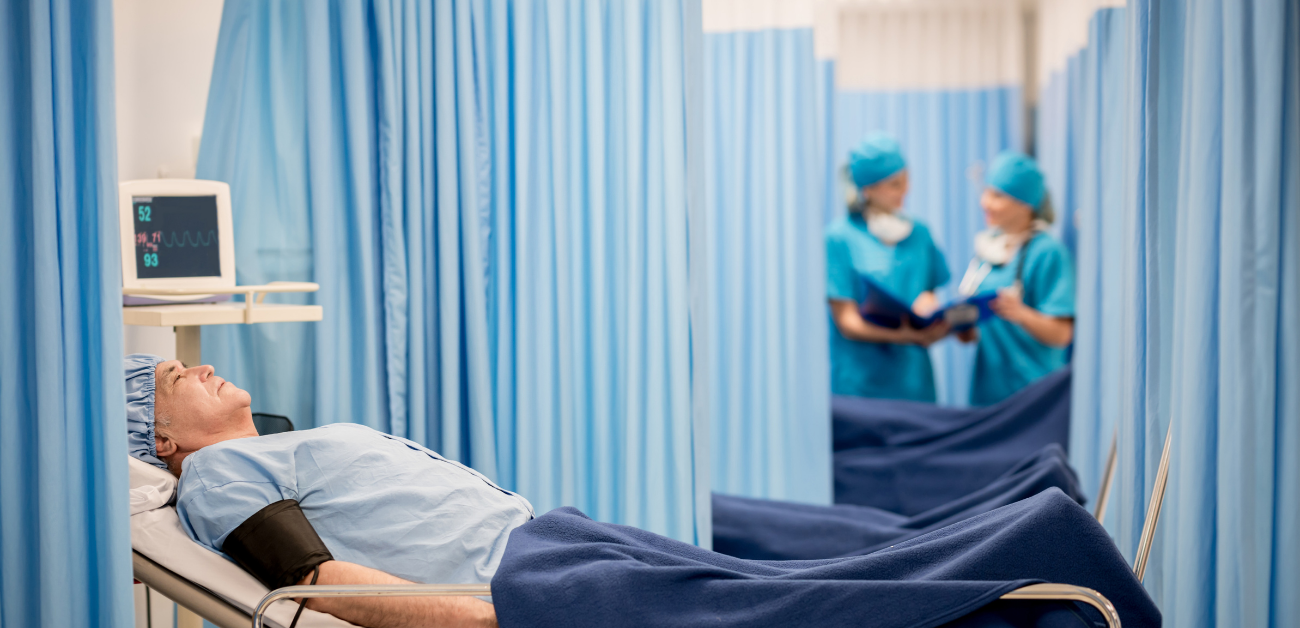
Hospital curtains should be understood as part of the fire safety infrastructure rather than secondary interior elements. Their proximity to patients, equipment, and potential ignition sources places them within the core of healthcare risk management. When specified correctly, curtain fabrics contribute to slower fire development, improved evacuation conditions, and stronger alignment with fire safety regulations.
Safety performance, regulatory compliance, and ethical responsibility intersect in material selection. Curtains that retain flame-retarding properties over time support inspection readiness, protect vulnerable occupants, and reflect a facility’s commitment to responsible design choices. These considerations elevate certain fabrics from a procurement detail to a safety standard.
Within this framework, Goodrich Global operates as a performance-driven textile partner focused on materials that respond to real clinical demands. Its work with flame retardant hospital curtain fabric invites healthcare decision-makers to look more closely at how textile specifications support long-term safety, accountability, and care quality.