Wallpaper & Wallcovering
Wallcovering vs Paint in Singapore: Which Wall Finish to Choose
“Should we wallpaper or just paint?” is one of the first decisions Singapore homeowners make when planning a renovation, and one of the most consequential for the final look of the home. Both finishes can produce excellent results. Both have specific contexts where they are clearly the right choice. The honest comparison is rarely “which is better” but “which is better for this room, this budget, this household, and this time horizon.”
This guide sets out the trade-offs that actually matter — cost over the life of the finish, durability under Singapore’s humidity and family use, design and pattern range, and the practical questions of installation and removal. It is written for homeowners weighing the decision before renovation, not for designers already committed to one approach.
What Each Finish Actually Does
Paint is a liquid applied in thin layers directly to a primed wall, drying into a continuous coloured film. Modern interior paints are formulated for specific properties — washability, mould resistance, low-VOC, anti-bacterial — and the finish ranges from flat matte to high-gloss. The base material is largely uniform across the price tiers, with quality differences showing up in coverage, depth of colour, and the durability of the dried film.
Wallcovering is a physical material applied to the wall with adhesive — paper, vinyl, fabric-backed vinyl, non-woven substrate, or natural fibre weaves like grasscloth and raffia. The wallcovering itself carries the pattern, texture, and visual depth; the wall underneath only needs to be smooth and primed for the wallcovering to adhere. Modern designer wallcoverings span an enormous range of materials, textures, and prints that paint simply cannot replicate.
The fundamental difference is layered versus integral. Paint becomes part of the wall surface; wallcovering sits on top of it. This single difference drives most of the cost, durability, and removability trade-offs that follow.
Cost — Initial vs Lifecycle
On a per-square-metre installed basis, paint is significantly cheaper than wallcovering. A coat of mid-tier interior paint covers a typical 4-room HDB master bedroom for a fraction of the cost of wallpapering the same space. For homeowners with tight renovation budgets, paint is genuinely the more economical short-term choice.
The lifecycle picture is more nuanced. Quality paint in Singapore’s humidity needs refreshing every 4 to 6 years in moderately used rooms — yellowing, scuffs, knocks against furniture, and faded colour patches all accumulate. Each repaint involves moving furniture, two coat cycles, and a few days of disruption. Over a 12-year horizon, a typical Singapore home will repaint major walls twice.
Quality wallcovering installed on a properly primed substrate lasts 10 to 15 years before the finish itself shows visible wear. The upfront cost is higher; the recurring cost is effectively zero across the same time horizon. For homeowners who plan to stay in the property long enough to amortise the spend, the lifecycle gap closes considerably.
Durability in Singapore Conditions
Singapore’s heat and humidity put both finishes under sustained stress, and they fail in different ways.
Paint failure modes are mostly surface-level — chalking, fading, blistering near wet zones, and visible wear in high-touch areas like switch surrounds, door frames, and corridors. None are catastrophic, all are addressable with localised retouching, but the cumulative effect on a 5-year-old paint job in a tropical climate is usually noticeable.
Wallcovering failure modes are more binary — most quality wallcoverings either hold up well or fail visibly at a specific seam, edge, or corner where moisture or movement has affected the adhesive bond. Vinyl-faced wallcoverings handle humidity better than paper-faced; non-woven backings are more dimensionally stable than traditional paper backings. The most common failure point is at the bottom edge of walls in poorly-ventilated rooms, where condensation accumulates.
For high-touch and high-wear areas — children’s rooms, corridors, kitchens — heavyweight vinyl wallcovering typically outperforms paint over a 5-to-10-year window. For low-traffic feature walls in air-conditioned bedrooms, the durability difference is marginal and the decision should turn on aesthetics rather than longevity.
Design and Pattern Range
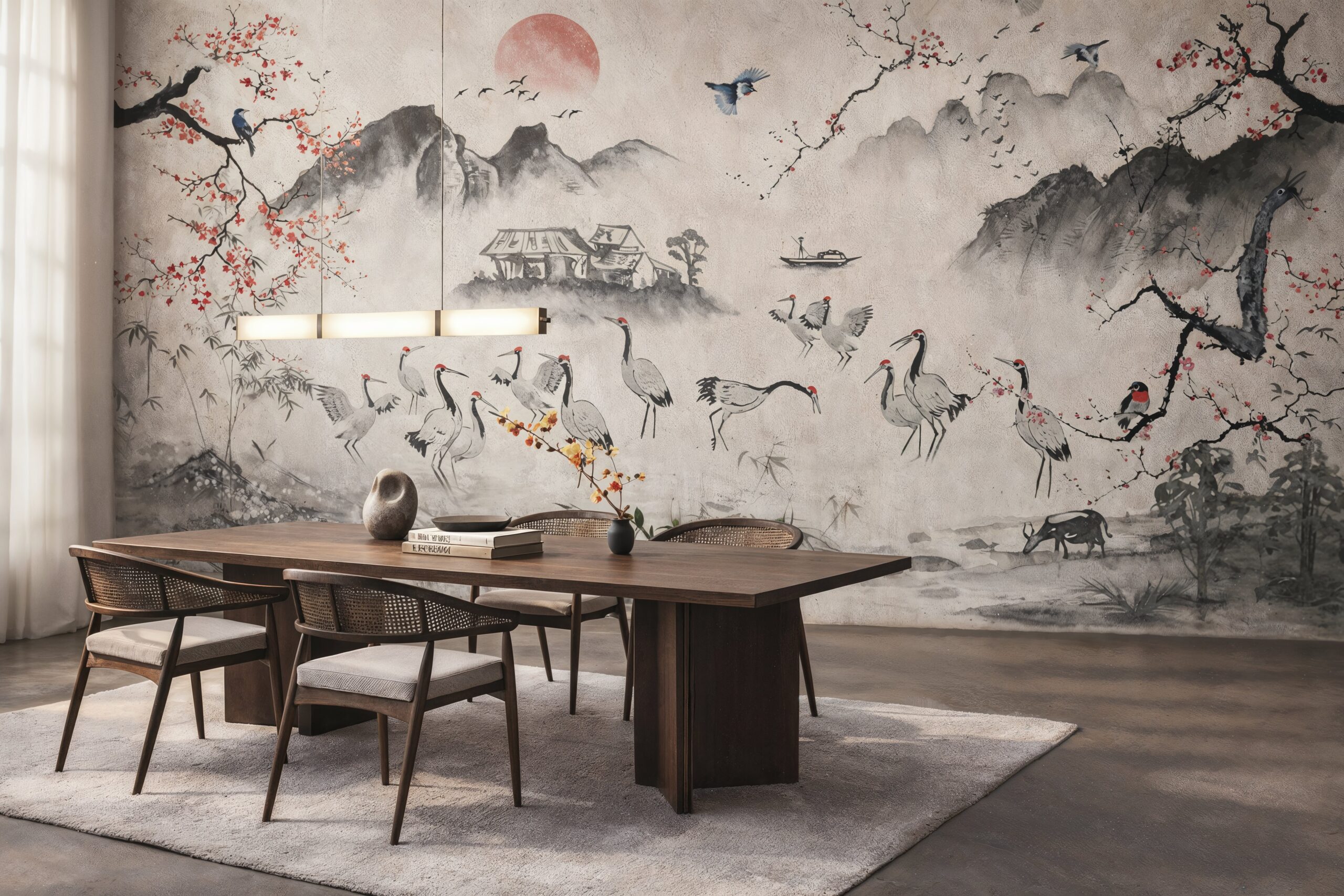
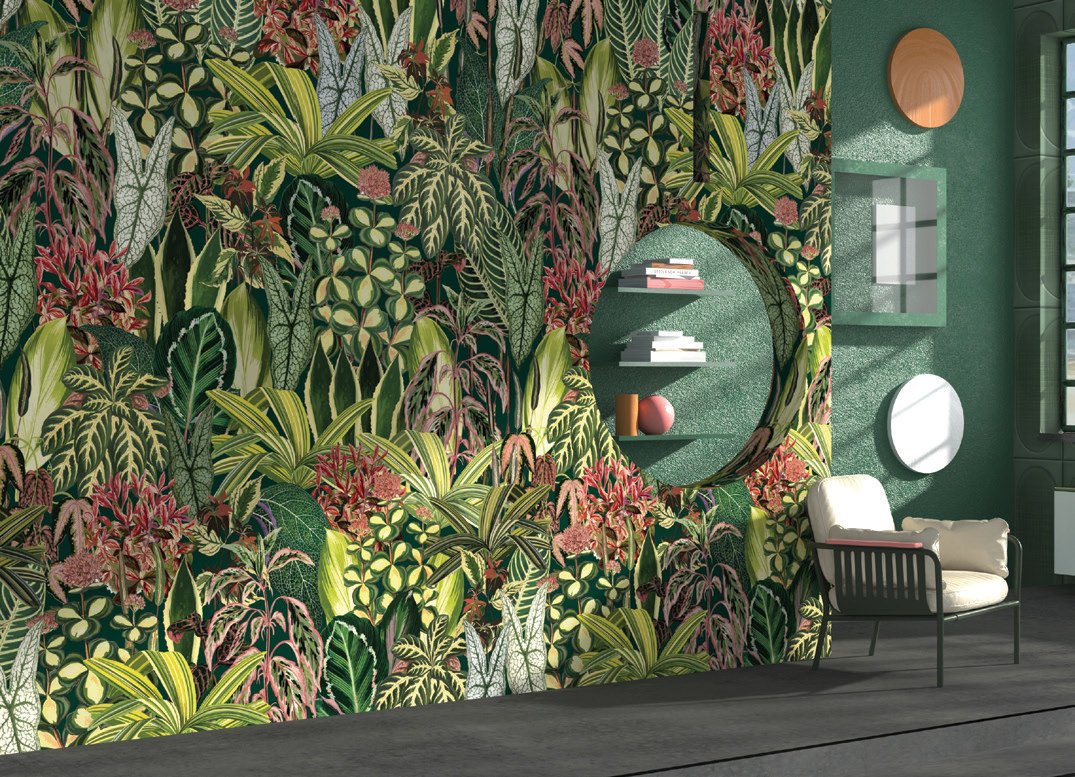
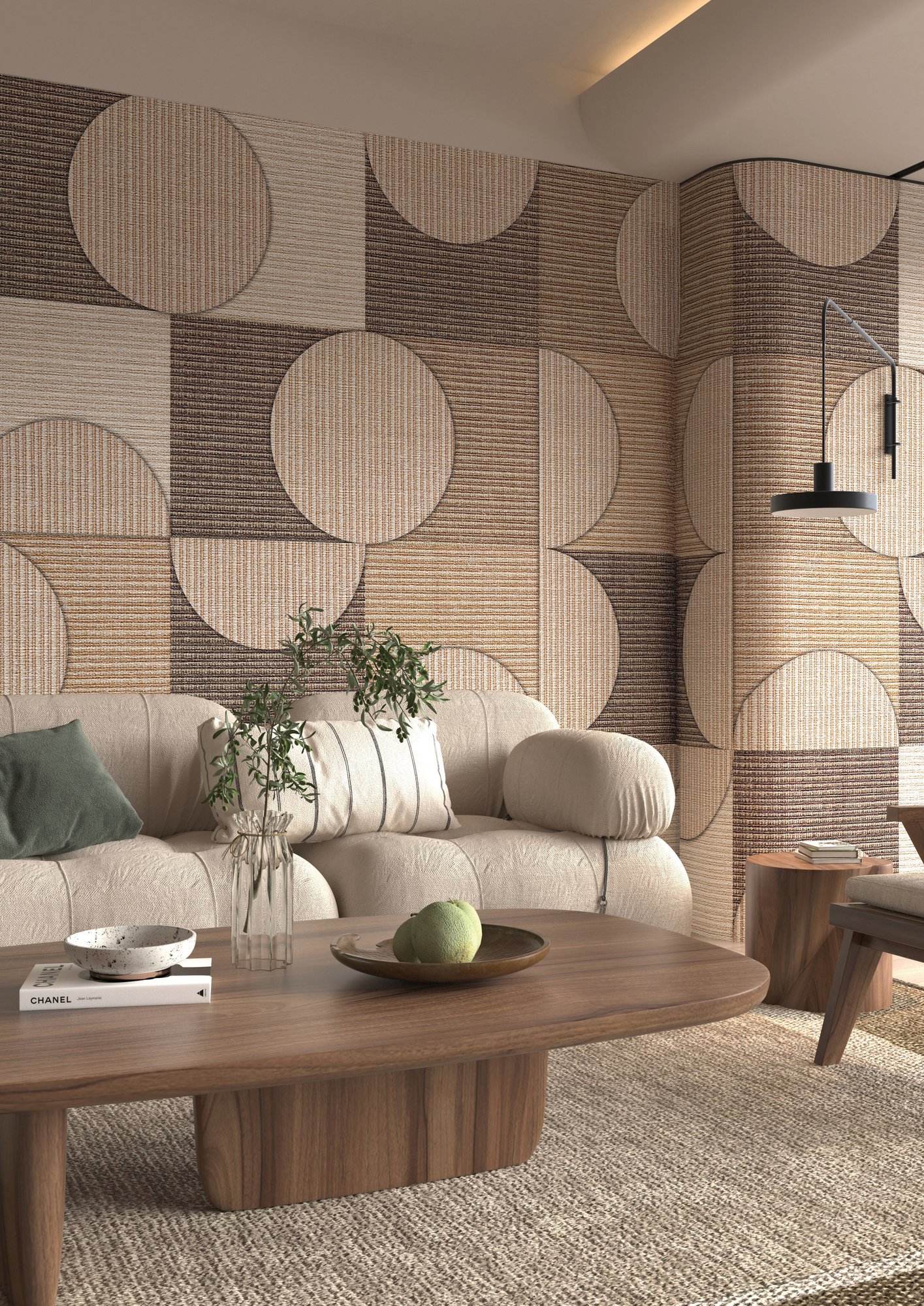
This is the dimension where the two finishes diverge most clearly. Paint gives you any solid colour and a small number of textural effects (limewash, Venetian plaster, suede-finish coatings, textured paint). Wallcovering gives you everything paint can do, plus pattern, photographic motif, metallic and foil finishes, woven textures, three-dimensional embossed surfaces, hand-printed designer collections, and bespoke murals.
For homeowners who want a feature wall with a distinct visual identity — a botanical mural in the dining area, a metallic grasscloth behind the bed, a children’s room with hand-painted forest scenes — wallcovering is effectively the only path. Paint can produce a strong colour field; it cannot produce pattern. For homeowners who want a calm, monochromatic space with subtle variation between rooms, paint delivers exactly that and wallcovering would be over-specification.
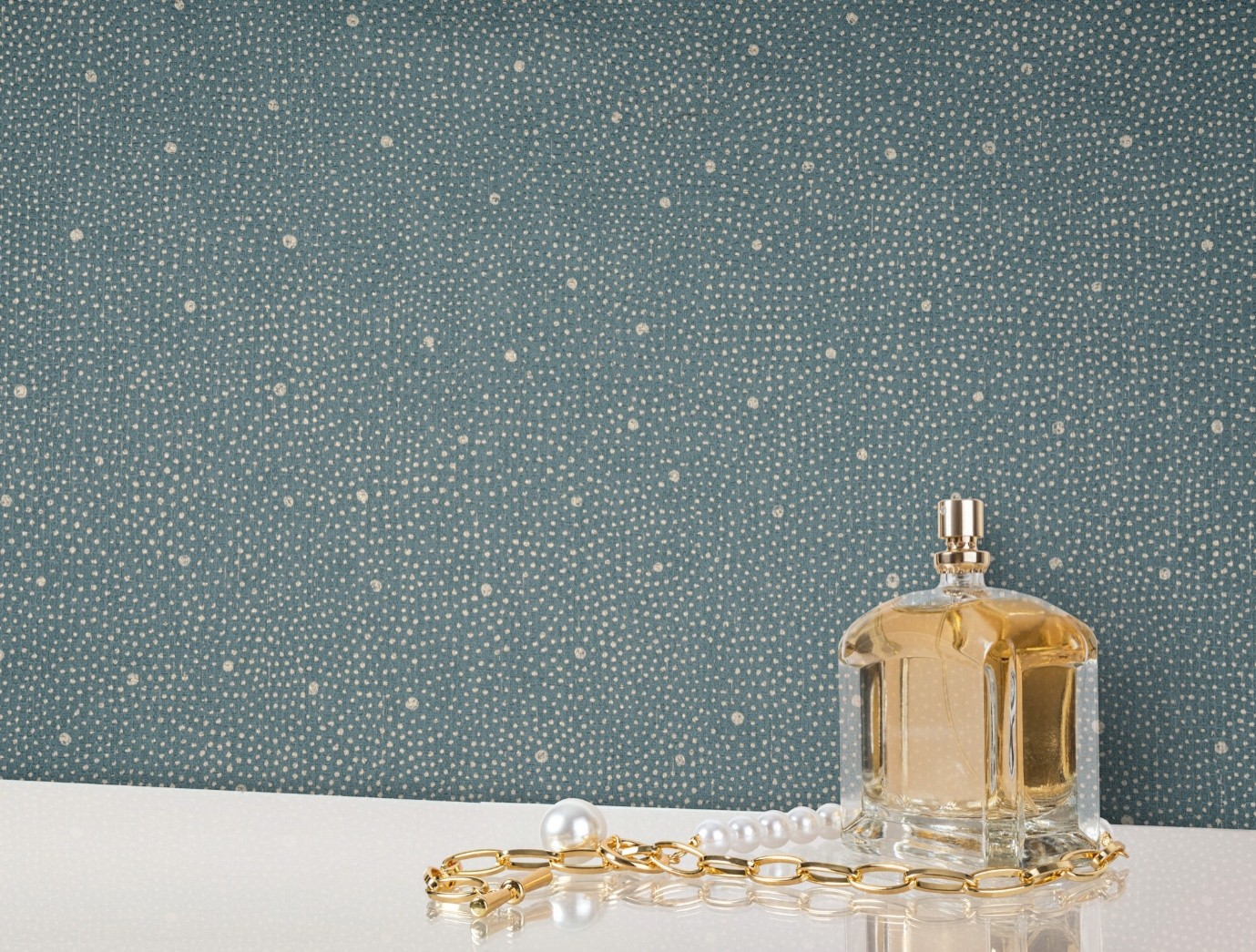
For Singapore homes specifically, where rooms are typically more compact than in larger markets, textured neutral wallcoverings (linen weaves, raffia, light grasscloth) have become particularly popular — they add visual depth without dominating the room scale. Our residential wallcovering range spans the practical selection territory.
Installation and Removal
Paint is more forgiving on the install side. A reasonably skilled contractor can paint a room in a day or two; the wall substrate does not need to be wallpaper-flat; small imperfections in the wall are hidden by the paint film. Removal — when the time comes to repaint — is essentially a sanding, priming, and over-painting cycle. Almost any wall in any condition can be painted.
Wallcovering installation requires a wallpaper-ready substrate, specialist installer skill (alignment of pattern repeats, careful trimming around switches and skirting, dealing with corners), and longer setup time. Removal is more involved — depending on the original adhesive and substrate, it can range from clean strip-off in a few hours to a multi-day skim-and-prime exercise on walls where adhesive bonded too tightly. Our wallpaper installation timeline guide covers how the install fits into the broader renovation sequence.
When Each Makes Sense
Choose paint when: the budget is tight, the holding period is short (rental, short-term ownership), the desired look is monochromatic or solid colour, the room sees heavy household movement that will accumulate scuffs and minor damage regardless of finish, or the wall substrate is in poor condition and major preparation work is impractical.
Choose wallcovering when: the desired look involves pattern, texture, or visual depth that paint cannot produce, the holding period is medium-to-long (5+ years), the wall is a designated feature wall where the finish itself is the design statement, or durability against scuffs and knocks matters more than easy retouching (heavyweight vinyl in children’s rooms, corridors, dining areas).
The hybrid approach is often the right answer for Singapore homes — paint most walls, wallcover one or two feature walls. This balances cost, design impact, and long-term flexibility. For inspiration on what to feature, see our complete feature wall guide.
Where Goodrich Fits
For homeowners deciding between paint and wallcovering, Goodrich Global is a one-stop supplier across wallcovering, flooring, fabric and carpet — covering the full material palette for a Singapore home renovation. If wallcovering ends up being the right choice for a feature wall, the sampling, sizing, and installer-referral conversation happens in the same showroom visit as the rest of the material selection.
Visit our showroom or speak to the team to see wallcovering samples in person and compare them directly against the paint finishes you are considering. Side-by-side under actual lighting is the only reliable way to make this decision well.