Interior Design
Landed Property Interior Design in Singapore | Goodrich Global
Landed property interior design in Singapore demands a different approach from apartment living. With multiple storeys, larger room dimensions, outdoor spaces, and architectural features like double-volume ceilings and internal staircases, landed homes offer design possibilities — and challenges — that condominiums and HDB flats simply do not present.
Whether you own a terrace house in Joo Chiat, a semi-detached in Bukit Timah, or a bungalow in the Good Class Bungalow belt, the principles below will help you create interiors that match the scale and character of your home.
Designing for Scale and Proportion
The most common mistake in landed property interiors is furnishing large spaces with apartment-scaled pieces. A compact two-seater sofa that works in a four-room HDB flat looks lost in a landed living room. Scale must be deliberate.
Furniture Proportions
Invest in generously proportioned furniture that anchors each room. A three-metre sectional sofa, an oversized dining table that seats eight to ten, and king-sized beds are standard rather than indulgent in landed homes. The visual weight of furniture should balance the volume of the room.
Wall Heights
Many landed properties feature ceiling heights of 3 metres or more, with some living areas reaching 5 to 6 metres in double-volume configurations. Standard 2.4-metre curtains and small artworks leave an awkward gap between the top of the furnishing and the ceiling. Floor-to-ceiling treatments — full-height curtains, wallcoverings that run from skirting to cornice, tall bookshelves — are essential to fill these proportions correctly.
Transitional Spaces
Landed homes have spaces that apartments lack: entrance foyers, hallways, staircases, and landings. These transitional zones deserve design attention. A well-chosen wallpovering in the stairwell, a statement pendant over the foyer, or consistent flooring that flows from entrance through to living areas creates a sense of intentional design rather than piecemeal decoration.
Flooring Across Multiple Levels
With two or three storeys to cover, flooring decisions in landed properties carry significant visual and financial weight. Consistency is generally more effective than variety — a single flooring type or complementary palette across all levels creates cohesion.
Ground Floor
The ground floor typically houses the living room, dining room, kitchen, and sometimes a guest suite or helper’s room. It sees the heaviest foot traffic and the most exposure to moisture from outdoor access points. Luxury vinyl tile in a wide-plank format offers the warmth of timber with the durability this level demands. Stone-look options in travertine or limestone finishes suit more formal design schemes.
Upper Floors
Bedrooms and family rooms on upper levels can afford softer, warmer flooring choices. Carpet tiles in bedrooms provide comfort and sound insulation between storeys — a practical consideration when bedrooms sit above living areas. For a unified look, continue the ground-floor vinyl flooring upstairs and layer with area rugs for warmth.
Wet Areas
Bathrooms, laundry rooms, and pool-adjacent areas require fully waterproof flooring with slip resistance. SPC flooring with textured surfaces handles these demands well, though porcelain tiles remain the traditional choice. Ensure transitions between dry and wet area flooring are flush and neatly finished with appropriate trim profiles.
Explore Goodrich Global’s complete flooring range for materials suited to every level of a landed home.
Wall Treatments for Generous Spaces
Larger wall areas in landed properties call for bolder treatment choices. What might overwhelm a compact HDB bedroom becomes perfectly proportioned in a landed living room.
Full-Height Wallcoverings
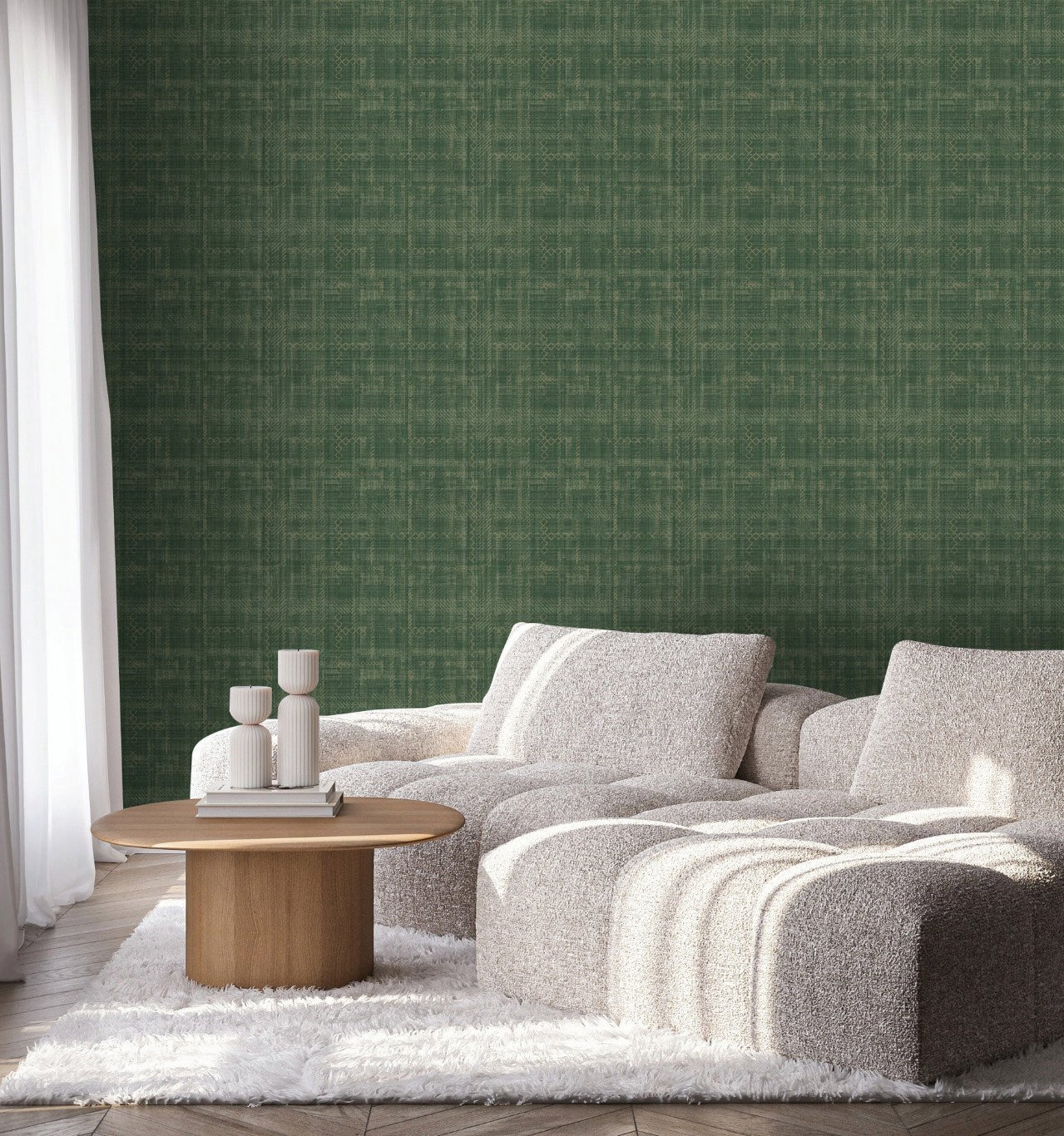
Wallpaper applied from floor to ceiling on a feature wall creates dramatic impact in rooms with high ceilings. Textured grasscloth, metallic-thread wallcoverings, and large-scale patterns that would feel busy in smaller rooms find their natural home in landed interiors. In double-volume spaces, a full-height wallcovering can serve as the room’s primary design statement.
Wainscoting and Panelling
Traditional wainscoting — timber or MDF panel mouldings on the lower portion of walls — suits the architectural character of many landed properties, particularly pre-war and colonial-style homes. Modern interpretations use clean, flat-profile panels rather than ornate mouldings, bridging heritage architecture with contemporary furnishing.
Stairwell Feature Walls
The stairwell is a vertical canvas unique to landed homes. A continuous wallcovering that spans multiple storeys creates a visual thread connecting the levels. Choose a design with subtle texture rather than a bold pattern — you will view this wall from multiple angles and distances as you move through the house.
Fabric Selections for Landed Interiors
The larger windows and more numerous rooms in landed properties mean significantly more fabric — curtains, upholstery, cushions — than an apartment project.
Drapery
Full-height windows in landed living rooms may require curtain drops of 3 metres or more. Fabric selection must account for this: lightweight materials may not hang well at these lengths, while very heavy fabrics can strain curtain tracks. Medium-weight fabrics with good draping qualities — linen blends, textured polyesters, and wool-touch weaves — perform best. Motorised curtain tracks are a practical investment for hard-to-reach windows on upper floors.
Upholstery
With more seating across more rooms, upholstery fabric choices have an outsized impact on the home’s overall feel. A cohesive approach — selecting fabrics from a coordinated palette rather than choosing each piece independently — prevents the disjointed look that plagues many landed renovations. Explore Goodrich Global’s upholstery fabric collection for materials that work across multiple applications.
Indoor-Outdoor Integration
One of the great advantages of landed living in Singapore is direct access to outdoor space. Designing this transition intentionally elevates the entire home.
Decking
Composite wood decking extends living areas into gardens, pool surrounds, and covered patios. Unlike natural timber, composite decking resists Singapore’s rain, humidity, and UV exposure without annual oiling or staining. Choose a colour that complements your interior flooring for a seamless visual transition through sliding or folding doors.
Outdoor Furnishing Fabrics
Alfresco dining and lounge areas require fabrics engineered for outdoor use — UV-resistant, water-repellent, and mildew-proof. Modern outdoor performance fabrics are remarkably comfortable and available in the same neutral, sophisticated colourways as indoor textiles, making it easy to maintain a consistent design language across thresholds.
Final Thoughts
Landed property interior design in Singapore rewards thoughtful material selection and an understanding of scale. The principles are straightforward: choose materials that suit the proportions, maintain consistency across levels, and treat every space — including transitional areas and outdoor zones — as part of the design story.
With the right flooring, wall treatments, and fabrics, a landed home becomes not just a larger living space but a more complete one.