Interior Design
Half-Wall Panelling Ideas: Dado-Height Style for Singapore Homes
Half wall panelling is one of the most requested wall treatments in Singapore renovations right now — and for good reason. Panelling that rises to dado height, roughly a metre from the floor, adds architecture and depth to a room without the visual weight of floor-to-ceiling treatment. It also creates something a full-height panel wall cannot: a second surface above the rail that is begging for colour, pattern, or texture.
That two-layer structure is the real design opportunity. The lower section does the grounding work; the upper section carries the personality. Get the pairing right and even a standard HDB living room reads like a considered, designer-finished space. This guide covers the best dado-height combinations for Singapore homes — and the fastest way to achieve them.
Goodrich Global does not supply timber wall panelling or carpentry. Our range covers panel-effect and wood-effect wallcoverings that deliver the dado-height look without the joinery work.
What Makes Half Wall Panelling Different from Wainscoting
The two terms are often used interchangeably, but they describe different design languages. Classic wainscoting is a traditional treatment — raised or recessed panels, ornate rails, and a heritage sensibility that suits colonial-style and formal interiors. We cover that look in depth in our guide to wainscoting wall design in Singapore.
Modern half wall panelling is simpler and more graphic. Think clean vertical grooves, slim shaker-style frames, or flat fluted lines stopping at a crisp horizontal rail. There is no decorative moulding stacked on top; the effect comes from proportion and repetition. It pairs naturally with contemporary, Scandinavian, and Japandi interiors — the styles that dominate Singapore renovations today — where full wainscoting would feel too formal.
Getting the Proportions Right
Dado height traditionally sits between 90cm and 1.1m from the floor — originally the height that protected walls from chair backs. In rooms with Singapore’s standard 2.6m ceilings, this lower-third proportion works well: it grounds the room without cutting it in half.
Two variations are worth knowing:
- Standard dado (one-third height): The safest, most versatile proportion. Suits living rooms, dining areas, and hallways.
- Raised two-thirds height: Taking the panelled section to around 1.6–1.8m creates a more enveloping, hotel-like effect. It works beautifully in bedrooms, where the rail can align with a headboard, leaving a slimmer band of wallpaper or paint above.
Whichever height you choose, keep it consistent through connected spaces. A rail that jumps height between the living room and the corridor breaks the line the treatment is supposed to create.
The Two-Layer Formula: Panel Below, Feature Above
The strongest half wall panelling schemes treat the wall as two coordinated products, not one treatment plus leftover paint. The lower section provides structure and durability; the upper section delivers the statement.
Panel-effect below, feature wallpaper above
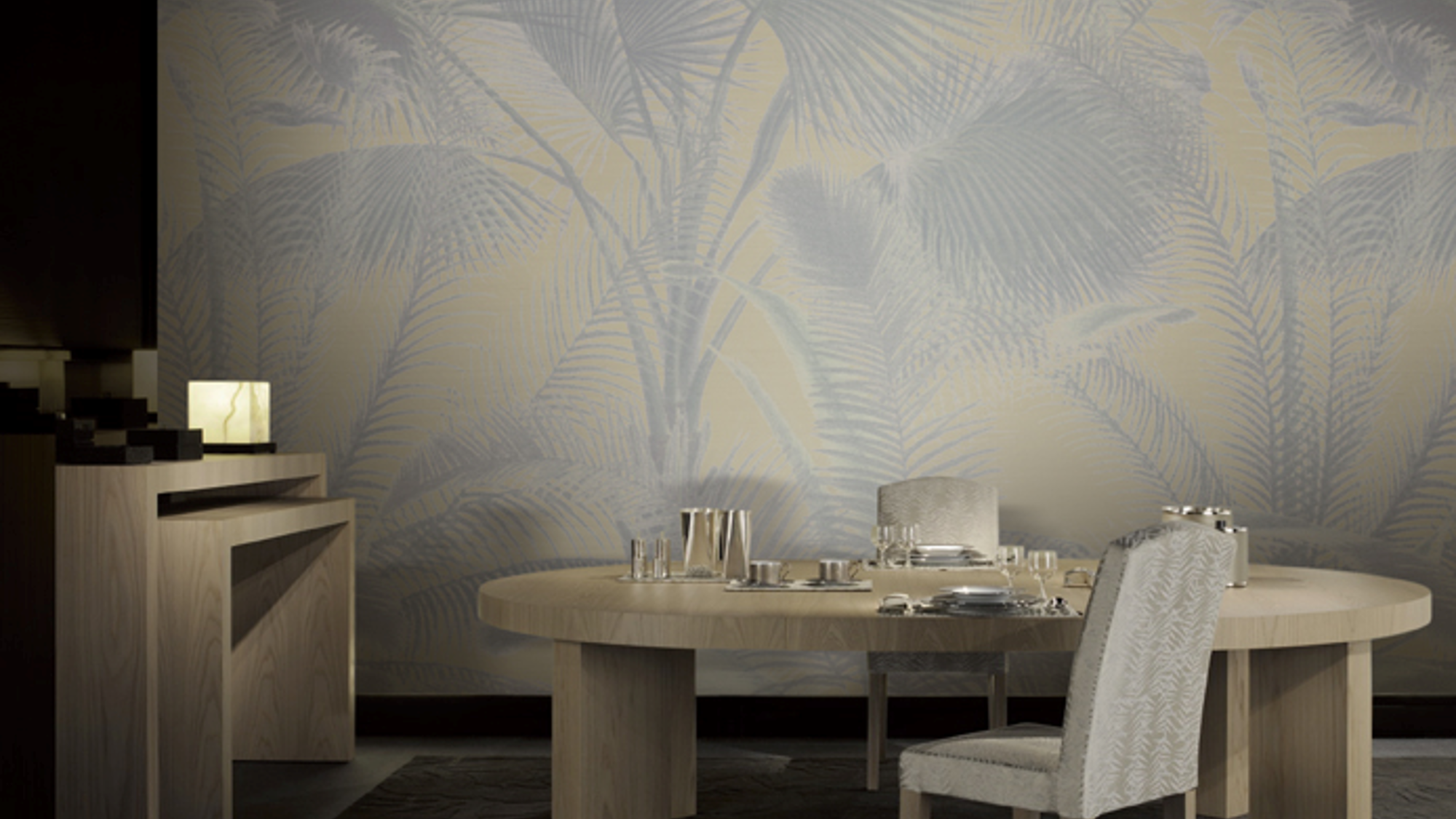
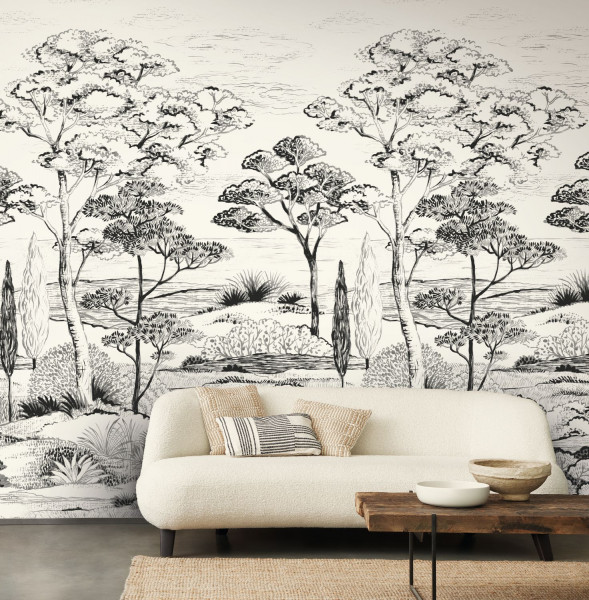
This is the combination we specify most often. A panel-effect wallcovering — printed shaker frames, fluted lines, or tongue-and-groove texture — runs from skirting to rail. Above it, a feature wallpaper takes over: botanical prints, oversized florals, chinoiserie, or a textured plain. Because the busy pattern only occupies the upper portion of the wall, it feels curated rather than overwhelming — which is why this format suits pattern-shy homeowners so well.
Panel-effect below, textured plain above
For a quieter scheme, pair the panelled lower section with a grasscloth-look, linen-weave, or plaster-effect wallcovering above. The result is tonal and calm but far richer than flat paint. This pairing suits bedrooms and reading corners where you want depth without visual noise.
Colour-blocked two-tone schemes
Running a deeper colour below the rail and a lighter one above is a classic trick for making ceilings feel higher. A dark-toned panel-effect wallcovering below with a pale wallpaper above achieves this with more texture than paint alone. For more pairings, see our guides to two-tone wall design ideas and two-tone wallpaper combinations.
Half Wall Panelling Ideas Room by Room
Living room
Run the dado line around the whole room rather than a single wall — half-height treatment is affordable enough per square metre to do this, and the continuous rail makes compact living rooms feel intentionally designed. Keep the panelled section in a neutral tone and let the wallpaper above respond to your sofa and curtain fabrics.
Dining area
Dado-height panelling earns its keep in dining zones, where chair backs meet walls daily. A wipeable vinyl panel-effect wallcovering below the rail takes the knocks; a statement paper above sets the mood for the table.
Bedroom
Use the raised two-thirds proportion behind the bed so the rail doubles as a visual headboard line. A soft textured wallcovering above keeps the ceiling zone airy.
Entryway and corridor
Half-height treatment protects the wall zone that bags, trolleys, and shoes actually touch, while the lighter upper section keeps a narrow space from feeling closed in.
Practical Tips for a Clean Dado Line
Half-height treatments live or die on the quality of the horizontal line, so a few site details are worth settling before installation day:
- Walk the room with a tape measure first. Check where the rail height lands against light switches, power points, and window sills. Shifting the line up or down a few centimetres so it clears switch plates — rather than slicing through them — is the single biggest difference between a polished result and an obviously DIY one.
- Decide how the rail itself is expressed. With panel-effect wallcovering, the dado line can be a printed border, a slim self-adhesive trim, or simply a crisp cut line where the two papers meet. A physical trim adds shadow and realism; a clean butt joint reads more minimal.
- Respect the skirting. The panelled section should land on the existing skirting, not float above it. If the flat has no skirting, a printed base edge on the wallcovering grounds the design.
- Sample both layers together. Wallcoverings shift in tone under warm evening lighting. Pin the panel-effect sample and the feature paper side by side on the actual wall for a few days before confirming.
Why Panel-Effect Wallcovering Beats Carpentry for This Look
Real timber dado panelling involves carpentry quotes, site works, dust, and days of installation — and in a rental or an HDB flat you may not want permanent joinery at all. Panel-effect wallcovering delivers the same visual rhythm with none of that:
- Installed in a day: A whole room can be papered below and above the rail in a single visit, with no sanding or sealing.
- A fraction of the cost: Wallcovering is priced per roll, not per metre of joinery, so wrapping all four walls stays within a normal renovation budget.
- Renter- and resale-friendly: The treatment is removable and reversible — no hacking required when tastes or tenancies change.
- Consistent finish: Printed panel designs are perfectly even; there are no timber joints to open up in Singapore’s humidity swings.
Our full guide to panel-effect wallpaper explains the realistic groove and shadow-line designs available, and our round-up of wall panelling ideas for Singapore homes covers full-height looks if you want to compare.
Final Thoughts
Half wall panelling gives you two design surfaces for the price of one wall — structure below the rail, personality above it. With panel-effect wallcoverings handling the lower section and a feature paper above, the entire look installs in a day and suits everything from BTO flats to landed homes.
Request free samples of panel-effect and feature wallcoverings from our Singapore showroom and test your dado-height pairing at home.