Commercial Interiors
Office Renovation in Singapore: Planning and Design
An office renovation in Singapore is a strategic investment that affects productivity, talent retention and brand perception. Whether you are fitting out a new lease, refreshing an ageing workspace or adapting to hybrid work patterns, the decisions you make about layout, materials and design will shape how your team works and how clients perceive your business.
This guide covers the practical considerations that matter most, from regulatory compliance and cost planning to material selection for durability and comfort.
Types of Office Renovation
Office renovations in Singapore generally fall into three categories, each with different scopes and budgets.
| Type | Scope | Typical Cost per sqft |
|---|---|---|
| Cat A fit-out | Base building works: ceiling, raised floor, basic M&E, fire protection | S$30 – S$60 |
| Cat B fit-out | Interior works: partitions, finishes, furniture, branding, AV systems | S$60 – S$150 |
| Reinstatement and refresh | Updating existing fit-out: new carpet, paint, furniture reconfiguration | S$20 – S$50 |
A full Cat B fit-out for a mid-sized office of 3,000 to 5,000 square feet typically costs between S$180,000 and S$750,000, depending on the quality of finishes and complexity of the design.
Regulatory Requirements
Office renovations in Singapore must comply with several regulatory frameworks. Understanding these early prevents delays and additional costs.
- Building and Construction Authority (BCA): Structural modifications, changes to fire escape routes and mechanical ventilation alterations require BCA approval.
- Fire Safety Manager: Any changes to fire protection systems, including sprinkler relocation and new partition configurations, must be reviewed by a licensed fire safety manager.
- Building management: Most commercial buildings have renovation guidelines covering working hours, material transport, hot works permits and protection of common areas.
- Workplace Safety and Health: Contractors must comply with WSH regulations, including risk assessments for works involving height, electrical systems and confined spaces.
Your renovation contractor or project manager should handle the approval process, but verifying compliance is ultimately the tenant’s responsibility.
Office Layout and Space Planning
Post-pandemic workspace design has shifted significantly. The standard rows of individual desks have given way to more flexible configurations that support different work modes.
Activity-Based Working
Activity-based working (ABW) provides a variety of settings tailored to different tasks. A well-designed ABW office might include:
- Focus zones: Quiet, individual workstations for concentrated tasks
- Collaboration zones: Open tables, writable walls and informal seating for team work
- Meeting rooms: Enclosed spaces with AV systems for formal discussions and video calls
- Social spaces: Pantry, lounge and breakout areas for informal interaction
- Phone booths: Small, acoustically isolated pods for private calls
Space Efficiency
With office rents in Singapore’s CBD among the highest in the region, space efficiency directly impacts the bottom line. Designing for flexibility rather than fixed desk allocations can reduce the required footprint. Hot-desking, shared lockers and bookable meeting rooms allow more employees to use less space without sacrificing comfort.
Flooring for Commercial Offices
Office flooring must handle heavy foot traffic, rolling office chairs, equipment loads and frequent cleaning. It also plays a significant role in acoustics, which directly affects productivity.
Carpet Tiles
Carpet tiles remain the most popular office flooring choice in Singapore because they offer excellent acoustic performance, are easy to install over raised access floors and allow individual tiles to be replaced when damaged or stained. Modern carpet tiles are available in a vast range of designs, from solid colours to planks and abstract patterns that create visual zoning.
High-performance office carpet tiles with solution-dyed nylon fibres resist staining, maintain colour under UV exposure and meet commercial fire safety standards.
Luxury Vinyl Tiles
LVT is increasingly used in reception areas, pantries and circulation zones where a hard-surface aesthetic is desired. It provides the look of timber, stone or concrete without the maintenance demands of natural materials. LVT is also easier to clean than carpet, making it practical for food-and-beverage zones within the office.
Wall Finishes and Acoustic Solutions
Open-plan offices face a persistent challenge: noise. Conversations, phone calls and movement create ambient noise that degrades concentration. Wall finishes and acoustic treatments can mitigate this.
Acoustic Panels and Wallcoverings
Fabric-wrapped acoustic panels on walls and ceilings absorb sound and reduce reverberation. These panels are available in a range of colours and can be configured to create graphic patterns that double as decorative elements.
Commercial-grade wallcoverings designed for office environments offer durability, fire resistance and design flexibility. Textured vinyl wallcoverings on feature walls in meeting rooms, reception areas and executive offices add visual sophistication while meeting commercial performance standards.
Biophilic Design Elements
Incorporating natural elements into office design has measurable benefits for employee wellbeing. Living walls, indoor planting, natural material finishes and nature-inspired patterns in wallcoverings and carpet tiles all contribute to a biophilic environment. Studies consistently show that access to nature, even simulated nature, reduces stress and improves cognitive performance.
Branding Through Interior Design
The office interior is a physical expression of your brand. Reception areas, client-facing meeting rooms and common spaces should reflect your company’s identity and values.
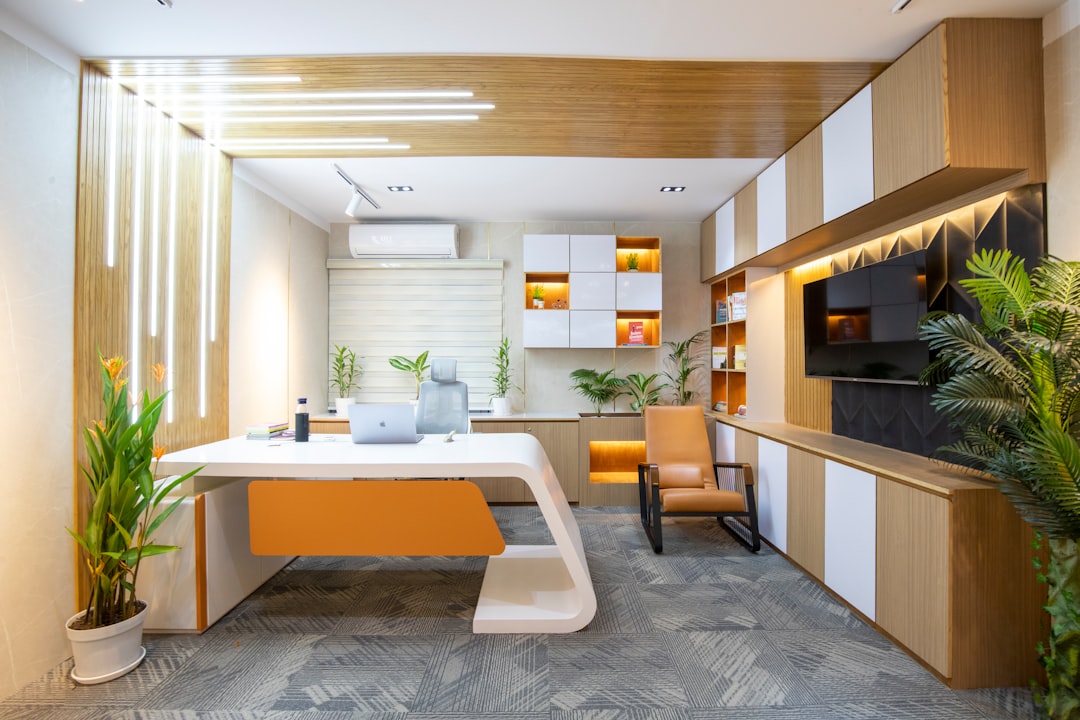
Material choices communicate brand positioning. A law firm might specify dark timber panelling, deep-pile carpet and leather upholstery to convey authority and tradition. A technology startup might use exposed ceilings, polished concrete-effect flooring and bold graphic wallcoverings to signal innovation and energy.
Consistency between brand colours, communication materials and interior finishes reinforces identity. Even subtle references, such as an accent carpet tile colour that matches the company logo, create a cohesive brand environment.
Renovation Timeline and Project Management
A typical office renovation in Singapore takes eight to sixteen weeks depending on scope. Key phases include:
- Design and documentation: 3-6 weeks
- Approvals and permits: 2-4 weeks
- Demolition and structural works: 1-2 weeks
- Mechanical, electrical and plumbing: 2-3 weeks
- Partitions and ceiling: 1-2 weeks
- Finishes (flooring, painting, wallcoverings): 2-3 weeks
- Furniture installation and testing: 1-2 weeks
Minimising business disruption is a key concern. Some companies renovate in phases, allowing staff to continue working in unaffected areas. Others relocate temporarily for a complete fit-out. Factor the cost of either approach into your overall budget.
Final Thoughts
An office renovation in Singapore is an opportunity to create a workspace that supports your business goals, reflects your brand and provides a productive, comfortable environment for your team. Invest time in the planning phase, specify materials that perform under commercial demands and work with contractors experienced in office fit-outs.
The right combination of layout, acoustics and finishes transforms an office from a place people have to be into a place they want to be.