Healthcare Interiors
Veterinary Clinic Interior Design: Durable Spaces
Veterinary clinic interior design presents a unique combination of challenges that few other commercial environments share. The space must be hygienic enough for surgical procedures, durable enough to withstand animal claws and accidents, calming enough to reduce stress for anxious pets and their owners, and practical enough for efficient clinical workflow. Getting the balance right requires informed material selection and thoughtful spatial planning.
This guide covers the design and material considerations that make veterinary clinics functional, welcoming and built to last.
Layout and Spatial Planning
A veterinary clinic layout must separate clinical functions from client-facing areas while ensuring smooth movement of staff, patients and pet owners through the facility.
Key Zones
- Reception and waiting area: The first impression space. Separate waiting zones for dogs and cats reduce animal stress. Include easy-to-clean seating and non-slip flooring.
- Consultation rooms: Enclosed rooms with examination tables, good lighting and sound insulation. Multiple rooms allow concurrent consultations.
- Treatment and preparation area: A central clinical zone where procedures, diagnostics and treatments occur. Easy access to consultation rooms and surgical suites.
- Surgical suite: A sterile environment with controlled air handling, easy-to-clean surfaces and dedicated scrub and prep areas.
- Kennels and recovery: Housing areas for hospitalised animals, separated by species. Adequate ventilation and acoustic separation are essential.
- Utility and storage: Pharmacy, laboratory, laundry and waste management areas.
Flow and Separation
Design the layout so that clinical staff can move between treatment areas without passing through the waiting room. Similarly, animals being admitted for procedures should have a pathway that does not take them through the reception area, where encounters with other anxious animals can escalate stress for everyone.
Flooring for Veterinary Environments
Flooring is arguably the most critical material decision in veterinary clinic design. It must simultaneously be:
- Slip-resistant for animals with smooth paws and claws
- Scratch-resistant against constant claw contact
- Waterproof for inevitable accidents and cleaning
- Chemical-resistant against veterinary disinfectants
- Comfortable for staff who stand for extended periods
- Easy to clean and maintain
Recommended Flooring Options
Sheet vinyl with welded seams is widely specified for veterinary clinical areas because it creates a seamless, waterproof surface with no joints where bacteria or fluids can accumulate. For waiting rooms and consultation areas, luxury vinyl tiles with enhanced slip resistance offer a more aesthetically refined finish while maintaining hygiene and durability.
Luxury vinyl flooring with a textured surface provides the grip that animals need while being comfortable underfoot for staff. Look for products with a wear layer of at least 0.55mm for commercial veterinary applications.
Flooring to Avoid
Ceramic tiles with grout lines harbour bacteria and create slip hazards when wet. Carpet is impractical in any area where animal accidents occur. Natural timber warps when exposed to moisture and disinfectants. Polished concrete, while durable, is extremely slippery when wet and unforgiving for staff who stand on it all day.
Wall Finishes for Hygiene and Durability
Walls in a veterinary clinic take significant punishment. Animals scratch, spray and collide with wall surfaces. Cleaning with strong disinfectants is a daily routine. The wall finish must withstand all of this while contributing to a clean, professional appearance.
Clinical Areas
In treatment rooms, surgical suites and kennels, wall surfaces should be seamless, non-porous and easy to disinfect. Hygienic wall cladding panels, such as PVC or fibreglass-reinforced plastic (FRP), provide a wipeable, jointless surface from floor to ceiling. These panels are impervious to moisture and resist chemical damage from veterinary disinfectants.
Client-Facing Areas
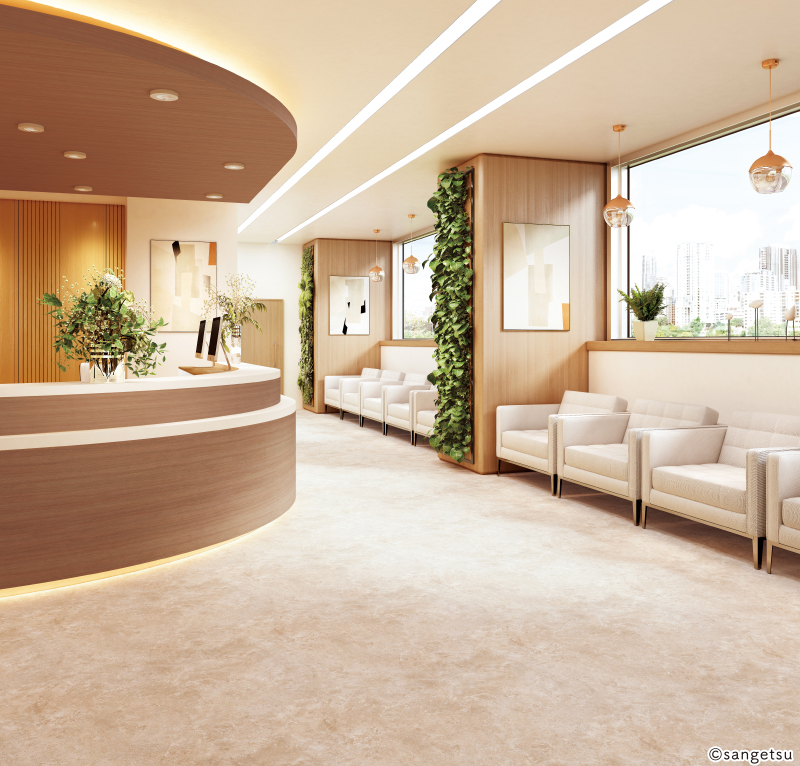
The reception, waiting room and consultation rooms benefit from a warmer, more welcoming aesthetic. Commercial-grade wallcoverings in calming colours and nature-inspired patterns create a reassuring environment for pet owners. Vinyl wallcoverings with high scrubbability ratings can be cleaned effectively while offering a far more appealing appearance than bare painted walls.
Consider installing a durable, wipeable wall finish to a height of 1.2 metres, where most animal contact occurs, with a more decorative wallcovering above. This two-zone approach balances practicality with aesthetics.
Creating a Calming Environment
Animal stress is a primary concern in veterinary clinic design. Stressed animals are harder to examine, more likely to injure staff and have worse clinical outcomes. The interior environment can significantly influence animal behaviour.
Colour Psychology
Soft, muted colours in the blue-green spectrum are generally calming for both animals and humans. Avoid bright reds and oranges, which can increase agitation. The reception and waiting area benefit from cool, soothing tones that set a calm tone from the moment pets and their owners arrive.
Acoustic Management
Barking dogs create a stressful acoustic environment that affects every animal and person in the clinic. Sound management strategies include:
- Acoustic ceiling tiles with high Noise Reduction Coefficient (NRC) ratings in waiting areas and corridors
- Sound-insulated walls between consultation rooms, kennels and the reception area
- Solid-core doors with acoustic seals
- Soft flooring materials that absorb impact noise
- Background music or white noise in waiting areas to mask sudden sounds
Separate Waiting Areas
Cats and dogs have very different stress responses. Providing separate waiting areas, or at minimum visual barriers between species, reduces anxiety significantly. Cat waiting areas should be quieter and positioned away from the main entrance, ideally with elevated seating where carriers can be placed at height, as cats feel safer when they are above ground level.
Lighting Design
Clinical areas require bright, even lighting for examination and procedures. LED panels providing 500-750 lux at examination table height ensure veterinarians can assess patients accurately. Colour rendering index (CRI) of 90 or above is essential for accurate assessment of skin, mucous membranes and tissue colour.
In contrast, waiting areas and corridors benefit from softer, warmer lighting that creates a less clinical atmosphere. Dimmable LED downlights in the 3000K range provide a welcoming glow without the harsh institutional feel of cool-white fluorescent tubes.
Ventilation and Odour Management
Effective ventilation is non-negotiable in veterinary clinics. Animal odours, anaesthetic gases, disinfectant fumes and airborne pathogens all require robust air handling. Design the HVAC system with separate zones for clinical areas, kennels and public spaces. Ensure adequate air changes per hour in surgical suites and kennel areas, and consider activated carbon filtration to manage odours in the main clinic.
Final Thoughts
Veterinary clinic interior design requires a practical, evidence-informed approach that prioritises hygiene, durability and animal welfare in equal measure. The right material choices create a space that is easier to clean, more comfortable for patients and staff, and more reassuring for pet owners.
By specifying surfaces that perform under the specific demands of veterinary practice, you build a clinic that maintains its professional appearance and functional integrity for years of demanding daily use.