Healthcare Interiors
Medical Centre Flooring: Hygiene and Compliance
Medical centre flooring must satisfy a rigorous set of requirements that go far beyond aesthetics. Hygiene, slip resistance, infection control, chemical resistance, and patient comfort all factor into a decision that directly affects clinical outcomes, regulatory compliance, and long-term maintenance costs.
For medical centres in Singapore — from polyclinics and GP practices to specialist clinics and ambulatory care facilities — this guide covers the flooring options, specifications, and zone-by-zone recommendations that ensure your facility performs to the highest standard.
Why Flooring Matters More in Healthcare
In a commercial office or retail space, flooring is primarily about aesthetics and durability. In a medical centre, it becomes a critical component of the infection-control system.
Floors harbour bacteria, viruses, and fungi that can transfer to patients, staff, and equipment. Porous surfaces, open seams, and grout lines create reservoirs where pathogens survive despite routine cleaning. The right flooring eliminates these vulnerabilities.
Slip-and-fall incidents are also a significant liability in healthcare settings. Patients may be elderly, medicated, or mobility-impaired. Wet floors from cleaning or spills increase risk further. Flooring must maintain adequate grip in both dry and wet conditions.
Singapore’s Ministry of Health (MOH) licensing requirements and infection-control guidelines set the baseline. The flooring specified must support compliance with these standards throughout its service life, not just at installation.
Flooring Types Compared for Medical Use
Three flooring categories dominate medical centre applications. Each has specific strengths and appropriate use cases.
Vinyl Sheet Flooring
Homogeneous or heterogeneous vinyl sheet flooring is the gold standard for clinical areas. Rolls of vinyl are heat-welded at seams to create a continuous, impermeable surface with no joints for bacteria to colonise. The material is chemically resistant, withstanding repeated disinfection with hospital-grade agents.
Coved skirting — where the vinyl curves up the wall by 100 millimetres or more — eliminates the floor-wall junction where dirt accumulates. This detail is standard in procedure rooms, treatment areas, and any space with elevated hygiene requirements.
Luxury Vinyl Tile (LVT)
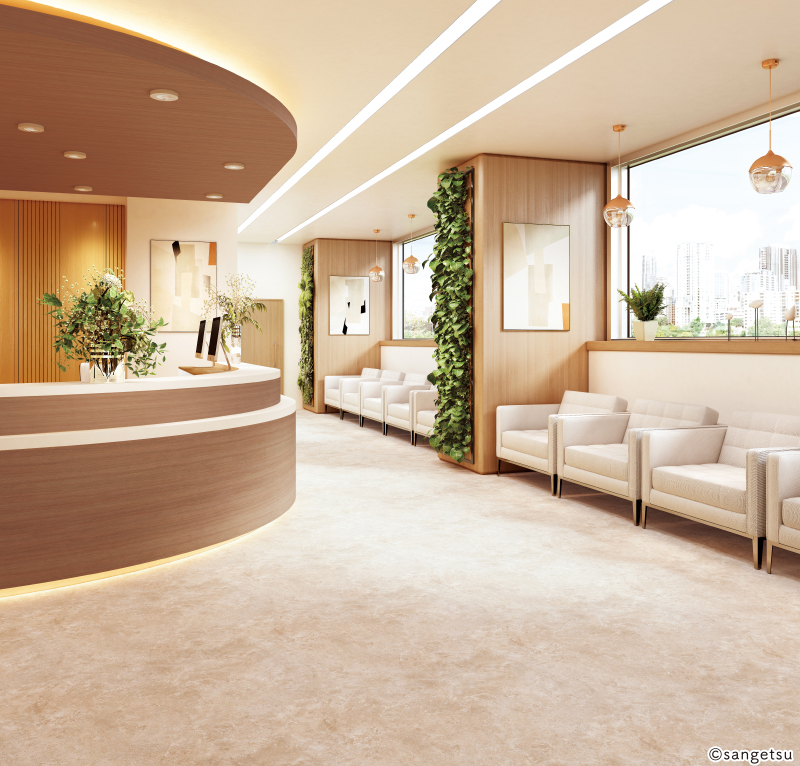
LVT offers greater design flexibility than sheet vinyl, with realistic wood-look and stone-look finishes that create a warmer, more welcoming environment. It is well suited to reception areas, waiting rooms, administrative offices, and corridors where the atmosphere should feel less clinical.
Modern commercial LVT products feature factory-applied polyurethane coatings that resist staining and simplify cleaning. While the tile-to-tile joints are not fully welded like sheet vinyl, tight-fitting click-lock systems minimise gaps.
Rubber Flooring
Rubber flooring provides excellent slip resistance, impact absorption, and acoustic performance. It is commonly used in rehabilitation areas, physiotherapy rooms, and high-traffic corridors. However, it requires specific adhesives and careful installation to avoid edge lifting.
Comparison Table
| Feature | Vinyl Sheet | LVT | Rubber |
|---|---|---|---|
| Seam impermeability | Excellent (heat-welded) | Good (tight joints) | Good (sealed joints) |
| Design variety | Moderate | Excellent | Limited |
| Chemical resistance | Excellent | Very good | Good |
| Slip resistance (wet) | Very good | Good to very good | Excellent |
| Acoustic performance | Good | Good (with underlayment) | Excellent |
| Underfoot comfort | Good | Good | Very good |
| Best suited for | Clinical and procedure rooms | Reception, waiting, offices | Rehab, therapy, corridors |
Zone-by-Zone Flooring Recommendations
Reception and Waiting Areas
These are the first spaces patients experience. LVT in warm timber or subtle stone finishes creates a welcoming first impression that reduces the anxiety many patients feel when visiting a medical facility. Matte or satin finishes prevent glare from overhead lighting.
Consultation Rooms
LVT or vinyl sheet flooring works well depending on the clinical activity level. For general consultations, LVT provides a comfortable, attractive surface. For rooms where minor procedures are performed, vinyl sheet with welded seams offers better infection control.
Treatment and Procedure Rooms
Seamless vinyl sheet flooring with coved skirting is the recommended standard. The surface must resist disinfectants including quaternary ammonium compounds, hydrogen peroxide solutions, and alcohol-based agents used in routine cleaning protocols.
Corridors and Circulation
High-traffic corridors benefit from commercial-grade LVT or vinyl sheet with enhanced wear layers. Consider contrasting floor colours at intersections and doorways to assist wayfinding, particularly for elderly or vision-impaired patients.
Staff Areas
Staff rooms, offices, and pantries can use standard commercial LVT. Comfort underfoot is a priority in staff areas where clinicians spend long hours standing. Cushion-backed vinyl reduces fatigue over extended shifts.
Infection Control Through Flooring Design
Beyond material selection, several design details enhance the infection-control performance of medical centre flooring.
- Coved skirting: Eliminates the 90-degree floor-wall junction where debris and moisture collect. Standard in all clinical areas.
- Welded seams: Heat-welding vinyl sheet joints creates a monolithic surface that prevents bacterial colonisation in gaps.
- Chemical-resistant coatings: Factory-applied polyurethane coatings on LVT and vinyl sheet resist degradation from repeated exposure to healthcare disinfectants.
- Colour coding: Using different floor colours for clean and dirty utility areas reinforces workflow separation and reduces cross-contamination risk.
Maintenance and Lifecycle Cost
Healthcare flooring must be maintained to perform. Even the best-specified floor deteriorates without a proper maintenance regime. However, selecting the right product from the outset significantly reduces the effort and cost of ongoing care.
Vinyl sheet and LVT with polyurethane coatings require no waxing or polishing, reducing maintenance labour and eliminating the slippery build-up that wax-based regimes can create. Daily damp mopping with approved disinfectants is sufficient for routine cleaning.
Lifecycle cost analysis should consider not just the initial material and installation cost but also cleaning frequency, chemical requirements, expected lifespan, and the cost of replacement or refurbishment. Vinyl flooring typically delivers 10 to 15 years of service in healthcare settings, making it cost-effective against alternatives that require more frequent intervention.
For medical centres planning renovations, selecting products with strong warranties and documented performance in healthcare applications provides confidence that the investment will perform over its intended lifespan.
Final Thoughts
Medical centre flooring is a functional decision with direct consequences for patient safety, infection control, and regulatory compliance. Vinyl sheet flooring, LVT, and rubber each have their place within a well-zoned facility, and specifying the right product for each area ensures performance without compromising patient experience.
The right flooring choice protects patients, supports clinical staff, and reduces long-term maintenance costs — a combination that benefits every stakeholder in the facility.
Request free samples from our Singapore showroom to evaluate healthcare-grade flooring options for your medical centre.