Carpet & Flooring
Round Rugs for Singapore Homes: Styling & Placement
Why Round Rugs Work in Singapore Interiors
Round rugs singapore homeowners are increasingly choosing do something that rectangular rugs cannot — they break the rigid geometry of a room. In Singapore apartments, where rooms tend to be rectangular boxes with straight walls and angular furniture, a round rug introduces visual softness and flow that transforms the entire space.
There is also a practical advantage. Round rugs fit naturally under circular dining tables, in reading nooks, between armchairs and in transitional spaces where a rectangular rug would either be too large or awkwardly proportioned. For compact Singapore homes, this flexibility is invaluable.
The growing popularity of curved furniture — round coffee tables, arched mirrors, boucle sofas with soft lines — has made round rugs feel more at home in contemporary interiors. They complement rather than compete with these organic shapes.
Choosing the Right Size
Size is the most common mistake homeowners make with round rugs. A rug that is too small looks like a placemat; one that is too large dominates the room. Here are sizing guidelines for typical Singapore room layouts.
| Application | Recommended Diameter | Placement Guide |
|---|---|---|
| Under round dining table (4-seater) | 180–200cm | Chairs should remain on the rug when pulled out |
| Under round dining table (6-seater) | 240–270cm | At least 60cm beyond the table edge |
| Living room seating area | 200–250cm | Front legs of sofa and chairs on the rug |
| Bedroom beside the bed | 120–150cm | Placed on one side, extending partly under the bed |
| Entryway / foyer | 100–150cm | Centred in the space, clear of the door swing |
| Nursery / children’s play area | 150–200cm | Centred as a defined play zone |
| Reading nook | 100–120cm | Under the chair, extending in front |
Always measure your space before purchasing. Mark the intended diameter on the floor with painter’s tape or newspaper to visualise how the rug will sit in the room. This five-minute exercise prevents costly sizing errors.
Placement Strategies for Different Rooms
Under a Dining Table
This is the most natural application for a round rug. Under a circular dining table, a round rug creates a cohesive, symmetrical arrangement that a rectangular rug cannot match. The rug should be large enough that chairs remain fully on the rug even when pulled out for sitting — typically 120 to 150cm larger in diameter than the table.
In open-plan HDB living and dining areas, a round rug under the dining table visually separates the eating zone from the living area without physical barriers.
Living Room
A large round rug anchoring the seating arrangement works well in living rooms with angled or floating furniture layouts. Place the rug so that the front legs of the sofa and armchairs rest on the rug. The circular shape softens the typically rectangular arrangement of seating furniture.
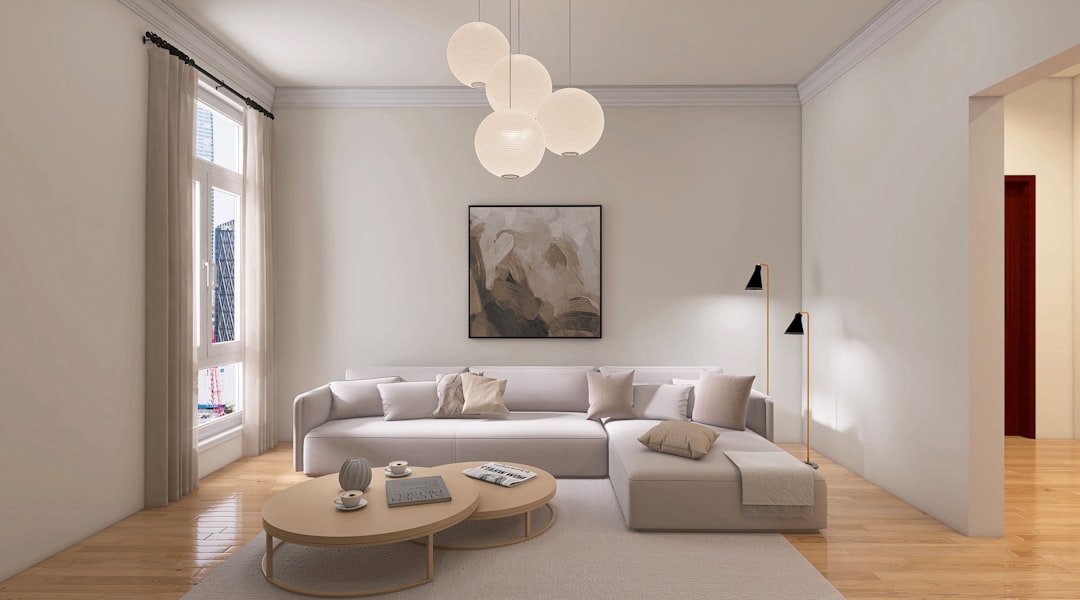
In smaller HDB or condo living rooms, a round rug between the sofa and coffee table creates a cosy focal point without filling the entire floor. This is particularly effective with a round or oval coffee table.
Bedroom
Round rugs beside the bed provide a soft landing for bare feet. Position a medium-sized round rug on one or both sides of the bed, extending partially under the bed frame. For a more dramatic approach, place a large round rug under the lower two-thirds of the bed, creating a visual island effect.
Entryway and Hallway
A round rug in the entryway makes an immediate design statement. In landed property foyers, a substantial round rug centred in the space sets the tone for the entire home. In HDB and condo entryways, a smaller round rug adds personality to what is often a featureless transition space.
Children’s Rooms
Round rugs create natural play zones in children’s bedrooms. The defined circular area gives children a comfortable surface for floor play while protecting the underlying flooring from toy scratches and spills.
Materials and Styles
Round rugs come in the same material options as their rectangular counterparts. Your choice should match the room’s function and maintenance requirements.
- Wool — Luxurious, resilient, naturally stain-resistant. Best for living rooms and bedrooms where comfort is paramount.
- Cotton — Soft, washable, affordable. Good for children’s rooms and casual spaces. Less durable than wool in high-traffic areas.
- Jute and sisal — Natural fibre textures that suit coastal and organic design schemes. Durable but can feel rough underfoot. Best in living and dining areas.
- Synthetic (polypropylene, polyester) — Stain-resistant, affordable, available in diverse designs. Practical for dining areas and households with young children.
- Viscose and silk — Lustrous, elegant, delicate. Reserved for low-traffic formal spaces where the rug will be admired rather than heavily used.
Style-wise, round rugs range from solid colours and simple textures to intricate patterns. For Singapore interiors, solid-colour or subtly patterned round rugs tend to integrate most easily, letting the shape itself be the design statement.
Care and Maintenance for Round Rugs
Round rugs require the same care as rectangular rugs, with one additional consideration — their shape means they cannot be rolled tightly for storage or cleaning transport in the same way.
- Vacuum regularly — Weekly vacuuming prevents dust and grit from settling into the fibres. Vacuum in multiple directions to lift dirt from all angles of the pile.
- Rotate quarterly — Rotate the rug 90 degrees every three months to distribute wear evenly. This is especially important for round rugs under dining tables, where chair legs create concentrated pressure points.
- Use a rug pad — A non-slip rug pad prevents the round rug from shifting on hard floors and adds cushioning. Trim the pad slightly smaller than the rug so it remains invisible at the edges.
- Address spills promptly — Blot liquids immediately with a clean, absorbent cloth. For dining area rugs, keeping a stain treatment kit nearby saves valuable response time.
- Professional cleaning — Have round rugs professionally cleaned every 12 to 24 months depending on usage. Inform the cleaner of the rug’s material composition for appropriate treatment.
Styling Tips for Round Rugs
A few design principles help round rugs look intentional rather than random in your space.
- Echo the shape — Round rugs look most cohesive when other circular elements are present — a round mirror, pendant light, wall clock or coffee table. This creates a visual conversation between shapes.
- Layer with confidence — A smaller round rug layered over a larger rectangular rug is a popular styling technique. It adds dimension and allows you to introduce colour or pattern without dominating the room.
- Centre with purpose — Round rugs work best when centred on a clear focal point — a dining table, a chandelier above or the middle of a seating arrangement. A round rug placed arbitrarily in a room can look accidental.
- Mind the furniture — Avoid placing heavy rectangular furniture like bookshelves or sideboards directly on a round rug’s edge. The curved edge combined with a straight furniture base creates an awkward visual conflict.
Explore the carpet collection for rugs in various shapes, materials and sizes suited to Singapore homes. Consider coordinating your rug with upholstery fabrics for a pulled-together interior scheme.
Book an appointment with our design consultants for personalised advice on round rug selection, sizing and placement for your Singapore home.