Carpet & Flooring
Toilet Flooring Options in Singapore: Slip-Resistant Picks
What Makes Toilet Flooring Different
Toilet and bathroom floors face conditions that no other room in a Singapore home experiences. They are constantly exposed to water — from showers, splashes, condensation and mopping. The surface must be fully waterproof, resistant to mould and mildew, easy to clean and safe to walk on with wet feet.
Slip resistance is the single most important factor. The Building and Construction Authority (BCA) recommends slip-resistant flooring in wet areas, and for good reason — bathroom falls are among the most common household injuries in Singapore, particularly for elderly residents.
Beyond safety, toilet flooring must also withstand cleaning chemicals, humidity levels that consistently hover above 80% and the occasional contact with toiletries and grooming products that can stain or etch certain surfaces.
Slip Resistance Ratings Explained
Slip resistance for floor tiles is measured using the R-rating system (DIN 51130) or the PTV (Pendulum Test Value) system. Here is what the ratings mean in practical terms:
| Rating | Slip Resistance Level | Suitable For |
|---|---|---|
| R9 | Minimal | Dry indoor areas only |
| R10 | Normal | Bathrooms, residential kitchens |
| R11 | Good | Wet rooms, shower areas, elderly-friendly bathrooms |
| R12 | High | Commercial wet areas, pool surrounds |
| R13 | Very high | Industrial wet areas |
For residential toilets and bathrooms in Singapore, R10 is the minimum standard. R11 is recommended for households with elderly family members or young children, and for shower zones where standing water is common.
Best Toilet Flooring Materials
Porcelain Tiles (Matte or Textured Finish)
Porcelain tiles remain the gold standard for toilet flooring in Singapore. They are completely waterproof, extremely hard-wearing and available in a vast range of sizes, colours and finishes. For bathrooms, always choose matte or textured finishes rated R10 or above — never polished or glossy.
Popular porcelain tile formats for Singapore toilets include:
- 300 x 300 mm: The classic small-format tile with more grout lines for improved grip
- 300 x 600 mm: A versatile format that suits most bathroom sizes
- Hexagonal: Trending in contemporary bathroom designs, with the many grout lines adding natural traction
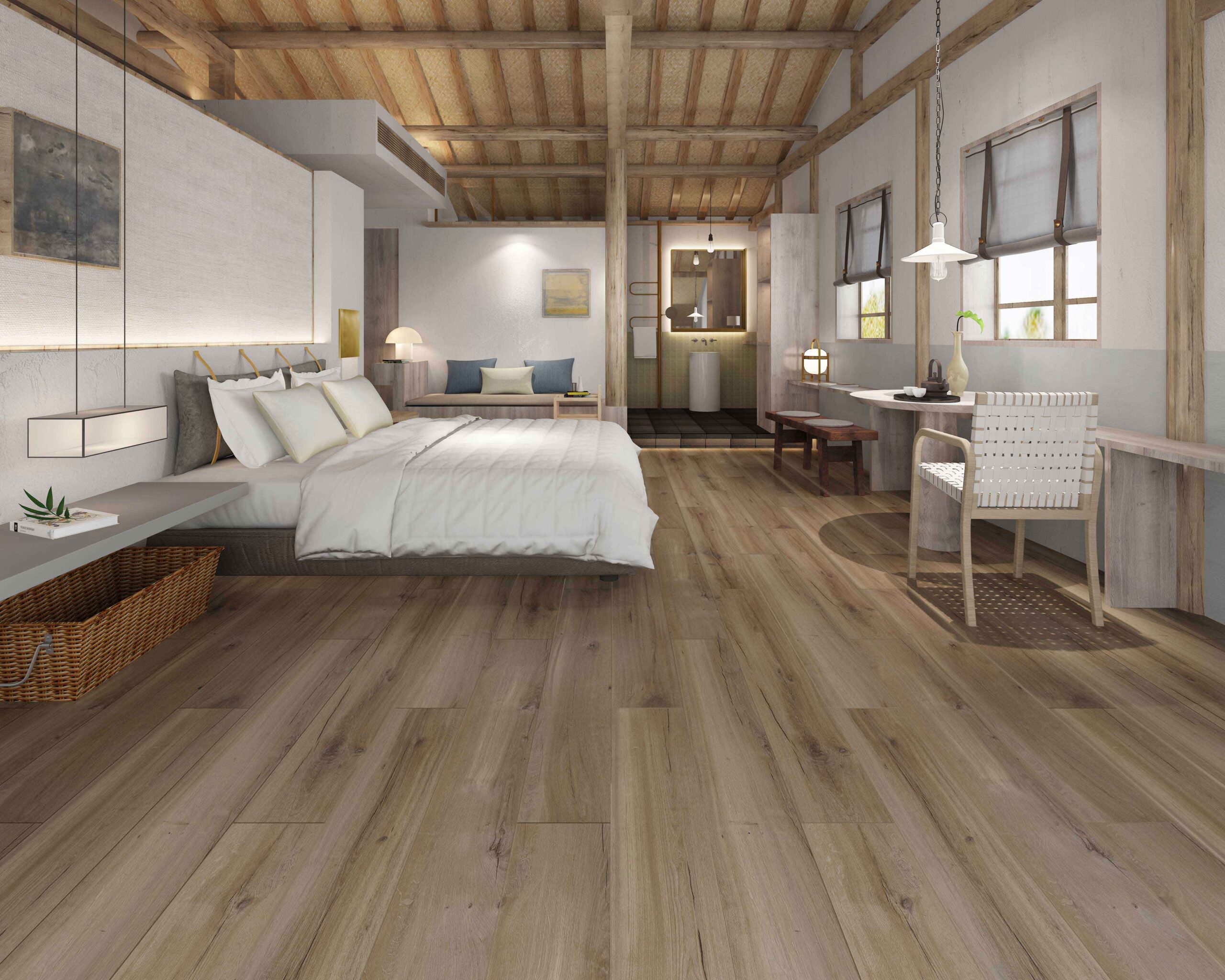
- Wood-look planks: Porcelain tiles in wood-grain finishes that give a warm aesthetic with waterproof performance
Ceramic Tiles
Ceramic tiles are a more affordable alternative to porcelain. They work well in bathrooms but are softer and more porous, meaning they may chip more easily and require sealing in certain applications. For standard HDB toilets with moderate use, ceramic tiles with a matte finish perform adequately.
Natural Stone (with Caution)
Marble, granite and limestone can create luxurious bathroom floors in landed homes and high-end condominiums. However, natural stone requires professional sealing, regular maintenance and careful product selection. Marble in particular is porous and can stain from toiletries. Honed (matte) finishes are essential — polished stone is extremely slippery when wet.
Vinyl Sheet Flooring
Vinyl sheet flooring is occasionally used in toilet renovations, particularly where overlay installation is preferred over hacking. A single seamless sheet eliminates grout lines entirely, creating a waterproof surface that is easy to clean. However, the edges must be carefully sealed to prevent water ingress underneath.
Design Trends for Singapore Bathrooms
Current bathroom flooring trends in Singapore reflect a preference for clean lines, natural textures and spa-like atmospheres:
- Large-format tiles: Fewer grout lines for a sleek, modern look. Requires precise waterproofing underneath.
- Terrazzo-look tiles: Porcelain tiles that replicate the speckled terrazzo pattern popular in mid-century Singaporean homes — a nostalgic yet contemporary choice.
- Cement-look tiles: Grey tones in matte finishes for industrial and minimalist bathrooms.
- Contrasting floor and wall tiles: Dark floor tiles paired with lighter wall tiles to create depth and visual interest.
- Pebble mosaic inlays: Small pebble-shaped tiles in shower zones for added texture and drainage.
Toilet Flooring for Elderly-Friendly Homes
Singapore’s ageing population makes bathroom safety a growing priority. If you are renovating for elderly family members, consider these enhancements alongside your flooring choice:
- R11-rated tiles minimum: Higher slip resistance provides a meaningful safety margin when the floor is wet.
- Smaller tile formats: More grout lines mean more texture and grip underfoot.
- Level-access shower: Eliminate the shower curb entirely and use a gradient floor with a linear drain. This removes the tripping hazard and makes the bathroom wheelchair accessible.
- Non-slip floor treatment: Chemical treatments can be applied to existing tiles to increase their slip resistance without replacing them.
- Contrast edging: Use a different colour tile at the shower boundary to help those with reduced vision identify the wet zone.
- Recessed soap dishes and shelves: Built into the wall rather than surface-mounted, these eliminate protruding edges that can cause injury during a fall.
The Centre for Enabled Living (CEL) in Singapore provides guidance on elderly-friendly home modifications, including bathroom flooring recommendations. Consulting their resources during the planning stage ensures your renovation meets accessibility best practices.
Cost Guide for Toilet Flooring in Singapore
| Item | Cost Range (SGD) |
|---|---|
| Hacking existing tiles (per bathroom) | $500–$1,200 |
| Waterproofing (per bathroom) | $300–$600 |
| Porcelain tiles (material, per sq ft) | $4–$12 |
| Ceramic tiles (material, per sq ft) | $3–$7 |
| Tiling labour (per sq ft) | $4–$8 |
| Total per bathroom (standard HDB size) | $1,500–$4,000 |
Most HDB flats have two bathrooms — a common toilet and a master bathroom. Budget $3,000 to $8,000 for both, including hacking, waterproofing, new tiles and installation.
Waterproofing: The Foundation of Good Toilet Flooring
No matter what tile you choose, the waterproofing membrane beneath it is the single most important element of any bathroom floor. Without proper waterproofing, water seeps through grout joints and tile adhesive into the concrete slab, causing damage to the ceiling of the unit below — a common source of neighbour disputes in HDB flats.
Professional waterproofing involves applying a liquid membrane or sheet membrane over the bathroom screed, extending at least 150 mm up the walls. The membrane must be applied in multiple coats and allowed to cure fully before tiling begins. A water ponding test — filling the bathroom with water and checking for leaks over 24 to 48 hours — should be conducted before tiles are laid.
For renovation projects where existing tiles are hacked, waterproofing must be redone from scratch. This adds $300 to $600 per bathroom but is absolutely non-negotiable. Skipping or cutting corners on waterproofing is the most expensive mistake a homeowner can make in a bathroom renovation.
Choosing the Right Toilet Flooring
For the majority of Singapore homes, matte or textured porcelain tiles rated R10 or R11 are the safest, most durable and most practical toilet flooring choice. They handle water, humidity and cleaning chemicals without issue and offer decades of reliable service.
When selecting tiles, always test the surface texture with wet hands before purchasing. A tile that feels grippy when dry can become treacherous when wet — particularly in a polished or semi-polished finish.
If you are renovating your entire home and want flooring guidance beyond the bathroom, Goodrich Global offers a comprehensive flooring range covering every room. For wet-area-adjacent spaces like kitchens and service yards, the luxury vinyl collection provides waterproof solutions that complement your bathroom tile choices.
Book an appointment with our design consultants to discuss the best flooring combination for your home.