Carpet & Flooring
Floor Tile Designs for Singapore Homes: Trends
The Role of Floor Tile Design in Singapore Interiors
Floor tile selection sets the visual tone for an entire home. In Singapore, where open-plan living is the norm in HDB flats, BTO units, and condominiums, the floor is often the single largest unbroken surface — making its design impact substantial.
Contemporary floor tile design goes far beyond the uniform, mass-produced look of decades past. Advances in digital printing, pressing technology, and surface finishing have produced tiles and tile-effect alternatives that replicate natural materials with extraordinary fidelity. This opens up design possibilities that were previously available only through expensive natural stone or specialist installations.
For Singapore homeowners, design must balance aesthetics with practicality. The floor needs to handle tropical humidity, frequent wet mopping, heavy foot traffic, and the visual demands of compact living spaces.
Popular Floor Tile Design Trends in Singapore
Several design trends have gained significant traction in Singapore’s residential market, each offering a distinct aesthetic direction.
Marble-effect tiles: White and grey marble patterns remain the most popular tile design in Singapore. The veined, luminous surface creates an immediate sense of luxury. Large-format marble-effect tiles (600 mm x 1,200 mm or larger) minimise grout lines and showcase the veining pattern dramatically, making rooms feel more expansive.
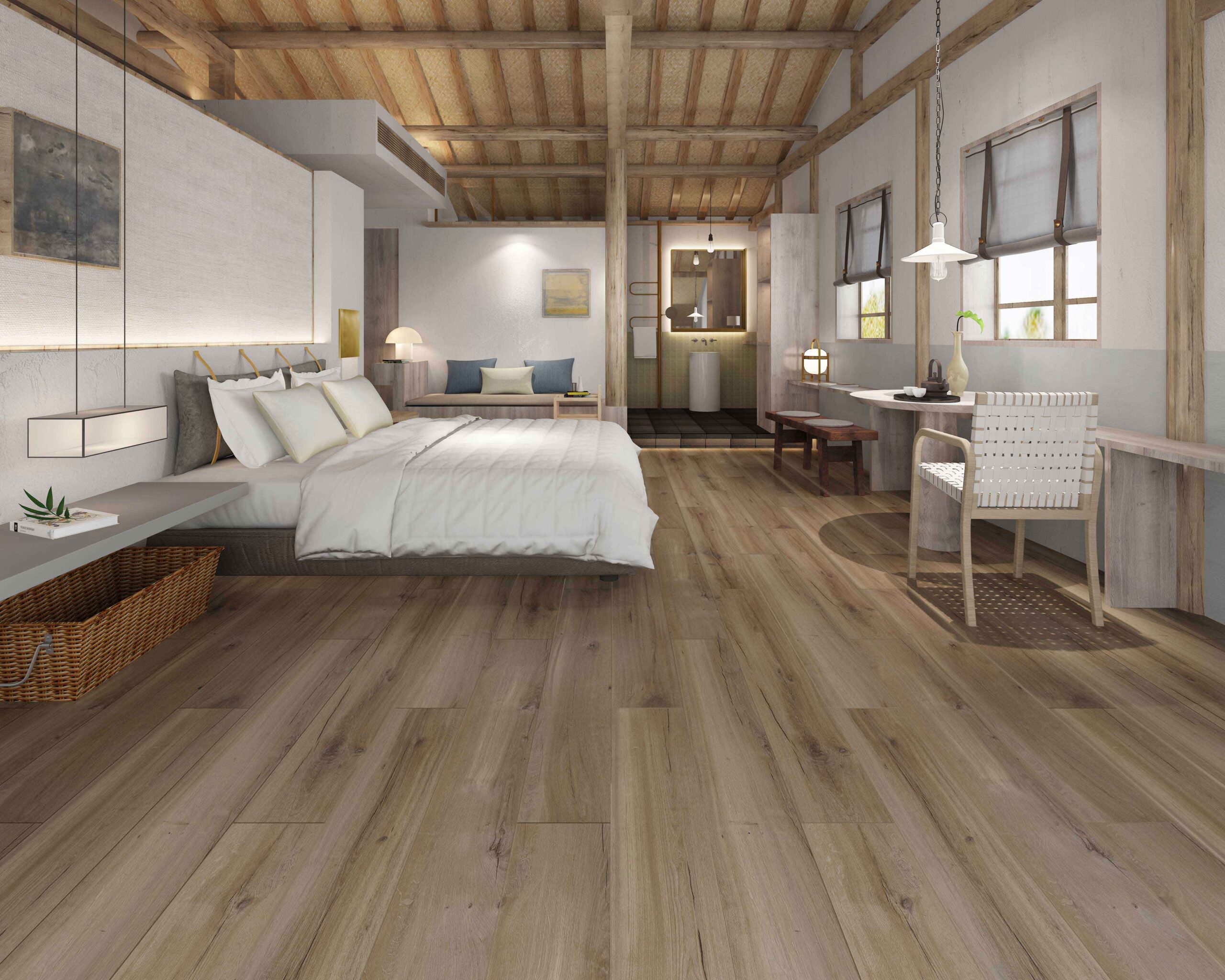
Wood-look tiles and vinyl: Timber-effect flooring brings natural warmth to tropical interiors. Available in both porcelain tiles and luxury vinyl planks, wood-look flooring suits living rooms and bedrooms where warmth and character are priorities. You can browse the latest collections in our e-catalogue. Vinyl options in particular offer advantages in comfort, noise reduction, and installation simplicity.
Terrazzo revival: Once associated with older HDB estates, terrazzo has made a dramatic comeback in contemporary design. Modern terrazzo tiles — and their vinyl equivalents — feature refined chip sizes and sophisticated colour combinations that feel fresh rather than dated.
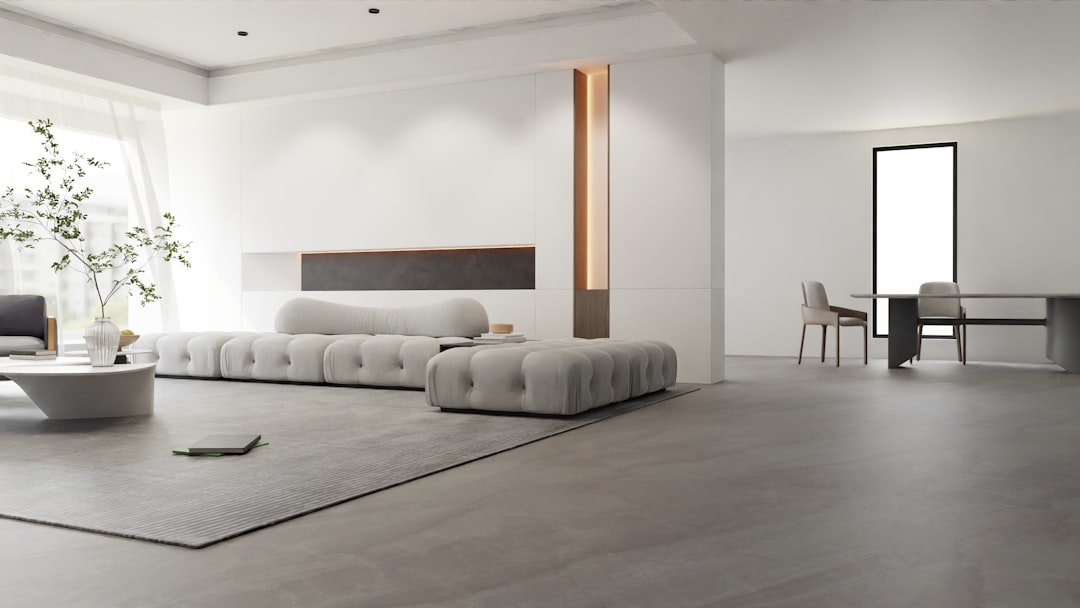
Concrete and cement effects: Raw, industrial-inspired floor designs suit the minimalist and industrial aesthetics popular in Singapore. Concrete-look tiles and vinyl create a clean, unfussy foundation that lets furniture and decor take centre stage.
Geometric patterns: Hexagonal tiles, herringbone layouts, and Moroccan-inspired patterns add visual interest and personality. These work well as accent zones — for example, a hexagonal tile feature in a kitchen or entryway — rather than wall-to-wall applications that can overwhelm compact spaces.
Choosing Tile Size and Layout for Singapore Spaces
Tile size and layout pattern significantly influence how spacious a room feels. For Singapore’s typically compact homes, strategic choices can make a measurable visual difference.
| Tile Size | Visual Effect | Best For | Grout Line Impact |
|---|---|---|---|
| Large format (600×1200 mm+) | Expansive, seamless | Open-plan living, master bedroom | Minimal; enhances spacious feel |
| Standard (600×600 mm) | Balanced, versatile | Any room | Moderate |
| Medium (300×600 mm) | Traditional, structured | Kitchens, bathrooms | More visible; adds rhythm |
| Small / mosaic (under 300 mm) | Detailed, decorative | Feature walls, shower floors | Numerous; creates texture |
| Plank format (wood-look) | Elongates space | Living rooms, bedrooms, corridors | Mimics timber board layout |
A general principle for Singapore homes: fewer grout lines create a cleaner, more spacious appearance. Large-format tiles or continuous-surface materials like vinyl sheet flooring are particularly effective in open-plan HDB and condo layouts where the floor flows unbroken from the entrance through the living and dining zones.
Laying direction matters too. Tiles or planks laid lengthwise along the longer dimension of a room elongate the space visually. A diagonal layout adds dynamic interest and can make narrow rooms feel wider, though it generates more cutting waste during installation.
Tile-Effect Vinyl: An Alternative Worth Considering
For homeowners who love tile designs but want to avoid the disruption of traditional tile installation, tile-effect vinyl flooring offers a compelling alternative. Modern vinyl products replicate popular tile patterns — marble, terrazzo, concrete, geometric — with remarkable visual accuracy.
The practical benefits of choosing vinyl over traditional tiles include:
- No hacking required: Vinyl can be installed directly over existing tile floors, eliminating the noise, dust, and cost of removing old tiles. This is particularly valuable in HDB estates with strict renovation noise restrictions.
- Warmer underfoot: Vinyl feels warmer and softer than ceramic or porcelain tiles, which can feel uncomfortably cold in air-conditioned rooms.
- Better acoustics: Vinyl absorbs impact sound rather than reflecting it, making homes quieter — especially beneficial in multi-storey properties.
- Faster installation: A typical 4-room HDB flat can be floored with click-lock vinyl in one to two days, compared to four to five days for traditional tiling.
- No grout maintenance: Vinyl joints are tight and non-porous, eliminating the ongoing battle to keep grout lines clean and mould-free.
Grout Choices and Their Design Impact
For traditional tile installations, grout colour and width significantly affect the final appearance. This is an often-overlooked decision that deserves careful consideration.
Matching grout: Using grout that closely matches the tile colour creates a seamless, unified appearance. This approach works best with large-format tiles where the goal is to minimise visual interruption across the floor surface. It is the most popular grout strategy in contemporary Singapore interiors.
Contrasting grout: Using a darker or lighter grout than the tile emphasises the tile layout and individual tile shapes. White tiles with dark grey grout, for example, create a graphic, grid-like pattern. This approach suits design styles that celebrate geometric structure — such as subway tile patterns in kitchens or hexagonal tile features.
Grout width: Narrower grout lines (1.5 mm to 2 mm) create a cleaner, more premium appearance. Wider grout lines (3 mm to 5 mm) are more forgiving of slight tile size variations and are easier to grout evenly, but they create a busier visual pattern and collect more dirt over time.
One significant advantage of vinyl flooring over traditional tiles is the elimination of grout entirely. Vinyl plank and tile joints are tight, non-porous, and do not require the ongoing cleaning and occasional re-grouting that tiled floors demand — a meaningful practical benefit for busy Singapore households.
Matching Floor Tile Design to Your Home Style
The floor design should complement your overall interior direction rather than competing with it. Here are proven combinations for popular Singapore design styles.
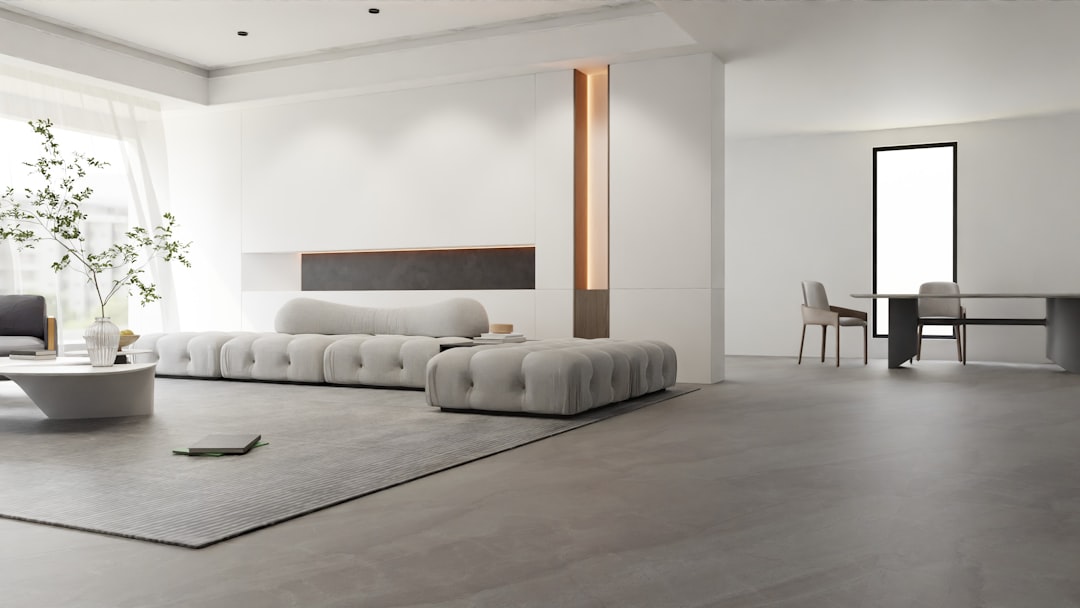
Minimalist / Scandinavian: Light wood-look planks or light grey stone-effect in large format. Keep patterns subtle — let the flooring recede so furniture and space take the focus. White walls, blonde timber furniture, and soft textiles complete the look.
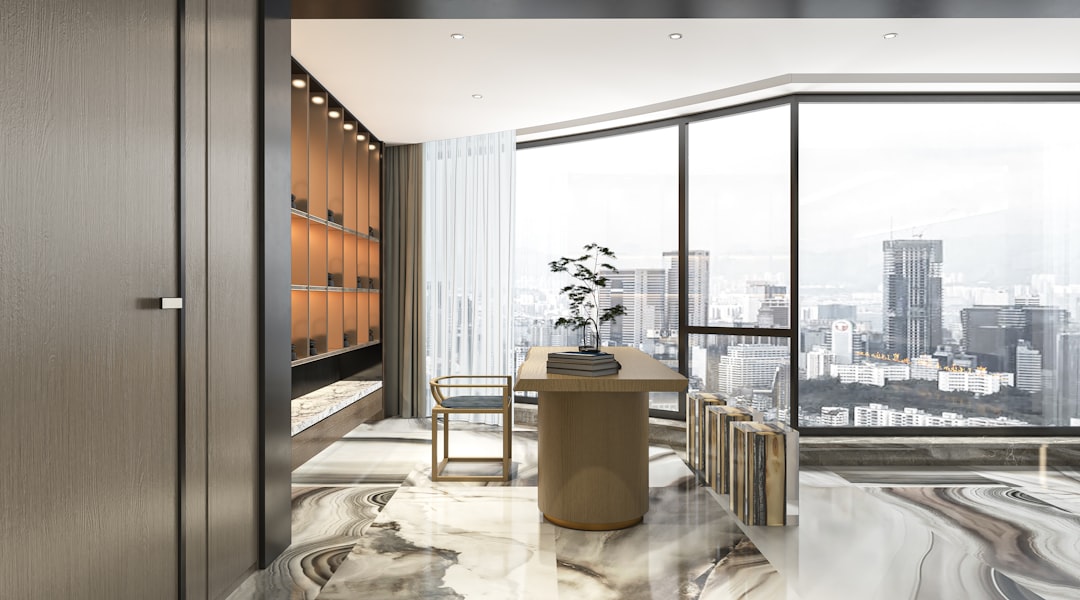
Modern luxury: White marble-effect tiles or vinyl in large format with dramatic veining. Pair with dark cabinetry, brass fixtures, and plush textiles. The floor establishes the luxurious base; finishes add richness.
Industrial: Concrete-effect flooring in mid-grey tones. Pair with exposed brick or dark feature walls, metal furniture, and warm leather accents. The utilitarian floor grounds the raw-material aesthetic.
Eclectic / maximalist: Patterned tiles — Moroccan, encaustic, or geometric — work as accent zones (entrance, kitchen, bathroom) while neutral flooring covers main living areas. This prevents visual overwhelm while adding personality.
When selecting your floor tile design, consider how the floor transitions between rooms. In open-plan layouts, a single flooring material and design running throughout creates the strongest sense of spaciousness. Where you do want to differentiate zones — say, between a living area and a kitchen — use a subtle transition strip or a complementary design rather than an abrupt change that fragments the space visually.
Explore our full collection of floor designs in tile-effect and wood-look finishes across our flooring range. Book an appointment with our design consultants to discuss the right floor design for your Singapore home.