Healthcare Interiors
Dementia-Friendly Flooring: A Safety and Design Guide
Dementia-friendly flooring is one of the most consequential material decisions in any care environment, because for a person living with dementia the floor is not just a surface to walk on — it is something the brain must interpret correctly. Patterns, contrasts, and reflections that a typical person ignores can read as steps, holes, or hazards to someone whose visual processing is impaired, triggering falls, hesitation, or distress. Getting the flooring right is therefore a safety intervention as much as a design one.
This guide focuses specifically on flooring. For the wider environment — lighting, wayfinding, colour, and layout — see our companion piece on dementia-friendly interior design. Here we concentrate on what makes a floor safe and legible for people with dementia, a concern made more pressing by Singapore’s rapidly ageing population.
How Dementia Changes The Perception Of Flooring
Dementia affects visual perception in ways that make certain flooring choices actively dangerous. Depth perception, contrast sensitivity, and pattern interpretation all degrade, so the floor can be misread in specific, predictable ways:
- Dark patches — including dark tiles, mats, or shadows — can be perceived as holes to be avoided or stepped over, causing stumbles.
- Shiny or reflective surfaces can look wet or slippery, provoking fear and hesitation, or create glare that disorients.
- Bold patterns, speckles, and strong geometric designs can appear to move, or be mistaken for objects or steps.
- Sparkly or flecked finishes may be perceived as litter or insects, prompting attempts to pick at the floor.
Understanding these misperceptions is the foundation of dementia-friendly flooring: the goal is a floor that the brain reads as flat, continuous, and safe.
The Core Principles
A handful of principles guide safe specification across care homes, hospital dementia wards, and the homes of people ageing with cognitive decline.
| Principle | Specification response |
|---|---|
| Plain over patterned | Choose plain or very subtly textured floors; avoid bold or busy patterns |
| Matte over glossy | Specify matte finishes to prevent glare and the appearance of wetness |
| Tonal consistency | Keep floor tone even; avoid sudden dark patches read as holes |
| Slip resistance | Ensure adequate slip ratings, especially in wet-prone areas |
| Seamless transitions | Avoid thresholds and strong colour changes between rooms |
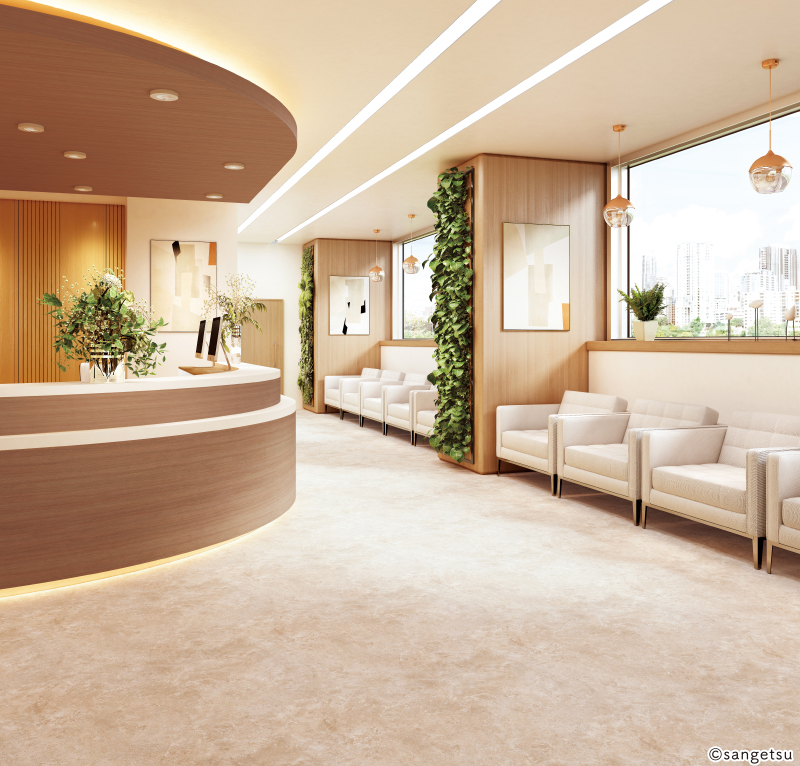
Resilient flooring is often well suited to these requirements, offering plain, matte, slip-resistant finishes in consistent tones. Specifying from a flooring range with appropriate slip ratings and subtle finishes makes it straightforward to meet the safety criteria without sacrificing a homely look.
Contrast: Where To Use It And Where To Avoid It
Contrast is a double-edged tool in dementia-friendly design. On the floor itself, strong contrast is dangerous — it creates the dark-patch and pattern misperceptions described above. But contrast between the floor and other elements is helpful, because it aids orientation. The distinction is critical:
- Avoid contrast within the floor — no dark borders, bold inlays, or high-contrast patterns.
- Use contrast between floor and wall to help define the edge of the room and support safe movement.
- Use contrast to highlight important features like handrails, doors, and toilet seats, but not the floor plane itself.
This careful use of contrast supports wayfinding, a subject explored further in our guide to hospital corridor design and wayfinding.
Transitions And Thresholds
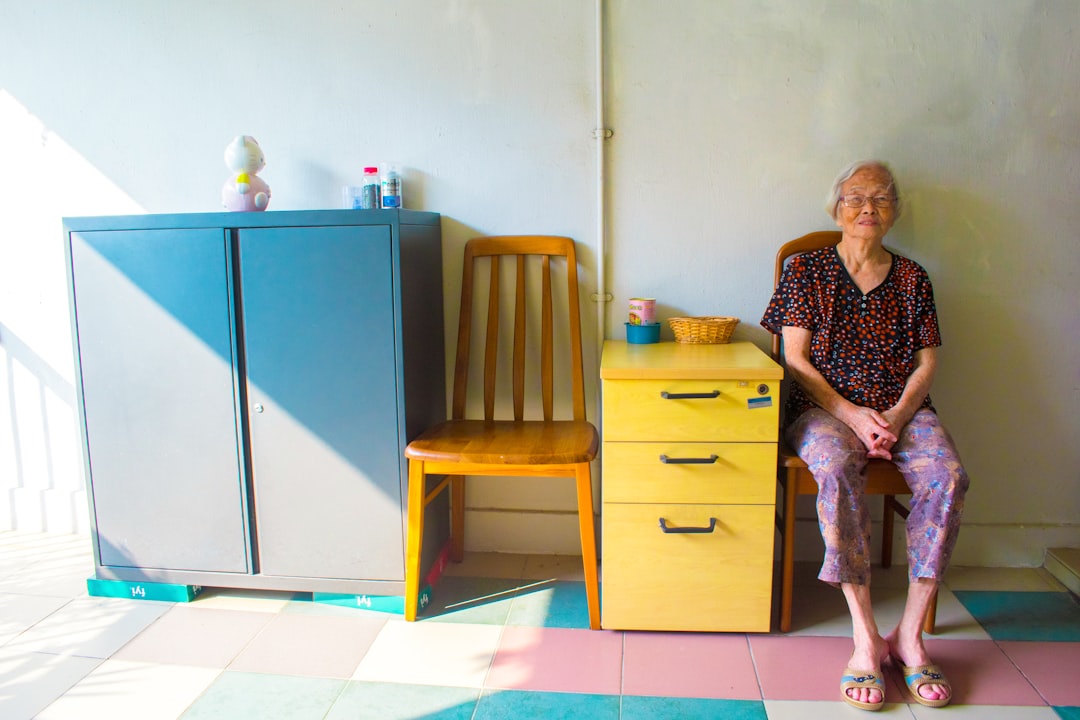
The point where one floor meets another is a particular risk. A sudden change in colour or tone between rooms can be read as a step or barrier, causing a person with dementia to stop, stumble, or refuse to cross. Wherever possible, flooring should flow between connected spaces with minimal tonal change and no raised thresholds. Where a transition between materials is unavoidable — for example between a corridor and a wet area — keeping the tones close and the junction flush reduces the perceived obstacle.
Acoustics And The Calming Environment
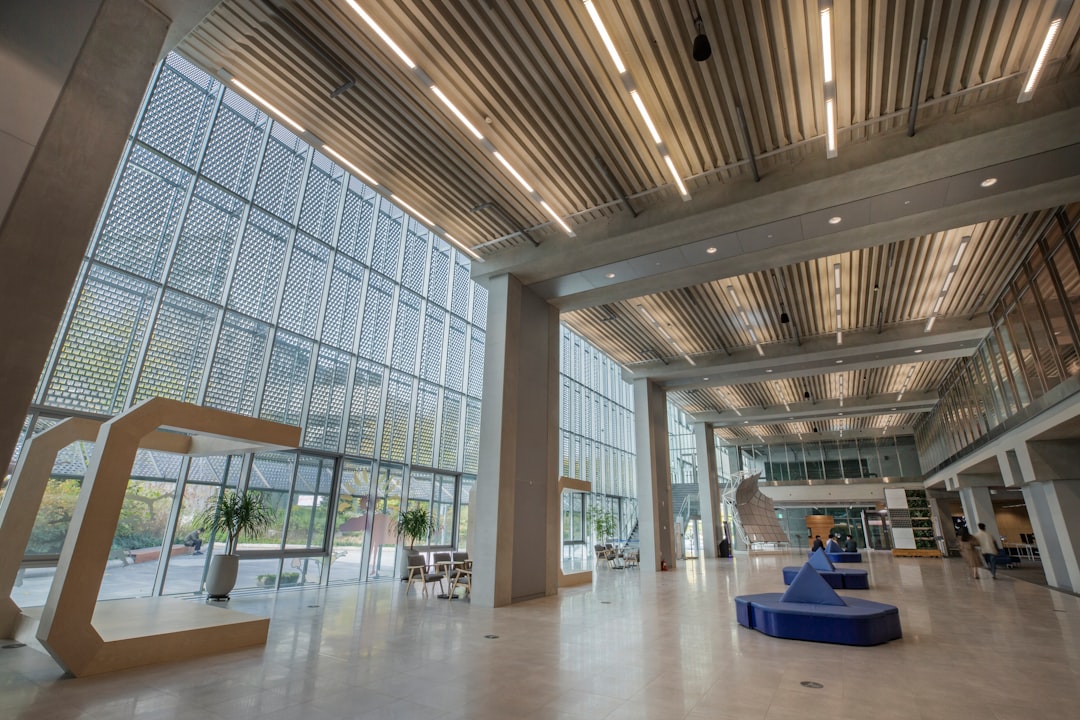
Flooring shapes the soundscape of a care space, and sound has a direct effect on people with dementia. Noisy, echoing environments increase agitation and confusion, while quieter spaces feel calmer and more secure. This creates a genuine tension in specification: the plain, hard, slip-resistant resilient floors that are safest visually can also be acoustically harsh if not handled carefully.
The answer is rarely an either-or. Acoustic-backed resilient flooring can deliver the plain, matte, safe surface a dementia setting needs while dampening impact noise, and carpet — where slip and hygiene allow, such as in lounges and bedrooms — adds warmth and quiet. Balancing visual safety with acoustic calm across different rooms is part of a considered specification, and it is worth booking a consultation to weigh samples against the specific needs of a setting.
Designing For Staff And Maintenance
A dementia-friendly floor must also work for the people who care for and clean it. Surfaces need to withstand spills, accidents, and frequent cleaning without becoming slippery or degrading, and they should be easy to maintain so that hygiene does not come at the cost of safety. A floor that becomes glossy or develops dark worn patches over time can reintroduce the very perceptual hazards it was meant to avoid, so durability and consistent appearance over the floor’s life are part of the dementia-friendly brief, not separate from it. Specifying for both residents and carers produces an environment that stays safe and calm over years of real use.
Balancing Safety With A Homely Feel
Dementia-friendly does not mean clinical. The Design 2035 Masterplan’s vision of care emphasises dignity and delight, not just safety, and flooring contributes to whether a space feels like an institution or a home. Plain, matte, tonally consistent floors can still be warm and characterful — natural wood-look tones, soft warm neutrals, and quiet textures all meet the safety criteria while creating a comforting environment. The skill lies in achieving legibility and calm at once, an approach consistent with our broader thinking on designing interiors for an ageing Singapore.
Beyond Care Homes: Where Dementia-Friendly Flooring Applies
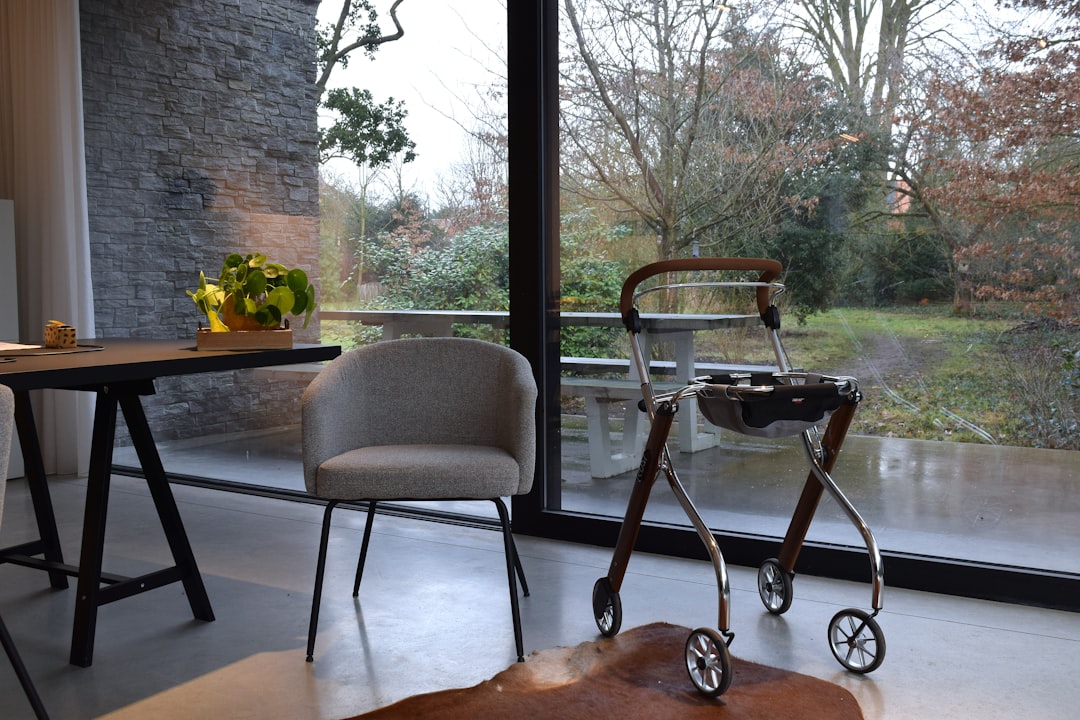
Dementia-friendly flooring is no longer confined to specialist care homes. As Singapore’s population ages, the principles apply across a widening range of settings: hospital wards and clinics that treat older patients, active ageing centres and community facilities, and increasingly the private homes of people living with cognitive decline who wish to remain in familiar surroundings. The home, in particular, is where much dementia care now happens, making age-aware flooring choices relevant to ordinary renovations.
The encouraging point is that dementia-friendly flooring principles are simply good universal design. Plain, matte, slip-resistant, tonally consistent floors with seamless transitions are safer and more comfortable for everyone — children, the frail, the visually impaired, and the fully able alike. Specifying this way future-proofs a home or facility for changing needs without any visible compromise, which is why these principles are steadily becoming a default rather than a specialism. For developers and operators building for an ageing market, adopting them across a portfolio is both a duty of care and a sound long-term investment, since spaces designed this way remain suitable as their occupants’ needs evolve.
Final Thoughts
Dementia-friendly flooring works by giving the brain a floor it can read correctly: plain, matte, tonally even, slip-resistant, and seamless between spaces, with contrast reserved for orientation rather than the floor plane. As Singapore’s population ages, this is becoming a mainstream specification skill — and one where the right choices measurably reduce falls and distress while keeping a space warm and dignified.
Book an Appointment with Our Team
Meet our consultants at the Goodrich Gallery to see materials in person and discuss your project.