Carpet & Flooring
Granite Flooring in Singapore: Costs, Care and Stone-Look Alternatives
Granite flooring carries a particular kind of authority in Singapore. It is the stone of lift lobbies, bank halls and older landed homes — dense, speckled, and almost impossible to wear out. For homeowners weighing it against marble, tiles or resilient flooring, the appeal is obvious: few materials signal permanence quite so clearly.
That permanence comes with real trade-offs, though, and they matter more in a flat than in a hotel lobby. This guide covers where granite genuinely earns its keep, what it costs to buy, install and maintain in Singapore, and where a stone-look resilient floor delivers the same visual language with far less commitment.
Goodrich Global does not supply natural granite. Our range covers stone-look luxury vinyl that delivers granite and stone visuals with warmth underfoot, slip-rated finishes and none of the sealing or hacking headaches.
Where Granite Appears in Singapore
Walk through almost any condominium built before 2010 and you will find granite somewhere — the driveway, the lift lobby, the pool deck coping. HDB void decks and staircase treads have used flamed and honed granite for decades because it shrugs off trolleys, bicycles and thirty years of foot traffic without complaint.
In private homes, granite shows up in two eras. Older landed properties often have polished granite living rooms in the beige-and-salmon palettes of the 1990s. Newer luxury builds use it more selectively: honed charcoal granite in entrance foyers, flamed finishes on outdoor terraces where slip resistance matters, and thick slabs on feature staircases where the budget allows.
What Granite Gets Right
Granite is an igneous stone, formed under heat and pressure, and it behaves accordingly. At 6 to 7 on the Mohs hardness scale it is meaningfully harder than marble, so it resists scratching from grit, furniture and pet claws far better than softer stones. Acid etching — the dull rings that citrus and vinegar leave on marble — is largely a non-issue.
It also handles Singapore’s climate well. Granite does not swell with humidity, tolerates direct sun on west-facing balconies, and a flamed or bush-hammered finish gives genuine outdoor slip resistance. Add the prestige factor — a granite foyer still reads as a serious material choice to buyers and valuers — and the case for it in the right location is real.
The Honest Realities: Cost, Weight and Upkeep
The difficulties start with the invoice and continue for the life of the floor. Indicative Singapore pricing looks like this:
| Item | Typical range (S$ per sq ft) | Notes |
|---|---|---|
| Granite tiles, supply only | S$8–S$18 | China and India origins at the lower end; premium colours higher |
| Granite slabs, supply only | S$15–S$35+ | 18–20mm slabs; rare colours and large formats climb quickly |
| Installation (wet works) | S$6–S$12 | Screed, adhesive, grinding and polishing on site |
| Hacking existing floor | S$2–S$5 | Plus debris disposal; often unavoidable given weight and height |
Weight is the constraint people underestimate. A 20mm granite slab adds roughly 55kg per square metre of dead load, which is why granite over existing tiles is rarely approved and why HDB renovations involving stone almost always mean hacking first. Between hacking, screeding and polishing, a granite installation is a multi-week wet-works project, not a weekend overlay.
Living with granite has its own texture. The surface is cold, unforgiving to dropped crockery and knees, and acoustically hard — footsteps and voices bounce. Polished granite becomes genuinely slippery when wet, which matters around kitchens, bathrooms and balcony thresholds. Although granite is less porous than marble, it still needs periodic sealing; unsealed granite near a stove will hold oil stains, and light-coloured stones show them badly. Finally, colour lot variance is real: granite is quarried, not printed, so tiles ordered six months apart may not match, and replacing one cracked tile can mean living with a visible odd one out.
Granite vs Marble at a Glance
Buyers often shortlist both stones together, but they behave very differently. Marble is softer, etches with acids and scratches more easily, but offers the flowing veining that granite’s speckled crystalline structure cannot. Granite is the workhorse; marble is the showpiece. If your priority is a dramatic bookmatched feature floor, marble wins on looks and loses on durability — our marble flooring guide for Singapore covers those trade-offs in full.
On cost, the two overlap heavily at the mid-market, though rare marbles outrun almost any granite. On maintenance, granite asks less of you — but neither stone is ever truly maintenance-free in a humid, high-traffic Singapore home.
The Stone-Look Vinyl Alternative
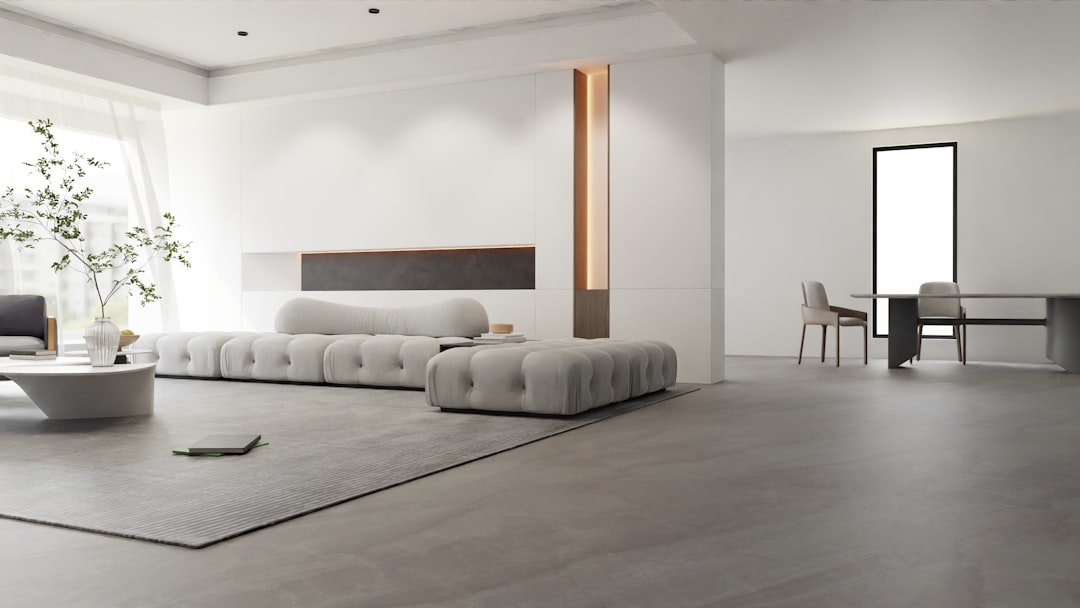
This is where the conversation usually turns for HDB, BTO and condo owners. Modern stone-look luxury vinyl reproduces granite, travertine and terrazzo visuals from high-resolution scans of real slabs, with matt and textured surface finishes that read convincingly as stone at standing height. The practical profile, however, is the opposite of granite’s.
Why designers specify it
Luxury vinyl tiles are around 5mm thick and a few kilograms per square metre, so they raise no structural questions and can often be installed over existing sound tiles — no hacking, no wet works, and a three-room flat done in days rather than weeks. The surface is warm underfoot, quieter than stone, and forgiving when a mug hits the floor. Slip-rated emboss finishes handle kitchen and entryway splashes, and there is no sealing schedule, ever: routine mopping is the entire maintenance regime.
Because the visual is manufactured, tone is consistent across the whole order and across repeat orders — the colour lot lottery disappears. Formats now include large stone-format tiles with grout-line detailing, so the floor keeps the rhythm of a real stone layout. Our stone-look vinyl flooring guide walks through the specific granite, marble and travertine visuals available, and the broader flooring range covers plank and tile options for every room.
Where granite still wins
Honesty cuts both ways. For outdoor terraces in direct weather, driveway aprons and genuinely monumental spaces, natural granite remains the right call — resilient flooring is an interior material. Indoors, though, the calculus has shifted decisively: most of what people want from granite is the look and the durability, and stone-look vinyl now delivers both at a fraction of the cost, weight and disruption.
Final Thoughts
Granite flooring earns its reputation — hard, prestigious and nearly indestructible in the right setting. But in Singapore homes it brings serious cost, dead weight, cold hard acoustics, wet-slip risk and a sealing routine that never ends, plus a hacking bill whenever tastes change. For lobbies and landscapes, specify the real stone. For living spaces, a granite-look luxury vinyl floor gives you the visual authority without asking you to live around the material’s demands.
Request free stone-look vinyl samples and compare granite, travertine and terrazzo visuals against the real thing in your own lighting before you commit.