Commercial Interiors
Acoustic Solutions for Co-Living Spaces in Singapore
In co-living, acoustic design is the difference between a building residents recommend and one they leave. Co-living acoustic design is rarely the headline of a brief, yet noise complaints are consistently the leading cause of resident churn in shared accommodation. When strangers live side by side for months at a time, sound transfer stops being a comfort issue and becomes a commercial one.
Singapore’s co-living boom — from purpose-built schemes to large adaptive-reuse projects such as Assembly Place’s Phoenix Park development — has raised the bar on what residents expect. This article sets out how to specify acoustic solutions for co-living spaces, and which material choices deliver the biggest improvement per dollar.
Why Co-Living Has a Harder Acoustic Brief
A private home contains one household that generates and tolerates its own noise. Co-living concentrates many unrelated residents into a single building, each keeping different hours and habits. The result is a far more demanding acoustic environment than the floor area alone would suggest.
Three problems dominate:
- Airborne noise between rooms. Voices, calls and media bleeding through partitions and along corridors.
- Reverberation in shared zones. Hard-surfaced lounges, kitchens and co-work corners that amplify every conversation into an unpleasant din.
- Impact noise. Footfall and furniture movement transmitted through floors to the rooms below.
No single product solves all three. Effective co-living acoustic design layers floor, wall and soft-furnishing treatments so they work together — the same layered approach Goodrich Global applies on dense flexible-space projects.

Acoustic Wallcoverings: The Reverberation Workhorse
Reverberation is what makes a shared lounge feel loud even when only a few people are talking. Hard walls, glazing and stone surfaces reflect sound until conversations compound into background roar. Acoustic wallcoverings absorb that energy at the surface, lowering reverberation time so communal areas stay calm enough to work, read or talk in comfort.
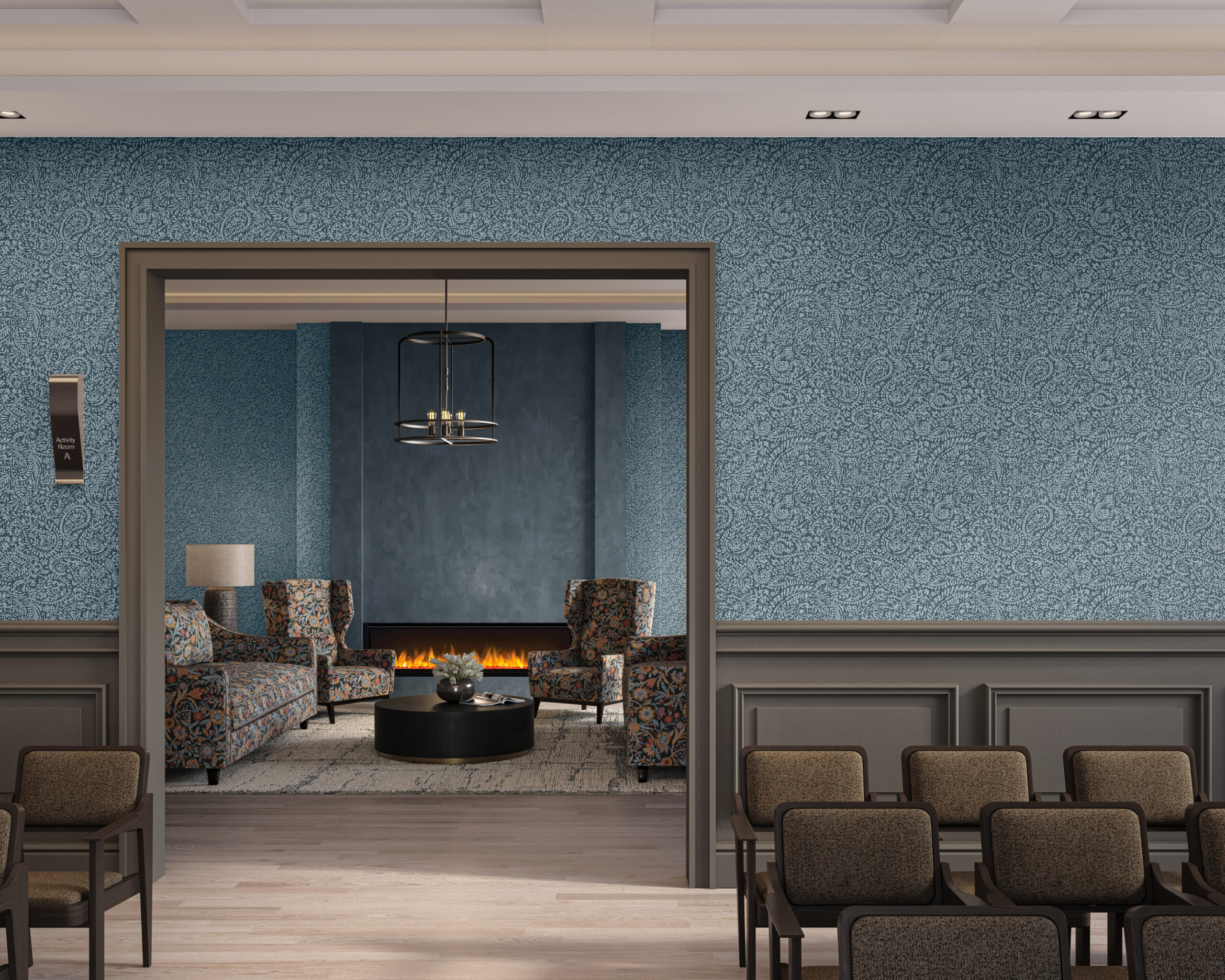
On its co-working project at JustCo at The Collective, Goodrich installed Zintra acoustic wallcoverings precisely to manage reverberation across open-plan and meeting-room zones. The same product family suits co-living lounges, dining areas, co-work corners and corridor nodes — anywhere hard surfaces and gathering people combine. Because these wallcoverings double as a decorative finish, operators gain acoustic performance and brand character from a single specification rather than bolting on separate acoustic panels.
Carpet: Quiet Underfoot and Overhead
Soft flooring is one of the most cost-effective acoustic tools available. Carpet absorbs airborne sound in the room and dampens impact noise transmitted to the spaces below — a critical consideration in multi-storey co-living where bedrooms sit beneath shared lounges.
Specifying carpet and carpet tiles in lounges, quiet corridors and co-work corners cuts both reverberation and footfall transfer at once. Carpet tile is the practical format for co-living: it delivers the acoustic benefit while letting operators replace worn or stained sections individually, keeping refresh costs down over the building’s life.
Soft Furnishings and Drapery: The Finishing Layer
Walls and floors do the heavy lifting, but soft furnishings close the gap. Upholstered seating, cushions and heavyweight drapery add absorptive surface area exactly where people gather, and curtains over large glazed elevations tame the reflections that hard glass creates.
Performance upholstery and drapery fabrics let designers add this absorption without sacrificing durability — important in shared zones where furniture is used hard and rearranged often. Layered with acoustic wallcovering and carpet, soft furnishings take a communal space from acoustically harsh to genuinely comfortable.
A Practical Specification Checklist
When specifying acoustics for a co-living scheme, work through the spaces by function rather than treating the building uniformly:
- Shared lounges and dining: acoustic wallcovering plus carpet and upholstered seating to control reverberation.
- Corridors: carpet or carpet tile to reduce footfall noise reaching adjacent rooms.
- Co-work and call zones: high absorption on walls and floor so calls do not carry.
- Stairwells and lobbies: surface absorption to stop hard finishes echoing.
Sourcing acoustic wallcovering, carpet and fabric from one supplier keeps the layered system coordinated and simplifies reordering when the time comes to refresh.
Final Thoughts
Acoustic comfort is the quietest line item in a co-living budget and one of the highest-returning. Layer absorptive walls, soft flooring and performance furnishings, and you protect the reviews, retention and rents that make the asset work.