Interior Design
Botanical Styling at Home: 5 Ways to Bring Nature Indoors
A botanical home is more than a room filled with plants. True botanical styling brings together colour, pattern, texture and greenery to create an interior that feels connected to nature. Wallcoverings establish the character, flooring grounds the scheme, fabrics add softness and plants complete the story.
Drawing on more than four decades of material expertise, Goodrich Global shares how wallcoverings, fabrics, carpets, flooring and faux greenery can work together to create a botanical interior that feels balanced, personal and comfortable. The botanical feeling comes from connected layers — not plants alone.
What Is Botanical Interior Design?
Botanical interior design takes its inspiration from nature. It can be expressed through florals, leaves, trees, landscapes, natural textures and greenery. However, there is no single botanical look. A botanical home can feel romantic and layered, bold and tropical, quiet and calming, or dark and dramatic. The style depends on the patterns, colours and materials selected.
Botanical styling can include:
- Delicate floral wallcoverings
- Large flowers and oversized leaves
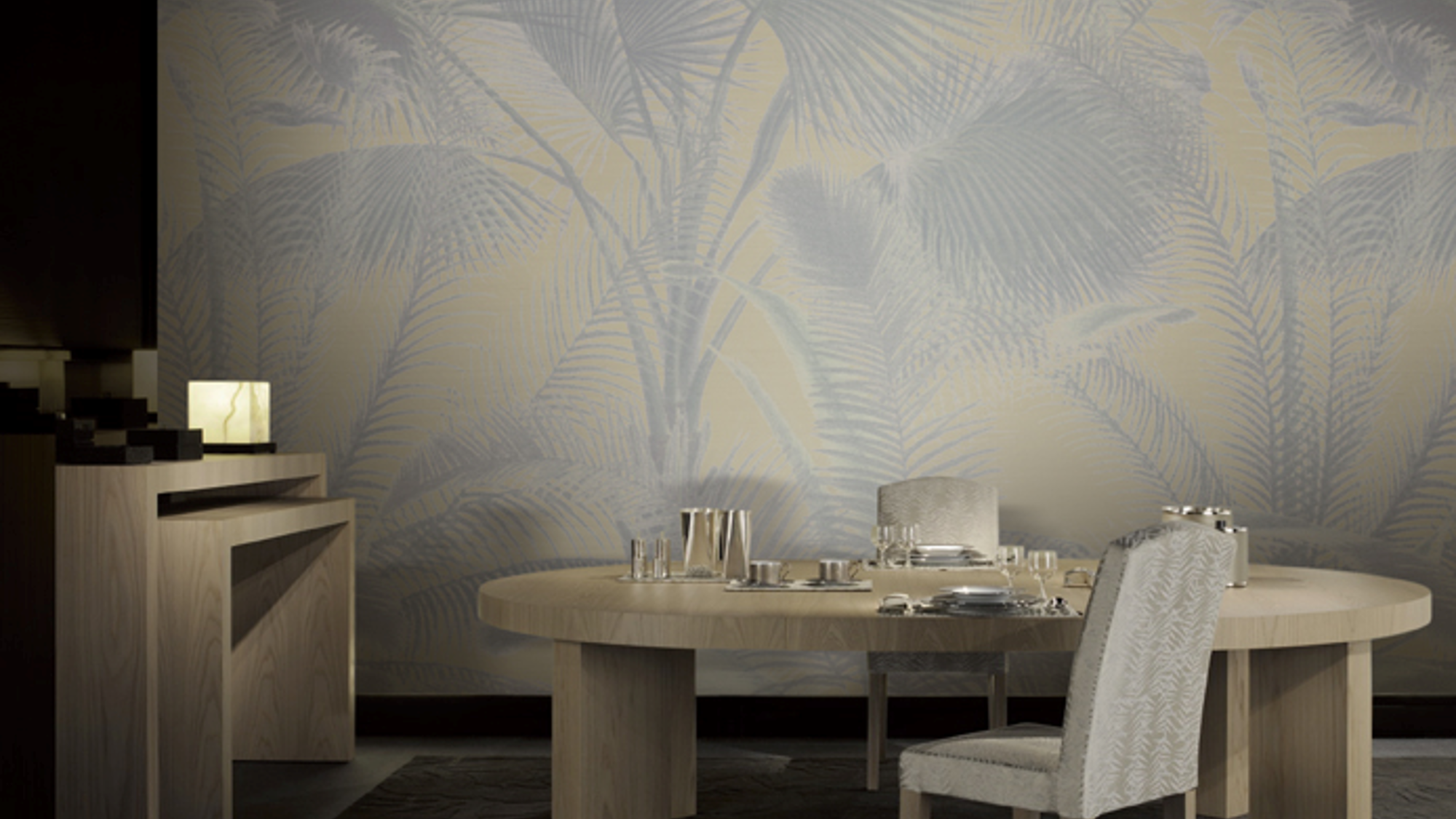
- Tropical palms and jungle patterns
- English garden-inspired prints
- Scenic and landscape murals
- Desert tones and succulent motifs
- Dark botanical designs with jewel colours
- Plain or textured materials in nature-inspired shades
- Natural or artificial greenery
The most successful botanical interiors begin with one clear mood before the supporting materials are selected.
Five Layers of a Botanical Interior
A coordinated botanical interior can be built through five connected layers:
- Palette: Choose warm or cool nature-inspired colours.
- Pattern: Select the botanical design that establishes the room’s character.
- Ground: Use flooring to calm and anchor the scheme.
- Fabrics: Repeat colours at a gentler or bolder scale.
- Plants: Add height, shape and life.
Each layer has a different role, but they should work together as one complete material palette.
1. Choose One Botanical Mood
Begin by deciding what kind of botanical atmosphere you want to create. Avoid combining too many nature-inspired themes in the same room. One clear direction will make it easier to select the wallcoverings, flooring, fabrics, carpets and greenery.
English Garden
Roses, trailing vines and softer greens create a romantic and layered interior. This style pairs well with classic furniture, textured fabrics and warm neutral flooring.
Tropical
Palms, banana leaves and saturated greens create a bold and relaxed atmosphere. Tropical patterns work well in living rooms, dining areas and entertainment spaces where a stronger visual statement is desired.
Desert Botanical
Cacti, succulents, sand tones and terracotta create a warmer and more sculptural look. This style can be balanced with stone-inspired textures, quiet vinyl flooring and natural-coloured fabrics.
Leafy Calm
Ferns, ivy, eucalyptus and tonal greens offer a quieter interpretation of botanical styling. Simple forms and softer colours make this approach suitable for bedrooms, studies and restful living spaces.
Dark Botanical
Deep backgrounds, jewel colours and dramatic florals create a sophisticated and immersive interior. Use controlled contrast and allow the pattern sufficient breathing space.
Goodrich tip: Match the botanical mood to the room, the available natural light and the level of visual drama you enjoy.
2. Begin With a Hero Botanical Pattern
The wallcovering or mural often sets the botanical character of the room. Choose one leading design and allow the other materials to support it. This prevents the space from becoming visually crowded.
Common botanical wallcovering styles include:
- Botanical murals: Immersive designs ideal for one hero wall.
- Oversized flowers: Dramatic, expressive and contemporary.
- Small repeats: Gentle patterns suitable for bedrooms and studies.
- Leaf patterns: From delicate foliage to bold jungle leaves.
- Scenic landscapes: Designs that introduce depth and a sense of distance.
Before finalising a wallcovering, view the design from a distance and compare its scale with the furniture, ceiling height and size of the room.
Small Patterns or Large Botanical Motifs?
The scale of the botanical pattern changes the mood and focus of the space. Small repeated patterns provide soft detail, are easier to layer and can be used comfortably across more walls. They are particularly suitable for smaller rooms, bedrooms and studies.
Large flowers, leaves or murals create a stronger focal point. They work best when given enough breathing space and paired with fewer competing accessories. A large pattern does not necessarily make a small room feel smaller — the result depends on placement, proportion and the supporting materials.
Goodrich tip: When the wall pattern carries a high level of detail, pair it with plain or subtly textured fabrics. Let one pattern lead and keep the remaining surfaces quieter.
3. Create a Connected Botanical Colour Story
Allow the hero botanical pattern to guide the supporting colours in the room. A simple approach is to use the 60-30-10 colour principle:
- 60% foundation: Flooring and a quiet main wall colour.
- 30% supporting materials: Curtains, upholstery, carpets and rugs.
- 10% accents: Plants, planters, cushions, artwork and accessories.
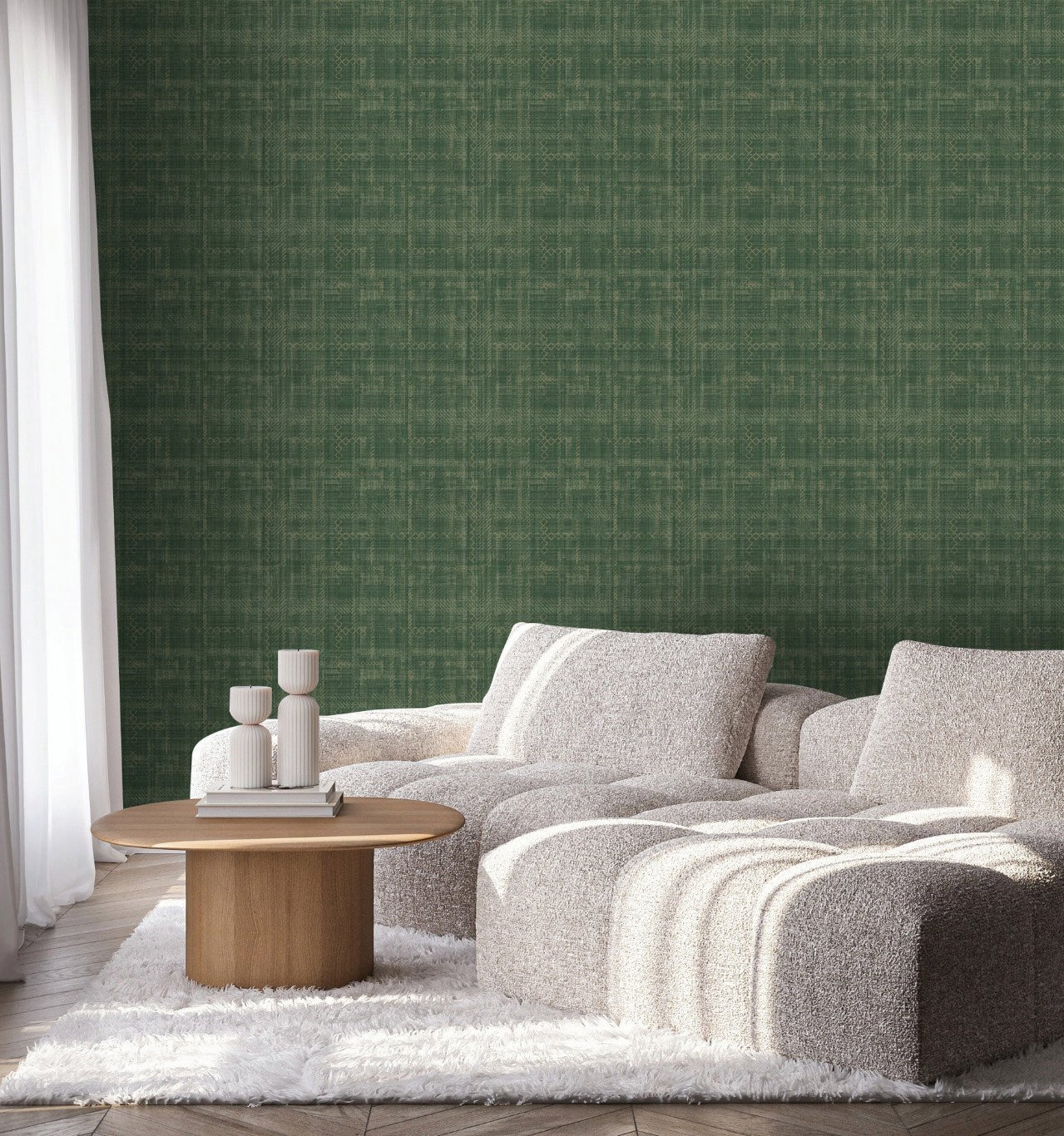
For example, select a green from the wallcovering and repeat it in smaller amounts through the fabrics, carpet and accessories. Balance the green with natural neutrals, warm wood tones or a quieter floor. Repeating two or three colours across the room creates a sense of connection without making every item look identical. The objective is not to make everything green — it is to build a coordinated palette inspired by the hero botanical pattern.
4. Ground the Botanical Scheme With Flooring, Fabrics and Carpets
Botanical patterns can be visually expressive. The flooring, fabrics and carpets help balance and ground the overall scheme.
Flooring
A calm floor gives florals and leaves space to be appreciated. Wood-inspired vinyl flooring can introduce warmth and a natural foundation, while stone-inspired finishes complement desert, tropical and contemporary botanical themes. Avoid using a highly patterned floor directly against an equally detailed wallcovering unless the room is large enough to carry both.
Fabrics
Curtains, cushions and upholstery can strengthen or soften the botanical theme. Use plain or textured curtains when the wallcovering is detailed. Alternatively, select one leaf or flower colour from the hero pattern and repeat it through cushions, trims or upholstery. Fabrics also allow the botanical look to evolve without changing the main surfaces.
Carpets and Rugs
A plain, textured or subtly patterned carpet can add softness and comfort without competing with the wallcovering. If the botanical wall is bold, select a quieter rug. If the walls are restrained, a subtle leaf-inspired carpet can reinforce the theme. The purpose of each supporting material is to connect with the botanical story — not compete for attention.
5. Add Faux Greenery With Intention
Faux greenery can bring height, shape and softness to a botanical interior without the maintenance requirements of living plants. It is especially useful in rooms with limited natural light, for homeowners who travel frequently, in hard-to-reach spaces, in air-conditioned interiors, where regular watering is difficult, and in areas that require a consistent appearance throughout the year.
However, artificial greenery should not be treated as an item used merely to fill an empty corner. It should form part of the room’s design. Before adding a plant, ask: what does this space need? Greenery can be used to soften hard architectural surfaces, balance an empty corner, introduce height beside low furniture, create a visual focal point, define zones without constructing a wall, add privacy without making the room feel enclosed, and connect the interior with nature.
Five Principles for Styling Faux Greenery
- Scale: Match the size of the faux plant to the room. A large living area may require a taller, more substantial plant, while a compact room may benefit from a smaller but carefully positioned arrangement. A plant that is too small can appear lost in the space.
- Proportion: Consider the relationship between the plant, planter, furniture and architecture. A tall plant may work beside a sofa, console or window, while a smaller arrangement may suit a table, shelf or study corner.
- Repetition: Repeat similar leaf shapes, planter colours or botanical forms to create visual rhythm. The plants do not have to be identical, but they should feel connected.
- Contrast: Pair organic plant forms with materials such as stone, glass, metal, wood or concrete. The contrast helps soften hard surfaces and adds visual interest.
- Negative space: Not every empty corner needs to be filled. Leave breathing space around the plant so that its shape can be appreciated. Thoughtful placement is more effective than adding more greenery.
Five Common Faux Greenery Mistakes
Avoid these common mistakes when adding artificial plants to the home:
- Choosing plants that are too small — a plant that is undersized may have little impact and can appear disconnected from the room.
- Using too many plants — overcrowding creates clutter and prevents individual plants from being appreciated.
- Selecting the wrong scale — greenery should not compete with the furniture or overwhelm the architecture.
- Choosing the wrong placement — avoid blocking walkways, windows, views or important focal points.
- Ignoring the interior design language — the plants and planters should complement the room’s colours, materials and overall style.
The goal is not to add more plants. The goal is to make the space feel better.
Choosing Planters for Faux Greenery
The planter is part of the overall design and should not be treated as an afterthought. Consider the colour of the flooring and walls, the shape and height of the furniture, the interior style, the size and form of the plant, and the surrounding materials.
For a contemporary home, simple planters in neutral colours provide a clean finish. A classic or English garden-inspired interior may suit softer forms and more decorative details. For visual consistency, limit the number of planter colours used in one room.
Building a Complete Botanical Material Palette
A botanical interior should be planned as a complete material story. Build the palette in five steps:
- Hero botanical: Choose a wallcovering or mural.
- Grounding material: Add wood, stone or quiet vinyl flooring.
- Fabric: Coordinate curtains and upholstery.
- Carpet: Select a plain, textured or subtly botanical rug.
- Greenery: Complete the room with natural or faux plants and planters.
The result should combine one strong botanical pattern, connected colours and quieter textures in different scales.
Five Rules for Botanical Styling at Home
Use this practical checklist when planning your nature-inspired interior:
- Choose one botanical mood for the room.
- Let one pattern lead and keep the other layers quieter.
- Ground florals and leaves with calm flooring.
- Repeat one or two colours through the fabrics and carpet.
- Use faux greenery with intention and leave breathing space.
Frequently Asked Questions
What is botanical interior design?
Botanical interior design uses nature-inspired colours, patterns, textures and greenery to create an interior that feels connected to the natural world. It can include floral wallcoverings, leaf patterns, landscape murals, natural textures and plants.
Is botanical styling only about using green?
No. Botanical interiors can include terracotta, sand, blush, blue, deep jewel tones and warm neutrals. Green is often used as a connecting colour, but it does not need to dominate the room.
Can botanical wallpaper be used in a small room?
Yes. Small repeated patterns provide gentle detail and can be used across more walls. A large mural can also work in a compact room when used as one focal point with quieter supporting materials.
Should botanical curtains match the wallpaper?
They do not need to match exactly. If the wallcovering is detailed, choose plain or textured curtains in one of its supporting colours. If the wall is quieter, the curtains may carry a more noticeable botanical motif.
Can faux greenery look sophisticated?
Yes. High-quality faux greenery can look refined when the scale, placement and planter are carefully considered. It should be integrated into the room’s material palette rather than used simply to fill an empty space.
Where should artificial plants be placed?
Use faux plants where the room needs height, softness, balance or a focal point. Suitable locations include beside a sofa, near an empty wall, at an entrance or in an area with limited natural light. Avoid blocking movement, views or important design features.
Can real and faux plants be used together?
Yes. Combining natural and faux greenery can provide visual consistency while reducing maintenance. Select plants with complementary leaf shapes and use coordinated planters to connect the arrangement.
The Goodrich Global Perspective
Botanical styling is not created through wallcoverings or plants alone. It comes from coordinating the complete interior palette: botanical wallcoverings and murals establish the character, flooring grounds and calms the scheme, fabrics repeat colour and introduce texture, carpets and rugs add warmth and balance, and greenery completes the connection with nature. When the pattern, colour, texture and greenery are thoughtfully connected, a botanical home can feel inspiring without becoming overwhelming.
Bring your floor plan, photographs or samples of your carpentry, flooring, stone and furniture to Goodrich Global, and our team can help you coordinate a complete botanical material palette for your home. Visit the Goodrich Global website or email info@goodrichglobal.com to discover more. Goodrich Gallery Singapore is at 8 Changi South Lane, #01-01, Singapore 486113 (customer hotline +65 6586 8700).