Interior Design
Goodrich’s Six Pillars of Surface Innovation
Interior surfaces have quietly changed their job description. Walls, floors, fabrics and architectural finishes are no longer asked only to look good — they are expected to enhance wellbeing, improve performance, support sustainability and create experiences people remember. As the COO of Goodrich Global, Wataru Tsunoda, puts it, “the future of design is not defined by individual materials, but by the surfaces that bring spaces to life.”

That shift is the thinking behind the Surface Edits Framework — Goodrich Global’s six pillars of surface innovation. Rather than organising materials by product type, the framework groups them by what they help a designer achieve: telling a story, printing an idea, quietening a room, specifying responsibly, standing up to heavy use, or renewing a surface without tearing it out. This article walks through all six, and how they fit together into a single, material-led way of specifying interiors.
Why a Material-Led Framework
For more than four decades, Goodrich Global’s role has extended well beyond that of a supplier of interior finishes. Today the company works as a specification partner — pairing wallcoverings, flooring, fabrics, acoustic systems, decorative surfaces and custom solutions with technical consultation, supply and installation. As a member of the Sangetsu Group, it combines global innovation with regional expertise across Asia.
The Surface Edits Framework distils that experience into six pillars. Each one answers a real design question — how do I make this wall unique, how do I make this space quieter, how do I refurbish without the mess — so that material selection starts from intent rather than from a product catalogue. As Jean Leong, Regional Head of Marketing & Branding Communications, describes it: “Surface Edits is more than an event or product showcase; it’s where innovation and partnerships come together to shape the future of interior design.”

Pillar 1 — Bespoke & Handcrafted Surfaces
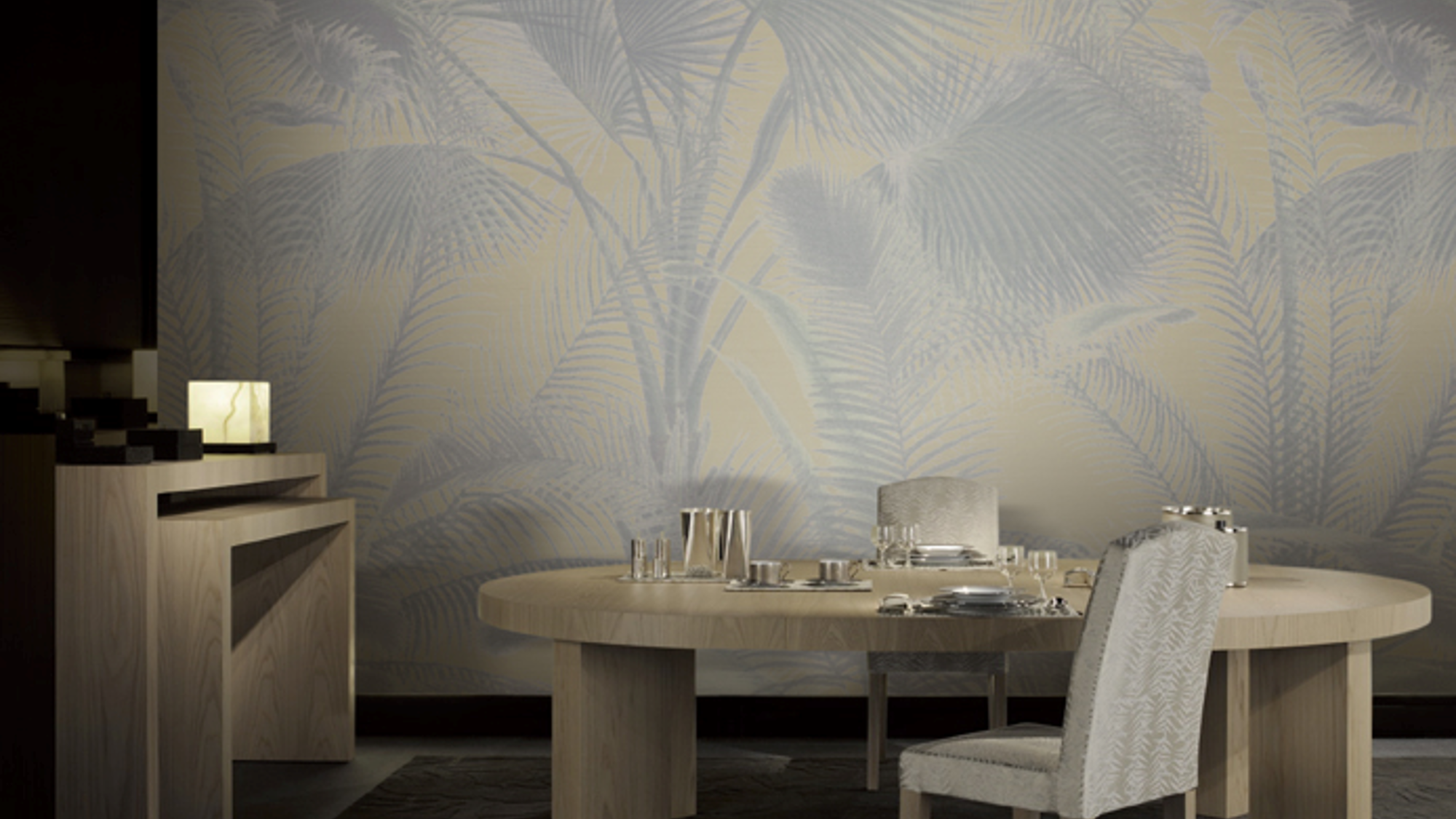
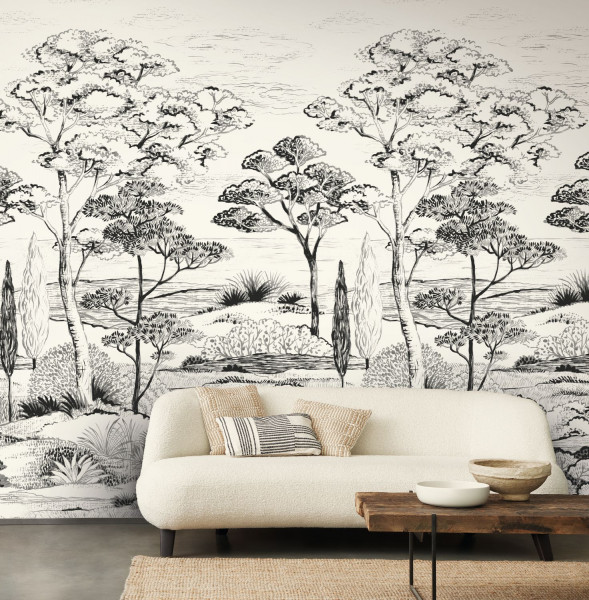
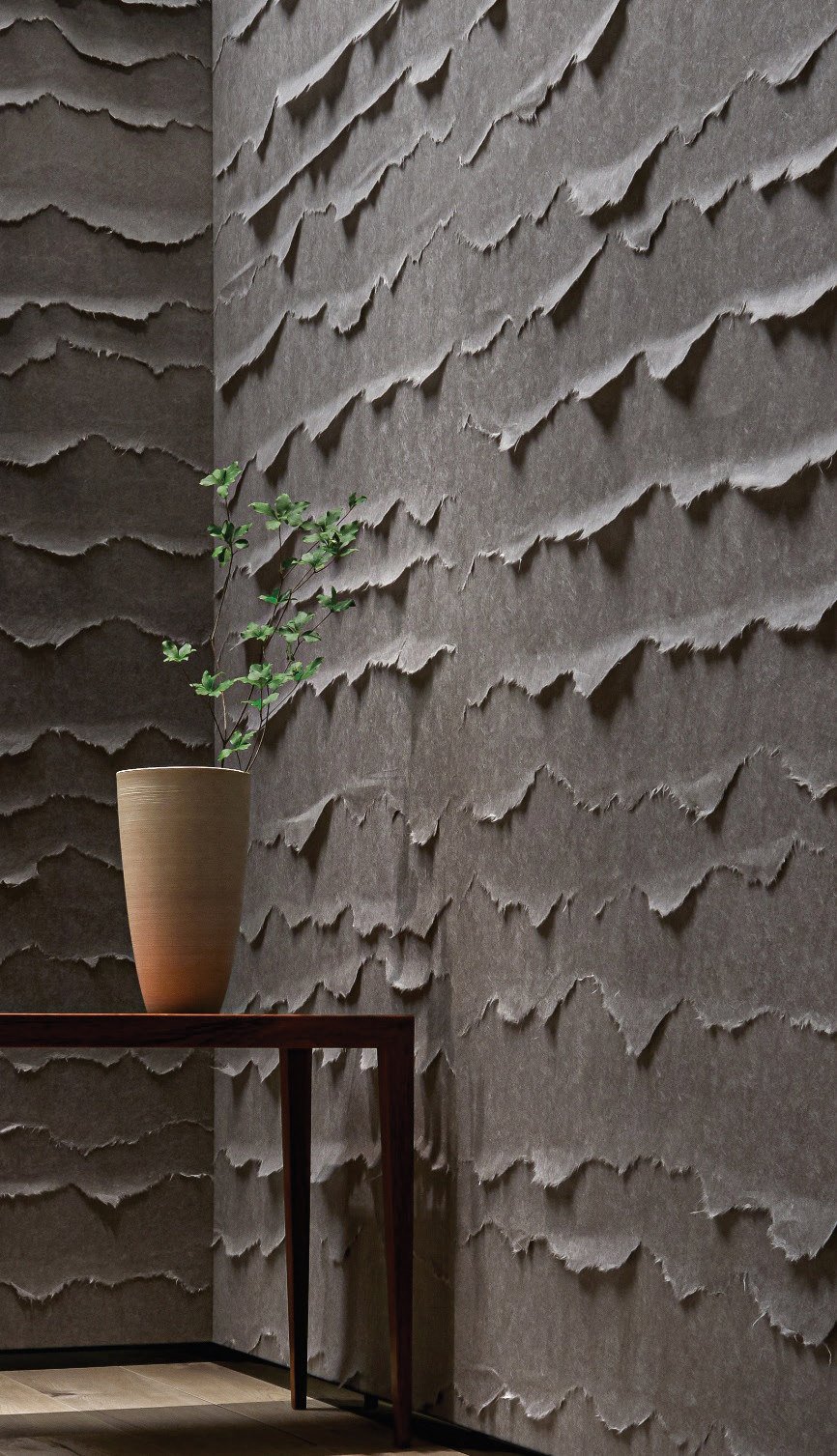
The first pillar is about walls that tell a story. From immersive hospitality environments to branded workplaces and luxury residences, bespoke wall design turns an idea into a seamless feature wall. With custom wallcoverings printed up to 2.8 metres wide, designers gain real creative freedom — fewer joints, richer detail and larger-than-life visual impact. Handcrafted natural wallcoverings, including designs inspired by the Japanese principle of wabi-sabi, bring texture and imperfection that mass-produced surfaces cannot replicate.
Pillar 2 — Digital Craftsmanship
The second pillar is where creativity meets technology. Advanced digital printing has transformed interior surfaces into personalised works of art — custom murals, branded environments and one-off feature walls that carry the identity of a project. This is the home of the Wall Edits Collection by the Goodrich Design Studio, a curated set of digitally printed designs made to be personalised for each space.
Pillar 3 — Acoustic & Wellness Solutions
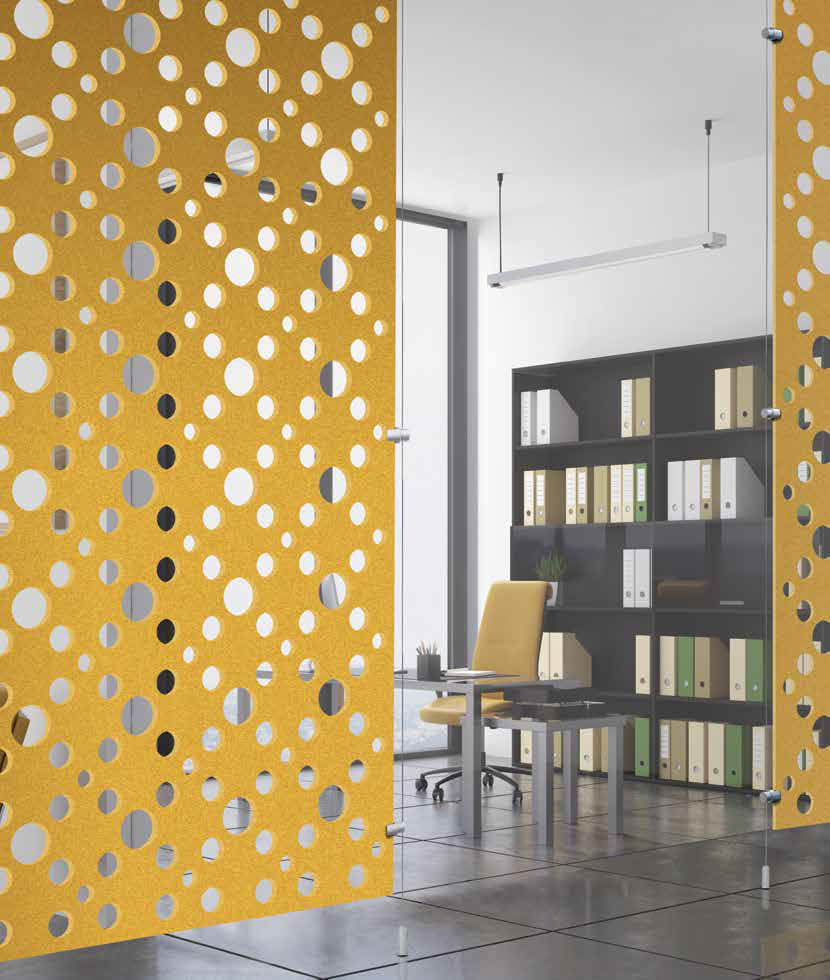
The third pillar designs for how a space sounds, not just how it looks. As we live, work and connect in shared environments, acoustic comfort has become central to wellbeing. Goodrich curates acoustic solutions that integrate performance with design — decorative fabric panels, luxury acoustic finishes and bespoke applications chosen for their balance of sound absorption and aesthetics. Across hospitality, workplace, healthcare, education and residential settings, these materials turn noise into comfort, so conversations are clearer and focus comes more easily.
Pillar 4 — Sustainable Surface Solutions
The fourth pillar treats sustainability as a design responsibility rather than an option. From low-emission materials and environmentally conscious manufacturing to products that support healthier indoor environments, this pillar gathers surfaces that contribute to more responsible, enduring spaces. It connects directly to Goodrich’s vinyl flooring and wallcovering ranges carrying recognised environmental and low-VOC credentials.
Pillar 5 — High-Performance Commercial Surfaces
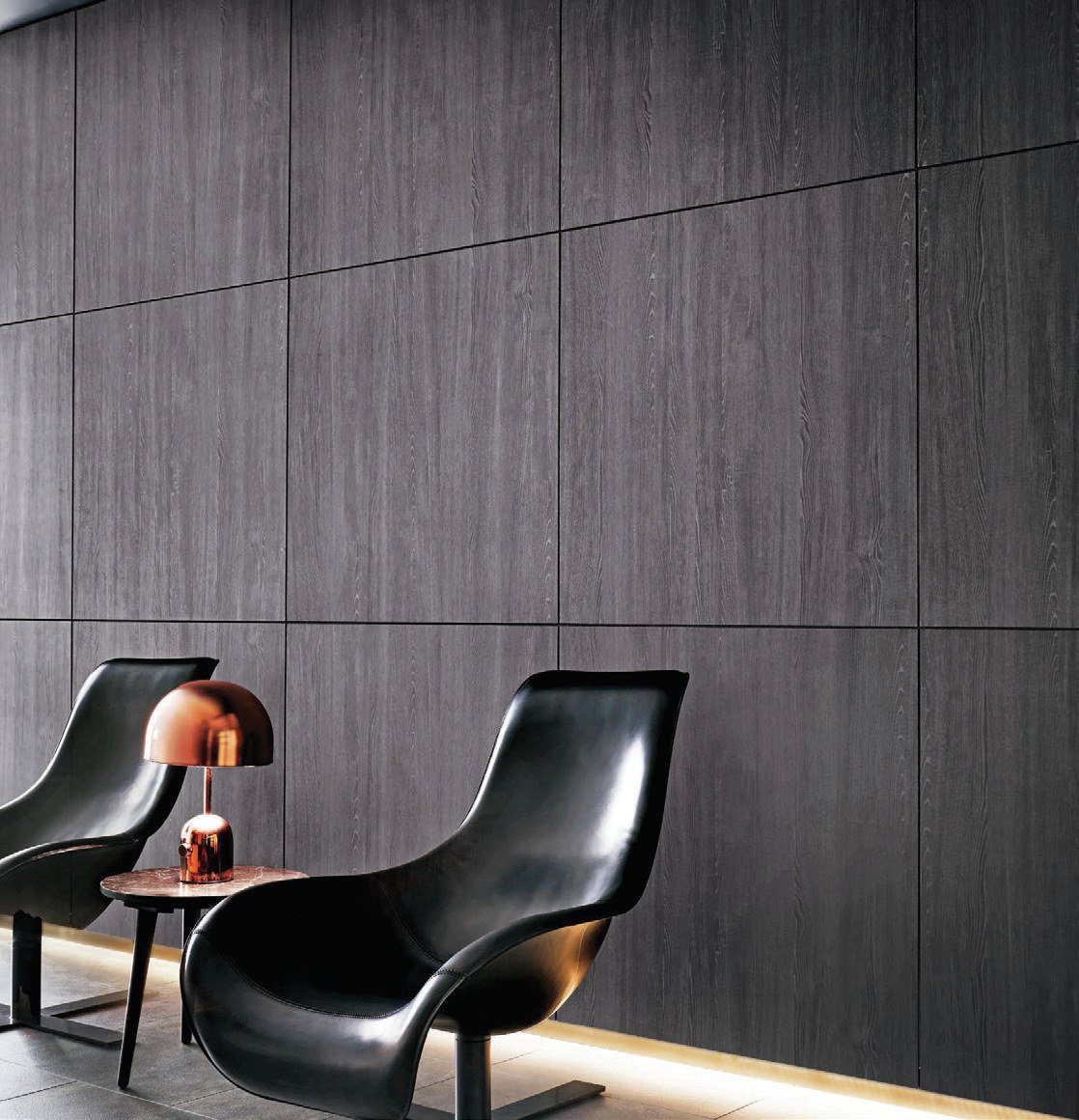
The fifth pillar is where form and function meet purpose. High-performance commercial surfaces are engineered to withstand intense foot traffic, impact, harsh chemical cleaning and moisture while holding their structural and aesthetic integrity over time. Unlike standard residential materials, they prioritise low lifetime maintenance, regulatory compliance and long-term cost-efficiency — the difference between a lobby that still looks specified after five years and one that needs replacing after two.
Pillar 6 — Surface Renewal & Architectural Films
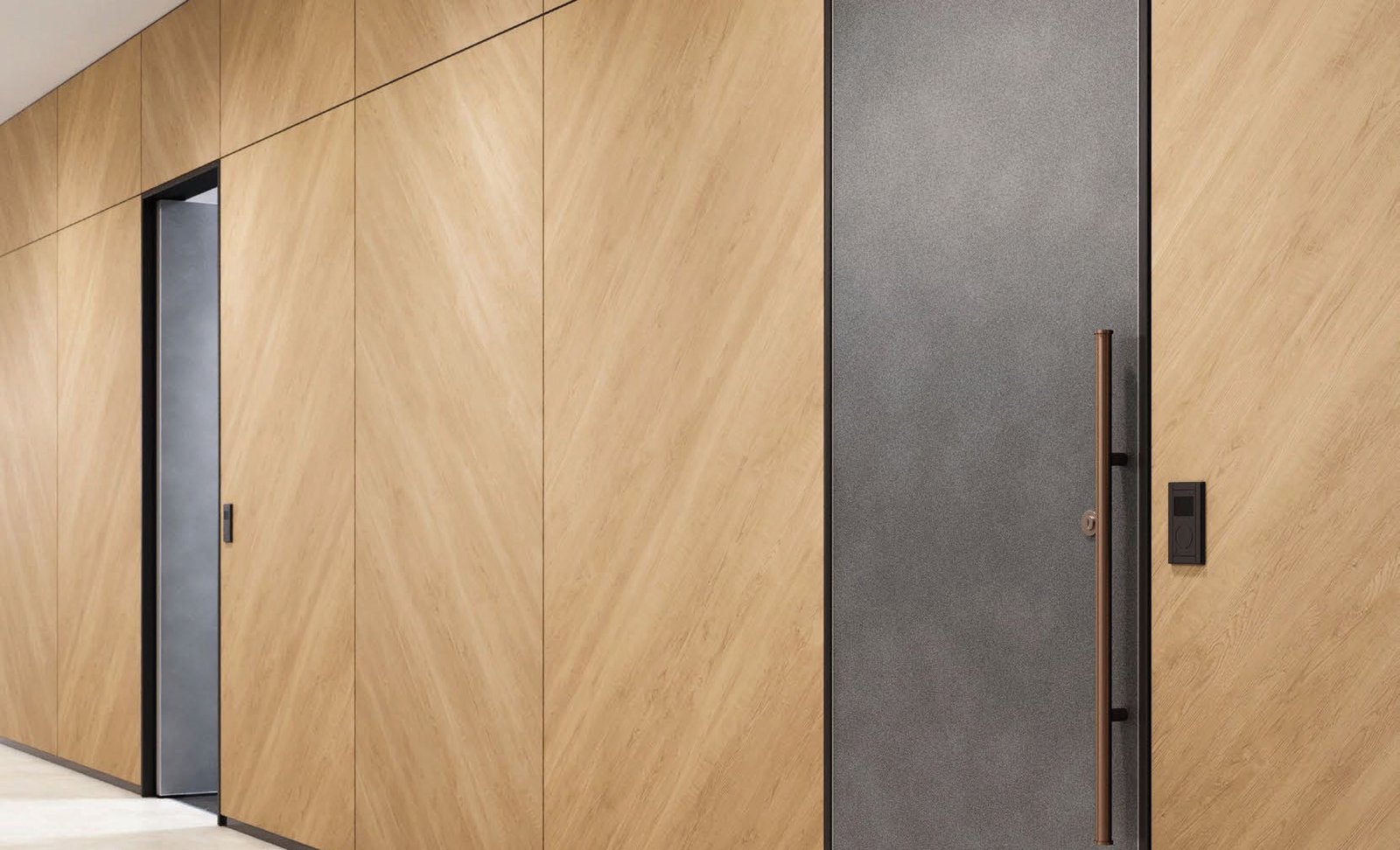
The sixth pillar transforms existing surfaces into new possibilities. Rather than replacing a tired wall, door or lift interior, surface renewal films refresh it with minimal disruption and downtime. Goodrich’s range includes self-adhesive architectural films, decorative glass films, privacy films and surface renewal films in ultra-realistic wood, stone and metallic finishes. Privacy glass films add a further layer of performance — reducing solar heat, blocking UV and protecting furnishings from fading — which makes this pillar as much about sustainable refurbishment as it is about aesthetics.
How the Six Pillars Work Together
The pillars are not silos. A single hospitality project might draw a bespoke feature wall from Pillar 1, digitally printed graphics from Pillar 2, acoustic panels from Pillar 3, low-emission flooring from Pillar 4, high-performance corridor wallcovering from Pillar 5, and renewal films to refresh existing lift lobbies from Pillar 6 — all specified through one partner. That is the point of the framework: it lets architects and designers coordinate every surface in a space against a shared set of priorities, backed by technical support from concept to completion.
Final Thoughts
The Surface Edits Framework reframes material selection around what surfaces do, not just what they are. For architects, interior designers, developers and specifiers, it offers a clearer way to think through a project — pillar by pillar — while keeping the whole scheme coherent. As Tsunoda reflects, “great design begins with thoughtfully curated materials that inspire, perform and endure.”