Commercial Interiors
Commercial Interior Design Trends for Singapore Offices | Goodrich
Commercial interior design trends in Singapore are evolving rapidly as workplaces adapt to hybrid schedules, employee wellbeing priorities, and sustainability mandates. The post-pandemic office is no longer a sea of identical workstations — it is a curated environment designed to attract talent, support diverse work modes, and reflect corporate identity through material choices.
For architects, interior designers, and facility managers specifying materials for Singapore office projects, understanding these trends ensures spaces that remain relevant and functional for years to come.
The Resimercial Trend: Office Meets Home
Resimercial design — blending residential warmth with commercial durability — has become the dominant aesthetic in progressive Singapore workplaces. Employees accustomed to working from home now expect a level of comfort and visual quality in the office that was previously reserved for hospitality environments.
What This Means for Materials
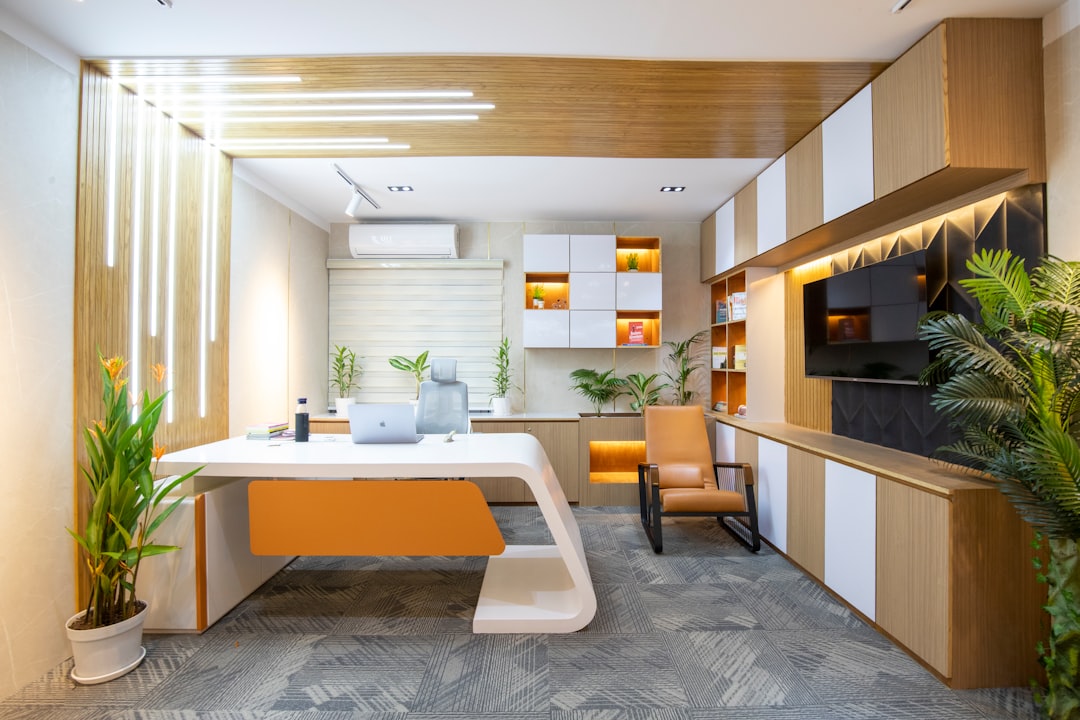
Hard-edged commercial finishes are giving way to softer, warmer alternatives. Carpet tiles in residential-style patterns — herringbone, plank formats, and organic textures — replace the generic loop-pile tiles of previous decades. Wallcoverings in linen and grasscloth textures bring warmth to meeting rooms and breakout areas. Upholstery fabrics on lounge seating use performance-rated versions of bouclé, velvet, and linen blends that look and feel residential while meeting commercial durability and fire-rating requirements.
Zoning Through Material Changes
Resimercial offices use material transitions to signal different activity zones. Hard flooring in high-traffic corridors transitions to carpet tiles in quiet focus areas. Smooth-painted walls in open-plan zones give way to textured wallcoverings in enclosed meeting rooms. These material shifts provide intuitive wayfinding and set behavioural expectations without signage.
Carpet Tiles: The Workhorse of Office Flooring
Carpet tiles remain the default flooring choice for commercial offices, but the options available today bear little resemblance to the uniform grey squares of a decade ago.
Plank Formats
Rectangular carpet tile planks (typically 25 x 100 cm) create a more dynamic floor pattern than traditional square tiles. Laid in staggered, herringbone, or brick patterns, they add visual interest to open-plan areas and make the floor an active part of the design rather than a neutral backdrop.
Organic and Biophilic Patterns
Patterns inspired by natural landscapes — forest floors, riverbeds, geological strata — align with the broader biophilic design movement. These tiles introduce visual complexity that reduces monotony in large floor plates while creating a subtle connection to nature. Mixed-tone installations where tiles in three or four coordinating colourways are randomly distributed produce a natural, unforced appearance.
Acoustic Performance
In open-plan offices, carpet tiles serve a critical acoustic function. Quality tiles with adequate backing reduce impact noise by 25 to 35 decibels compared to hard flooring — a meaningful difference in workplaces where noise distraction is a primary complaint. Specifying tiles with enhanced acoustic backing for areas adjacent to focus pods and meeting rooms improves the overall sound environment.
Explore Goodrich Global’s commercial carpet tile range for formats and patterns suited to contemporary office design.
Wallcoverings for Commercial Spaces
Commercial wallcoverings serve both aesthetic and functional purposes in office environments. Compared to paint, they offer superior durability, easier maintenance, and a richer visual and tactile experience.
Meeting Rooms and Boardrooms
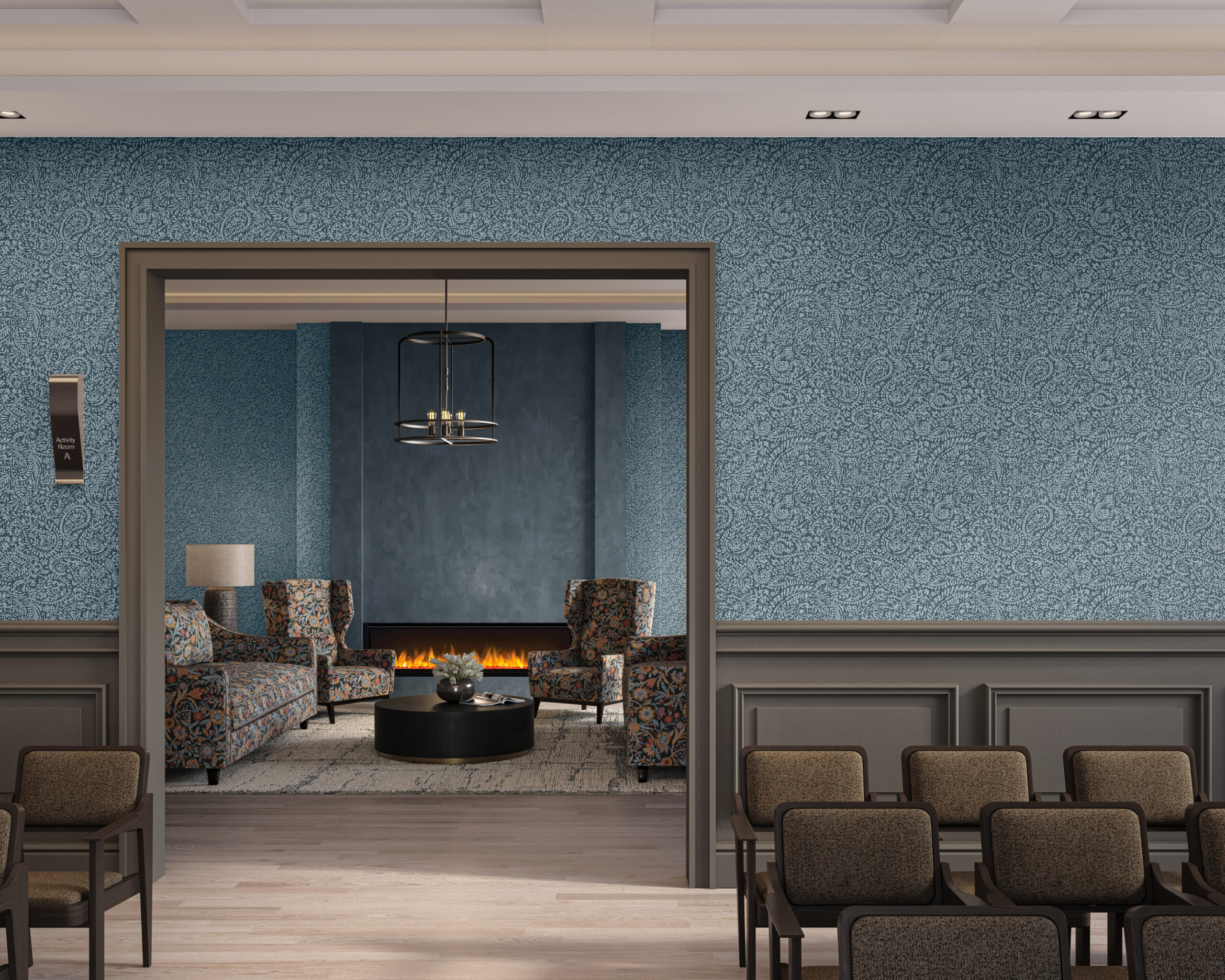
These high-profile spaces warrant premium wall treatments. Textured wallcoverings in subtle metallic, linen, or woven finishes create an environment that feels considered and professional. Darker tones — charcoal, navy, deep taupe — reduce glare from presentation screens and promote focus during meetings.
Reception and Lobby Areas
First impressions matter. A feature wall in a statement wallcovering behind the reception desk establishes brand identity and design intent immediately. Bold geometric patterns, oversized botanical prints, or richly textured grasscloth make these transitional spaces memorable. Commercial-grade vinyl wallcoverings ensure durability in high-touch areas while maintaining their visual quality.
Open-Plan Work Areas
In open-plan zones, wallcoverings typically serve as accent elements rather than full-room treatments. Column wraps, partition panels, and alcove walls are opportunities to introduce texture and colour without overwhelming the workspace. Neutral textured wallpapers work best here, providing visual warmth without distraction.
Sustainability in Commercial Interiors
Sustainability has shifted from a nice-to-have to a specification requirement in Singapore commercial projects. The Building and Construction Authority’s Green Mark scheme and the Singapore Green Building Council (SGBC) certification programme drive demand for materials with verified environmental credentials.
Green-Certified Flooring and Wallcoverings
Carpet tiles manufactured from recycled content, with cradle-to-cradle certification or SGBC product labels, satisfy both environmental policy and procurement requirements. Similarly, wallcoverings with low VOC (volatile organic compound) emissions contribute to indoor air quality — a key component of green building ratings.
Longevity as Sustainability
Durable materials that maintain their appearance over a longer lifespan inherently reduce waste and replacement frequency. Commercial-grade carpet tiles with 10-year warranties, heavy-duty vinyl wallcoverings rated for high-traffic areas, and performance upholstery fabrics that resist staining and abrasion all represent sustainable choices through longevity. Browse Goodrich Global’s commercial wallcovering options for durable, specification-grade products.
Colour and Material Trends for 2026
Several specific colour and material directions are shaping Singapore office projects this year.
- Warm neutrals over cool greys: Greige, sand, and warm taupe are replacing the cool grey palette that dominated the previous decade. These tones create a more welcoming, residential atmosphere.
- Green as an accent colour: From sage to forest, green hues appear in carpet tile accents, upholstery, and wallcovering details. The colour connects to biophilic themes and signals environmental consciousness.
- Textured surfaces: Smooth, uniform surfaces are giving way to materials with visible texture — ribbed wallcoverings, bouclé upholstery, carpet tiles with varied pile heights. Texture adds richness without colour complexity.
- Dark, moody retreats: Focus rooms and phone booths use darker materials — deep-toned carpet, charcoal wallcovering, warm ambient lighting — to create cave-like retreats that contrast with the openness of the main workspace.
- Curved forms: Curved furniture, rounded room partitions, and soft-cornered layouts replace the rigid orthogonal geometry of traditional offices. These organic forms complement biophilic material choices.
Final Thoughts
Commercial interior design trends in Singapore reflect a fundamental shift in how we think about workplaces. The office is no longer just a place to work — it is a tool for attracting and retaining talent, supporting wellbeing, and expressing organisational values. Material choices are central to achieving these goals.
From acoustic carpet tiles that reduce noise distraction to textured wallcoverings that make meeting rooms feel premium, every surface contributes to the employee experience. Specifying the right materials from the outset ensures a workplace that performs as well as it looks.
Get a free quote for your commercial interior project today.