Carpet & Flooring
Flooring Direction Guide: Which Way to Lay Your Planks
Why Flooring Direction Matters
The direction in which you lay flooring planks has a surprisingly significant impact on the look and feel of a room. It can make a narrow space appear wider, draw the eye towards a focal point, or create a seamless flow between connected rooms. Yet it is one of the most overlooked decisions in a renovation.
Whether you are installing luxury vinyl planks, engineered timber, or laminate, the principle is the same: the orientation of the planks interacts with the room’s proportions, natural light, and layout to shape the overall aesthetic. Getting it right costs nothing extra but makes a notable difference to the finished result.
This guide covers the key factors to consider when deciding on flooring direction, with practical advice for common room shapes and layouts found in Singapore homes.
Aligning Planks with Natural Light
The most widely recommended approach is to lay planks in the direction of the primary light source. In most rooms, this means running the planks perpendicular to the main window wall, so that light flows along the length of the boards.
When light falls along the plank, it emphasises the length and grain pattern of each board, creating a natural, visually pleasing effect. Conversely, when light hits the planks at a right angle, it can highlight seams and any minor height differences between boards, making the floor look less uniform.
In Singapore, where many HDB flats and condominiums have windows primarily on one side, this guideline is straightforward to apply. Identify the window that provides the most light and orient the planks to run away from it, towards the opposite wall.
In rooms with windows on multiple walls — such as corner units — you may need to choose which light source takes priority. Generally, the larger window or the one facing north or east (which provides more consistent, diffused light) should guide the decision.
Working with Room Shape
Room proportions are the second key factor in determining flooring direction. The orientation of the planks can visually correct or emphasise the shape of a room.
| Room Shape | Recommended Direction | Visual Effect |
|---|---|---|
| Long and narrow | Across the width (perpendicular to the long walls) | Makes the room appear wider |
| Square | Towards the main focal point or light source | Adds visual interest and direction |
| L-shaped | Along the longest run of the L | Creates continuity and flow |
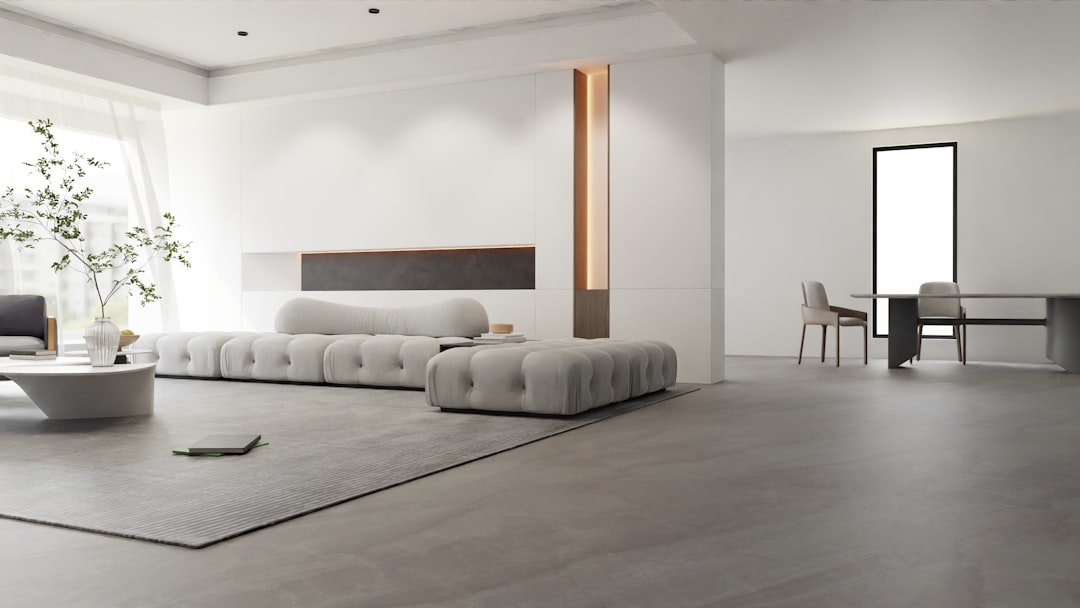
| Open plan | Along the longest dimension of the overall space | Maximises the sense of spaciousness |
In a narrow corridor, for example, laying planks across the width can make the passage feel less tunnel-like. In a large, open living and dining area, running planks along the longest axis elongates the space and creates a sense of grandeur.
When the room shape and the light direction conflict — for instance, when a narrow room has its window on the short wall — you will need to decide which factor takes priority. In most cases, correcting the room’s proportions is more impactful than aligning with the light.
Diagonal and Herringbone Layouts
Beyond the standard lengthwise or widthwise options, diagonal and herringbone layouts offer additional design possibilities. These patterns are more visually complex and can elevate a room’s aesthetic significantly.
A diagonal layout, typically set at 45 degrees to the walls, works well in square or near-square rooms where a standard plank direction might feel static. It adds movement and energy to the space. However, diagonal layouts generate more offcuts, which increases material waste.
Herringbone and chevron patterns are among the most popular premium flooring layouts. These V-shaped arrangements create a sense of sophistication and movement. In Singapore homes, herringbone flooring is increasingly chosen for living areas, dining rooms, and master bedrooms.
Luxury vinyl planks are available in formats specifically designed for herringbone installation, making this once-specialist technique accessible to a wider range of projects. The planks are typically shorter and narrower than standard format boards, allowing the pattern to be displayed at an appropriate scale.
Transitioning Between Rooms
In most Singapore homes, flooring runs through multiple rooms, corridors, and sometimes into the kitchen and bathrooms. How the plank direction transitions between spaces is an important practical and aesthetic consideration.
The ideal scenario is to maintain the same plank direction throughout the entire home. This creates a seamless flow and makes the overall space feel larger. It works best when you choose the direction based on the largest or most prominent room — typically the living area — and carry that orientation through all connected spaces.
Where a change in direction is unavoidable — for example, when a corridor meets a room at a right angle — use a transition strip or threshold to create a clean break. This is particularly important with floating floor installations, where expansion gaps between rooms are necessary.
In open-plan HDB and condo layouts, the flooring often needs to flow from the entrance, through the corridor, and into the living and dining area without interruption. Plan the direction based on this entire run, not just one room in isolation.
Practical Tips for Singapore Homes
Singapore’s residential layouts have their own characteristics that influence flooring direction decisions. Here are some practical guidelines for common scenarios.
- Standard HDB corridor: Lay planks across the width of the corridor to prevent a tunnel effect, then transition to the room’s chosen direction at each doorway.
- BTO open-plan living: Run planks towards the balcony or main window. This draws the eye towards the view and creates a sense of depth.
- Condo with floor-to-ceiling windows: Align planks perpendicular to the window wall to maximise the impact of natural light on the floor surface.
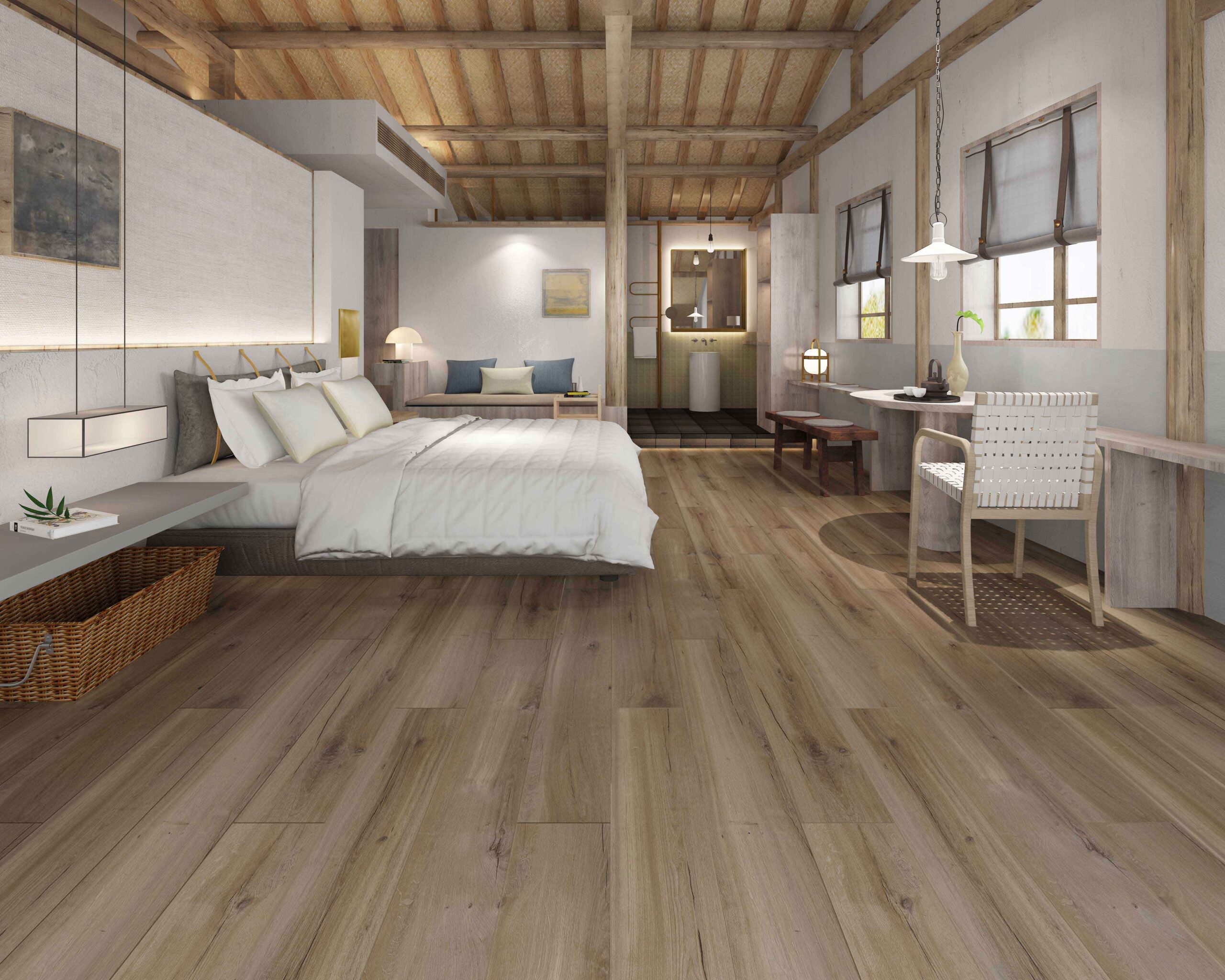
- Master bedroom: Consider running planks towards the bed to create a visual path that anchors the room’s focal point.
- Irregularly shaped rooms: Diagonal layouts can resolve awkward angles and make odd-shaped spaces feel more intentional.
Before finalising the direction, dry-lay a few planks in the room to see how the pattern interacts with the space. What looks right on a floor plan may feel different in person, and a quick test on site can save regret later.
Does Plank Width and Length Matter
The dimensions of the planks themselves also influence the visual effect of the chosen direction. Wider, longer planks create a greater sense of openness and work particularly well in larger rooms. Narrower, shorter planks can make a small room feel busier if too many seams are visible.
In a compact HDB bedroom, for example, a wide-format plank laid lengthwise creates fewer visual breaks and makes the room feel more expansive. In a large living area, extra-long planks provide an uninterrupted visual flow that reinforces the sense of space.
The relationship between plank size and room size should also inform the laying direction. In a small room, running wide planks across the narrow dimension can make the space feel wider without overwhelming it. In a generous open-plan area, the longest available plank format, laid along the longest axis, creates maximum impact.
When selecting your flooring, consider how the plank dimensions and laying direction will work together to achieve your design goals. Your flooring supplier can provide samples in different formats to help you visualise the finished result in your specific room.
Get a free quote for your project today. Contact Goodrich Global for expert advice on flooring selection and layout for your Singapore home.