Carpet & Flooring
Best Flooring for Rental Properties in Singapore
Choosing the right flooring for rental property in Singapore requires balancing durability, appearance, cost and ease of maintenance. Landlords need flooring that withstands tenant turnover, resists wear from daily use and looks attractive enough to command competitive rental rates — all without excessive capital outlay.
This guide covers the best flooring options for Singapore rental properties, including HDB flats, condominiums and landed homes, with practical advice on material selection, cost efficiency and long-term value.
What Makes Good Rental Property Flooring?
Rental property flooring needs to perform differently from owner-occupied home flooring. The key criteria are:
- Durability: Must withstand multiple tenants, furniture moves and varying levels of care.
- Affordable replacement: When damage occurs, the cost to repair or replace should be manageable.
- Neutral aesthetics: Flooring should appeal to a broad range of tenants and complement various furniture styles.
- Easy maintenance: Tenants are more likely to maintain simple-to-clean floors properly.
- Quick installation: Minimising downtime between tenants protects rental income.
Best Flooring Options for Rental Properties
Luxury Vinyl Tiles and Planks (LVT/LVP)
Luxury vinyl flooring is arguably the best overall choice for Singapore rental properties. It ticks nearly every box a landlord cares about.
- Water resistance: LVT is fully waterproof, making it suitable for kitchens, bathrooms and throughout the home.
- Scratch and dent resistance: Quality LVT has a robust wear layer that handles furniture, pets and foot traffic.
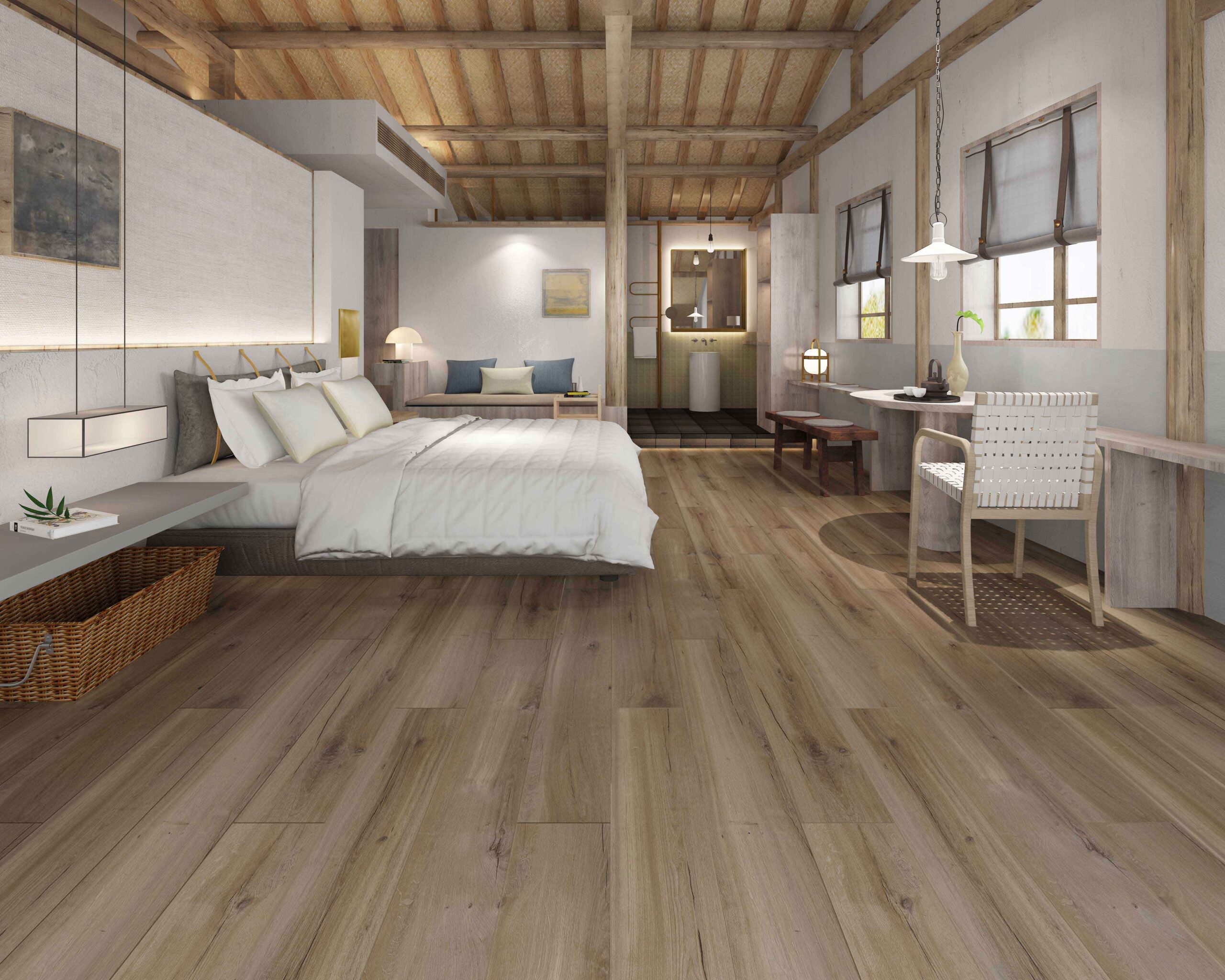
- Realistic appearance: Modern LVT convincingly replicates hardwood and stone, elevating the perceived value of the property.
- Easy maintenance: Regular sweeping and mopping are all that is required.
- Affordable: LVT costs significantly less than hardwood or natural stone while delivering a similar aesthetic.
- Quick installation: Click-lock LVT can be installed rapidly, reducing vacancy time between tenants.
For rental properties, opt for LVT with a wear layer of at least 0.3 mm for residential use or 0.5 mm for higher durability.
Ceramic and Porcelain Tiles
Tiles are already present in many Singapore HDB flats and condominiums. Their advantages for rental properties include extreme durability, water resistance and near-zero maintenance. Tiles can last decades without replacement.
The downside is that cracked or chipped tiles are harder and more expensive to replace than vinyl planks. Grout lines also require periodic cleaning to prevent discolouration.
Laminate Flooring
Laminate offers a wood-look surface at a lower price point than LVT. It is easy to install using a click-lock system and is reasonably durable. However, laminate is not waterproof — exposure to standing water causes swelling and permanent damage. This makes it less suitable for kitchens and bathrooms in Singapore’s humid climate.
Laminate is best used in bedrooms, living rooms and studies where moisture exposure is minimal.
Engineered Hardwood
Engineered hardwood provides the warmth and character of real wood at a lower cost than solid hardwood. It can be refinished once or twice during its lifespan, extending its useful life. However, it is more sensitive to moisture and scratches than LVT and costs more to install and maintain.
Engineered hardwood is best reserved for premium rental properties where the higher-end aesthetic justifies the investment.
Cost Comparison for Rental Property Flooring
| Flooring Type | Material Cost (per sq ft) | Installation Cost (per sq ft) | Expected Lifespan | Best For |
|---|---|---|---|---|
| LVT / LVP | $3 – $8 | $2 – $4 | 15-25 years | Whole home |
| Ceramic Tiles | $2 – $8 | $4 – $8 | 25+ years | Bathrooms, kitchens |
| Laminate | $2 – $5 | $1.50 – $3 | 10-15 years | Bedrooms, living rooms |
| Engineered Hardwood | $6 – $15 | $3 – $6 | 20-30 years | Premium rentals |
Flooring Strategies by Property Type
HDB Rental Flats
For HDB rentals targeting the mass market, LVT overlay on existing tile floors offers the best value. Click-lock LVT can be installed directly over existing tiles without the cost and disruption of hacking, keeping renovation costs low and turnaround time short.
Condominium Rentals
Condo tenants, particularly expatriates, often expect a higher standard of finish. LVT in wood-look designs or engineered hardwood in living areas paired with quality tiles in wet areas creates a polished look that supports premium rental rates. Ensure the flooring complements the condo’s common area aesthetic.
Landed Property Rentals
Landed properties targeting high-end tenants benefit from engineered hardwood or premium LVT in living spaces. The larger floor area means material costs are significant, so choosing a durable product that will not need replacement between tenants is essential for return on investment.
Protecting Your Flooring Investment
Smart landlords protect their flooring through tenancy agreements and practical measures.
- Document condition at move-in: Photograph all flooring before the tenant moves in. This provides evidence for security deposit claims if damage occurs.
- Include flooring care in the tenancy agreement: Specify expectations for maintenance, such as using felt pads under furniture and wiping spills promptly.
- Provide furniture protectors: Supplying a set of felt pads and a doormat costs very little but prevents scratches and dirt accumulation.
- Schedule periodic inspections: Regular property inspections allow you to identify and address minor flooring issues before they become costly repairs.
- Budget for replacement: Even the most durable flooring has a finite lifespan. Set aside a portion of rental income for eventual replacement.
Common Mistakes Landlords Make with Flooring
- Choosing the cheapest option: Very low-cost flooring often fails prematurely, costing more in replacement and lost rental days than a moderate investment upfront.
- Over-investing: Premium materials like solid hardwood or imported marble may not yield a proportional increase in rental value, particularly in mid-range HDB and condo markets.
- Ignoring wet areas: Using non-waterproof flooring in kitchens and bathrooms leads to swelling, mould and costly repairs.
- Dark colours in small spaces: Very dark flooring can make compact HDB rooms feel smaller. Mid-tone and light finishes appeal to more tenants.
Final Thoughts
The best flooring for rental property balances durability, appearance and cost efficiency. In the Singapore market, luxury vinyl flooring stands out as the most versatile choice across property types, while tiles remain reliable for wet areas and engineered hardwood suits premium segments. Invest wisely in quality flooring, protect it through clear tenancy terms and you will maximise both tenant satisfaction and long-term returns.